









Emirates SkyCargo Adds Two India Freighters, Boosts Weekly Capacity to 3,000 Tonnes

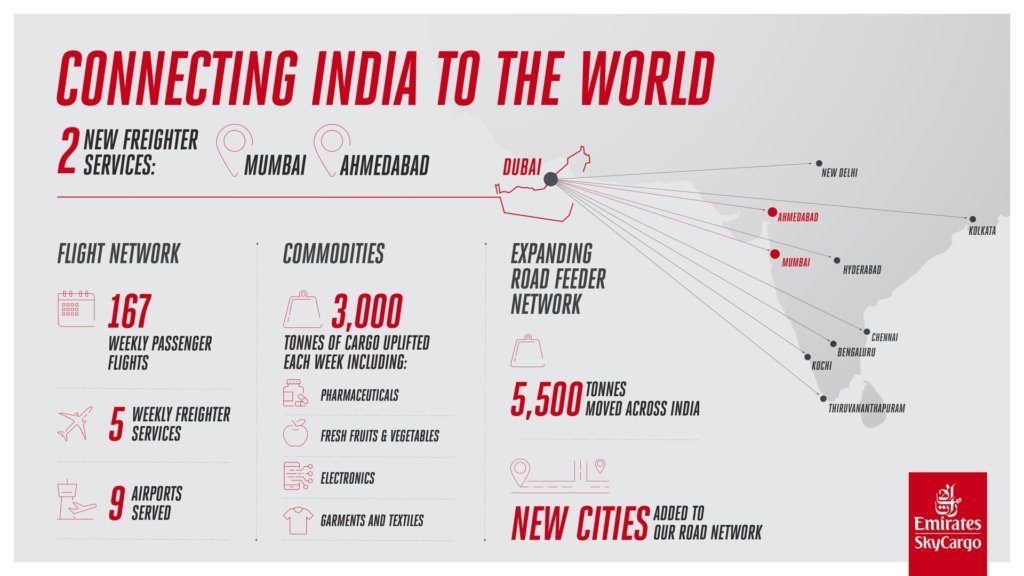
- Emirates SkyCargo is adding two new weekly freighter services to Mumbai and Ahmedabad from March 2026, taking total dedicated freighter frequencies to five per week and lifting average India capacity to around 3,000 tonnes weekly.
- India is now among the airline’s top three global cargo markets, with strong outbound volumes in pharmaceuticals (around 600 tonnes weekly), perishables (about 500 tonnes), textiles, engineering goods and electronics.
- A growing road feeder network, including over 1,000 trucking movements in 2025 and new offline stations such as Coimbatore and Goa, is extending export access beyond metro gateways and linking inland manufacturing clusters to global markets.

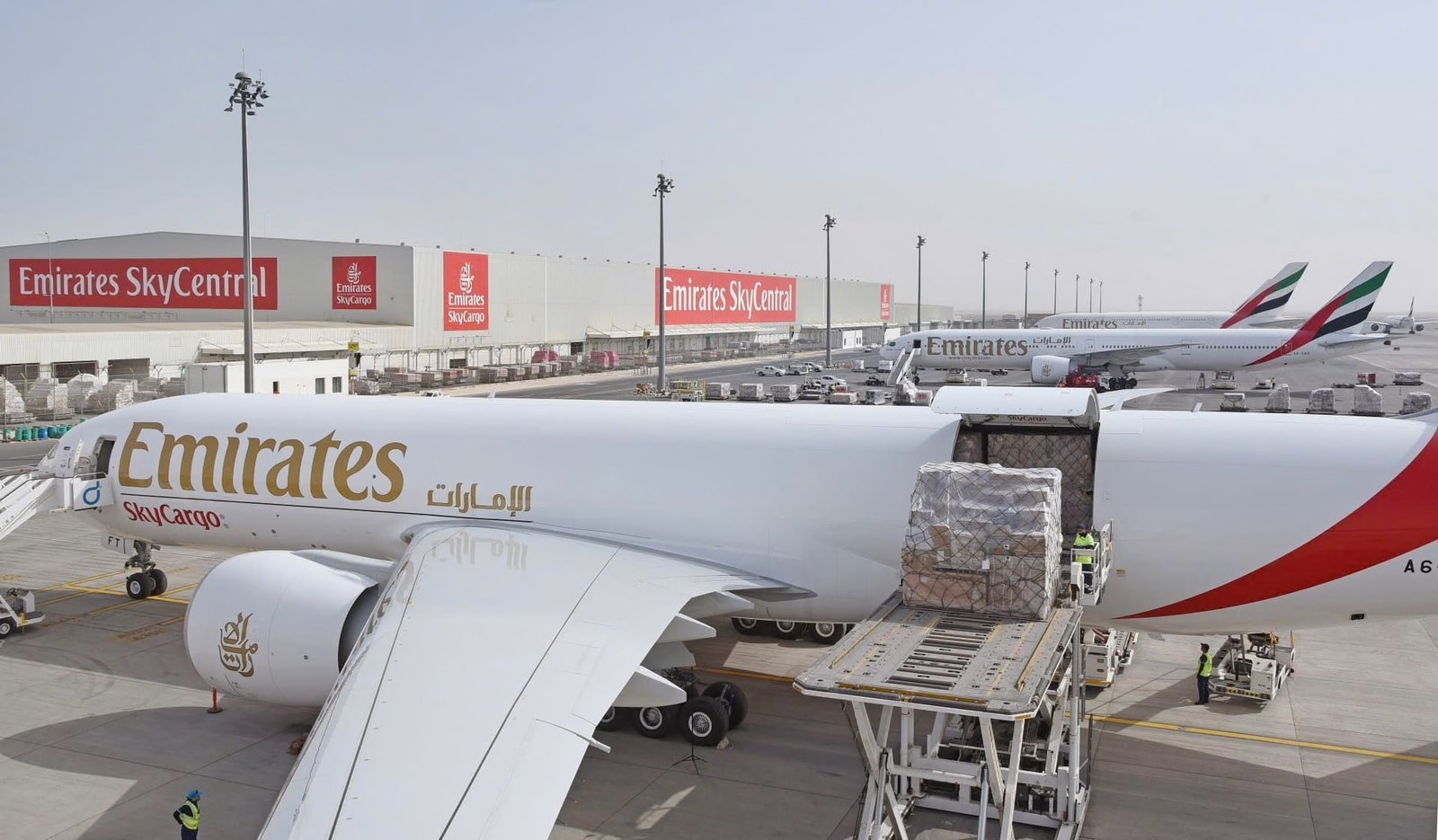
Emirates SkyCargo is stepping up its India operations with the deployment of two additional weekly freighter services, one each to Mumbai and Ahmedabad, reinforcing the airline’s four-decade commitment to one of its most strategic cargo markets.
The new Mumbai freighter will launch on 4 March 2026, operating on a Dubai–Singapore–Mumbai routing, while the Ahmedabad service, also starting in March, will run as a direct dedicated freighter to Dubai. With these additions, Emirates will operate five weekly dedicated freighters to India, three existing services (one to Mumbai and two to Ahmedabad) plus the two new frequencies, complemented by belly-hold cargo capacity on 167 passenger flights per week across nine Indian gateways.
The expansion takes the airline’s average cargo uplift to around 3,000 tonnes per week between India and its global network, underlining the scale of demand from exporters and importers.
High-value, time-sensitive cargo
The additional capacity is expected to primarily carry pharmaceuticals, fresh fruits and vegetables, other perishables, garments and textiles, and personal electronic devices such as mobile phones, laptops and tablets.
India has emerged as a critical source market for temperature-sensitive pharmaceutical shipments. Emirates SkyCargo currently moves about 600 tonnes of pharmaceuticals weekly from India, alongside roughly 500 tonnes of perishables, connecting Indian producers to markets across the Middle East, Europe, Africa and the Americas through its Dubai hub. Garments, textiles and engineering goods also form a substantial share of outbound traffic, while inbound cargo into India includes electronics, machinery, components, and high-value industrial shipments supporting manufacturing supply chains.

Beyond aircraft capacity, the airline has built a significant road feeder network to extend its reach beyond airport cities. In 2025 alone, more than 1,000 Emirates SkyCargo trucks transported nearly 5,500 tonnes of cargo across India, linking inland production clusters with international gateways. Shipments ranged from automotive and aircraft spare parts to spices, textiles, heavy machinery and even a satellite. Temperature-controlled reefer trucks have been deployed to ensure the safe transport of delicate pharmaceuticals and medical equipment.
The addition of Coimbatore and Goa as offline trucking stations further broadens access for exporters, particularly small and medium enterprises. Coimbatore, a major manufacturing hub for engineering goods, automotive components and textiles, stands to benefit from faster and more reliable access to global markets.
Among Top Three Cargo Markets
India today ranks among Emirates SkyCargo’s top three cargo markets globally, reflecting the country’s expanding manufacturing base, pharmaceutical leadership and growing e-commerce exports. Since commencing operations to Mumbai and Delhi in 1985 under its parent airline Emirates, the cargo division has steadily scaled up.
It now serves nine Indian cities: Ahmedabad, Bengaluru, Chennai, Delhi, Hyderabad, Kochi, Kolkata, Mumbai and Thiruvananthapuram. The expansion of freighter services aligns with India’s Cargo Open Sky policy for exports, which has enabled foreign carriers to add capacity in response to rising outbound demand.
The growth also coincides with the approaching third anniversary of the UAE–India Comprehensive Economic Partnership Agreement (CEPA). Bilateral trade between the two countries has accelerated, with India’s exports to the UAE growing faster than its overall export growth. Emirates SkyCargo plays a direct role in facilitating that corridor, moving high-value goods every week between the two economies.
“Our new freighter frequencies to India reflect both the strength of India’s trade corridors and our long-term commitment to supporting them,” said Badr Abbas, Divisional Senior Vice President, Emirates SkyCargo. “India is a powerhouse of manufacturing, pharmaceuticals, perishables and e-commerce, and the demand for reliable and stable capacity continues to grow.”
Regional expansion
In addition to the India expansion, Emirates SkyCargo will introduce a dedicated weekly freighter to Dhaka from April 2026, signalling broader growth across South Asia and reaffirming the airline’s focus on high-growth emerging markets. The carrier’s strong positioning was underlined this week at Air Cargo India, where its leadership participated in industry discussions on the rapid transformation of India’s logistics ecosystem.
While Emirates SkyCargo is among the largest international freighter operators serving India, particularly when combining dedicated freighters with widebody belly-hold capacity and an integrated trucking network, it operates in a competitive landscape that includes global integrators and other widebody cargo airlines.
However, its scale, network breadth via Dubai, and ability to aggregate cargo from both primary metros and secondary manufacturing hubs give it one of the most comprehensive international cargo footprints in and out of India.
Also Read: Training at scale: rethinking pilot development for India’s aviation growth