

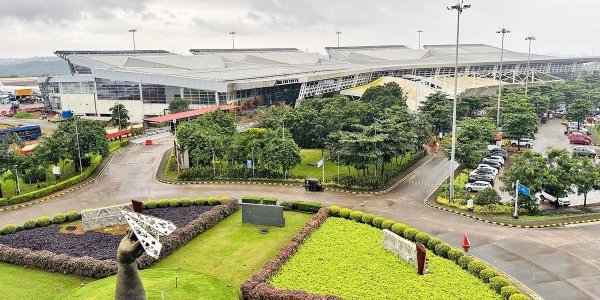












- Tamil Nadu is set for an aviation boom with upgrades to key regional airports and plans for new facilities like the Hosur and Parandur airports.
- These developments aim to enhance connectivity, boost economic growth, and attract trade and tourism across the state.
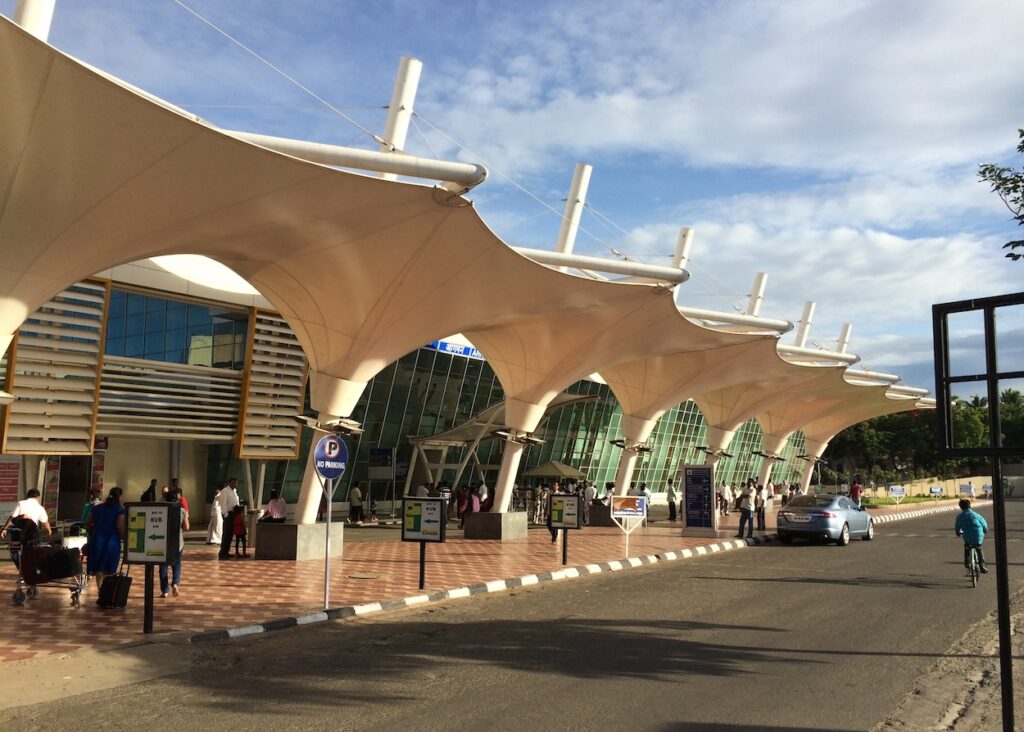
Tamil Nadu is in the thick of aviation action, illustrated in no small measure by the government’s eagerness to build an international airport in its industrial hub, Hosur. As the State has already begun location-scouting in the areas close to its Karnataka border, a multi-pronged approach to boost regional aviation across Tamil Nadu is now underway. An aviation boom of sorts awaits the State over the next five years.
The Hosur airport plan is part of a larger roadmap to enhance regional air connectivity and economic development, ensuring distributed growth. Airports in Coimbatore, Tiruchi, Madurai, Thoothukudi and Vellore are all set for substantial upgrades, as the focus is clearly on attracting trade, tourism and investment.
Hosur airport in six years
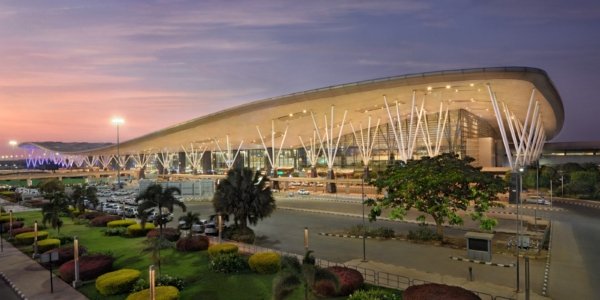
A greenfield airport in Hosur has a Bengaluru problem. It is within a radius of 150 km from Bengaluru’s Kempegowda International Airport (KIA) and thus comes into conflict with the airport operator BIAL’s Concessionaire agreement with governments that no such facility be allowed. But this agreement has a timeframe, and Tamil Nadu wants to start the process now to operationalise a new airport six to seven years from now.
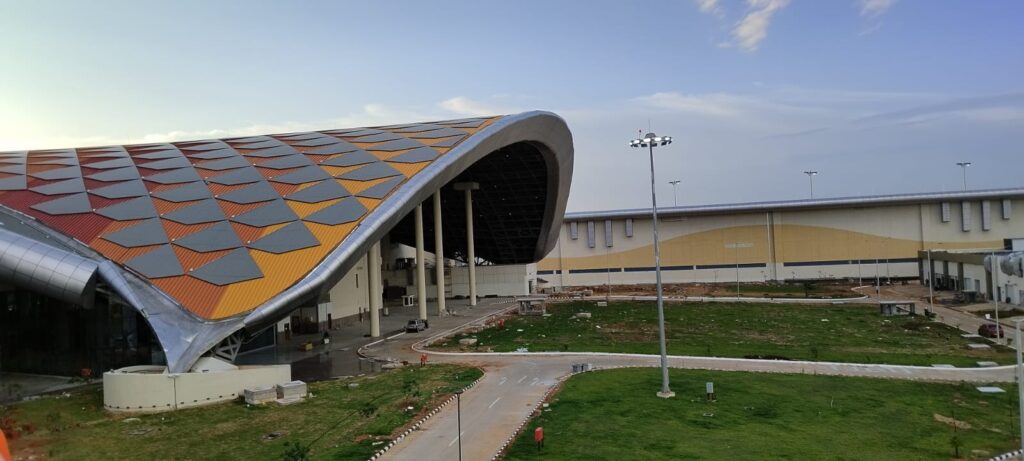
In June 2024, Tamil Nadu Chief Minister M K Stalin had announced that the airport would be built on nearly 2,000 acres of land with an annual capacity of 10 crore passengers. Besides catering to the huge industrial complex of electronics and electric vehicles in the Hosur region, the airport is expected to boost socio-economic development in the adjoining Krishnagiri and Dharmapuri districts.
The Airports Authority of India (AAI) had submitted reports to the government on the five locations identified for the airport. An industry watcher informs that the State will now shortlist two and undertake a detailed study before zeroing in on the final location.
The term of BIAL’s Concessionaire agreement will end in 2033. “Tamil Nadu wants to finalise the location and float tenders. After this process, it will take at least another six to seven years to operationalise the airport. This explains the government’s haste to kickstart the process now with a 2030-31 completion in mind,” the industry analyst explains.
To get around the 150km restriction, the government has been in constant touch with BIAL over the last six years. “Tamil Nadu has even suggested that BIAL could run the Hosur airport for two to three years. If they agree and issue a No Objection Certificate (NOC), then there would be no problem. As the analyst adds, “Even if they extend the agreement, it would be fine if BIAL is ready to run it as a second terminal. The government feels BIAL could also benefit from this arrangement.”
The emergence of the Jewar airport in Noida within 72 km of the existing Indira Gandhi International Airport (IGI) in Delhi is cited as a precedent. But more than passenger traffic, Hosur is seen as a lucrative option for freight traffic.
Coimbatore airport upgrade in progress
Elsewhere in Tamil Nadu, land acquisition had been a stumbling block for the expansion of many regional airports under AAI. This is now changing, with the government handing over acquired land for the expansion of the Coimbatore airport. Good progress has been made in land acquisition for the Tiruchi airport expansion as well. With the Madurai airport becoming operational 24 / 7 recently and the upgrade process making good progress in Thoothukudi, regional air travel is showing good promise.
For years, Coimbatore airport could not accommodate wide-body aircraft due to the restrictions posed by its runway, which is only 2,990m long and 45m wide. The availability of additional land now paves the way for runway expansion and larger turn pads that would help handle bigger airplanes. Also on the expansion agenda are a new terminal building, a new approach road and other related facilities.
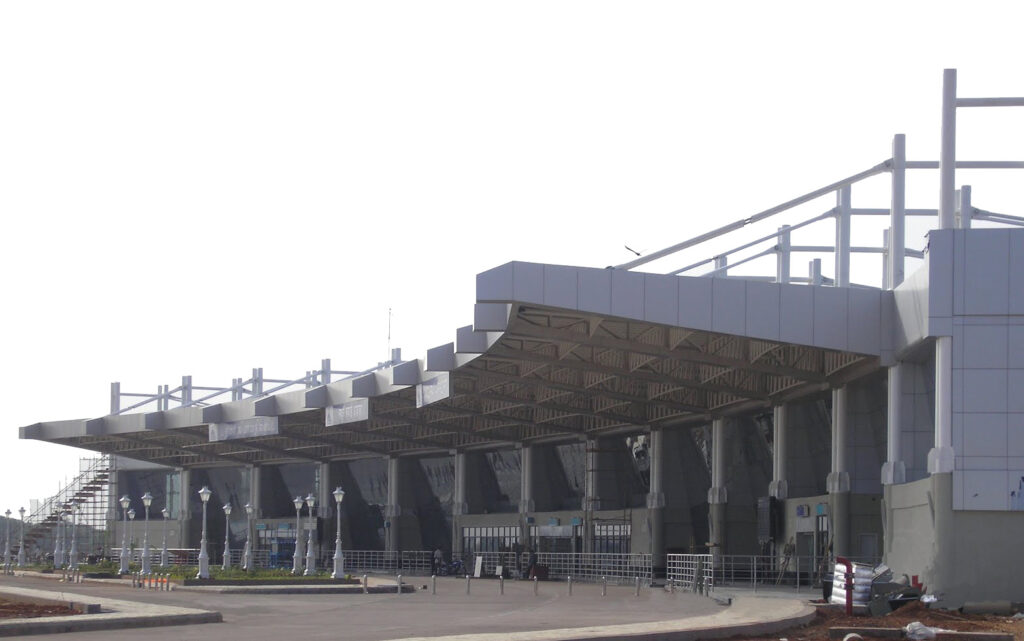
Second only to Chennai in passenger traffic, the Coimbatore airport currently operates 28 daily domestic flights to the State capital, Mumbai, Delhi, Bengaluru, Hyderabad, Pune and Goa. Among international flights are services to Abu Dhabi, Sharjah and Singapore. To boost international operations, a Coimbatore-based business form has urged the Ministry of Civil Aviation to include the city as a point of call in the ASEAN Bilateral Air Services Agreement.
Although the current passenger traffic stands at about 10,000 a day, this could change dramatically once the AAI starts working on the upgrade. In 2019, the Authority unveiled plans to build a new domestic departure terminal and a new integrated Air Traffic Control (ATC) and administrative building. Addition of three aero bridges and parking facility for 100 cars were part of the project agenda. With the Centre in 2022 December announcing plans to invest Rs 20 billion to modernise the airport, it is expected that the annual passenger capacity would eventually shoot to 15 million.
Madurai’s wait for ‘international airport’ tag
Awaiting an ‘international’ status for years, the Madurai airport recently got an upgrade for 24/7 flight operations. With this, the number of flights taking off round-the-clock is expected to increase drastically. Since the airport is already connected to Singapore, Colombo and Dubai, the upgrade could give it a push towards getting the coveted ‘international’ tag. On the domestic front, the airport’s network will soon include Pune and Varanasi.
The last big upgrade was in September 2010, when the airport’s new terminal was inaugurated with a capacity to handle 250 each on arrival and departure. To expand the runway to 3,800m enabling the airport to accommodate large jet aircraft, a total of 633.17 acres of land is now being acquired. Of this, 543.64 acres have already been reportedly handed over.
So far, the international flights from Madurai have been operated by Indian carriers IndiGo and Air India, with the only exception being the Sri Lankan airline service to Colombo. No foreign carriers are allowed to land at the airport. Those closely connected with the region’s aviation dynamics point fingers at the Tiruchi lobby. Barely 130 kms from Madurai, the Tiruchi international airport traffic could be hit if Madurai gains international status.
Currently, passengers from 10 South Tamil Nadu districts depend on Madurai airport only for their trips to Malaysia, Singapore and the Gulf. Tiruchirapalli is their transit point while heading out to other global destinations.
Busy Tiruchi airport, on upgrade mode
Catering to the aviation needs of Central Tamil Nadu, the Tiruchirapalli/Tiruchi airport too is on upgrade mode. In January 2024, the airport infrastructure got a big boost with the inauguration of a new integrated passenger terminal capable of handling 4.5 million passengers per annum. It has a peak-hour handling capacity of 3,480 passengers.
The runway was extended from 1,800m (6,000ft) to 2,480m (8,136ft) in the first phase. In 2010-11, the AAI had proposed to extend the runway length to 12,000ft, which would help bigger and wide-body aircraft to land. The Airports Authority had sought about 500 acres of land. Pending for over a decade, the land acquisition process is now nearing completion.
Besides the recently launched terminal, a new Air Traffic Control tower at the airport is likely to turn fully operational in 2025. The rising passenger traffic is a big factor going in its favour. The airport handled about 7 lakh international passengers between April and September 2024, accounting for a 10% growth during the same period in 2023. Domestic passenger traffic also grew by a substantial 41.7% over the corresponding six months last year.
New terminal for Thoothukudi airport
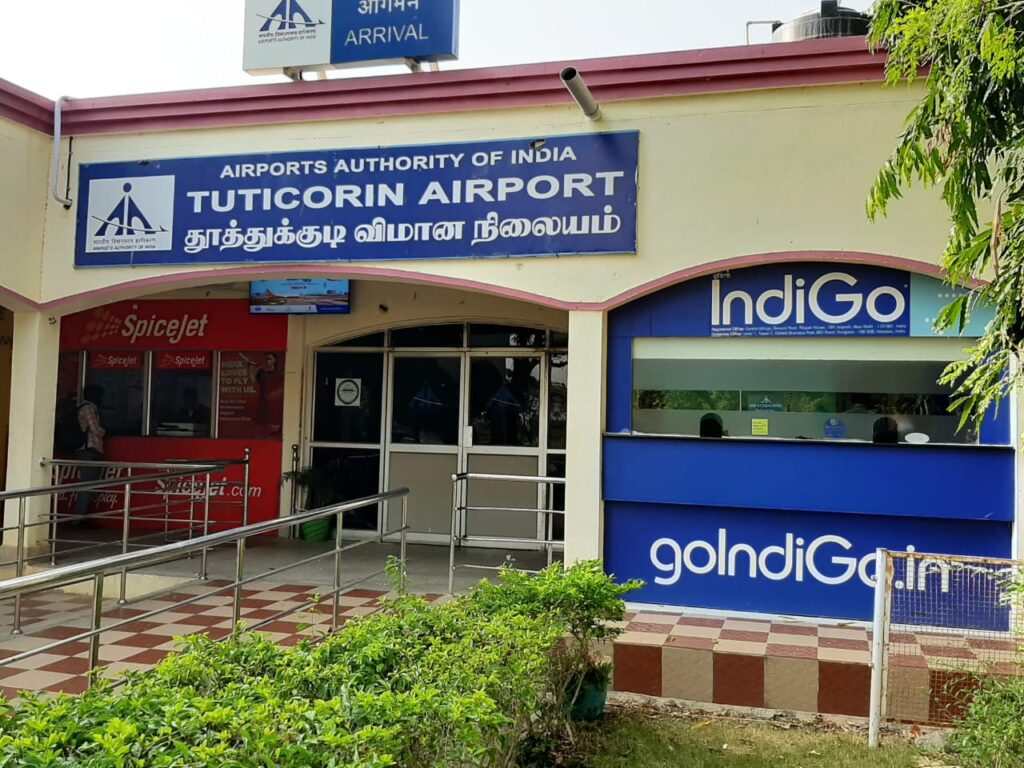
The upgrade button has been pressed for the Thoothukudi (Tuticorin) airport as well. Serving Thoothukudi, Tirunelveli, Tenkasi and Kanniyakumari districts, the airport is the fifth busiest in Tamil Nadu after Chennai, Coimbatore, Tiruchi and Madurai. As part of the Rs 312 crore modernisation, a new terminal is nearing completion. An upgraded Air Traffic Control tower is expected to be commissioned in the first half of 2025.
Although the airport only caters to domestic passengers, demands are growing to modify the terminal building to handle international travellers in the future. The new terminal is designed with four entry points and 21 passenger check-in counters. The airport will soon be equipped with three aero-bridges. Upgrading it to an international airport will help passengers from Tamil Nadu’s Southern districts bound for Singapore and the Gulf countries.
Chennai’s second international airport
Beyond upgrades, Tamil Nadu’s aviation dynamics could see a dramatic shift if the proposal for a second airport in Chennai at Parandur gets the ‘in-principle’ approval, expected in February 2025. The Rs 20,000-crore greenfield international airport is proposed to be built on 4,970 acres of land at a location 57 km away from the existing airport. Parandur is in Kanchipuram district, barely 70 km from Chennai city.
Led by the Tamil Nadu Industrial Development Corporation (TIDCO), the airport project is expected to boost trade from Chennai and its neighbouring districts. A dedicated cargo terminal is proposed to be a key feature of the airport. While land acquisition is progressing, the Union Forest and Environment Ministry has reportedly granted approval to undertake an environmental impact assessment.
But the project has been facing severe protests from local villagers and environmentalists. They contend that it would trigger loss of water bodies, including three lakes and ponds, agricultural land and several residential localities.
However, the Tamil Nadu government is pushing for the airport in a big way since. Located along the upcoming Chennai-Bengaluru Expressway, the airport will also feature an Aero City. An aviation analyst closely following the project progress has this update: “They have just got the site clearance, and once they start building it by 2026, the airport will be ready in another six years. The airport will be a game-changer for the State.”
Chennai, once considered a transit hub for flights to South East Asia, had lost this stature after the emergence of greenfield airports in Bengaluru and Hyderabad. Tamil Nadu is keen to take this back with a flashy new airport in Parandur. “Singapore and Malaysia are only 3.5 hours from Chennai. Thailand is about 2 hours and 45 minutes away. The entire South East Asia can be reached within four hours. This is what is being planned and pushed with this two-runway airport,” the analyst informs.
To fill connectivity gaps, the airport plan integrates suburban railway and Metro linkages with Chennai. The Expressway will also aid big cargo transfers.
Expanding airstrips in Vellore, Thanjavur
Apart from these big ticket projects, Tamil Nadu is also toying with proposals to upgrade the airfields / small airports in Vellore and Thanjavur. Revived under the Regional Connectivity Scheme of the Civil Aviation Ministry in 2018, the Vellore airport project has seen ups and downs. Expansion of the airstrip, a terminal building and other amenities suitable for operation of 20-seater aircraft are part of the upgrade agenda.
Spanning over 97 acres, the Vellore airport has an 850m runway. Upgrading and operationalising the airport is expected to give a big boost for development of the surrounding areas such as Ambur, Vaniyambadi, Gudiyatham, Ranipet and Chittoor. However, aviation experts say if the Tamil Nadu government shifts its focus on an international airport in Hosur, Vellore might lose priority.
Last year, the development of Thanjavur airport was put on the fast track with the AAI planning to invest about Rs 200 crore to build a domestic terminal and other facilities. Owned and operated by the Indian Air Force (IAF), the airport has two runways. Following a Memorandum of Understanding in December, 2022, the IAF had handed over 56.16 acres of the land to AAI, which owned 26.5 acres. With an estimated investment of Rs 200 crore, the completion of the airport project was a year away.
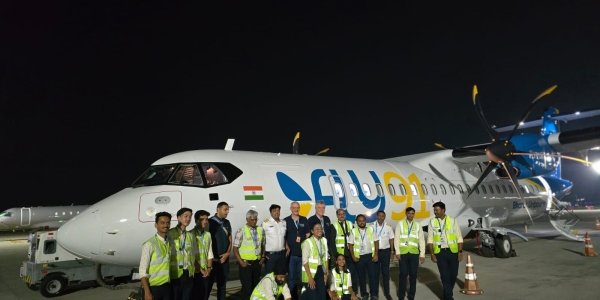
Salem is another airport project in the pipeline. Currently operational for daytime flights under Visual Flight Rules (VFR), the airport can handle ATR-72 type aircraft. Accommodating larger aircraft, the airport would need upgraded operational capabilities. Expansion of this airport was a topic of discussion in the Lok Sabha in November 2024. An upgrade is expected to drive economic growth in the region.
In the final analysis, with a major greenfield international airport in Parandur in the works, upgrade of several regional airports nearing completion and development of airstrips into small airports, Tamil Nadu is on the cusp of an aviation boom of sorts. Industry, business, trade, tourism and connectivity are all coming together to drive this State-wide expansion. The big picture is expected to become much clearer over the next three to five years.