













- India’s airports are setting new global benchmarks with advanced digitalisation and eco-friendly initiatives, driven by rapid air travel growth and private sector investments.
- With major hubs like Delhi, Bangalore, and Hyderabad leading the charge, Indian airports are expanding capacity, enhancing passenger experience, and pioneering sustainability efforts.

India’s world class airports are today leading the way when it comes to airport digitalisation and eco-friendly initiatives. This is a dramatic shift from the decades past and has been aided by booming domestic and international air travel. Indian airports operated by private entities also continue to invest heavily in improving the passenger experience with biometric boarding systems, Common Usage Self Service (CUSS) and Self Baggage Drop (SBD) kiosks. The new Biometric Boarding Systems have simplified check-in, security, and boarding processes, providing a seamless and paperless experience. This shift towards digitalisation of airport services is aiding higher passenger throughput what are increasingly turning into regional air travel hubs.
India is a key driver for civil aviation in the Asia-pacific region, which is home to some of the fastest-growing aviation markets in the world. By 2035, the region is expected to account for over 40% of global air traffic, with nearly 3.5 billion passengers travelling annually, and airports will play a key role in the growth of air travel in India. The number of operational airports in the country has doubled from 74 in 2014 to 157 in 2024, with the Ministry of Civil Aviation (MoCA) aiming to increase this number to 350-400 by 2047. The growing eco-friendly credentials of Indian airports is also in evidence with airports like Delhi, Mumbai, Hyderabad, and Bengaluru having achieved Level 4+ as well as higher Airports International Council (ACI) Accreditation and are Carbon neutral.
Delhi Airport in Growth Mode
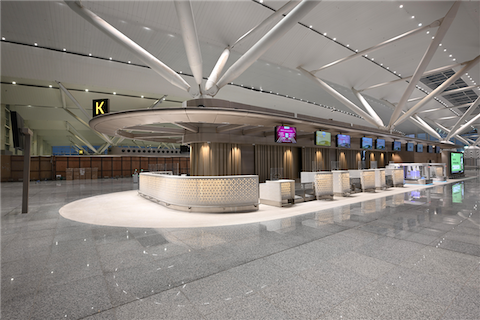
GMR-run Delhi Airport’s state-of-the-art new Terminal 1 became operational in August this year. The new T1 will reduce pressure from T2 and T3 at Delhi Airport, which is the busiest airport in the country. The new terminal was developed as part of the Phase 3A expansion project by DIAL and inaugurated by Prime Minister Shri Narendra Modi this year in March. IndiGo & SpiceJet moved a significant part of their operations to New T1 in September and August, respectively. “Delhi Airport is glad to announce the operationalisation of new Terminal 1 from August 17, 2024. The state-of-the-art Terminal 1 will significantly boost our capacity, easing pressure on Terminals 2 and 3. Passengers can expect a smoother travel experience with improved amenities and advanced technology,” said Videh Kumar Jaipuriar, CEO-DIAL.
The largest private airport operator in Asia, GMR Airports Infrastructure Limited (GIL) is the second-largest globally and served over 121 million passengers in FY24. GIL operates key gateways such as Delhi, Hyderabad, Goa and Medan airports, while offering its technical services to Mactan Cebu International Airport in the Philippines. GIL is also developing transformative projects like the greenfield airports in Bhogapuram (Visakhapatnam) and Crete, Greece. Delhi International Airport Limited (DIAL), a subsidiary of GMR Airport Infrastructure Limited (DIAL), began work on the expansion of Indira Gandhi International Airport (IGIA) in 2019.
Serving approximately 70 million passengers annually as India’s biggest airport, Delhi Airport will soon become one of the largest airports in the world serving 109 million passengers per year. Delhi Airport has become India’s only airport to have four operational runways. The 4.4- kilometre-long runway, parallel to the third runway (11/29) on the Southern side, is an integral part of the Phase 3A expansion project. DIAL has introduced an innovative Mobile Check-in Service at the new terminal. In addition to Automated Tray Retrieval System (ATRS), Individual Carrier System (ICS), Common Usage Self Service (CUSS), Aerobridges and check-in counters, including Self Baggage Drop (SBD) kiosks. The redesigned apron features a dual taxiway for improved air traffic flow, faster aircraft turnaround, and enhanced safety. Technological upgrades like VDGS, FHS, GPU, and PCA also contribute to efficiency and safety in aircraft handling.

“Delhi Airport is glad to announce the operationalisation of new Terminal 1 from August 17, 2024. The state-of-the-art Terminal 1 will significantly boost our capacity, easing pressure on Terminals 2 and 3. Passengers can expect a smoother travel experience with improved amenities and advanced technology,” said Videh Kumar Jaipuriar, CEO-DIAL.
This August, DIAL announced that IGIA had become the 1st airport in Asia to successfully achieve Net Zero Carbon Emission Airport status (Level 5 certification) under the Airport Council International’s Airport Carbon Accreditation (ACA) programme. The airport had initially set an ambitious goal to become a “Net Zero Carbon Emission Airport” by 2030. “Reducing carbon emissions from airport operations has been a key focus for us at IGIA. Achieving carbon-neutral status in 2016 and Level 4+ transition accreditation in 2020 was just the beginning. Now, with the attainment of Level 5 net zero emission accreditation in 2024, we have once again demonstrated our commitment to continual improvement and sustainability. As we face the challenges of climate change, we are committed to further reducing our carbon footprint and exploring sustainable aviation fuel options to address Scope 3 emissions. Achieving ACI’s Level 5 certification well before our target date is a testament to our dedication to sustainability and innovation,” said Jaipuriar.
By achieving Level 5 certification, Delhi Airport has demonstrated significant progress in reducing its Scope 1 and 2 CO2 emissions by 90 per cent. DIAL is the first airport globally to adopt and certify an ISO 50001:2018 Energy Management System, leading to reduced fuel and electricity consumption over the years. DIAL has also adopted Electric Vehicles (EV) and TaxiBots, which have significantly reduced fuel consumption and emissions during aircraft taxiing operations. The new Eastern Cross Taxi Way has reduced taxiing time, improved efficiency, and cut CO2 emissions by approximately 55,000 tonnes annually, which is the equivalent of planting about 15 lakh trees. The Airport Collaborative Decision Making (A-CDM) system has enhanced air traffic flow and reduced fuel consumption and emissions, contributing to overall operational efficiency.
The airport currently operates entirely on renewable energy, eliminating approximately 200,000 tonnes of CO2 annually, supported by a 7.84 MW solar power plant within the airport’s airside. Delhi Airport is also on track to achieve water-positive status with over 350 rainwater harvesting systems and a zero liquid discharge sewage treatment plant.
BLR Airport Forging Ahead
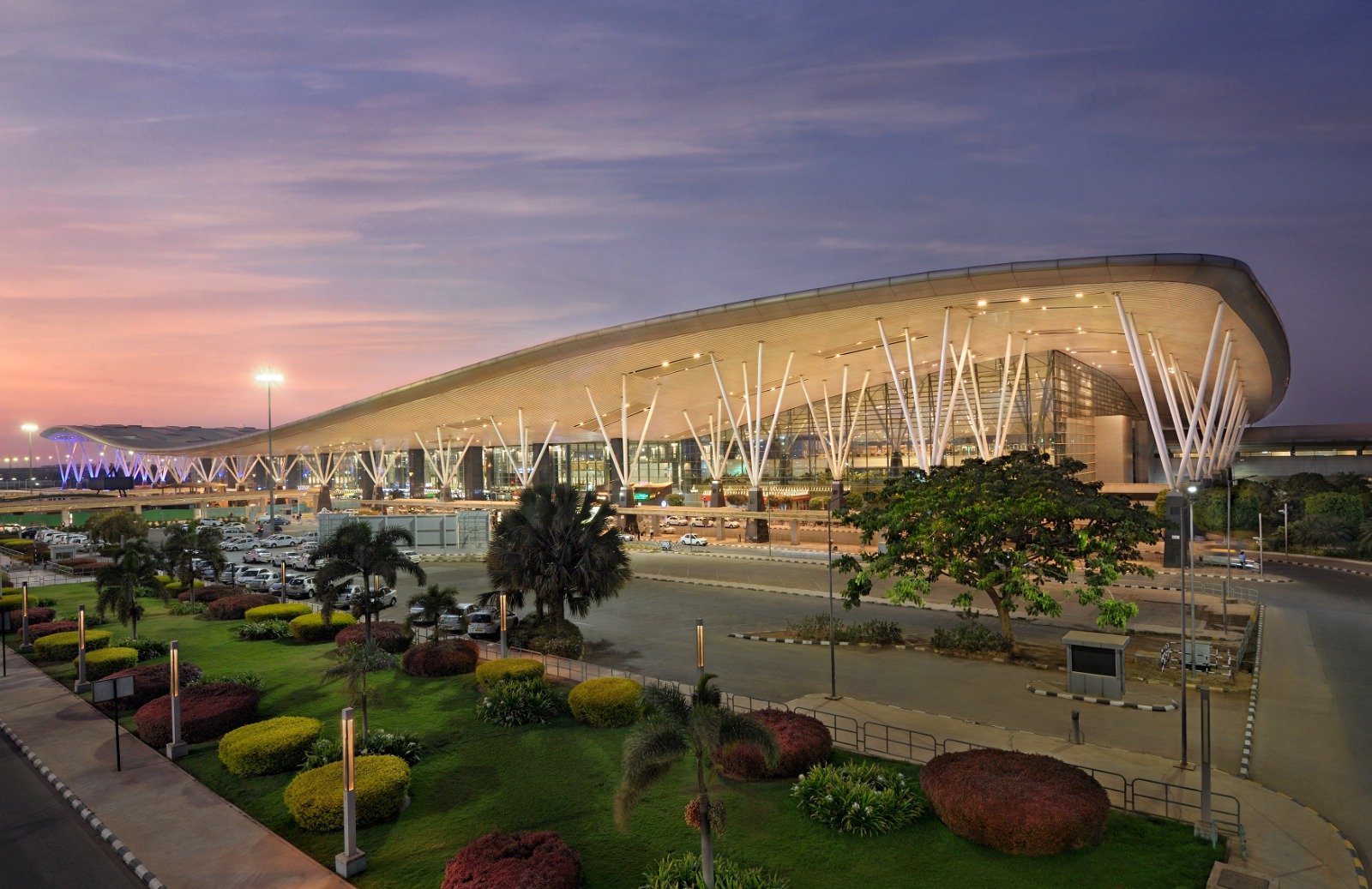
Kempegowda International Airport Bengaluru (KIAB/BLR Airport), operated by Bangalore International Airport Limited (BIAL), continues to be one of the trendsetters among Indian airports. BLR Airport witnessed its highest-ever annual passenger traffic and cargo numbers during FY 2023-2024, with a total of 37.53 million passengers traversing through its terminals and 439,524 metric tonnes (MT) of cargo passing through the airport. The airport catered to 32.86 million domestic passengers and 4.67 million international passengers during this period. The airport has emerged as the pre-eminent gateway in South India with the surge in travel demand this year. BLR Airport now connects, connecting travellers to a total of 108 destinations (80 domestic and 28 international). The Air Traffic Movements (ATM) for FY 24 stood at a total of 245,880 ATMs, with domestic ATMs increasing by 10% while international growth stood at 13% as compared to the previous financial year.

BLR Airport has significantly increased its passenger capacity in the last one year to ensure smooth passenger flow with increased number of entry gates, check-in counters, and informative display boards. International operations have been moved from Terminal 1 (T1) to the new Terminal 2 (T2) which is equipped to handle 25 million passengers annually. To ensure a smooth and efficient passenger experience, T2 has operationalised facial recognition for contactless boarding with Digi Yatra and installed self-baggage drop systems. The Automated Tray Retrieval System (ATRS) further streamlines baggage screening, enhancing overall efficiency.
This August, BLR Airport became the first airport in Asia to receive ACI’s highest Level 5 accreditation. Hari Marar, Managing Director and CEO of Bangalore International Airport Limited said, “We are delighted to be the first airport in Asia to attain ACI’s Level 5 accreditation and to lead the way with the highest emission elimination by an Indian airport. Achieving Net Zero Greenhouse Gas Emissions seven years ahead of our target is a testament to BLR Airport’s unwavering commitment to sustainability. This accomplishment not only sets a new benchmark for us but also reinforces our dedication to creating a greener future for all.” The T2 terminal was pre-certified with a Platinum LEED rating by USGBC and the IGBC Green New Building Platinum certification, becoming the largest terminal in the world to achieve these prestigious distinctions.
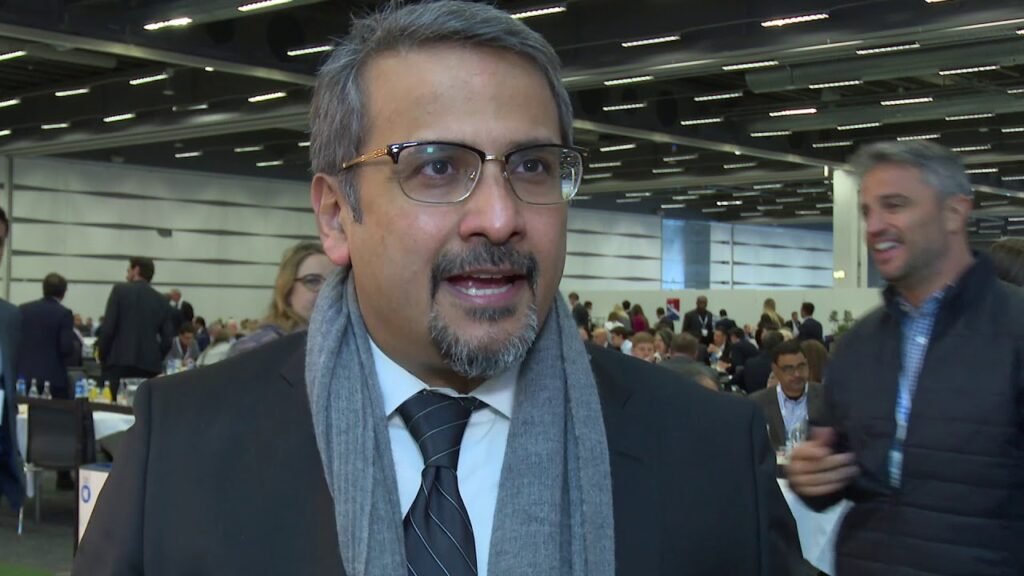
“We are delighted to be the first airport in Asia to attain ACI’s Level 5 accreditation and to lead the way with the highest emission elimination by an Indian airport. Achieving Net Zero Greenhouse Gas Emissions seven years ahead of our target is a testament to BLR Airport’s unwavering commitment to sustainability. This accomplishment not only sets a new benchmark for us but also reinforces our dedication to creating a greener future for all,” said Hari Marar, Managing Director and CEO of Bangalore International Airport Limited
BLR Airport has made a remarkable 95.6% reduction in Scope 1 and 2 Greenhouse Gas (GHG) emissions, attaining the highest emission elimination by an Indian airport, achieved seven years ahead of the initial target of 2030. The airport is aiming to attain Net Zero GHG emissions by 2050, encompassing Scope 3 emissions. The airport has made significant strides in its decarbonisation journey and set new benchmarks by transitioning to 100% renewable electricity and implementing initiatives focusing on sustainable mobility and green infrastructure. To offset its residual emissions, BLR Airport has procured Airports Council International (ACI) approved carbon units from verified carbon removal projects. BLR Airport is water-positive, it regenerates more water than it consumes.
RGIA Growing in Stature
Rajiv Gandhi International Airport (RGIA) at Hyderabad, which is managed by GMR Hyderabad International Airport (GHIAL, has also been accelerating passenger friendly initiatives and burnishing its eco-friendly credentials. It recently announced the launch of a city-side self-check-in facility, which enables passengers to check in, drop off their baggage, and obtain their boarding passes before entering the terminal building. “We are excited to introduce the city side check-in facility to the passengers. We are always looking for innovative solutions to make the airport experiential. This feature of the airport offers that experience to our passengers. It is a significant step toward alleviating congestion within the terminal building and offering passengers a more relaxed, efficient, and stress-free start to their journeys,” said SGK Kishore, ED – South & Chief Innovation Officer, GMR Airports.
Passengers can use self-check in kiosks, stay informed with flight information display systems, and drop their baggage at the self-baggage drop counters. Passengers can use self- check-in kiosk boarding cards in conjunction with their Aadhar ID at the entry gate, offering added convenience and security. The city-side check-in service is available for regular-sized baggage only. In April this year, Hyderabad Airport emerged as the number one airport among all participating airports in India and South Asia and GHIAL won the prestigious ‘Best Airport Staff in India & South Asia 2024’ award by Skytrax. Earlier in March, Hyderabad Airport was awarded the Airport Service Quality (ASQ) Award for ‘Best Airport in the 15 to 25 Million Passengers Per Annum (MPPA)’ in the Asia-Pacific region for 2023.
This September, GHIAL received the “National Energy Leader” accolade for the sixth consecutive year and the “Excellent Energy Efficient Unit” distinction for the eighth time. Over the years, the airport operations have resulted in significant energy savings of around 1.82 million units (MU). Pradeep Panicker, CEO, GMR Hyderabad International Airport Ltd., said, “RGIA has been at the forefront of adopting energy-efficient practices ever since it started operations. We are committed to achieving Net Zero by investing in energy-efficient technologies across our organisation. This dedication reflects our goal to promote sustainable practices and reduce our carbon footprint. By prioritising energy efficiency, we aim to lead by example and foster a culture of sustainability, aligning economic growth with ecological responsibility.” RGIA harnesses the power of green energy through a combination of its own 10 MWp (megawatt peak) solar power plant and green energy supplied by TGSPDCL.
Moving Ahead
Indian airports are now comparable to the best in the world and, in many cases, outshine some of the best airports in the world with their amenities and services. The airports in Delhi, Bangalore and Hyderabad are the cynosure of all eyes and are vital to the continued growth of India’s fast growing commercial aviation industry. At the same time, the entire aviation industry is focused on sustainability and is here that the rising adoption in the digitalisation of airport services that is coming to the fore. Indian airports are also some of the most eco-friendly anywhere in the world, and this is another feather in their cap. Continued investment in airport infrastructure is vital for these airports to keep up with the pace of the growth of commercial aviation in India.