










- India’s surging air traffic is driving the urgent need for modernised airspace and air traffic management systems across the country.
- The Airports Authority of India is deploying advanced ATM automation and indigenous technologies to enhance safety, efficiency, and capacity in line with growing aviation demands.
India is amongst the fastest-growing aviation markets globally and this is likely to continue for the foreseeable future. Indian civil aviation has bounced back from the difficulties it faced during the COVID-19 pandemic and domestic traffic recovered by 98 per cent in FY23, while international traffic in the same year recovered to 86 per cent of pre-COVID levels. In FY24, domestic air passenger traffic grew by 13 per cent from the previous year to 30.6 crores, and international air passenger traffic grew by 22 per cent to 7 crores.
As per the Airports Authority of India (AAI), the traffic handled at all Indian airports taken together during the year 2023-24 saw an increase as compared to the previous year in all three areas namely aircraft movements, passenger and freight handled. The total aircraft movement, passenger and freight traffic have increased by 6.7 per cent, 15.0 per cent and 7.0 per cent respectively during the year. The growth of air traffic in India, makes the modernisation of its airspace control imperative to enhance safety, and efficiency and increase airport and airspace capacity.
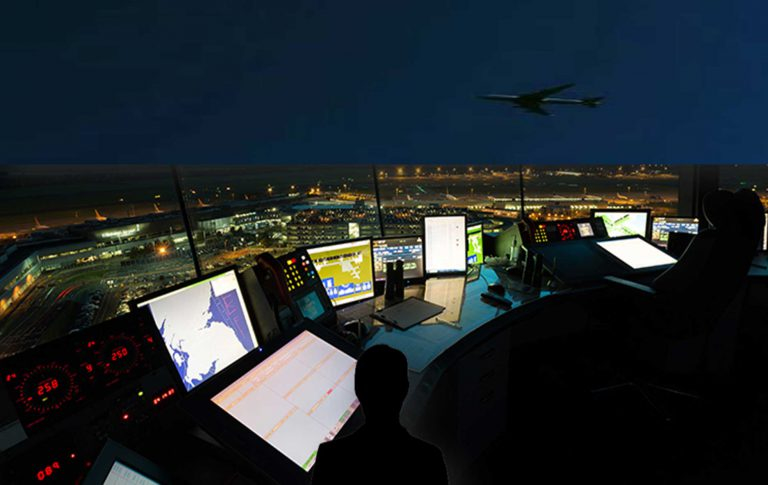
Towards this goal, the AAI has been modernising Air Traffic Management (ATM) systems in the country by investing in State-of-the-art ATM automation systems, surveillance, communication and navigation systems. AAI is taking massive steps to install ATM automation at all medium and major Air Traffic Control (ATC) Centers to ensure enhanced safety and operational efficiency to cater for the growing air traffic in India. ATM automation systems provide air traffic controllers with conflict prediction/alert warnings and decision-making tools, enabling safer and more efficient Air Traffic Control. AAI provides ATM services over the entire Indian air space and adjoining oceanic areas covering 2.8 million sq. NM.
In Growth Mode
At present, the AAI is overseeing a network of 134 airports across India, including 26 international, 12 customs, and 96 domestic airports. Current projections by the Ministry of Civil Aviation call for India to have 350 airports by 2047. The AAI had announced a capital expenditure plan of over INR 26,000 crore for the period FY20 to FY25 to develop, upgrade and modernise airports to meet international standards. The AAI has already spent approximately INR 23,000 crore between FY20 to FY24, while PPP and other airport operators have spent around INR 49,000 crore during the same period, taking the total capital expenditure to approximately INR 72,000 crore in the airport sector over the last five years.
AAI has invested INR 5,335 Crore in capital expenditures in 2023- 24 to enhance airport services and technology, improving operational efficiency. It is also developing greenfield airports and modernising its existing airports and reviving airports under the Regional Connectivity Scheme (RCS). Since the launch of the RCS initiative over 600 routes have been launched connecting 88 airports.
Airspace Modernisation
AAI provides ANS infrastructure such as Air Traffic Services (ATS) Automation Systems at the airports, Surveillance Systems (RADAR/MLAT/ADS-B/SB-ADS-B), Communication equipment, and Navigational Aids like Instrument Landing Systems (ILS), DVOR/DME. Presently, It has over 44 ATM automation systems in service at different airports, in addition to one Centralised Air Traffic Flow Management Centre in Delhi, more than 48 surveillance radars and over 22 ADS-B sensors spread across the Indian subcontinent. More than 11 Airports are equipped with Advanced-Surface Movement Guidance And Control System (ASMGCS) for surface movement monitoring and guidance. There are over 64 CAT-I, one CAT-II and nine CAT-III ILS systems in operation at various airports. AAI also provides trained ANS manpower for Indian airspace via its three Civil Aviation Training Institutes at Prayagraj, Hyderabad and Gondia.

Since 2022, the AAI has been creating telecom infrastructure with the help of Managed Service Provider (MSP) on the Build, Own & Operate (BOO) model, which will last for 15 years. This is a step towards achieving radar integration, and sectorisation for air space harmonisation. Apart from this, to improve operational efficiency, AAI has undertaken measures such as Flexible use of Airspace (FUA), Airport Collaborative decision-making (A-CDM), Central Air Traffic Flow Management (C-ATFM), Departure slot management (DSM), Performance Based Navigation (PBN) and Continuous Decent Operations (CDO) are under various stages of implementation.
A start-up project by SatSure Analytics India, Bengaluru called Indian National Electronic Repository for Aviation (iNetra) has been selected by AAI for meeting its goal of transitioning from AIS to AIM. The project aimed at end-to-end data workflow for electronic – Aeronautical Information Publication (eAIP) from the point of origination to the AIS data entry point to minimise human intervention in its creation process. AAI has also awarded a contract for the upgradation of the AIS – AIM Automation system at its CHQ. As per the AAI, the upgraded system will significantly improve productivity for Flight Plan Design (FPD), Air Space Management (ASM), Aeronautical Information Services (AIS) and EMACS users.
AAI has also achieved a cumulative reduction between August 2020 to March 2024 in carbon emissions of approximately 1,56,034 tonnes of CO2, resulting in savings of approximately INR 724 crore on ATF expenses. This is the result of the implementation in of Flexible Use of Airspace (FUA). In the past, approximately 40 per cent of India’s airspace was not available for civilian use. As a result, commercial aircraft often had to adopt circuitous routes to reach their destinations.
A commercial jetliner on average consumes 2000kg of fuel per hour, hence a 60-minute circling time would end up costing the airline approximately INR 2.5 lakh in fuel costs, while a 40-minute circling time would cost approximately INR 1.8 lakh. With recent changes, the Air Force controlled 30% of national airspace has released 30% of that as upper airspace under FUA. An additional 129 Conditional Routes (CDR) have also been promulgated since the implementation of FUA in consultation and coordination with the Indian Air Force and Ministry of Defence.
Centralised Air Traffic Surveillance
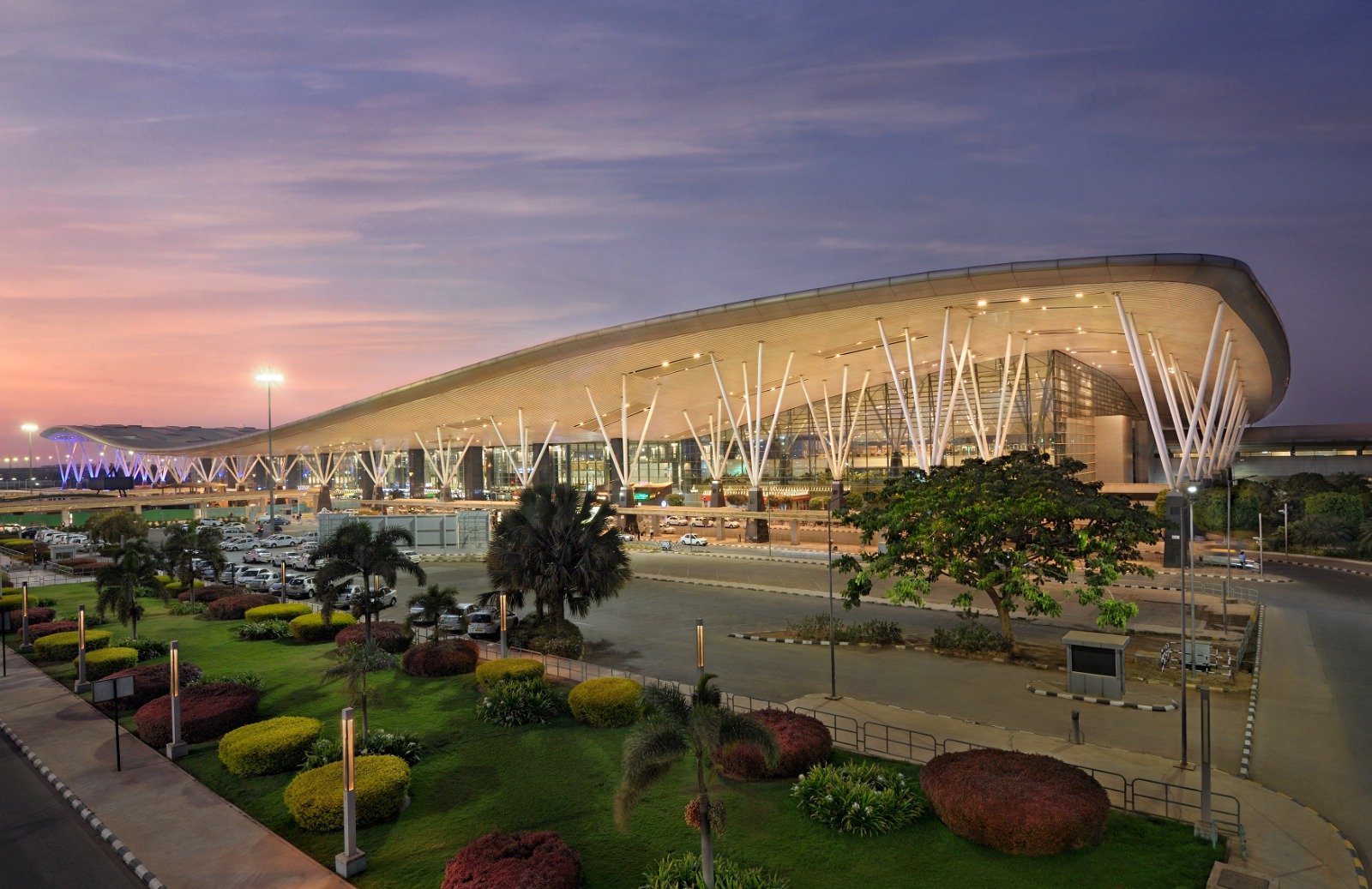
In a major milestone in enhancing the capacity of Indian airspace, in March 2023, the AAI awarded Indra and its local partners a contract worth over 55 million euros to deploy its pioneering solutions at five of the country’s main air traffic control centres and airports in Mumbai, Hyderabad, Bangalore, Navi Mumbai and Mopa. When fully deployed air traffic controllers at these five centers will be able to manage traffic far more efficiently and control a greater volume of traffic in less time with high degrees of safety, efficiency and cost-effectiveness. It will also reduce the average flight time and delays, given that the solution calculates the exact position of each aircraft throughout all of the stages of the flight to detect any conflicts and provide alternatives well in advance.
Indra is now deploying this integrated system that will centralise all the phases of air traffic surveillance and control in India. This will deliver substantial benefits related to enhanced flight safety, increased management capacity and efficiency and reduced delays, emissions and noise pollution. Indra’s solution will perform the automated air traffic management and tracking of civilian aircraft from the moment they leave their parking stands and begin to move through the departure airport until they land and arrive at their parking stands at their destinations. Its air traffic management system will receive and process data from India’s upper airspace surveillance radar network and will be fully integrated into the management of the lower airspace, tower, sensors and surface radars of the airport, enabling it to see whatever is happening on the airport approach, apron, runways and taxiways.

Indra is the leading supplier of air traffic systems in India and has already modernised several of AAI’s main control centres including those in Delhi and Kolkata, as well as 38 towers spread around the country. Indra has also deployed a radar network that provides surveillance of 80 per cent of the country’s airspace. It has also supplied several dozen landing assistance systems to Indian airports and four approach and tower simulators for training centres set up at the air traffic control centres in Calcutta, Delhi, Mumbai and Chennai.
Partnerships for Growth
In March 2022, Boeing announced that it had completed a project with the AAI to develop a comprehensive 10-year Communication, Navigation and Surveillance/Air Traffic Management (CNS/ATM) modernisation roadmap, undertaken with a grant from the U.S. Trade and Development Agency (USTDA).
L3 Harris was awarded a 15-year contract by AAI worth INR 945 crores in May 2018 for the Futuristic Telecommunications Infrastructure initiative. L3 Harris (then known as Harris Corporation) is the prime contractor and systems integrator for the initiative which has upgraded network operations, enhanced security, and improved the performance, reliability and quality of India’s ATM’s communications network while reducing telecommunications costs. The FTI Project has introduced SLA-based telecommunication links at each AAI location and their performance is continuously monitored at the Network Operation Control Centres (NOCC) in Delhi and Bangalore. There are also Security Operation Control Centres (SOCC) in Delhi and Bangalore to protect the network from cyber threats.
In January 2019, the AAI and Saab entered into a Memorandum of Understanding (MoU) to research a pan-Indian Air Traffic Management Automation System for airports under the UDAN Regional Connectivity Scheme. Saab’s ATM solutions are presently deployed in Ahmedabad, Amritsar, Guwahati, Jaipur, Lucknow, Chennai, Kolkata, Mumbai, New Delhi, Cochin and Bhubaneshwar. All of these airports have Saab’s A-SMGCS software and a combination of other products such as SR-3 Surface Movement Radars (SMR) and Multilateration (MLATS) solutions. The A3000 A-SMGCS fuses multilateration and SMR surveillance data providing air traffic controllers with precise surveillance of the airport’s runways and taxiways, along with the identification of aircraft.
Indigenous Drive
In October 2023, the AAI and BEL celebrated the success of the Project “Development of Indigenous ATM Automation System and integration of Advanced-Surface Movement Guidance And Control System (ASMGCS) with ATMAS” at Bhubaneswar Airport. This is India’s first indigenously developed ATMS Automation system and it was jointly developed by BEL & AAI. BEL installed the system free of cost at Bhubaneshwar Airport. As per a BEL spokesperson, ‘the new ATMS will reduce AAI’s foreign dependency for procurement of ANS infrastructure, thereby saving a large amount of foreign exchange outlay.’
It was in March 2022, under its R&D initiative, that the AAI agreed with Bharat Electronics Limited (BEL) for the joint, indigenous development of systems for air traffic management and surface movement of aircraft at airports in the country. Prior to this, these equipment were imported. An ATMS combined with ASMGCS provides the air traffic controller with the complete air traffic picture of the coverage area.
The indigenously developed system comprises multiple, in-house developed technologies, such as Situation Display for Air traffic controllers, Surveillance Data Processing (SDP), Flight Data Processing (FDP), Safety Net and Decision Support (SNET), Control & Monitoring Display (CMD), Advanced ASMGCS, etc. ASMGCS provides routing, guidance and surveillance services to aircraft and vehicles, on the ground, to maintain safe surface movement in all weather conditions at the airport.
Safe Skies
Burgeoning air travel in India has also resulted in record jetliner orders by Indian carriers, which will result in well over 1,000 jetliners in commercial service in the next decade. This makes the safe and efficient management of Indian airspace, essential for the continued growth of the civil aviation sector. At the present moment, the AAI provides ATM services over the entire Indian air space and adjoining oceanic areas have invested in the continuous modernisation of Indian ATM/ATC facilities. However, it will need to ensure continued investments in the modernisation, training, operations and maintenance of the infrastructure to keep up with the rapid growth in air travel.