







- A new era of business jet interiors is taking shape, blending luxury with cutting-edge sustainable materials and design innovation.
- As business aviation evolves, manufacturers and designers are reimagining cabin comfort with eco-friendly upgrades and smarter, cost-efficient solutions.
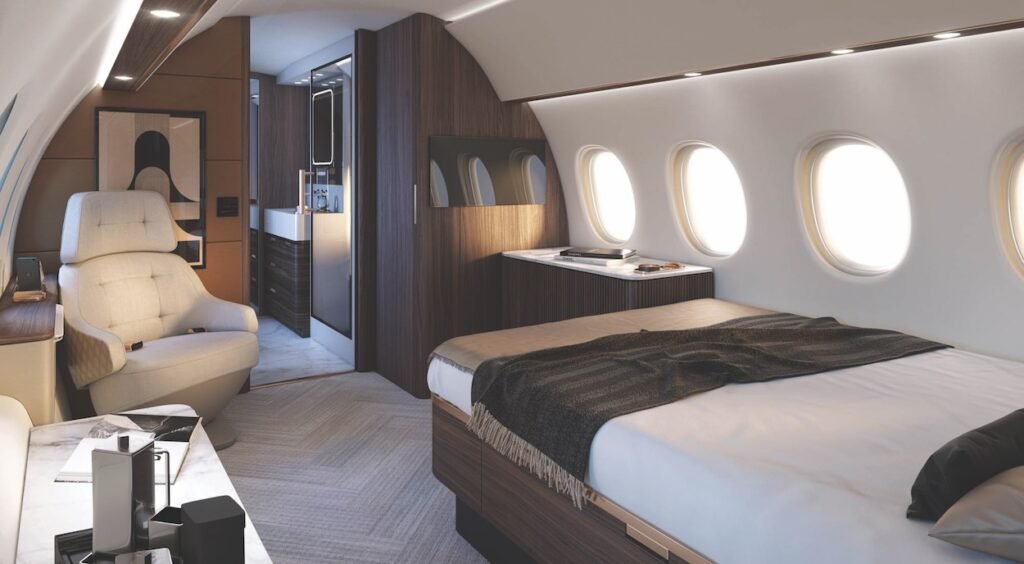
Business jets which are the preserve of the wealthy have always been known for their upscale and luxurious interiors. Business jet OEMs all are hard at work to ensure their aircraft cabins offer an unmatched experience and this is aided by their new generation of aircraft, which offer unprecedented levels of cabin space. However, several bespoke design agencies are now offering aircraft cabins that are dramatically more opulent than ever before with a greater focus on sustainability. According to an aviation industry expert, there is a growing trend towards developing high-end business and private jet cabins due to the emergence of new aircraft which feature large cabins, windows and cabin advanced pressurisation systems.” In addition to modern aircraft cabins, new improvements are being offered in cabin interiors as well as cost savings in their maintenance and repair, along with greater use of sustainable materials.
A New Direction
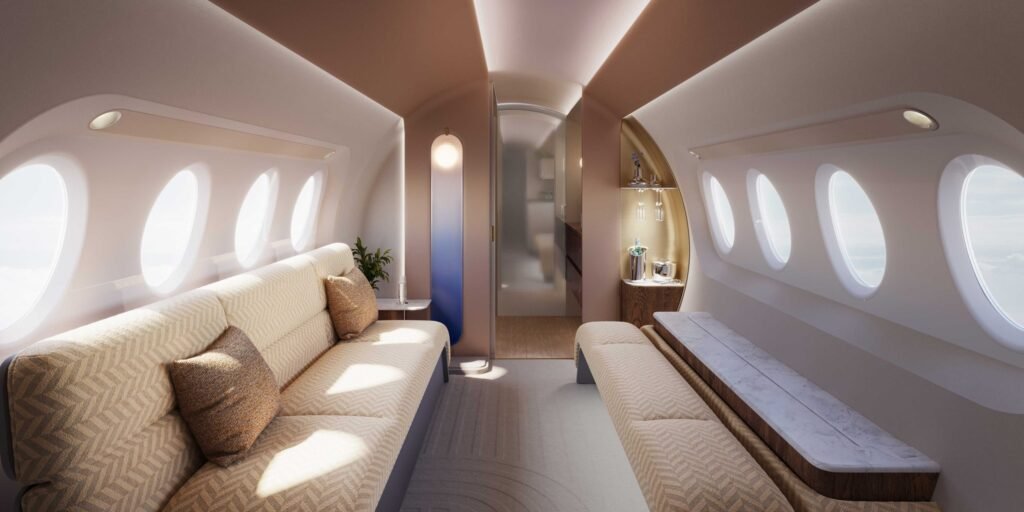
One of these is the JPA Design Agency which is a global multidisciplinary design studio founded in 1983 by James Park and earlier this January unveiled its ‘Afterglow’ private aircraft cabin concept, which takes opulence to new levels but with a strong focus on sustainability. “JPA see a future that is much more akin to that of the commercial aviation spheres. Where planned scheduling of retrofit interiors plays a pivotal role in extending the aircraft lifecycle. Re-use rather than replace,” the company said while announcing Afterglow. The global fleet of private jets has doubled in the past two decades, resulting in many aircraft still in service with outdated interiors. In its quest to reimagine the cabin lifecycle, JPA is exploring what a modern travel experience onboard a private jet could comprise. The design agency said the shift from traditional practices into a more engaging human-centric design was a key consideration when designing the ‘Afterglow’ cabin.
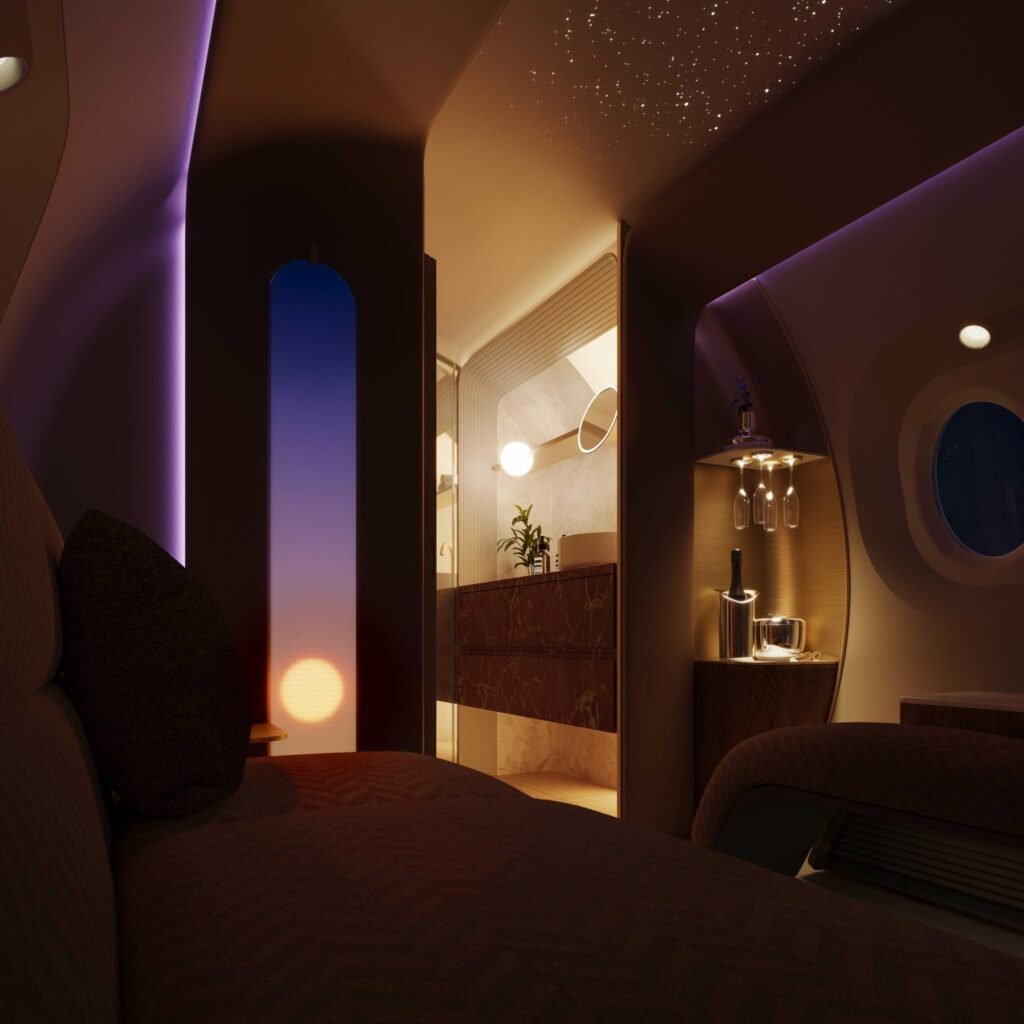
It is now well understood that cabin lighting has a profound effect on passengers’ wellness. Keeping this in mind, JPA analysed circadian rhythms and created bespoke lighting elements to replicate sunset and sunrise, to promote sleep or enhance alertness, thus enabling passengers to acclimate to their destination during the journey and hence reduce jet lag. The design, location and purpose of the wall-mounted feature light received special attention and the floating orb situated behind a specially tinted frosted pane is a key element in promoting wellbeing through sleep cycles onboard. The sequence of this feature light, in conjunction with the overall cabin lighting, is programmed to replicate solar movements of sunrise and sunset. Adjusting to provide the optimal scenario based on flight time and time of day at the destination.
To make greater use of the available cabin space, the lounge and washroom, located at the rear of the cabin, were designed in tandem, creating a more secluded and private environment. This area includes a minibar, W/C with changing area, full-height closet, and side furniture, all within reach. The sofa converts to a double bed and is positioned to allow access to the W/C at all times.
Reimagining Interiors
In October last year, the U.S. operator Flexjet, the only fractional provider to offer highly custom aircraft interiors as part of its LXi Cabin Collection, announced that it was offering a US$100,000 prize for the winning designer of the company’s next aircraft interior through its ‘Project LXi – Design the Ultimate Private Jet Interior Contest.’ “Beautiful design can completely transform an experience and I have always enjoyed studying design, whether in clothing, architecture or aircraft,” said Flexjet Chairman Kenn Ricci. “When it comes to the Flexjet fleet, we created several themes, just as boutique hotels often do with their rooms. It makes Flexjet unique. Each aircraft’s interior design captures interest and speaks to our fanatical attention to detail.”
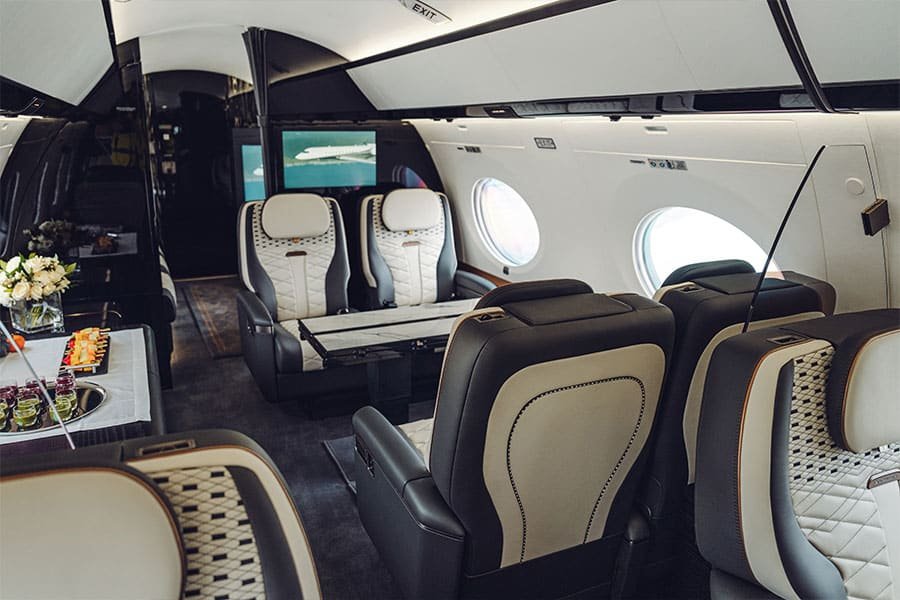
For Project LXi – Design the Ultimate Private Jet Interior, the competing designers have been asked to come up with their themes, as there are many elements inside the aircraft cabin they can use to illustrate their theme – from the carpet pattern, the seating materials, colour and accents, the type of wood veneer, the sidewall colour and material. Flexjet’s Gulfstream G650s also feature four distinct zones – working, dining, sleeping and the family room. Flexjet is looking for new themes to complement its nearly 50 custom interiors. The company’s LXi Cabin Collection of custom private jet interiors has been well accepted by the industry. The LXi Cabin Collection is unique to Flexjet and its ultra-modern fleet. Every year, Flexjet’s design team develops fresh interiors to outfit the company’s growing fleet of nearly 300 aircraft.
Enhanced Interiors
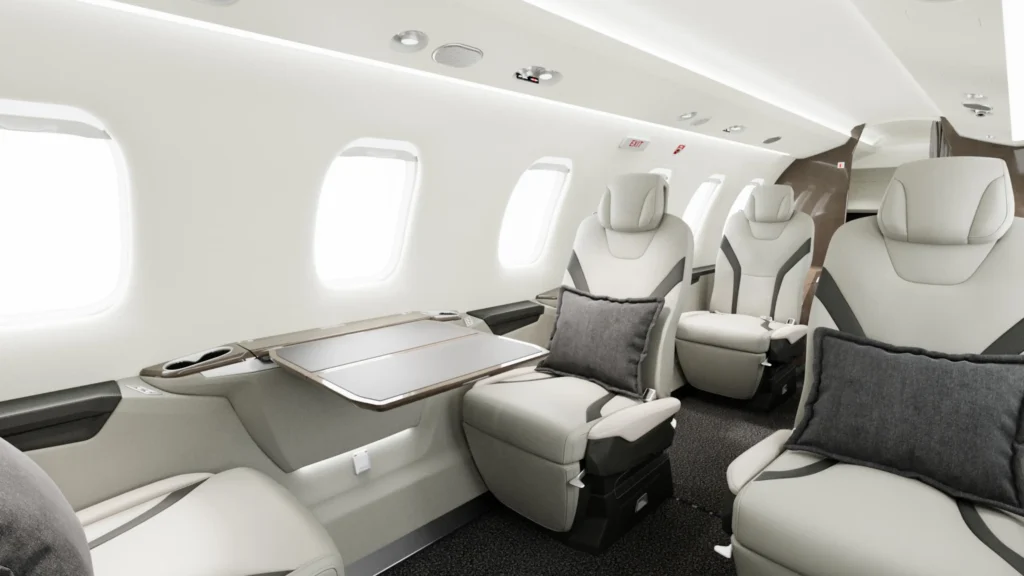
The Swiss airframer Pilatus has introduced new technical improvements on its PC-24 to further improve the cabin experience, with a redesigned interior. The PC-24 offers the option of a large side-facing divan, which is a first in this class. Just under two meters in length, it can be converted into a bed during the flight and includes drawers for pillows and blankets. The airframer has also reduced the noise level in the cabin through various optimisations, such as improving the ventilation system and engine intake. Greater flexibility, ergonomy and freedom of movement are now offered in the cabin interior and welcome centre, along with additional storage space and a large work surface.
“All the features which make the PC-24 a genuine Swiss quality product – the craftsmanship, the premium materials, the precision – are recognisable, but were chosen in such a way that they don’t appear too obtrusive. The result is more free space and customers who can also bring their personality and character to the table,” Flavia Vianna, Director of Product Management at Pilatus. “We take customer input very seriously and design the cabin according to their wishes. There’s no point in developing a product or design that is neither wanted nor needed. New technologies are only of interest if they solve problems and make processes simpler, more efficient and more agreeable.” In collaboration with Lufthansa Technik, Pilatus has also developed a new Inflight Entertainment System which features a ten-inch touchscreen with a 3D map displaying the real-time position of the PC-24 at all times. There are also four high-quality cabin loudspeakers including a subwoofer, mood lighting, USB ports and dedicated media storage.
Sustainable Steps
In October last year, Pilatus announced that it had demonstrated the use of environmentally friendly materials in the cabin interiors of its PC-24. This included the use of natural oils instead of synthetic varnishes. Pilatus partnered with F/LIST, a global supplier of high-end cabin interiors for business and private jets to showcase the first-ever mock-up of a PC-24 cabin interior designed with environmentally-friendly materials. “We make every effort to constantly improve what we offer to our customers, and we strive to reduce our environmental footprint without compromising on quality or performance. Pilatus has been committed to sustainability and energy efficiency for many years, in our production processes, for example In addition we continue to invest in Sustainable Aviation Fuel (SAF), which we use for part of our fleet,” said Andre Zimmermann, Vice President Business Aviation at Pilatus.
The use of transparent F/LAB oil not only minimises the release of harmful Volatile Organic Compounds (VOC) into the environment. As an airframer, most of the fabrics used by Pilatus today in its aircraft interiors are made from special fibres. These are easy to clean, requiring substantially less water and detergent and quicker to dry as well. There is also the benefit that they can be recycled. The use of natural wool carpeting, which is a renewable and biodegradable fibre is also appreciated by clients. Pilatus has also committed to buying 200 tonnes of solar fuel annually from 2027-2032.
Sizeable Savings
In the world of aviation, every little thing counts and cost-savings wherever possible are always welcome. Sizeable cost savings and sustainability benefits are often in the maintenance and repair of wear and tear items on business jets. Dassault Aviation Business Services (DABS) interiors department plays a key role in this area when it comes to its business jet offerings. The Geneva-based team has been innovating to create repair and refurbishment regimes that are quicker and have lower costs, with new, stylish options. One of the highlights of any business jet is the lavish wood trim, which is often hard to maintain and expensive to replace. DABS has developed extensive skills in its ability to repair small scratches in cabinetry and other lacquered wood surfaces.
It scaled down a technique for varnishing large wood panels to repair minor scratches on lacquered wood surfaces, which involves quickly curing varnish with UV light technology. The Geneva-based team borrowed the technique from Dassault Little Rock completions, which has the industrial-scale equipment to cure an entire table or bulkhead surface. DABS, in essence, miniaturised the special lighting system for small repairs. According to Jean Kayanakis, Senior Vice President, Worldwide Falcon Customer Service & Service Center Network, “the cost savings are quite impressive. The DABS UV process can be accomplished for about 15 – 25 % of the cost incurred with conventional techniques.”
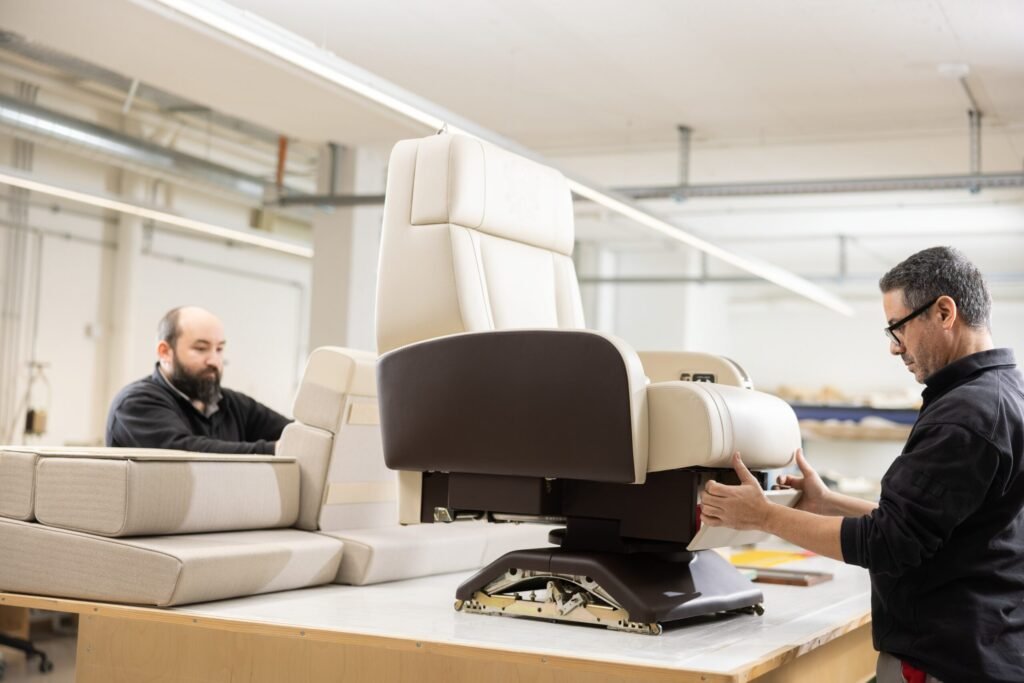
DABS has also been perfecting ways to refurbish seating more quickly and at a lower cost. A set of eight Falcon 7X executive seats can be fully refurbished in as little as five weeks. This is a dramatic improvement on the 12 weeks needed previously. DABS has also developed processes to repair seats quickly and easily and as an example, they’ve made fixing the lumbar support adjustment vastly easier, developing a new repair scheme, in which a technician can remove the backrest in 30 seconds and put it back in place just as quickly. Previously one had to cut through layers of foam to get at the mechanism, a time-consuming process.
Change is the only constant in the fast-paced world of business and private aviation and it is heartening to see that the focus on luxury and comfort does not come at the cost of sustainability. With sustainability now a major area of focus in private aviation, real improvements are being seen in the development, upgrade and modernisation of aircraft cabin interiors and their cost-effective and sustainable maintenance.