











Regional airlines generally cater to smaller cities and remote areas that have few alternatives for ground or air travel, often as a result of difficult geography or low population density. India exemplifies how the efficiency and adaptability of ATR aircraft enhance regional connectivity, especially under the UDAN scheme. Alexis Vidal, ATR’s SVP (Commercial) spells out the mantra that helps ATR connect the dots across India.
As the global leader in regional aircraft with a 40% order surge in 2024, what strategic and market factors are driving ATR’s sustained success in the evolving aviation landscape?
ATR’s leadership in regional aviation is driven by the growing demand for fast, affordable and reliable connections between regions, across both mature and developing markets. Despite economic uncertainties and geopolitical challenges, communities want and need regional flights, for business opportunities, to see their loved ones, for healthcare, education, or even just food. ATR aircraft are specifically designed for these short-haul operations, making them highly attractive to airlines looking to expand or even develop connectivity in underserved areas efficiently, profitably and responsibly.
Regional airlines typically serve smaller cities and remote regions with limited ground or air travel alternatives, often due to challenging geography or low population density. These include island nations, mountainous regions, and arctic and remote territories, but also dense urban areas with short runways, and rapidly growing population centres where ground infrastructure remains scarce.
In such environments, turboprops offer an efficient and responsible solution, delivering significant advantages over regional jets with similar seating capacity. ATR 42 and 72 models excel in diverse settings thanks to their exceptional fuel efficiency, operational flexibility and low operating costs. They enable operators to achieve higher margins and reduce financial risks compared to larger aircraft. This makes them an ideal choice for launching new routes and testing new markets, ensuring airlines can expand their networks strategically. India is a great example of how the efficiency and versatility of ATR aircraft support regional connectivity, particularly under the UDAN scheme. This government initiative has been instrumental in fostering the growth of regional airlines that rely on ATRs to connect underserved regions.
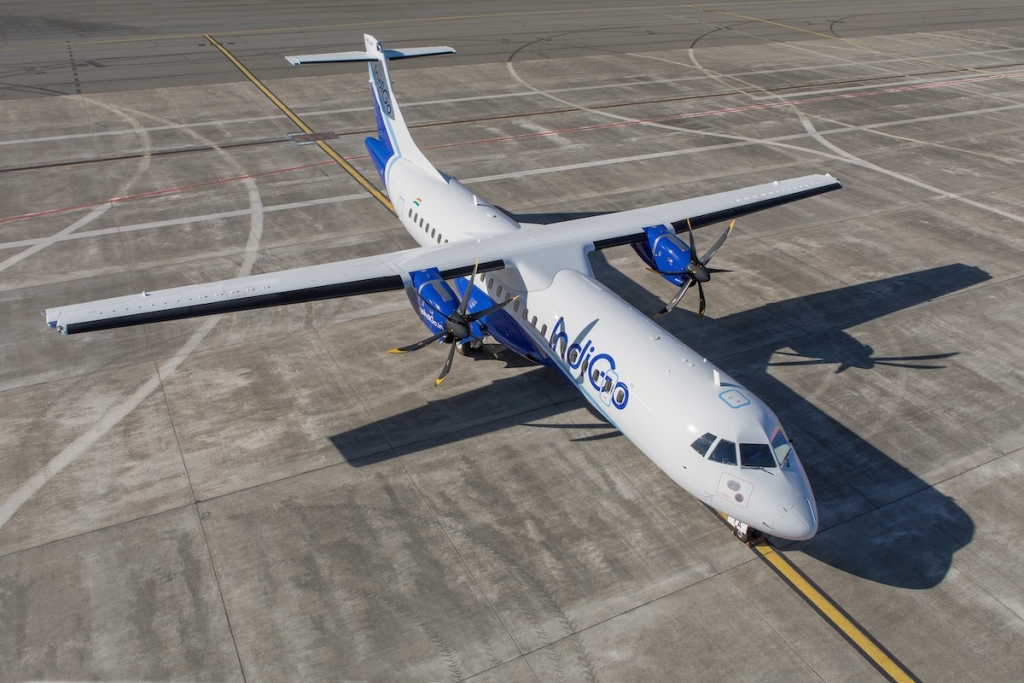
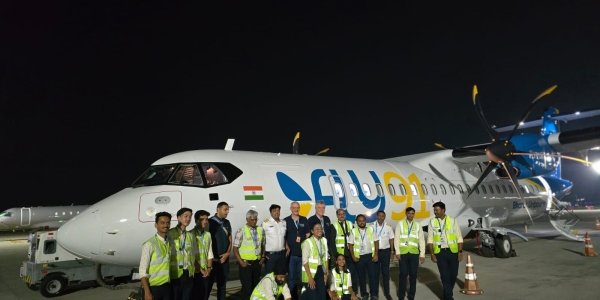
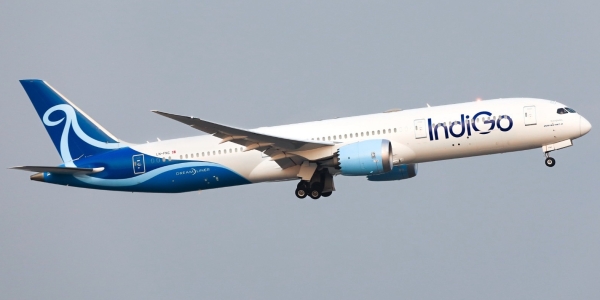
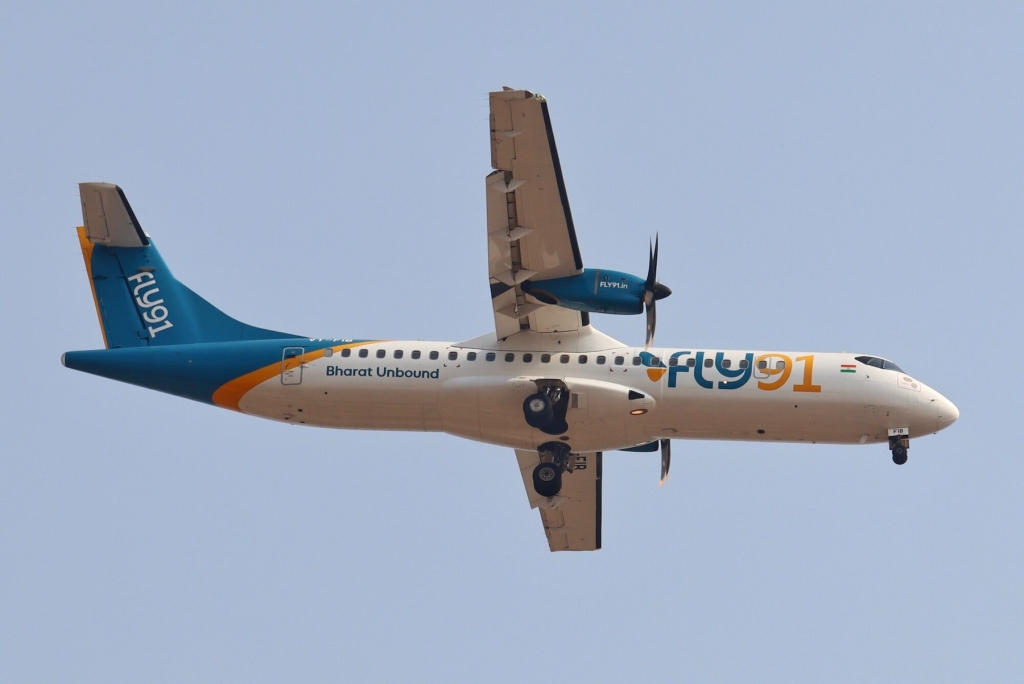
IndiGo, for instance, has embraced the ATR to efficiently connect smaller Tier 2 and Tier 3 cities, both with each other and with major Tier 1 hubs, such as Vijayawada with Hyderabad, or Visakhapatnam with Tirupati, ensuring profitability while expanding its network. Similarly, Fly91 is leveraging the ATR to establish its presence in India. Fly91 has been operating three ATR 72-600s for over a year, strategically launching and testing several routes to gauge market demand. Three of these routes have already reached a 70% load factor, proving their viability. Beyond commercial success, Fly91 supports communities, particularly by connecting Goa to Agatti in Lakshadweep, initially targeting tourism but now serving as a lifeline for residents who rely on air travel for healthcare and trade.
This dual impact – economic viability and social responsibility – highlights the crucial role of regional aviation. ATR aircraft’s fuel efficiency and cost-effectiveness make them a preferred choice for airlines operating under UDAN, but their advantages extend far beyond subsidised routes. In many regions of the world, they enable airlines to expand sustainably while maintaining affordability for passengers, proving that profitability does not always require government support.
With 34% of the world’s airports accessible only by turboprops, ATR aircraft allow airlines to bypass major hubs, enabling direct flights that enhance efficiency and reduce congestion at larger airports. As India’s economy expands, tier-2 and tier-3 cities demand point-to-point connections, leading airlines to prioritise non-stop routes over traditional hub-and-spoke models.
Environmental concerns are also shaping our industry, pushing airlines towards highly-efficient aircraft like the ATR to meet their sustainability goals. ATR aircraft are designed for fuel efficiency, burning 45 % less fuel and emitting 45% less CO2 than similar-size regional jets. This makes ATR a compelling choice for airlines seeking to lower both their costs and environmental impact.
What key market trends is ATR observing among global airline customers and lessors regarding sustainable operations, fleet modernisation, and regional connectivity demands?
One of the key highlights of 2024 was the renewal of ATR–600 series aircraft, marking the first fleet refresh among existing operators. This signals strong customer confidence in ATR’s efficiency and long-term viability. Airlines are upgrading their fleet with brand new aircraft, equipped with PW127XT engines, for further fuel efficiency, reduced maintenance costs, and improved overall performance, offering even greater economic and environmental benefits.
While 75% of our orders come from fleet renewals, there’s still a significant portion of our market growth which comes from route creation, and here again India is a standout example. Under the UDAN scheme, ATR aircraft have proven to be the best product for regional expansion, connecting underserved areas efficiently and profitably. Indian airlines are choosing ATR turboprops to open new markets and enhance accessibility.
The versatility of our aircraft also allows operators to tailor their fleets to dynamic market demands. Our aircraft support a wide range of airline strategies, from essential services and point-to-point regional travel to premium experiences through ATR HighLine’s VIP and dual-class configurations.
Over the past years, customer feedback has highlighted two main forces shaping decisions. For most ATR customers, maintaining the competitiveness of our platform remains the top priority, and the key metric to assess this is the Cost per Available Seat Kilometer (CASK). Meanwhile, some of our customers are primarily focused on reducing CO2 emissions, highlighting the industry’s increasing emphasis on sustainability, and the imperative that we have to pave the way for a more responsible future.
To maintain our leadership on the market, we must continue earning our customers’ trust by helping them overcome challenges with products and services that are relevant and tailored to their needs – offering the right economics, optimal versatility, and innovations that align with their operational environment.
Amid global supply chain and economic challenges, what are ATR’s strategic priorities to ensure resilience and growth in the regional aviation sector?
Resilience is built on credibility. As the world leader in turboprops and the only turboprop manufacturer today, ATR leverages over 40 years of experience and a fleet of over 1,300 aircraft in service, with 200 operators in 100 countries, including around 80 ATRs in India alone. This has given us unmatched expertise in designing and delivering efficient, adaptable and highly competitive aircraft. Continuous improvement remains a priority, and we focus on enhancing efficiency, reliability, versatility, and long-term value for our customers.
Our resilience also relies on a strong customer base, and mutually beneficial relationships with long-standing clients whose renewed confidence in our brand serves as the strongest testament to our ability to meet market needs. By continuously listening to customer feedback and adapting to their evolving needs, we aim to stay ahead of the competition, but not only we’re building an ecosystem that is solid and future-proof, but is fully ready for the next phase of growth and innovation in regional aviation.
Our support and service solutions are another way to reinforce resilience, not just for ATR but for our customers. Through our Global Maintenance Agreement (GMA), we work hand in hand with our clients to improve the availability of their aircraft and guarantee predictable maintenance costs, even in an inflationary supply chain environment. This is how we provide our customers with as much stability as we can. One of our ongoing initiatives includes evolving ATR’s maintenance programme from a two-year to a three-year cycle, which will help reduce operational downtime and maintenance costs.
Alongside these operational improvements, ATR remains committed to environmental stewardship. As the leader in low-emission regional aviation, we actively support customers in integrating Sustainable Aviation Fuels (SAF), further reducing the environmental impact of their fleets.
Resilience is also built on visibility. Our partners, suppliers, and customers need a clear vision of what the future looks like for ATR and for them. Our turboprop market forecast predicts a need for over 2,000 new aircraft deliveries over the next 20 years, of which the expected demand from India is significant – over 200 aircraft. And as far as the future is concerned, we have also shared our plans for the ATR ‘EVO’, our next-generation concept designed to further enhance efficiency, sustainability and affordability.
By providing transparency on future advancements, we aim to strengthen industry confidence, enabling our stakeholders to plan ahead and align their strategies with the evolving landscape of regional aviation.
With ATR turboprops leading in sustainability, what initiatives is the company pursuing to further reduce their environmental impact in support of the industry’s net-zero emissions goal by 2050? How is ATR advancing next-generation aircraft technologies to enhance sustainability and performance for the future of regional aviation?
What’s important to note is that ATR aircraft are, already today, the lowest-emission regional aircraft on the market. With the new PW127XT engine series, we set new standards for fuel consumption, carbon and NOx emissions as well as operating economics for regional aviation: 40% more time on the wing for fewer maintenance events compared to the PW127M, 20% reduction in direct maintenance costs, and at least 3% block fuel savings. This is the latest generation engine on the market, standard for all variants of the ATR 42-600 and 72-600 aircraft.
ATR is also pushing for a a greater adoption of SAF, with our aircraft already designed to be 50% compatible with sustainable fuel. We made history by being the first manufacturer to fly a commercial aircraft with 100% SAF in both engines in July 2022, and we are working towards achieving 100% SAF compatibility by the end of this decade.
I mentioned the ATR ‘EVO’ earlier, our next-generation concept, which will combine an ultra-efficient thermal engine with a hybrid propulsion system. The idea is to optimise the engine core size by using electrical power, significantly enhancing efficiency and reducing fuel consumption. Another key feature of the ATR EVO is its 100% SAF compatibility, further reducing its carbon footprint.
Our priority is to strike the right balance between reducing emissions further while ensuring economic viability and maintaining the versatility our customers need. A fully hydrogen-powered aircraft or a 100% electric platform would be completely impractical if our operators lack the necessary infrastructure or if payload limitations make it unsuitable for their operations. The solutions we will deliver, while technologically advanced, must be aligned with real-world market needs to remain relevant. That’s exactly the kind of trade-offs we are evaluating as part of the pre-feasibility study we’re conducting, aiming for an entry into service in the mid 2030s.
We’re not only focusing on emissions, but also on the recyclability of our aircraft, taking into account its entire lifecycle to assess its impact on our planet. As part of the EVO, we are aiming for an eco-designed cabin, using lighter, bio-sourced materials and integrating recycled and reusable components. This design will help minimise waste throughout the aircraft’s lifecycle, contributing to ATR’s broader sustainability goals.
As market leaders, with a platform that is already highly efficient, we want to shape the future of regional aviation, ensuring that communities can fully benefit from the opportunities of a connected world, without compromising the environment.
How is ATR responding to global airline demands for enhanced passenger experiences, including in-flight entertainment and connectivity, on regional routes?
When we designed the ‘Armonia cabin’ for the ATR –600, we made sure that if would offer cabin levels of comfort, personal space, and storage comparable to those found on single-aisle jets, leveraging a key advantage: the largest cross-section on the turboprop market.
Now, what we observe is that passenger expectations have evolved a lot in recent years, particularly regarding in-flight connectivity. Previously, travellers accepted being disconnected during flights, viewing it as a temporary break from digital communication. Today, however, we expect to be reachable at all times, whether for work, social interactions, or entertainment. We want to be able to respond to emails, or stay in touch with friends or family, and therefore nowadays all passengers, including on regional flights, see in-flight Wi-Fi as a necessity rather than a luxury.
We’ve been working on passenger experience for a long time, looking to provide in-flight entertainment (IFE) solutions and USB ports, ensuring that passengers have access to the same kind of amenities that they would expect onboard any aircraft. For instance, we’ve recently introduced Starlink high-speed internet connectivity onboard our aircraft, and Air New Zealand is poised to be the launch customer of this solution, bringing internet to its domestic flights from 2025. The solution is available as a retrofit option on ATR 72-500 and –600 for all ATR operators through a Supplemental Type Certificate (STC). With this game-changing technology, our operators will be able to provide their passengers with internet services that reflect their home experience.
For airlines looking to offer a premium experience, we have introduced ‘ATR HighLine,’ a collection of high-end seating options, including premium and executive configurations, as well as an all-business class layout. The latter features the ‘ETEREA’ business seats, designed by Geven, an open, executive-style ceiling, a personal side console, and dedicated stowage, all of this in a 1-by-1 configuration. Malaysian airline Berjaya Air is the launch customer for this all-business class configuration, and they will take delivery of their very first ‘HighLine’ aircraft later this year.
ATR is also committed to accessibility and inclusivity. The company offers a range of solutions to cater to passengers with different needs, including the Audioback® concept, a hearing aid loop that helps hearing-impaired passengers receive inflight announcements. Additionally, we ensure that our cabins are accessible to passengers with reduced mobility: we have fully foldable armrests, a wide aisle thanks to our large cross-section, which makes it possible to accommodate onboard wheelchairs.
What strategies is ATR employing to expand the global market for its freighter aircraft in response to growing regional cargo demand?
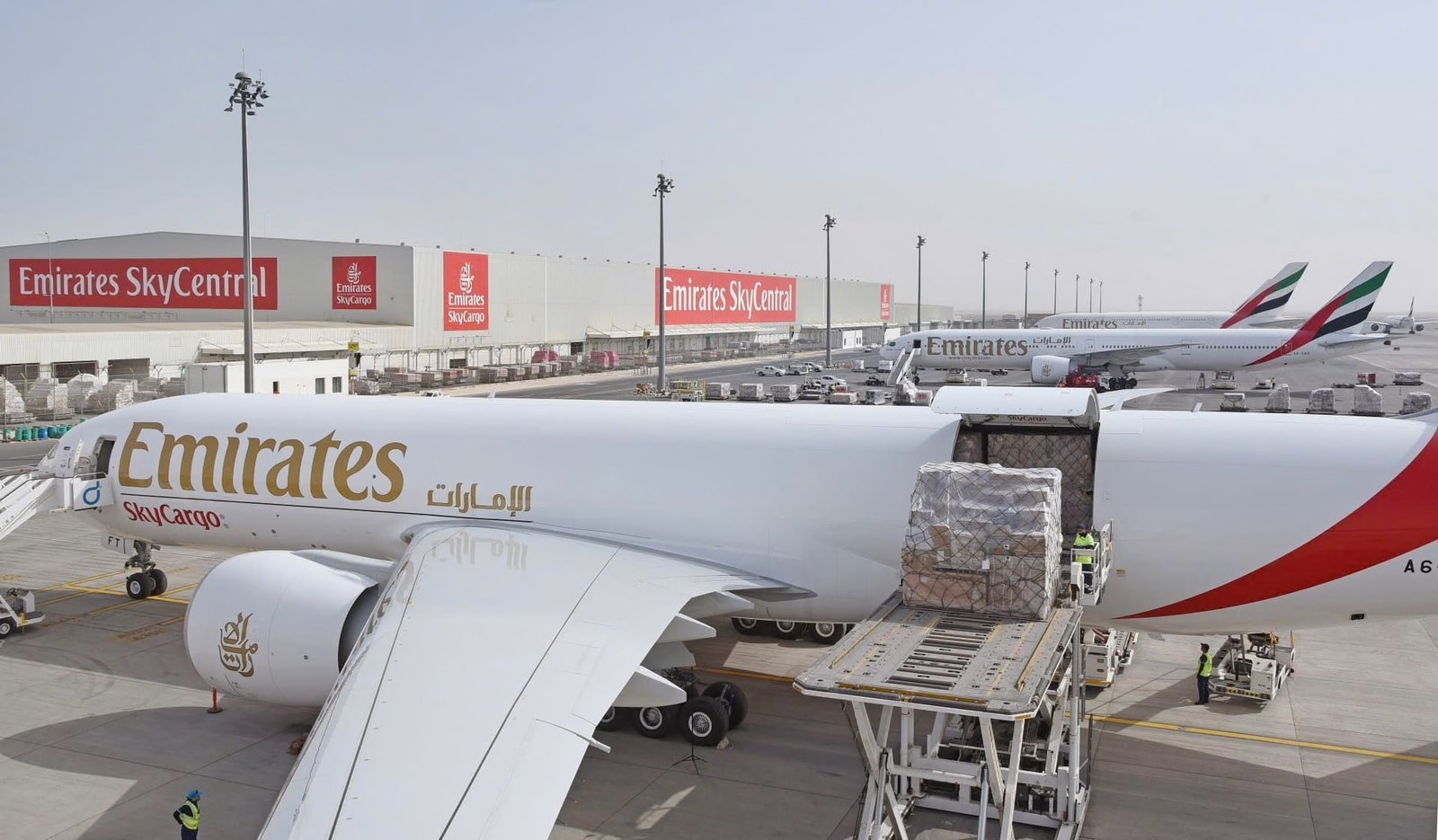
We are actively expanding our presence on the freighter market worldwide by leveraging a dual strategy of new aircraft production and passenger-to-freighter (P2F) conversions, ensuring flexibility to meet diverse customer needs.
We have a purpose-built cargo aircraft in our portfolio, the ATR 72-600F, offering a 9.2t payload capacity and the ability to access smaller markets profitably. It is the only in-production regional freighter on the market. It incorporates the latest technology featured in the ATR–600 series while being specifically designed for cargo operations. A bulk configuration helps in optimising the available volume – up to 75 m3 – thanks to nine vertical nets, attachment points on the floor and lateral tracks. In addition, with a large cargo door, a cargo loading system and a wide cross section, the ATR 72-600F can accommodate industry-standard Unit Load Devices (ULDs) and interline with larger freighters.
The ATR 72-600F is a key asset in FedEx’s fleet, replacing its legacy ATRs, and helping optimise its network capabilities worldwide. Its high versatility allows for seamless operations across multiple countries, logistical frameworks and environments, from the warm climates of Miami, Florida, to the cold temperatures of Anchorage, Alaska. FedEx’s fleet of ATR 72-600F handles critical feeder operations, playing a vital role in the company’s coverage of smaller markets. Late last year, FedEx reconfirmed its commitment with an order for 10 ATR 72-600Fs, adding to a previous commitment of 30 aircraft. This illustrates how ATR can be a trusted partner for leading logistics operators, ensuring reliable and efficient cargo transport.
We also offer P2F conversions, transforming passenger aircraft into fully operational freighters. This approach allows airlines to extend the lifecycle of existing aircraft, maximising fleet utilisation, while maintaining competitive operating costs. Conversions are particularly attractive for regional cargo operators, enabling them to scale operations efficiently without the higher investment required for brand-new aircraft. With the continued growth of e-commerce, demand for point-to-point cargo deliveries is rising, making our converted freighters an ideal solution for fast, localised logistics.
The boom in e-commerce has reshaped global cargo demand, with businesses requiring rapid, reliable deliveries to meet customer expectations. ATR freighters are perfectly suited for this shift, offering fuel efficiency, lower operating costs, and direct access to secondary airports, ensuring fast last-mile delivery.
Additionally, ATR actively supports lessors by connecting them with airlines and providing investment guidance to improve asset placement. The increasing involvement of lessors in the ATR freighter market has expanded financial solutions, offering more flexibility to airlines looking to acquire cargo aircraft. This shift is evident across various regions, including Australia, North America, and Kenya, where operators are increasingly leasing ATR freighters to strengthen their cargo capabilities.
How is ATR positioning its turboprops to meet the global demand for connecting underserved and remote regions, and what role do you see for regional aviation in the broader air transport ecosystem?
Our turboprops serve as essential mobility enablers, particularly in areas where ground infrastructure is limited or geographical barriers make other forms of transport impractical. Unlike larger aircraft, ATRs allow airlines to operate in remote territories, ensuring direct, efficient connections without relying on major hubs.
However regional aviation is not just about point-to-point connectivity, it also plays a role in feeding hubs and expanding the overall aviation market. Our turboprops help fill long-haul flights by bringing passengers from smaller cities to major hubs, support the growth of national and international air travel. This is evident in India, where ATRs contribute to the expansion of the sector by integrating regional routes into the broader network.
Our aircraft contribute to economic growth by unlocking new markets, boosting local economies, and facilitating trade and tourism. By connecting previously isolated regions, ATRs help distribute wealth, support local businesses and enhance territorial development. This is why regional aviation is also a matter of sovereignty – ensuring territorial continuity and national cohesion. By providing consistent air links, governments ensure that all regions remain accessible and economically integrated.
Our approach to regional aviation is deeply rooted in understanding mobility patterns: why people travel, how they move between cities, and what makes sense for different transport modes. Our detailed analysis of India’s travel patterns has revealed that 90% of intercity trips are within the 100 to 400 nautical miles range, which underscores the inherent logic of investing in regional aviation across the country, to enhance connectivity and accessibility across the diverse regions of India. Yet, today, only 3% of those trips are conducted by air, indicating significant room for growth in air travel share, as that number is typically around 6 to 9% in other markets in Europe or Asia. ATR aircraft are the perfect fit for these routes, reinforcing our role in India’s regional air travel growth.
Unlike runways or rail networks, aviation requires only two runways, making it a cost-effective and responsible solution for regions where population density does not allow for large infrastructure investments. We can help provide flexible, scalable connectivity, ensuring that mobility remains accessible and affordable. It also goes through exploring ways to engage new stakeholders, beyond traditional airlines, to help create a more integrated transport ecosystem.