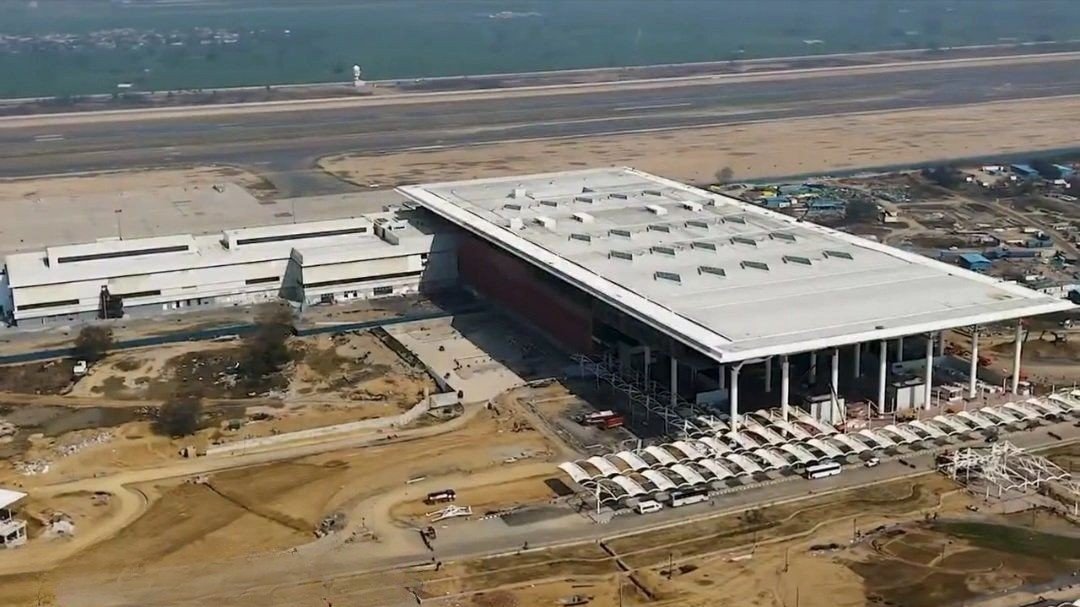







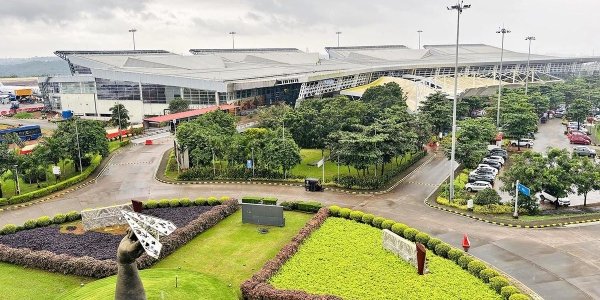












- India’s airport count has grown from 74 in 2014 to 162 in 2025, with nine new airports built annually, boosting connectivity and economic activity.
- Aviation drives job creation and inclusivity, with initiatives like UDAN and Digi Yatra enhancing access to underserved regions and streamlining travel.
- The sector supports tourism, investment, and sustainability, with potential leadership in Sustainable Aviation Fuel and global competitiveness.
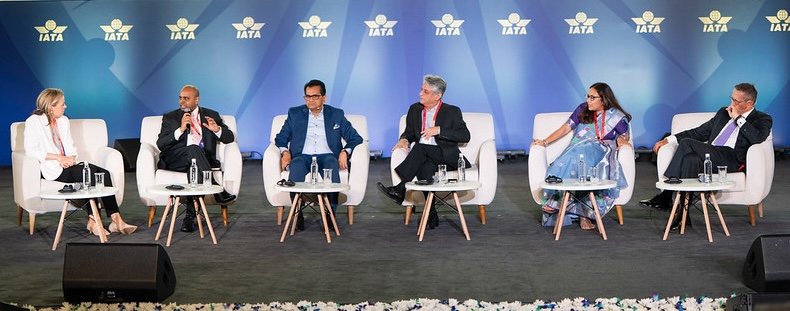
India has witnessed a significant improvement in air connectivity alongside the expansion of airport infrastructure. The number of operational airports has risen from 74 in 2014 to 162 in 2025, with a goal to exceed 400 by 2047. At the 81st IATA Annual General Meeting and World Air Transport Summit held in New Delhi, a panel discussion titled “Aviation as a Force for Good” explored the transformative power of air connectivity in India, reaffirming the country’s aviation momentum and its wider developmental implications.
The panel, moderated by CNN International’s Richard Quest and Clare Sebastian, brought together experts from government, investment, hospitality, and finance: Amitabh Kant (G20 Sherpa, Government of India), Ananth Narayanan (Senior VP and Chief Industry Officer, Invest India), Radhika Gupta (MD & CEO, Edelweiss Asset Management Ltd), and Patu Keswani (Chairman & MD, Lemon Tree Hotels).
Amitabh Kant opened the discussion by sharing his experience transforming Kerala’s tourism sector through aviation connectivity. “We took Kerala from obscurity to being listed among the world’s top 10 exotic paradises,” he said, noting how this created thousands of jobs, especially for women. He emphasised that “no retaliatory duties can impact travel demand.” Kant underscored how aviation is linking the aspirations of millions in India’s smaller towns and cities today. He highlighted the impact of the UDAN scheme, which has facilitated flights to previously underserved destinations like Darbhanga, Jharsuguda, and Belagavi. Kant noted that regional airports now act as gateways to economic participation. “India is building nine airports annually through public-private partnerships,” he said, citing Delhi and Mumbai’s dual-airport systems as models. “Our ambition is for all 1.4 billion Indians to have access to air travel.”
When asked about protectionism in aviation, Kant was clear: “Our airlines must compete globally. Air India and Indigo should challenge Emirates and Qatar Airways directly.” He also highlighted India’s technological leapfrogging in travel, with DigiYatra enabling mobile-based seamless transactions for millions.
Patu Keswani, whose Lemon Tree Hotels operates in 200 locations, explained how his company uses machine learning to identify airport-adjacent opportunities. “Wherever we build within 30 minutes of an airport, we see materially better performance,” he said. Keswani noted that discretionary travel is at an inflection point, predicting “100 million Indians will travel abroad annually within five years.” He emphasised the aviation-tourism link, noting that his company was expanding to cities with new air routes. Each new airport creates jobs across the hospitality value chain—from taxi services to housekeeping, food supply, and maintenance. Lemon Tree Hotels also focuses on inclusive hiring, employing marginalised communities and persons with disabilities, and demonstrating how aviation-linked tourism can generate social and economic returns.
Ananth Narayanan of Invest India revealed striking statistics: “Since 1981, passenger traffic grew 37-fold to 370 million, while cargo increased 17 times.” He shared that 80 per cent of investors in a recent survey prioritised airport proximity when selecting sites. Narayanan stated that global investors see aviation as a long-term growth opportunity, with interest spanning airlines, aircraft leasing, ground handling, logistics, MRO, and drone corridors. Aviation serves as a “connective tissue” for trade, logistics, and investment flows. According to Narayanan, as India becomes a global manufacturing and service hub, air cargo infrastructure and international airport connectivity will be key enablers of competitiveness.

Radhika Gupta took 28 flights in the past month to expand financial services. “Our next 30 markets are growing faster than top metros,” she said, announcing plans to establish 100 branches nationwide. Gupta argued that aviation lowers barriers for marginalised populations, enabling access to jobs, education, and healthcare. She linked this to financial inclusion, noting that new fliers become potential savers, investors, and taxpayers. As one of India’s few female CEOs in finance, Gupta also spoke about the symbolic power of representation—especially for women travelling independently for education, employment, or entrepreneurship. She revealed that 35 per cent of new fliers are now women, up from 22 per cent in 2020.
The panel acknowledged the need for the adoption of Sustainable Aviation Fuel (SAF). India, with its growing renewable energy capacity and biofuel potential, is seen as well-placed to take a leadership role in SAF. They highlighted Cooch Behar Airport as a model—fully powered by green energy. However, as of 2025, SAF accounts for less than 1 per cent of global aviation fuel use. Policy innovation and cross-sectoral cooperation are critical to scaling production. The panellists supported policy innovation and cross-sectoral cooperation to scale up production and reduce costs.
The discussion aligned with Prime Minister Narendra Modi’s vision of aviation as a catalyst for India’s ambitions of becoming a developed country by 2047. The panel unanimously agreed that aviation connects citizens to growth, dignity, and mobility—making the sector a force for inclusive progress. As Kant concluded: “We’re not building ghost airports. Every new hub becomes an economic engine—just look at Ayodhya and Prayagraj’s transformation.”