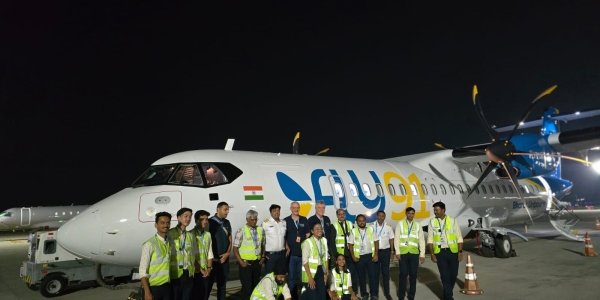
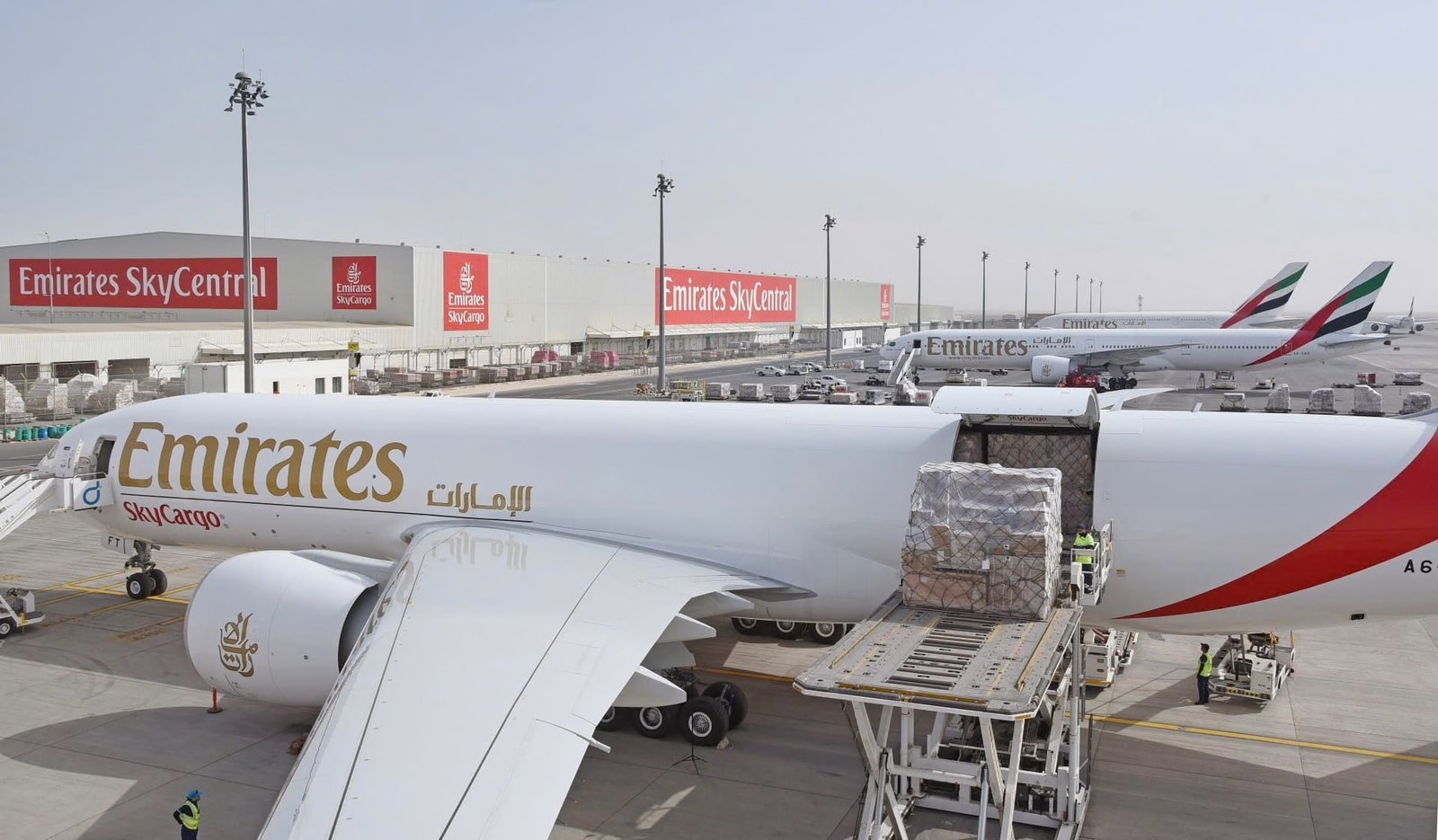
Sheikh Nahyan bin Mubarak Al Nahyan, Minister of Tolerance and Coexistence, witnessed the official induction of two ATR 72-600 aircraft into the expanding fleet of Indian regional airline FLY91, during an official ceremony held at Dubai World Central (DWC), in…
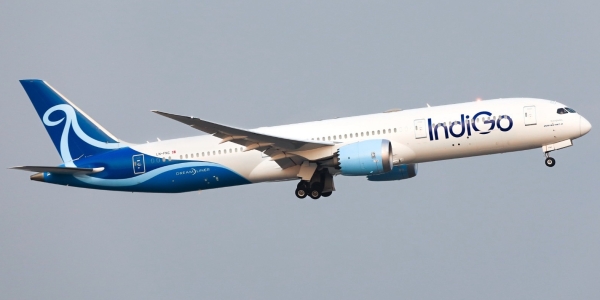
IndiGo and Axis Bank, one of the largest private sector banks in India, have partnered to launch co-branded credit cards that are tailored to meet the evolving needs of Indian consumers. The cards, available in two variants – IndiGo Axis Bank Credit…
Regional aviation in India often swings between optimism and fragility. Star Air’s current phase sits somewhere in between—expanding its footprint, adding capital, and preparing for a larger fleet—yet doing so with a sharp awareness of the constraints that define this…
IndiGo has announced adjustments and schedule revisions in its long-haul network to ensure seamless and reliable operations for the convenience of its customers. Recently IndiGo’s widebody operation has faced external operational constraints; continuously changing airspace constraints due to geo-political circumstances,…
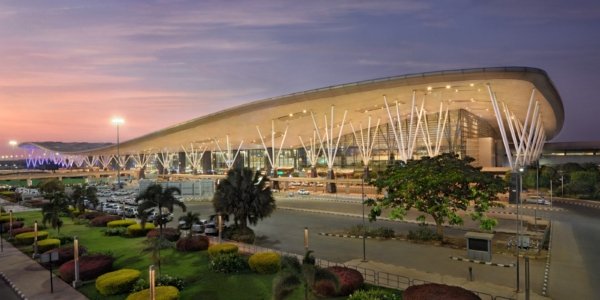
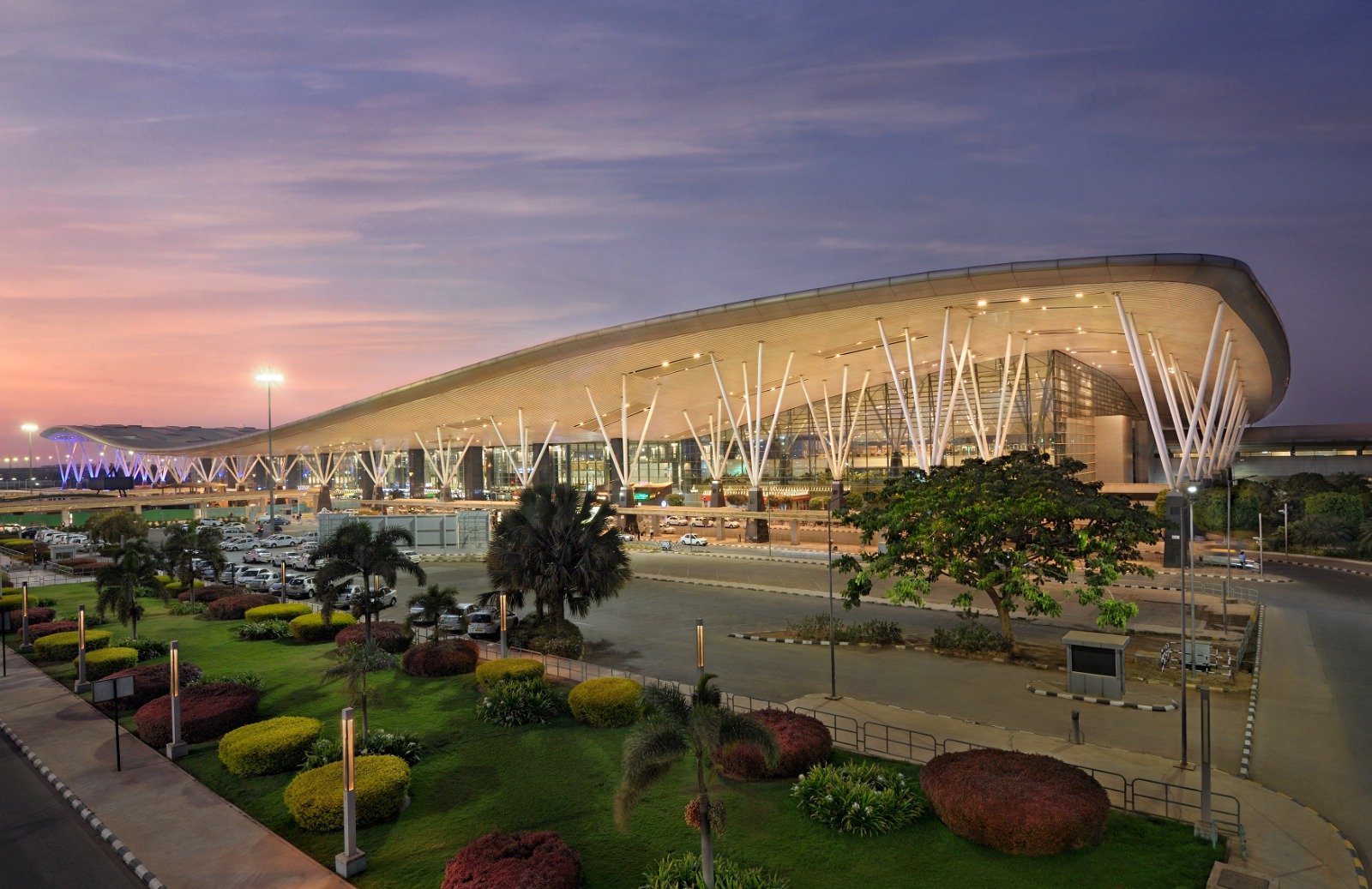
Riding high on an 8% plus annual passenger traffic growth, Bengaluru’s Kempegowda International Airport (KIA) is all set for a major technological upgrade this year. High on its agenda is an all-new Air Traffic Control (ATC) and an upgrade of…
Chhatrapati Shivaji Maharaj International Airport (CSMIA), Mumbai, has been recognised as Asia-Pacific’s Best Airport for Departures in the over 40-million passengers’ category at the 2025 Airport Service Quality (ASQ) Customer Experience Awards presented by Airports Council International (ACI). The recognition…
India’s memory of tabletop runway disasters is long and sobering. In 2020, an Air India Express Boeing 737 overshot Kozhikode’s rain-soaked runway and plunged into a gorge, killing 21 people. A decade earlier, another Air India Express aircraft overshot at…
FedEx and Navi Mumbai International Airport (NMIA) today broke ground on FedEx’s fully automated air cargo hub, advancing capacity in India’s largest international trade corridor and strengthening its role as an integrated logistics and trade gateway for Western India. The ₹2,500…
STACK.aero, the technology platform streamlining business aviation workflows, experienced significant growth in the uptake of its Business Operations System (BOS) digitalisation platform in 2025, and predicts continued adoption through 2026, as customers increasingly seek to reduce silos and streamline services….
India’s aviation ecosystem is expanding, but structural consistency across the industry remains a work in progress. Less attention has been given to how well the system accommodates operations that function differently from scheduled airlines, yet remain integral to economic activity….
Gama Aviation has officially opened its purpose‑built Business Aviation Centre (BAC) at Sharjah International Airport, a major multi‑million‑dollar investment designed to future‑proof business aviation services in the UAE and the wider Middle East. The BAC is one of the region’s…
Business aviation in India is standing at a critical inflexion point. Long perceived as an exclusive domain of the wealthy, private aircraft are increasingly being recognised as strategic tools that enable productivity, rapid accessibility and industrial mobility, especially in regions…
American Airlines and CFM International (“CFM”) today announced that American’s future deliveries of Airbus A321neo aircraft will continue to be powered by the CFM LEAP-1A engine. These engines will be installed on Airbus A321neo aircraft that American ordered two years…
India’s aviation growth is pushing beyond fleet additions toward questions of endurance, utilisation, and long-term support. From engines powering high-frequency domestic routes to platforms enabling long-haul expansion, the emphasis is on reliability, operating economics, and lifecycle depth. Manufacturing and engineering…
GE Aerospace announced today a new test milestone for hybrid electric aviation, successfully demonstrating power transfer, extraction, and injection in a high-bypass commercial turbofan engine. Ground testing of a modified Passport engine was completed in 2025 at Peebles Test Operation…
The Civil Aviation Authority of Singapore (CAAS), CFM International, and Airbus today signed a Memorandum of Understanding (MOU) to establish Singapore as the world’s first airport testing ground for operations of CFM’s next-generation Revolutionary Innovation for Sustainable Engines (RISE) technologies,…
Air France Industries KLM Engineering & Maintenance (AFI KLM E&M) announces the arrival of the first LEAP-1B spare engine in Amsterdam, marking a major milestone in their recently signed agreement to purchase up to 10 CFM International LEAP-1A and LEAP-1B…
Ryanair and CFM International (CFM) today announced the signing of a Memorandum of Understanding (MoU) for a long-term material services agreement to support Ryanair’s entire fleet of about 2,000 CFM56 and LEAP engines powering its Boeing 737 aircraft. The MoU,…
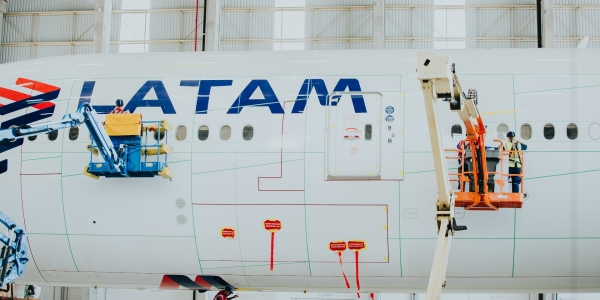
LATAM Airlines Group, the first airline outside of the Lufthansa Group using AeroSHARK to save fuel and reduce emissions, has now opted to equip even more of its aircraft with the nature-inspired drag-reduction solution jointly developed by Lufthansa Technik and…
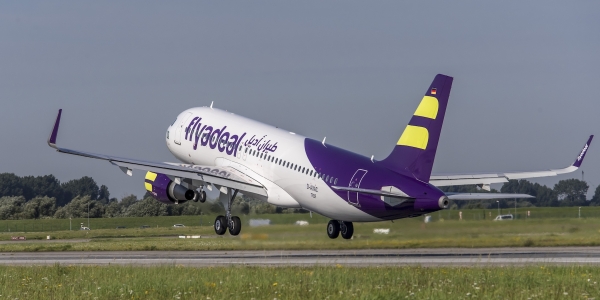
Lufthansa Technik and flyadeal, Saudi Arabia’s fast-growing low-cost airline, have renewed their Aircraft Production Inspection Program (APIP) cooperation with an exclusive five-year contract. The agreement, signed at the MRO Middle East in Dubai, now covers the airline’s new 51 Airbus…
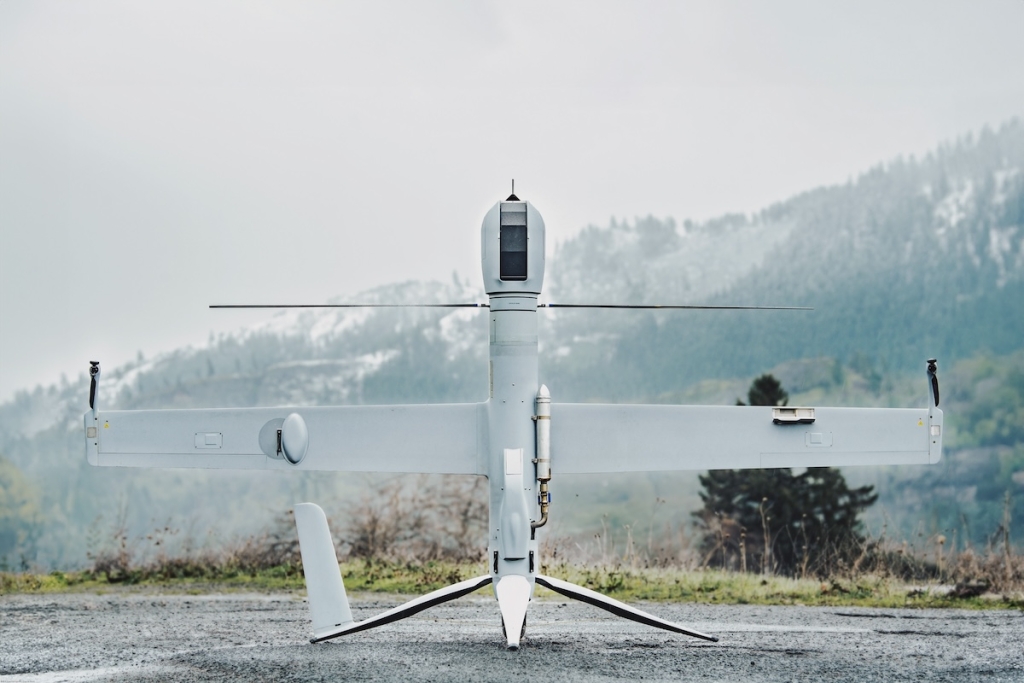
Australian aerospace start-up Drone Forge and Airbus Helicopters have signed an agreement to purchase six Flexrotor uncrewed aerial systems (UAS) comprising 17 aircraft, making it the single largest order for the Flexrotor to date.
The mission-ready Flexrotor systems will be configured to meet a broad range of operational requirements in the Asia-Pacific region, spanning littoral surveillance and high-altitude inland missions, to infrastructure monitoring and maritime environment assessment.
Photo: Airbus Helicopters
Each UAS will feature a heavy fuel engine optimised for maritime operations, ensuring greater safety, fuel availability, and interoperability with naval assets. It will also incorporate Starlink connectivity, enabling beyond-line-of-sight operations and real-time situational awareness. Additionally, the Flexrotor will be equipped with PT-6 imaging technology, providing stabilised, high-resolution intelligence, surveillance and reconnaissance capabilities for efficient wide-area maritime monitoring.
“We are fully convinced that the Flexrotor, built on a strong engineering heritage, will allow us to tap into new markets with a proven solution where real-time intelligence, mission flexibility and reliability matters,” said Thomas Symes, Chief Executive Officer of Drone Forge. “We look forward to integrating and commercialising the Flexrotor systems in the region.”
“The landmark order opens a new chapter in our partnership with Drone Forge, reinforcing our shared commitment to delivering cutting-edge crewed-uncrewed teaming capabilities to Asia-Pacific operators,” said Olivier Michalon, Executive Vice President of Global Business at Airbus Helicopters. “With strong confidence in the Flexrotor’s efficiency and reliability, this force multiplier will drive operational excellence in defence and security applications.”
The agreement followed closely from a Letter of Intent (LOI) signed recently between Airbus and Drone Forge, where the two companies collaborate on the deployment and operational integration of the Flexrotor UAS.
The Flexrotor is Airbus’ newest addition to its UAS portfolio. A modern Vertical Takeoff and Landing (VTOL) uncrewed aircraft with a maximum launch weight of 25 kg (55 lbs), it has been designed for ISTAR missions for more than 12-14 hours in a typical operational configuration. It can integrate different types of payloads including an electro-optical system and advanced sensors to suit customers’ unique mission needs. With the ability to autonomously launch and recover from either land or sea requiring only a 3.7 by 3.7 m (12 by 12 ft.) area, the Flexrotor is ideal for expeditionary missions requiring minimal footprint.