













- Air India’s ambitious Vihaan.AI transformation hits turbulence after a crash near Ahmedabad amid fleet groundings.
- The airline faces widespread cancellations, route cuts, and maintenance-driven disruptions impacting domestic and international schedules.
- As safety oversight comes under scrutiny, the Tata-led carrier may need a hard reset to sustain its growth and regain past glory.

On June 12, when VT-ANB crashed just after take-off at Ahmedabad on its way to London Gatwick, catastrophe struck Air India, now in its fourth year since privatisation. This set the clock back for the airline, which started its ambitious transformation plan launched under the Vihaan.AI banner, even naming an aircraft Vihaan. As per its own admission, it has already completed two stages: Taxi, which fixed the basics and Take-Off, which focused on Building for Excellence. The airline is now in its third stage, Climb, aimed at scaling and growing. The airline and its management may need to revisit the plan to identify additional areas that require fixing, especially if facing numerous cancellations on short notice.
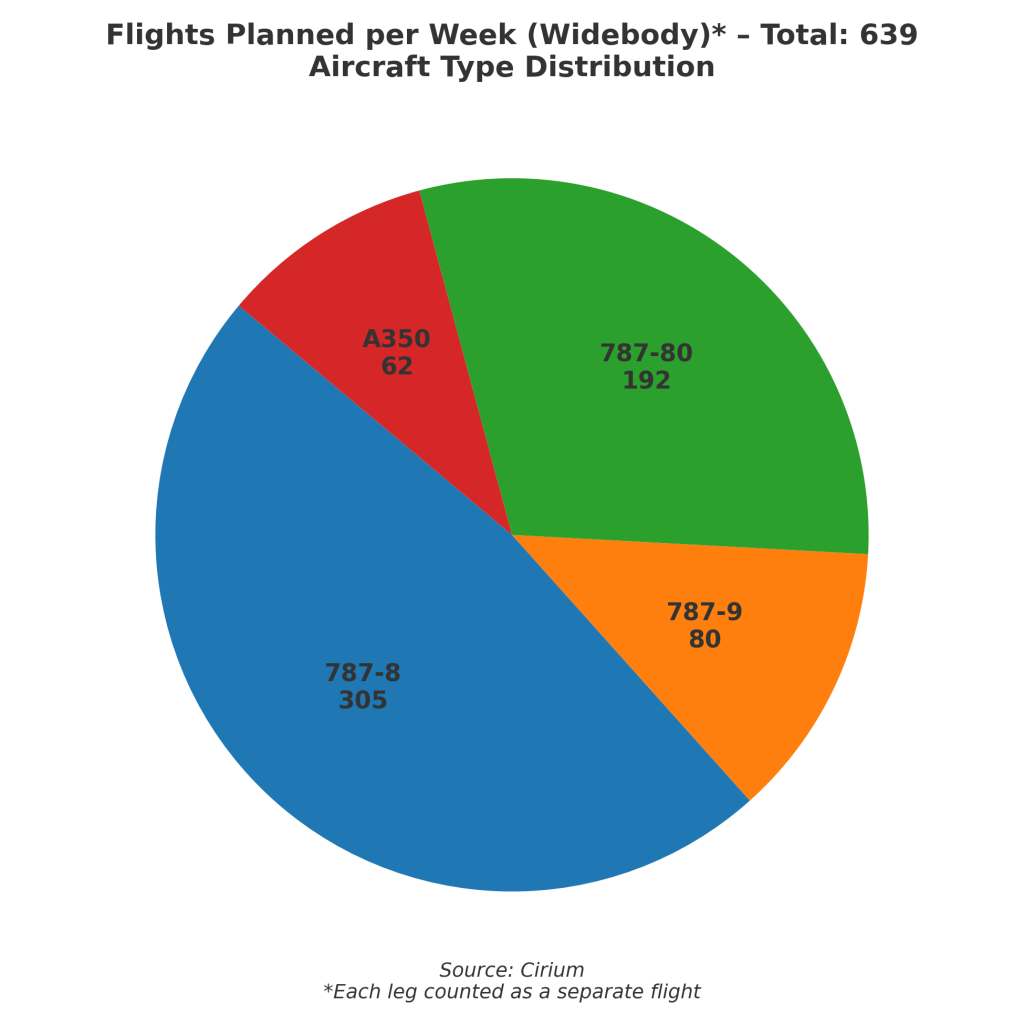
The transformation program also aims to have a 30% market share in five years. However, data obtained from Cirium, an aviation analytics company, shows that the airline has 639 flights planned on widebody aircraft per week. The count is higher due to technical stops at Vienna or Kolkata, with each leg being counted as a separate flight, even though it is a technical stop. Out of these, 305 are on 787-8, 80 on 787-9, and 192 on the 777s. There are 62 flights on the A350, six of which are with the airline. A 15% reduction in the overall schedule would result in 96 flights being cancelled each week. However, it is unlikely to impact the entire fleet and could be restricted to specific fleets. A 15% cut to the 787-8 schedule alone would translate a weekly reduction of 45 flights for the airline. In effect, this means hundreds of flights will be cancelled over the next three to four weeks, going by the airline’s guidance for cancellations up to mid-July.
The airline is discontinuing three routes: Bengaluru-Singapore, Pune-Singapore, and Mumbai-Bagdogra. It is also reducing the frequency on 19 routes, resulting in a total reduction of 120 flights per week. These routes include flights operated by former Vistara aircraft (AI 2xxx series) as well as legacy Air India aircraft (non-refurbished). The airline operated between 530 and 545 flights a day within India and on 160 sectors, with the impact affecting 12 per cent of its total domestic routes. The reasons for cancellations, though not officially listed, appear to stem from a combination of factors. The airline has been focusing on additional checks and maintenance for its entire fleet and has experienced its fair share of groundings and cancellations over the last week, resulting in a cascading effect on its schedule and connecting traffic.
Set back or reset?
The Air India plane crash is a significant setback for the airline, particularly as it was in the midst of a major rebranding and modernisation effort under the Tata Group. While some experts believe it’s a temporary setback, the tragedy has undoubtedly impacted morale and raised questions about safety procedures. The crash has dealt a major blow to the transformation effort. Pilots who had previously raised concerns but were eased out from the company have come out in the open to highlight how they had already warned of serious consequences. The Directorate General of Civil Aviation (DGCA) had fined the airline at repeated intervals, raising questions about whether more could have been done.
This unfortunate event also presents an opportunity for a hard reset for the airline and the Tata group to relook at the issues which have been affecting the airline since it was taken over by the Tata group.
In the middle of the setback lies an opportunity to reset, to look at the multiple issues which were apparently highlighted in the past but never given due attention. The airline needs a hard reset to ensure it can reach the glory which it once had under the watchful eyes of JRD Tata and what it has been aiming for as it set path on its transformational journey.
International dominance in question
Air India is the only Indian carrier to operate non-stop to North America and, until recently, to Europe as well. The investigation and corrective actions have a huge impact on its marketing ability in these markets, and the airline risks facing lawsuits that could hamper its growth plans and expansion.
The airline must act responsibly and swiftly; otherwise, its ambitious transformation may remain a mere pipe dream.
Read More: Enhancing Precision: India’s NavIC System