










Will lessons be learnt from the Air India AI 171 crash? Not so sure

- Conflicting theories on the Ahmedabad crash reflect unresolved safety issues and regulatory lapses.
- Earlier crashes in Mangaluru and Kozhikode show how vital safety lessons were ignored, deepening current fears.
- Gaps in committee makeup, post-crash handling, and Air India’s compliance signal urgent need for real accountability.

Decoding the crashed Boeing 787 Dreamliner’s cockpit voice and flight recorders could eventually identify the fatal error that led to India’s worst air accident in recent decades. But will lessons be learnt and corrective measures taken to prevent another disaster in the sky? Having tracked past air crashes in the country and regulatory responses in implementing recommended measures, veteran aviation accident investigators are not so sure.
The May 2010 Mangaluru Air India Express crash that killed 158 and the August 2020 Kozhikode accident, which led to 21 deaths, had raised serious safety questions. As investigators piece together every available evidence linked to the Ahmedabad crash – the cockpit voice recorder and flight data recorder have been recovered-the spotlight is also shifting back to the two earlier incidents and the gaps that were left unfilled.
Dual engine failure, bird hit, overloading of fuel, pilot error… Multiple theories are being put forth to make sense of the latest disaster, which has left the entire aviation industry in shock. The stakes are highest for Air India, the operator and Boeing, the aircraft manufacturer. Although the first indications of what went wrong could take weeks, a final verdict could be over a year away. A re-enactment of the aircraft’s parameters in a flight simulator by Air India pilots reportedly identified technical malfunction as a possible cause. Nevertheless, analysts remain sharply divided over the pilots’ role, structural defects and external factors.
Committee questioned
This division has turned sharper with the constitution of a committee under the chairmanship of the Union Home Secretary tasked with an independent probe. A veteran of air accident investigations and a past member of the Civil Aviation Safety Advisory Council (CASAC), Capt Mohan Ranganathan notes that the panel is packed with bureaucrats not linked to aviation, and sees it as an attempt at cover-up and manipulation.
The Mangaluru and Kozhikode accident investigations had raised questions related to infrastructural and procedural gaps in safety. Capt Ranganathan recalls that lessons were not learnt. In a detailed counter to the official report filed after the Mangaluru accident, he had flagged the wrong runway markings with photographic evidence. But, he notes, a safety audit done by a DGCA personnel two days before the crash had stated that everything conformed to the specified standards.
Besides, the structure housing the Instrument Landing System (ILS) was found to be concrete in Mangaluru. This structure is typically made of material such as a frangible lattice mast. This design is deliberate as a safety measure. Near runways, it could easily break away in case of a collision with an aircraft, thus minimising the risk of severe damage or injury.
As Capt Ranganathan points out, “It should have been a frangible structure from January 1, 2022. They had not done that even though their own audit two years prior to the crash had flagged the issue.” The localiser housing was later replaced by a steel girder. “It made it worse. And that was done 10 days after the crash. So for almost one year, flights were going in violation again.”
SOPs written in blood
It is extremely critical that structural gaps identified before and after an accident are addressed to ensure everything is fail proof. Preferring anonymity, a seasoned aviation expert notes that every accident should be seen as a learning process and the right time to reinforce the Standard Operating Procedures (SOPs). “The SOPs are written in blood, of the passengers and crew.”
For instance, the Air India Kanishka bombing over the Atlantic that killed 329 in June 1985 and the PanAm Flight 103 bombing in December 1988 that claimed 259 lives directly resulted in mandatory bag checks and passenger bag matching at airports. These incidents led to a greater emphasis on the separation of passenger areas and baggage handling areas.

Investigation into the Ahmedabad crash, one of the worst air accidents in recent decades, has global implications and thus any attempt at a cover-up could be tough. That this is the first fatal crash and hull loss of a Boeing 787 Dreamliner adds to the complexity of the situation. The world’s eyes are on this accident. The NTSB (National Transportation Safety Board), the primary American agency tasked with investigating civil aviation accidents and making safety recommendations to prevent future occurrences, is on it. So is Boeing, GE, and the UK Airprox Board (UKAB).
An aviation analyst reiterates that if the official report deviates from the findings or if there is any attempt at manipulation, these agencies will put out an alternate report immediately.
Post-crash protocols
Questions are also being raised about the lack of post-crash protocols. The International Civil Aviation Organisation (ICAO) Annex 13 has laid out clear procedures in the event of an air accident.
It has clear guidelines on protecting the privacy of individuals involved in the accident, particularly about personal details of the crew. But, as the analyst points out, on the day of the crash, the official press statement had the names of both the captain and the copilot.
The ICAO rule also mandates that the authorities protect the evidence at the accident site from further damage by preventing access of unauthorised persons from pilfering and deterioration. The responsibility includes maintenance of the safe custody of the aircraft and its contents during the investigation. Aviation watchers have flagged the apparently unrestricted access of the public and television cameramen at the Ahmedabad crash site.
Meanwhile, Air India’s troubles have only mounted with the DGCA recently asking it to remove officials from crew scheduling responsibilities and issuing a show-cause notice for breaching flight duty time regulations. This comes on the back of the regulator’s warnings over the last three years on issues related to flight operations, cockpit discipline and internal accountability. DGCA has now embarked on an assessment of the airline’s Boeing 787 aircraft documentation, airworthiness status, and crew-related records, including training and duty hours.
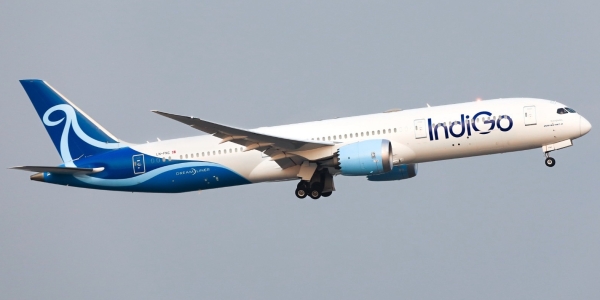
While aviation analysts have asked for the same assessment of Boeing 787s operated by IndiGo, Capt Amit Singh, founder of Safety Matters Foundation, wants the focus to be on the training requirements mandated by the regulator. In an email to the regulator, he has sought a review of the legality and enforceability of the Air India’s Flight Standards Policy Manual and a direction to the airline to submit a dedicated Quality Assurance Program for pilot training.
Besides seeking the appointment of an independent Quality Manager who reports outside of the Flight Standards chain, he has proposed that the regulatory authority of the Head of Training be reinforced as the sole accountable figure for training quality and compliance. “It is imperative that corrective actions be taken to close this governance and compliance gap, ensuring alignment with India’s obligations under ICAO Annex 1 and DGCA CARs,” he says in the email, a copy of which was posted on the social media platform X.
The message is clear: Unless critical lessons are learnt from past accidents, policy and regulatory corrections taken and executed with all seriousness, the risk of another crash will remain high. An honest, thorough probe will inevitably reveal the real reasons behind the Ahmedabad crash. But for all the gaps to be fixed and accountability guaranteed, the stakeholders will have to take urgent steps both in policy and implementation, and let some heads roll for the greater common good.
Read More: New Aviation Safety Rules Trigger Crackdown on Airport Obstructions Nationwide