










India’s Aviation Sector: Navigating the Talent Shortfall in a Booming Market

- India’s aviation sector faces yearly gaps of 1,150–1,450 pilots, 300–500 maintenance technicians, and up to 1,000 cabin crew, even as its fleet is set to triple by 2034.
- Limited training capacity, high costs, slow hiring of air traffic controllers, and reliance on foreign centres strain India’s ability to build its aviation workforce.
- India needs more local training facilities, stronger partnerships, early career outreach, and wider use of VR and digital tools to close this gap.

According to Airports Council International World (ACI World) and the International Civil Aviation Organisation (ICAO), global air passenger traffic is forecast to exceed 12 billion passengers per year by 2030, up from approximately 9.5 billion in 2024. The Asia-Pacific region is leading this surge, with India identified as a key contributor, according to CAE’s biennial Aviation Talent Forecast 2025, unveiled at the Paris Air Show.
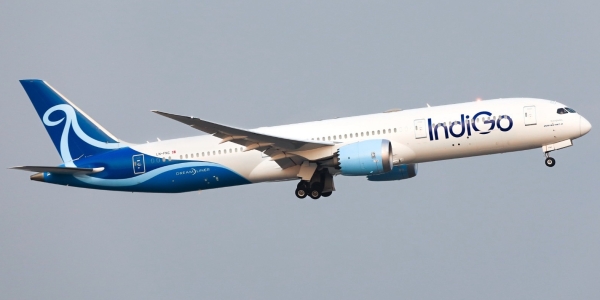
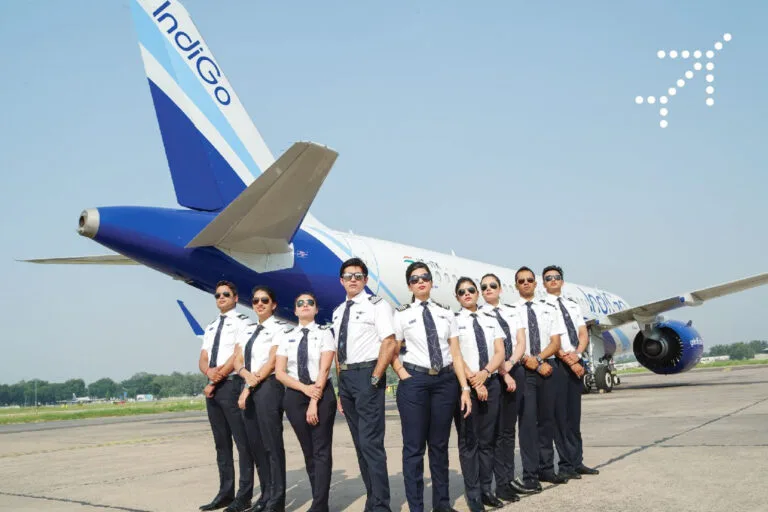
India’s total air passenger traffic is projected to reach 300 million annually by 2030. To meet this rapidly surging demand, India’s major carriers, such as IndiGo, Air India, Akasa Air, and Air India Express, placed massive order books in 2023–24, with the overall aircraft orders crossing the 2,000-mark, indicating the world’s second-largest aircraft order pipeline after the US.
Beneath these optimistic projections lies a critical challenge: The CAE report notes that approximately 50 per cent of pilots worldwide will be new to the profession by 2034, underscoring the urgency of expanding robust training pipelines. A large wave of pilot retirements globally is already underway; 129,000 pilots will retire, while another 138,000 will be needed to support fleet growth. By 2034, the Asia-Pacific region will require 90,000 commercial pilots, 250,000 cabin crew, and 115,000 aircraft maintenance technicians.

India accounts for a significant share of the demand for skilled aviation professionals and the infrastructure to train them. Air India and IndiGo alone are projected to need 16,800 pilots over the next 10 years. Meeting the demand for pilots, aircraft maintenance technicians, cabin crew, and thousands of air traffic controllers over the next decade holds the key to India sustaining its aviation boom. The report states that India’s in-service fleet is expected to triple within the next decade, thereby amplifying its training and workforce needs.
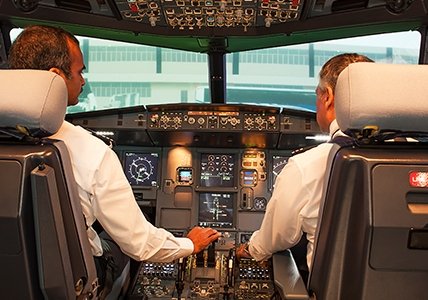
India’s aviation sector faces significant human resource challenges, with annual shortfalls of 1,150–1,450 pilots, 300–500 aircraft maintenance technicians (AMTs), and a projected 500–1,000 cabin crew over the next decade. The 2024 Boeing and Airbus forecasts underscore the urgent need for 19,000–20,500 pilots, 20,000–23,500 cabin crew, and 20,000–23,500 AMTs over the next 10 years.
The Talent Imperative: A Growing Deficit
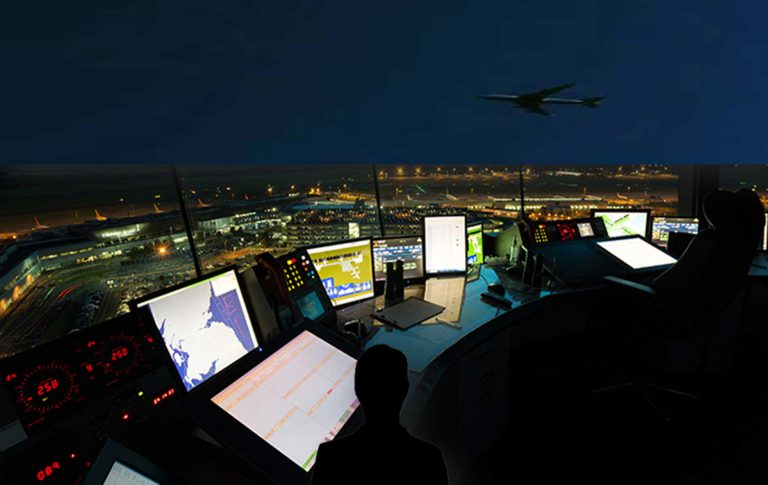
India’s needs are driven by the rapid expansion of its fleet and the retirement of seasoned professionals. The challenge is stark for air traffic controllers. India, which accounts for a significant proportion of the estimated 100,000 daily commercial flights globally, faces shortages compounded by a slow training pipeline. As of January 2023, the Airports Authority of India (AAI) had 3,692 controllers in place out of a sanctioned strength of 4,211, resulting in over 500 positions remaining vacant. India must recruit and train at least 1,400–1,800 additional controllers over the next few years and maintain this pace for the decade to support aviation growth and ensure safety.
Infrastructure Shortfalls: A Bottleneck to Growth
The CAE report emphasises that training is the “most critical bridge” to meeting talent demand. For pilots, the duration (often 2+ years), high cost, and academic complexity deter many aspirants. As of 2024, India has 35–37 DGCA-approved Flight Training Organisations (FTOs), producing 1,500–1,800 Commercial Pilot Licenses (CPLs) annually, though only 600–750 pilots are type-rated and ready for airline operations.
Aircraft maintenance technician training faces similar constraints. The report notes that 83 per cent of current technicians worldwide will retire by 2034. India’s need for 119,000 new technicians calls for a robust training network. As of 2024, India has 35–37 DGCA-approved Flight Training Organisations (FTOs), which produce 1,500–1,800 Commercial Pilot Licences (CPLs) annually. However, only 600–750 pilots are type-rated and ready for airline operations. However, of CAE’s eight global maintenance technician training centres, none is located in India, pushing Indian trainees to seek costly foreign options.
Air traffic control training is another bottleneck. The emotional and technical demands of the role result in high attrition. While India is investing in modernising its ATM system, the report suggests that India needs to urgently add new Air Traffic Services (ATS) to localise and scale up training.
Cabin crew training, while less technically intensive, still requires facilities and structured curricula to train India’s share of the 250,000 new cabin crew needed in Asia-Pacific. India currently has around 55 to 100 recognised cabin crew training institutes across the country. In terms of output, these institutes collectively train approximately 3,000–5,000 candidates per year, who then go on to join airlines.

Furthermore, supply chain disruptions affecting aircraft deliveries through 2026 may slow down fleet expansion, in turn delaying simulator acquisitions and operational training. India’s dependence on imported aircraft and spare parts exacerbates these delays.
India’s Response: Innovations and Challenges
The CAE report commends initiatives such as Science, Technology, Engineering, and Mathematics (STEM) outreach and training sponsorships. Airlines like IndiGo have launched cadet pilot programmes offering conditional job offers and financing support. However, these are still nascent and insufficient for India’s scale.
The report recommends embracing technologies like AR/VR, AI-powered simulation, and data-driven platforms like CAE Rise™. In a digitally advanced country like India, these solutions could optimise outcomes if adopted widely. India’s digital infrastructure provides a fertile ground for adopting hybrid training, VR simulators, and cloud-based learning systems.

The Path Forward: Bridging the Gap
To meet the CAE forecast’s projections, India must make bold investments in aviation training. Currently, India’s aviation training ecosystem comprises major facilities operated by IndiGo, Air India, the Flight Simulation Technique Centre (FSTC), and others. Additionally, GMR, AAI, and over 35-37 DGCA-approved flying schools across India support training for pilots, cabin crew, and ground staff.
Establishing CAE-style centres for air traffic and maintenance training in India will reduce dependence on foreign facilities. Public-private partnerships and scholarship programs need to be expanded. Increasing local MRO capacity is also crucial for training technicians and retaining value within the country.
The government can play a key role in aligning compensation packages, offering financial aid, and promoting aviation as a viable career early in schools and colleges. The CAE forecast recommends early outreach, mentorship, competency-based training, and stress management support, particularly for roles with high burnout rates, such as air traffic control.
A Sky Full of Promise
The CAE 2025 Aviation Talent Forecast envisions a future where India can emerge as a global aviation talent hub, sustaining millions of jobs and contributing significantly to regional economic growth. However, India needs to invest in localised, tech-enabled training, foster inclusivity, and forge cross-sector partnerships to bridge its aviation talent gap.
Read the complete report in PDF format here;