







Airports have transformed into bustling hubs of retail, dining, and entertainment to enhance passenger experiences and generate revenue.
This shift benefits both travellers and airports, with non-aero activities like retail and food services playing a significant role in this evolution.
There was a time when airports were simply places to catch a flight. Those days are now history. In recent years, airports have undergone a dramatic transformation, evolving into bustling hubs of retail, dining, and entertainment. It’s almost as if they’re competing with malls for attention.
What is driving this trend? Primarily, it’s about passenger experience. With increased security checks and potential delays, people are spending more time in airports. To make this wait more enjoyable, airport authorities are turning their terminals into destinations in their own right. Not only does this help the passengers, but it has become a major source of revenue for the airports as well.
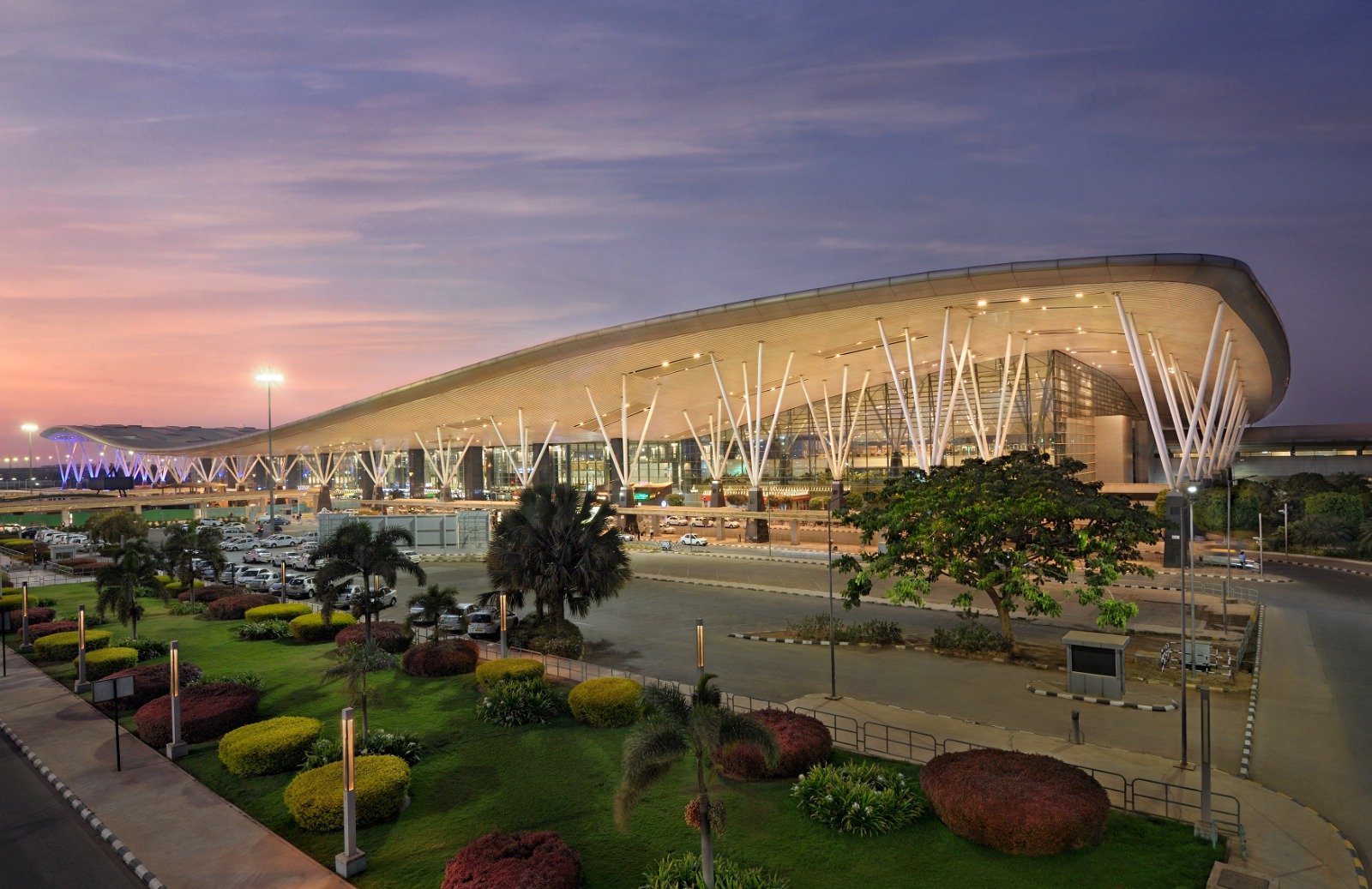
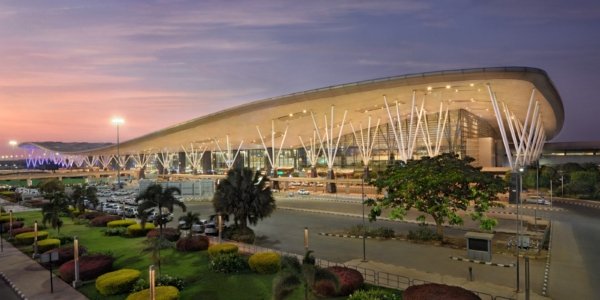
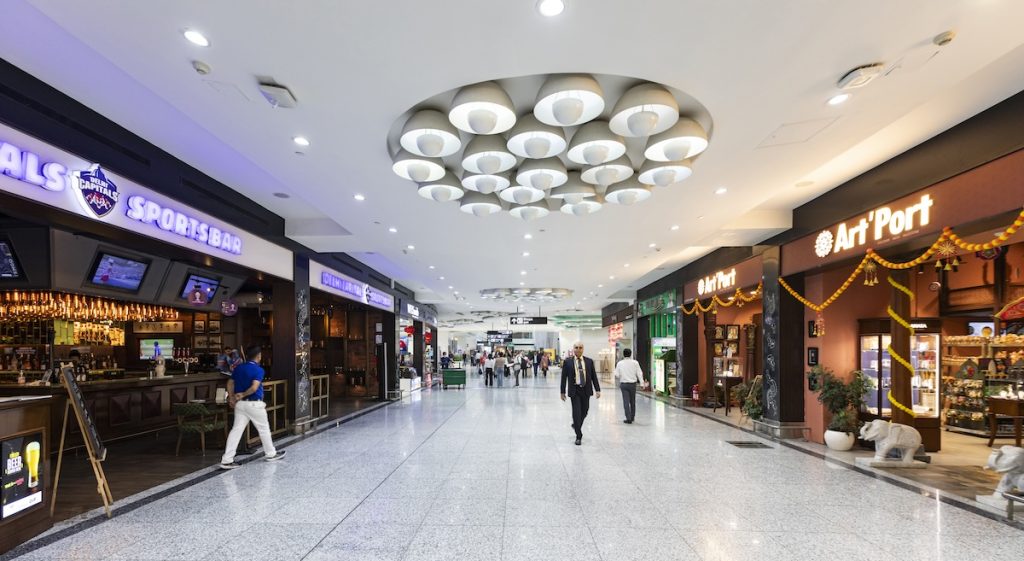
Gone are the days of overpriced, limited food options. Today’s airports boast a diverse culinary scene, from local delicacies to international cuisines. It’s not uncommon to find gourmet burger joints, artisanal coffee shops, and even Michelin-starred restaurants within the terminal walls. At Bengaluru’s Terminal two, there are some brands which have their first or only store in India at the new terminal.
This transformation is not without its challenges. Balancing passengers’ needs with retailers’ commercial interests can be tricky. Airport authorities must ensure that the core function of getting people from point A to point B is not compromised. Additionally, there’s the issue of rent prices. High rents can limit the variety of stores and restaurants, leading to a less appealing experience for passengers. Despite these challenges, the trend of airports becoming mini-malls is here to stay. It’s a win-win situation for everyone involved. Passengers get to enjoy a better airport experience, retailers gain access to a captive audience, and airport authorities increase their revenue.
India’s airports have also joined this trend, starting with Delhi Airport, the largest in the country for both domestic and international passengers, and it has a large gateway into and out of India. Pushing up non-aero revenue is standard practice with airports worldwide, which are large capital-intensive projects. The airport developer looks at the non-aero business, city-side development, and long-term concessions as the revenue that recovers its development cost. Globally, the non-aero revenue stands at around 40%, as per the ACI Airport economics report released in 2019. The first phase of the privatisation of airports in India saw the usage of a revenue-sharing model, where a percentage of total revenue is shared with the Airports Authority of India. The higher revenues also help AAI gain, which is then deployed to develop smaller airports or operationalise airports hitherto not in use. The later phase of privatisation, which was conducted just before the onset of COVID, saw the model shift to a per-passenger amount to be shared.
What is non-aero revenue, and why do airports focus on it?
The non-aero revenue comprises space rentals given out to airlines and lounges, Food & Beverages, Advertisement, Cargo, Ground Handling and Car Parking, amongst others. Airports focus on these to gain beyond the standard charges which they get from airlines for landing and parking the planes and the User Development Fee which airports get from passengers. While these two heads are controlled by various regulations, the non-aero revenue has limited regulations which allow the airport to charge based on demand and supply. Advertisement spaces are available at variable rates based on visibility, for example.
What do the numbers say?
GMR Airports’ income from non-passenger revenue at Delhi and Hyderabad stood at INR 356 per passenger, compared to INR 235 per passenger from aero activities. In India, the charges are governed by AERA (Airports Economic Regulatory Authority of India). The non-aero revenue at Delhi was nearly three times its aero revenue. Delhi Airport earned INR 29,417 million from non-aero revenue in FY24, while its aero revenue was INR 10,618 million. The non-aero revenue was 60% of the total gross income of the airport. This underscores the “Mall in an airport” concept for the largest airport in the country.
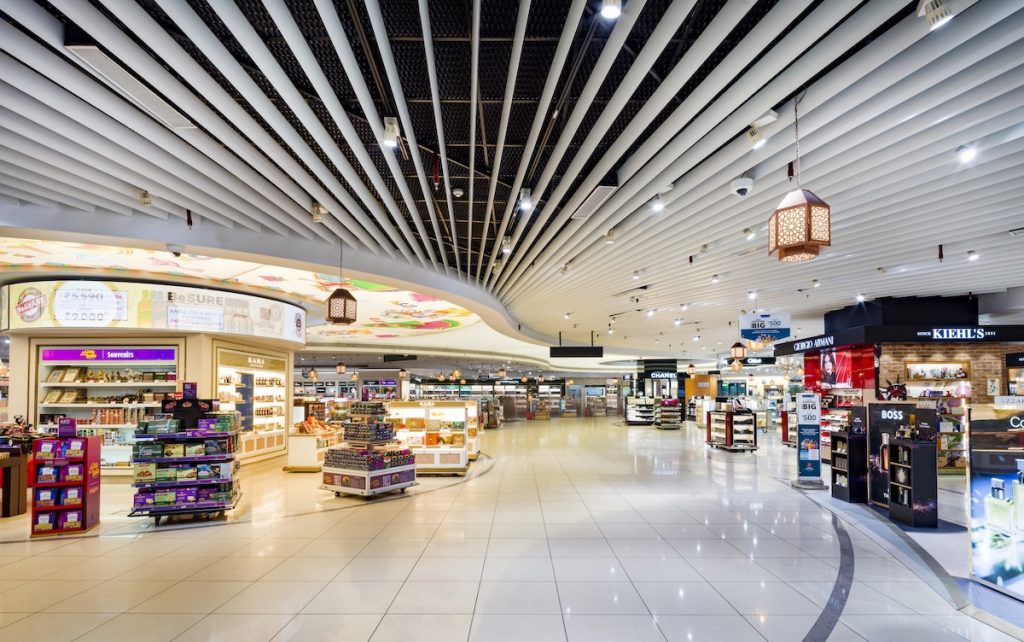
The non-aero revenue was up 19% year over year. Within Non-aero revenue, Retail and Food & Beverage were the top growers. The aero revenue typically comprises airline terminal space rentals, airline landing fees, and usage fees for terminals, gates, services, and the User Development Fee. The non-aero revenue comprises Rentals, retail, Food & Beverage, Duty Free, Advertising and car parks.
Hyderabad, also operated by the GMR group, has a non-aero revenue of INR 5704 million, less than half of the aero revenue, which stood at INR 12602 in the last financial year. Starting this year, the airport will see a jump in non-aero revenues as the expansion is complete and additional area is now available for non-aero activities.
Another area that sees a major uptick in revenue is CPD or Commercial Property Development. The Aerocity area in Delhi and similar land banks being developed in Hyderabad and Bengaluru are huge business generators. This involves hotels, malls, and office spaces, amongst others, and it is a nice way to attract MICE (Meetings, Incentives, Conferences, and Exhibitions).
Bengaluru may not have declared its revenue or the split as it is not listed, but some of the brands that have come to Bengaluru T2 are Carluccio’s, the famous Italian restaurant chain. Similarly, global brands like Johnny Rockets, Wolfgang Puck, and James Martin Kitchen have made Bengaluru’s T2 their home. What is surprising is that they have not invested in the international terminal but on the domestic side.
Concept fraught with criticism
The collapse of the canopy structure in Delhi or delays due to fog leads to criticism against the airports for investing in malls rather than airports. These two issues are unrelated. The airport can be a mall and also have ample seating and security lines. It need not come as either this or that as an option. Large airports across the world, especially hubs, have large retail, duty-free, and food and beverage selections. Singapore Changi or Dubai are no exceptions to this, and as Delhi tries to get into this league, the airport should, in fact, invest more in attracting global brands in retail and food to make the transit more attractive. While Singapore Changi Airport has the jewel, a butterfly park and many such attractions, Dubai is known for its duty-free. The attractiveness cannot just be the cost and connection time but the airport experience and the only way forward is more retail, food and beverages and duty-free without compromising on service standards for security checks, check-in and waiting areas.
Passengers are often in two camps. One who wants to get to the gate as soon as possible and board the flight, and those who want to enjoy the airport experience of lounge, dining, and retail. But in the case of Delhi, like most other airports in the country – a passenger pays a User Development Fee. The total fees that a passenger pays for domestic departures in Delhi include the Aviation Security fee (INR 236) and the User Development Fee (UDF), which is INR 148. While passengers continue to complain about the lack of services and long wait times at bottlenecks like security and entry, the investment and returns for the airports seem to be on the non-aero rentals, which are occupying space and could well make way for automated tray retrieval machines at security or an increased security area when re-arranged.
From a passenger perspective, this is a double whammy – paying extra for the facilities and complaining about the very same facilities, only to see glitzy stores and outlets in the security hold area and if this does not rub enough salt on the wound, airlines the world over are counting cabin baggage by the kilo or pieces and making it strict – which could mean a passenger’s retail experience could need some more currency to take it inside the plane!
Tail Note
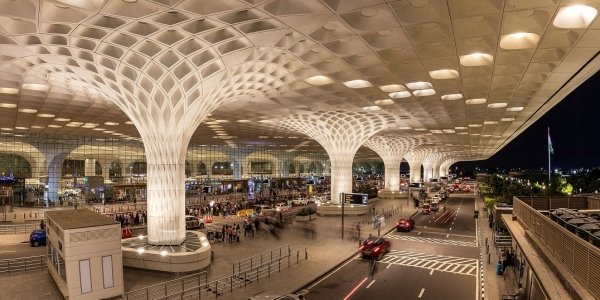
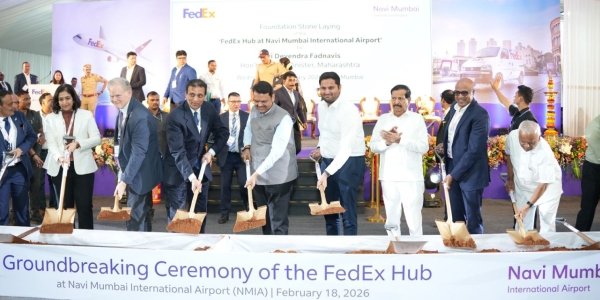
More airports are up for privatisation in the country. For the early starters – Mumbai and Delhi saw new terminals being built while Hyderabad and Bengaluru were greenfield constructions. The next saw the Adani group enter the airport management business with concessions at Jaipur, Guwahati, Lucknow, Mangalore, and Ahmedabad and buying out Mumbai, along with concession for Navi Mumbai – a green field airport. To take over existing AAI-owned airports means there always is a lack of space to accommodate large retail offerings, which will put additional pressure on the Adani group to match the non-aero revenues of Delhi! There could still be scope for growth as Singapore Changi – saw only 39% of its income come from airport service fees pre-pandemic, with the rest coming from Rentals, Cargo and Consulting charges, amongst others.
One challenge for the airports in India is that higher security constraints mean that there are limited common areas for passengers and non-travelling public. Kuala Lumpur Airport’s terminal 2 (KLIA2) has been designed as a mall where a section as big as the check-in hall is a mix of retail and food & beverage outlets.
In fact, the GMR group has not been able to replicate the same percentage at Hyderabad. This points to a case of a larger market, higher purchasing power, and better reach for advertising driving revenues at Delhi, which now ranks in the top 50 airports worldwide by traffic and connectivity.