














- Adani Group’s acquisitions of Air Works and Indamer Technics mark a decisive push into India’s aviation maintenance market.
- The Nagpur MIHAN hub, combined with Air Works’ national footprint, positions Adani to capture high-value heavy maintenance and redelivery work.
- While integration and competition challenges remain, Adani’s entry signals a transformative shift for India’s MRO ecosystem.
India’s MRO sector has been repeatedly overlooked, never attaining the heights or receiving the credit it deserved. But with the Adani group entering the fray, the dynamics of India’s MRO market are changing rapidly.
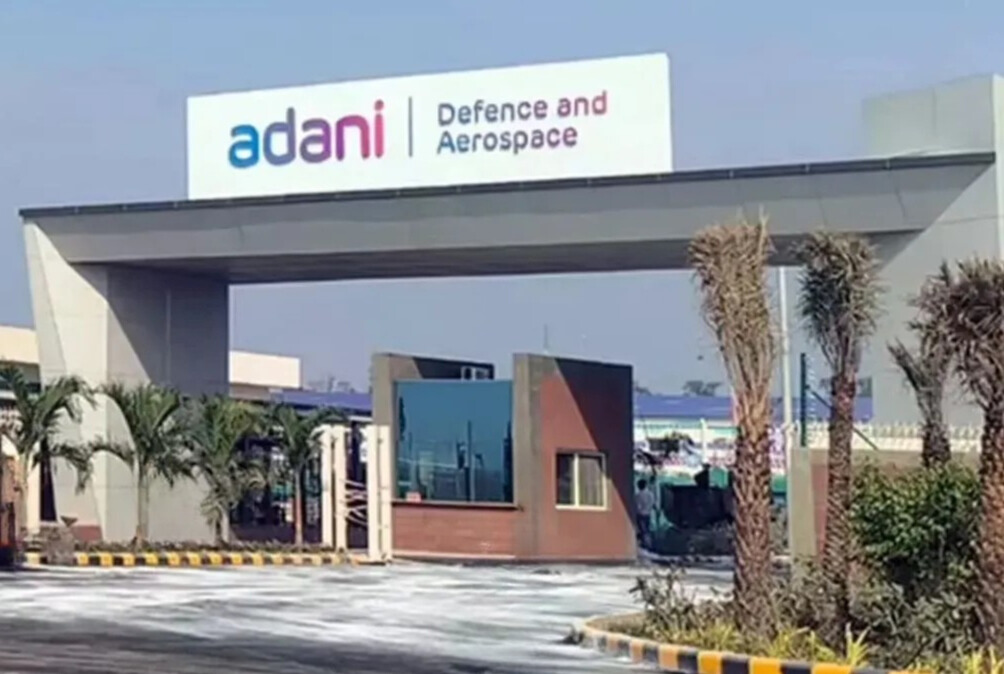
With Adani Defence & Aerospace now stitching together Air Works and Indamer Technics (ITPL) under one umbrella, that push might finally be here. The question is: does this create the flywheel India needs for capability-building and self-reliance or does it risk crowding out smaller players?
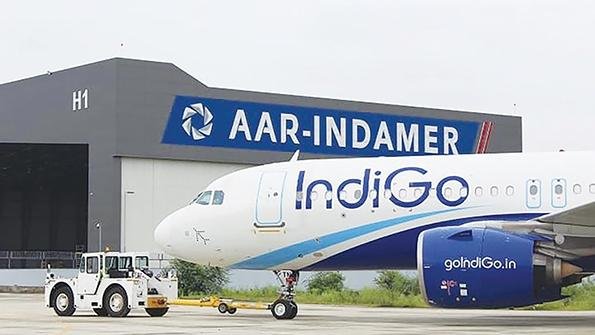
Adani Defence Systems & Technologies (ADSTL), via its new 50:50 venture Horizon Aero Solutions with Prime Aero Services (owned by Prajay Patel), signed a definitive agreement to acquire 100% of Indamer Technics Pvt. Ltd. (ITPL). ITPL runs a modern greenfield base-maintenance complex at MIHAN, Nagpur, covering approximately 30 acres, 10 hangars, and 15 bays, with DGCA, FAA (US) and other approvals. It is capable of undertaking lease returns, heavy C-checks, structural repairs and painting.
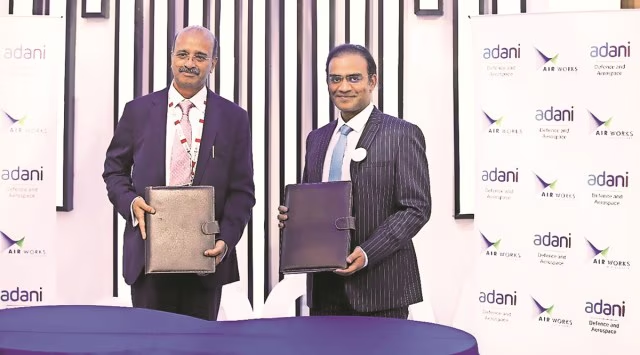
In parallel, Adani completed the earlier-announced deal to take over approximately 85.1% of Air Works India (Engineering) Pvt. Ltd. for Rs 400 crore, via ADSTL. This was confirmed through stock-exchange disclosures and business press in July 2025.
Together, these moves instantly give Adani the leverage of one of the largest private MRO footprints in India covering a wide range of services and customers, spanning line and base maintenance, interiors, avionics, painting, heavy checks, and redeliveries and strengthening its future defence MRO play.
Why did Adani choose Indamer after Air Works?
MIHAN is at India’s geographic centre with long taxiways, large plots and year-round operating windows. The 10 hangars/15 bays configuration allows parallel heavy checks, critical when Indian airlines are inducting hundreds of new aircraft and leasing redeliveries spike.
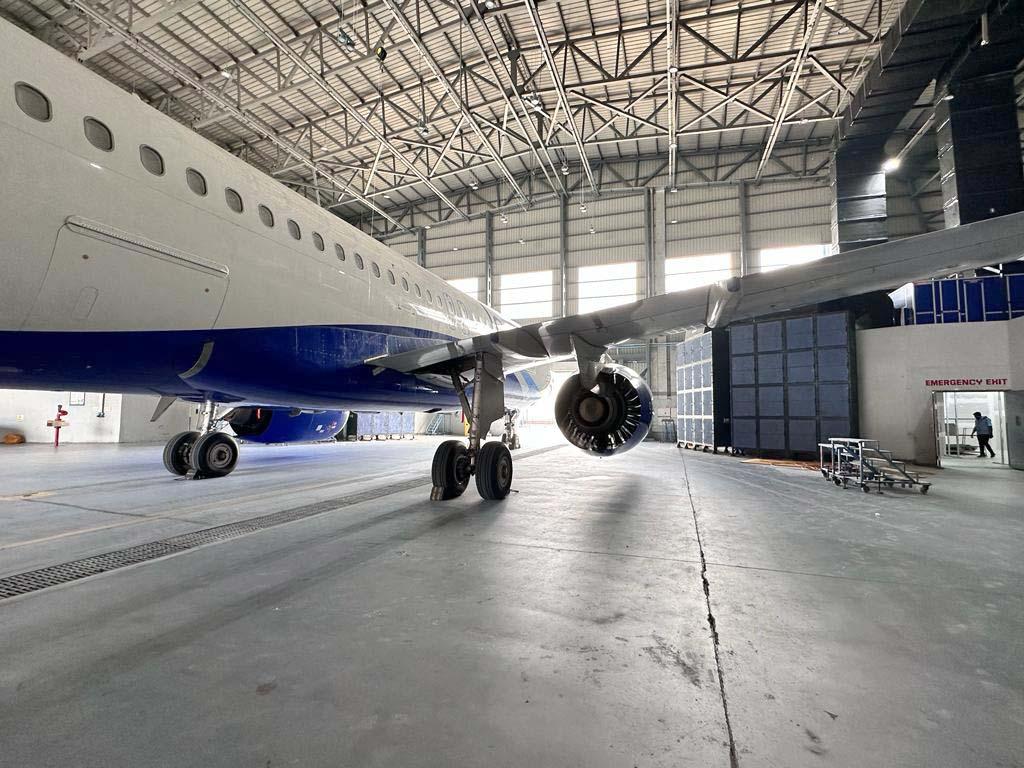
Indamer’s Nagpur facility is certified by FAA (US) along with DGCA, which reassures lessors and global operators. It unlocks higher-value checks, complex structural work and paint with international quality assurance needed for redelivery and export work.
India is expected to add over 1500 aircraft over the next few years, which will expand the MRO market for decades to come. Even conservative growth implies double-digit expansion in the domestic MRO addressable market.
Is Adani going big on India’s untapped MRO market?
The answer is a simple ‘yes’ and there is plenty of evidence to prove it. Adani Group’s aim is “single-point aviation services platform” that can serve airlines, lessors and defence customers end-to-end. With Air Works’ nationwide presence and Nagpur’s heavy-checks and paint hub, Adani now has end-to-end MRO capabilities supported by specialised shops for throughput and quick turnarounds.
This is a game changer for India’s MRO ecosystem as it will provide standardisation of processes, unified tooling/calibration, common QA, shared parts pools and cross-utilised engineering talent.
Will this build real capability and self-reliance?
Indian airlines lose a huge amount of FOREX when aircraft are sent abroad for D-checks, structural modifications, cabin retrofits, and composite repairs. With Nagpur capacity and Air Works’ pedigree, Adani can onshore a larger share of C/D Checks, major structural repairs, cabin modifications, and full-aircraft painting at international standards. That’s genuine capability, not just volume.
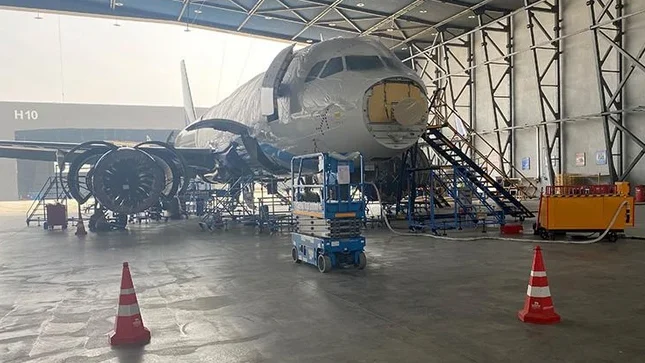
Besides, self-reliance is not merely about building hangars. India needs a complete value chain, and the government has addressed this gap by revising the MRO policy to encourage OEM collaborations, technology transfers, and capability building.
Now you might ask, what about lessors’ trust? Given past concerns from incidents like the SpiceJet, Go First and Jet Airways crises, will this deal turn the tide in India’s favour? The answer again tilts in favour of India because FAA/EASA-equivalent processes, digital records, and lease-return facilities at Nagpur could make it a redelivery hub for Asia/MEA fleets with predictable TATs and robust records.
India could retain a larger share of MRO spend domestically, improve airline cashflows (lower ferry and downtime), and build exportable services, if the Adani Group is able to capitalise on all of the above.
Is Adani eyeing AIESL next?
The privatisation of AIESL has been on and off for over a couple of years now. The latest reports of July 2025 indicate deferral of divestment while regulatory and housekeeping issues are resolved. This has no doubt dampened the investor momentum, but it does not completely rule out the chances of sale.
However, given the present scenario, the timeline looks vague and uncertain. But once the air is cleared, Adani is definitely seen as a strong contender for the deal. AI- Engineering Services Limited is one of India’s largest MROs dealing with widebody hangars, engine maintenance, both C and D checks, APU shops, and a large pool of talented engineers and AMEs. In short AIESL is a short-cut recipe to a full-spectrum capability.
What is the future of small repair shops then?
Yes, smaller MROs can still do well, but they’ll need to focus on specialised services where a big player like Adani may not put its main attention. Large MRO groups usually take on the big, routine jobs such as A, B, or C checks, aircraft painting, and cabin interiors, which leaves space for smaller companies to handle more niche and high-value work.
This could include repairing specific components like wheels and brakes, safety gear, composite parts, pneumatics, or galley equipment, especially if they can work closely with OEMs or offer quick turnaround times.
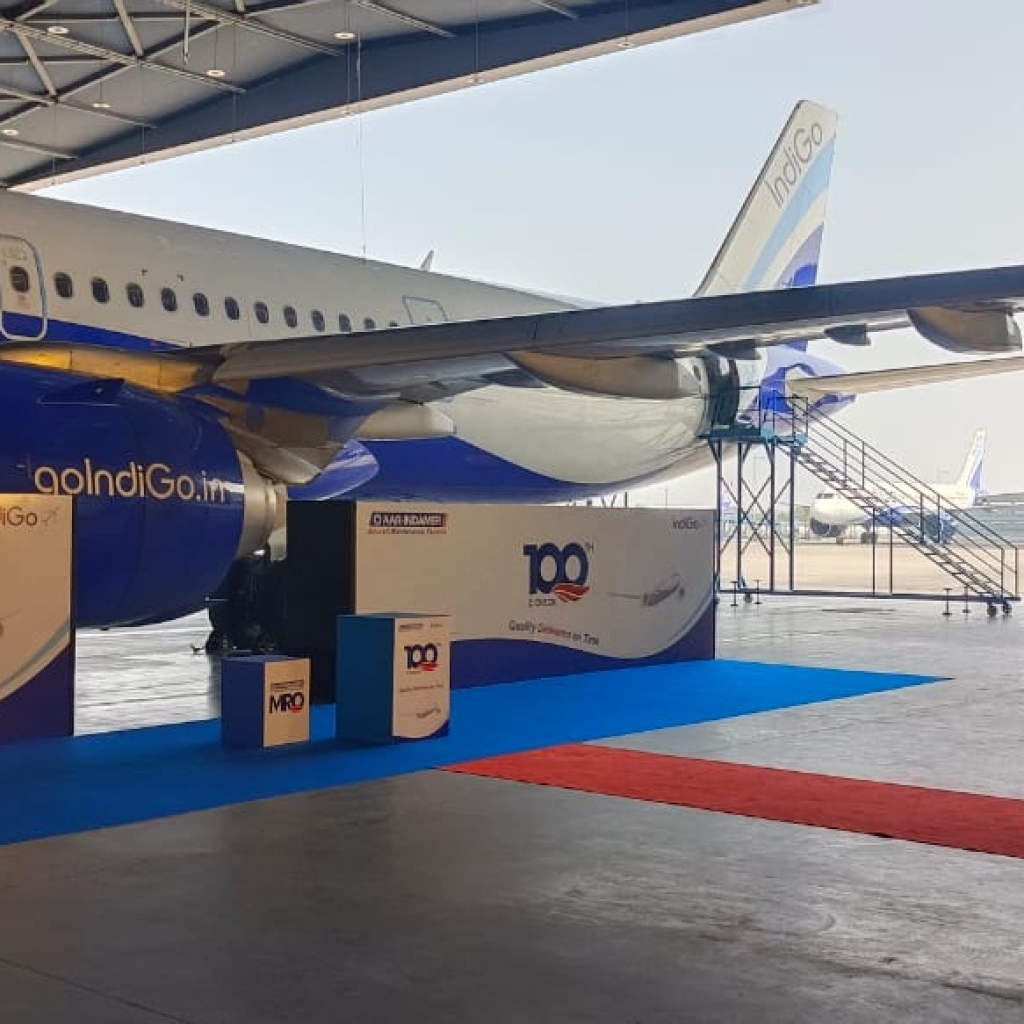
They could also focus on on-wing and line services, like ETOPS checks, urgent AOG recovery, borescope inspections, and mobile repair teams that can travel to the aircraft.
Another promising area is cabin upgrades, such as installing new connectivity systems, premium seats, or other modifications approved under STCs.
There’s also big potential in helicopter and business jet MRO, which are smaller, specialised markets that big players often overlook. For these smaller MROs, speed, expertise, and strong partnerships will be key, whether by subcontracting part of a bigger job like composites or NDT work or by becoming part of a larger company’s supply chain.
India’s aviation market is growing so fast that there’s room for a healthy ecosystem with many players, not just one dominant giant.
Scope for Defence MRO?
Adani could gradually expand into defence MRO for military fleets by using the same facilities, quality systems, and supplier networks they already use for civil aircraft. Many capabilities like painting, working with composites, non-destructive testing (NDT), machining, and engine/APU (auxiliary power unit) partnerships can serve both civil and military needs.
However, real success will depend on getting long-term contracts from the Indian Air Force, Navy, and Army, as well as securing access to intellectual property (IP) and forming partnerships with OEMs along with government policy, which will act as a catalyst.
All-in-all, Adani Group is going big, with two major independent MRO acquisitions in India. While the Group will face its own set of challenges, with stalwarts like D. Anand Bhaskar, Ashwani Acharya and Ashish Rajvanshi leading at the helm, things are expected to smoothen out sooner than later. As for other acquisitions, AIESL is a likely bet that Adani Group might take up as soon as the offer is on the table. Till then, it is a matter of wait and watch.
As for India’s MRO ecosystem, the deal is a game-changer. This tie-up signals a shift: as more maintenance moves in-country, airlines anticipate shorter downtimes and lower costs, reshaping India’s MRO sector.