










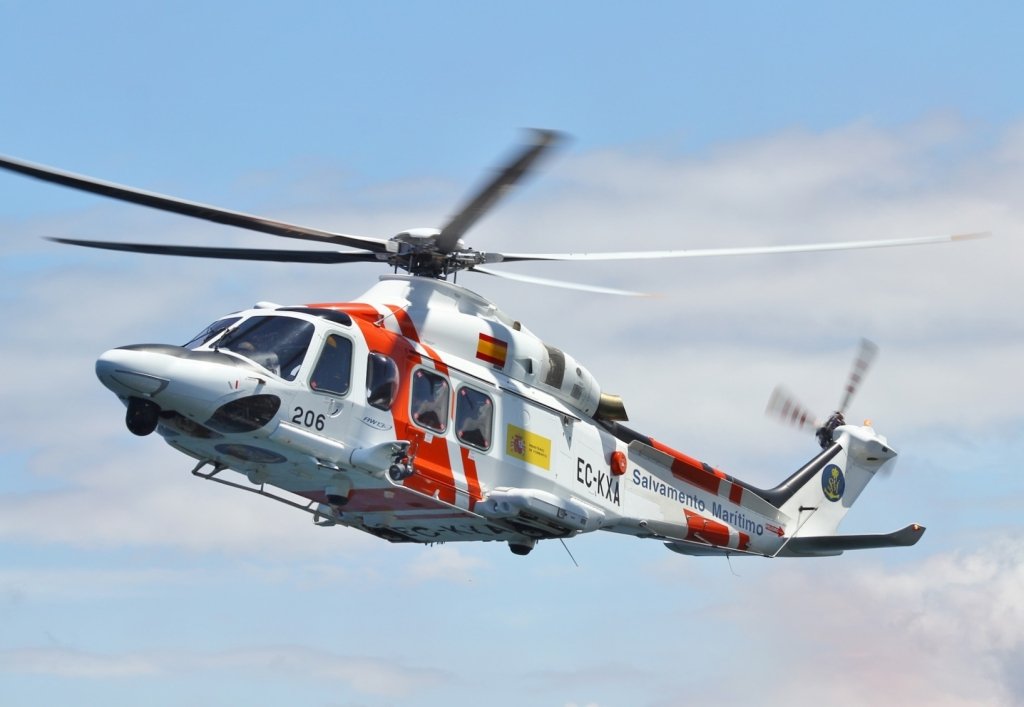
AgustaWestland AW139
The AgustaWestland AW139 stands as a credible product in the medium twin-engine helicopter market, embodying over two decades of engineering expertise and operational excellence. Introduced in 2001 and entering service in 2003, it has been fulfilling the diverse needs of operators across corporate, offshore, emergency medical, law enforcement, and military sectors. It offers a rare combination of performance, reliability, and adaptability. With more than 1,200 units delivered to over 300 operators in 90 countries, this helicopter has become the best-selling aircraft in its class, logging over 3.5 million flight hours by 2025.
Developed by Leonardo Helicopters, and priced competitively against peers like the Airbus H155 and Sikorsky S-76, the AW139 stands out with its exceptional range, advanced avionics, and a modular design that supports a wide array of missions, from VIP transport to search and rescue (SAR) in the harshest environments. Its widespread adoption—ranging from oil and gas operations in the North Sea to disaster response in Southeast Asia—underscores its reputation as a trusted workhorse for both civilian and government operators globally. In India, the helicopter serves roles like offshore transport for ONGC and disaster relief for the Indian Air Force.
Cabin Experience
The helicopter’s cabin—the largest in its class—measures 2.90 meters (9.51 feet) in length, 2.40 meters (7.87 feet) in width, and 1.42 meters (4.66 feet) in height, offering up to 8 cubic meters (282 cubic feet) of space. This expansive interior enabled it to be configured for multiple roles, seating up to 15 passengers in a high-density layout or providing a luxurious VIP setup for 6 to 8 passengers with club seating. For executive transport, the cabin can feature premium leather seats, soundproofing that reduces noise levels to as low as 75 decibels, and customisable options like walnut panelling, ambient lighting, and satellite connectivity for in-flight communication. Passengers enjoy easy access through large sliding doors on both sides, even in tight landing zones, and panoramic views through oversized windows. In SAR or EMS roles, the helicopter accommodates two stretchers with full medical equipment, including ventilators and defibrillators, and offers 360-degree access to patients for medical crews. Its separate baggage compartment provides 3.4 cubic meters (120 cubic feet) of storage, accessible during flight, making it ideal for missions requiring extra gear, such as offshore crew changes or disaster relief operations where every cubic foot counts.
Technology (Engine and Avionics)
The helicopter is powered by two Pratt & Whitney Canada PT6C-67C turboshaft engines, each delivering 1,679 shaft horsepower. Its Full Authority Digital Engine Control (FADEC) systems optimise fuel efficiency and reduce pilot workload. These engines provide exceptional hot-and-high performance, enabling operations in extreme conditions like the deserts of Rajasthan or the high-altitude terrains of the Himalayas. The helicopter’s avionics suite, centred around the Honeywell Primus Epic system, features four 8×10-inch multi-function displays that integrate navigation, communication, and mission systems. The cockpit includes a 4-axis digital autopilot, Helicopter Terrain Awareness and Warning System (HTAWS), and Enhanced Ground Proximity Warning System (EGPWS), ensuring safety in low-visibility conditions. For night operations, the aircraft supports Night Vision Goggle (NVG)-compatible lighting, while its optional searchlight and FLIR (Forward-Looking Infrared) systems enhance SAR capabilities. The helicopter’s modular design allows for mission-specific upgrades, such as weather radar or maritime surveillance systems, making it a favourite for multi-role operators like the Indian Coast Guard, which uses it for coastal patrols.
Performance
Proving its versatility as a multi-mission platform, the helicopter achieves a maximum speed of 306 km/h (165 knots), a cruising speed of 290 km/h (157 knots), and a service ceiling of 6,096 meters (20,000 feet). These attributes make it well-suited for long-range missions and high-altitude operations. With a maximum range of 1,061 kilometres (573 nautical miles) on standard fuel, the aircraft can fly non-stop between major hubs—such as Mumbai to Ahmedabad—while carrying a full payload. Its Category A certification ensures safe take-offs and landings in confined spaces, critical for urban operations or offshore platforms. The helicopter can carry an external load of up to 2,800 kilograms (6,173 pounds), supporting utility roles like firefighting or construction in remote areas. Its impressive hover performance, even at high altitudes, has made it a go-to choice for disaster relief missions in India, such as flood rescues in Kerala, where its ability to operate in challenging weather conditions proved invaluable.
AW139 operators receive robust global support from Leonardo Helicopters, with over 50 service centres worldwide, including facilities in India, ensuring 24/7 technical assistance and parts availability. The maintenance schedule includes 600-hour inspections and 2,500-hour major overhauls, supported by Leonardo’s digital maintenance platform, HeliWise, which provides predictive analytics to minimise downtime. Direct operating costs average around $2,500 per hour, competitive within its class, while recent upgrades—like a 2023 maximum take-off weight increase to 7,000 kilograms (15,432 pounds) and an optional 5-blade rotor system that improves fuel efficiency by 7 percent—keep the AW139 at the forefront of medium twin technology. Future enhancements, including studies into hybrid propulsion, promise to further reduce its environmental footprint, aligning with global sustainability goals like those discussed in India’s SAF initiatives.
Specifications
| Category | Metric | Imperial |
| Length | 13.77 m | 45 ft 2 in |
| Rotor Diameter | 11.00 m | 36 ft 1 in |
| Height | 4.98 m | 16 ft 4 in |
| Cabin Length | 2.90 m | 9 ft 6 in |
| Cabin Width | 2.40 m | 7 ft 10 in |
| Cabin Height | 1.42 m | 4 ft 8 in |
| Passenger Capacity | Up to 15 | Up to 15 |
| Max Take-off Weight | 7,000 kg | 15,432 lb |
| Max Range | 1,061 km | 573 nm |
| Max Speed | 306 km/h | 165 kts |
| Cruising Speed | 290 km/h | 157 kts |
| Service Ceiling | 6,096 m | 20,000 ft |
| Rate of Climb | 10.9 m/s | 2,140 ft/min |
| Engines | 2 × Pratt & Whitney PT6C-67C | 1,679 shp each |
| Fuel Capacity | 1,600 L | 423 US gal |
Takeaways
The helicopter epitomises Leonardo Helicopters’ dedication to delivering a versatile, high-performance platform that meets the evolving demands of global and Indian operators. With its unmatched cabin space, cutting-edge avionics, and robust Pratt & Whitney engines, it excels in roles from offshore transport to disaster response. In India, the AW139 has proven its worth in challenging missions, supporting ONGC’s oil rig operations and aiding disaster relief efforts, while its global footprint—from VIP transport in Europe to SAR missions in Australia—solidifies its status as a leader in the medium twin-engine category,. With competitive operating costs, continuous upgrades, and a focus on sustainability, the AW139 offers operators reliability, safety, and adaptability in multi-mission aviation.