












Table of contents
Dornier 328 Jet
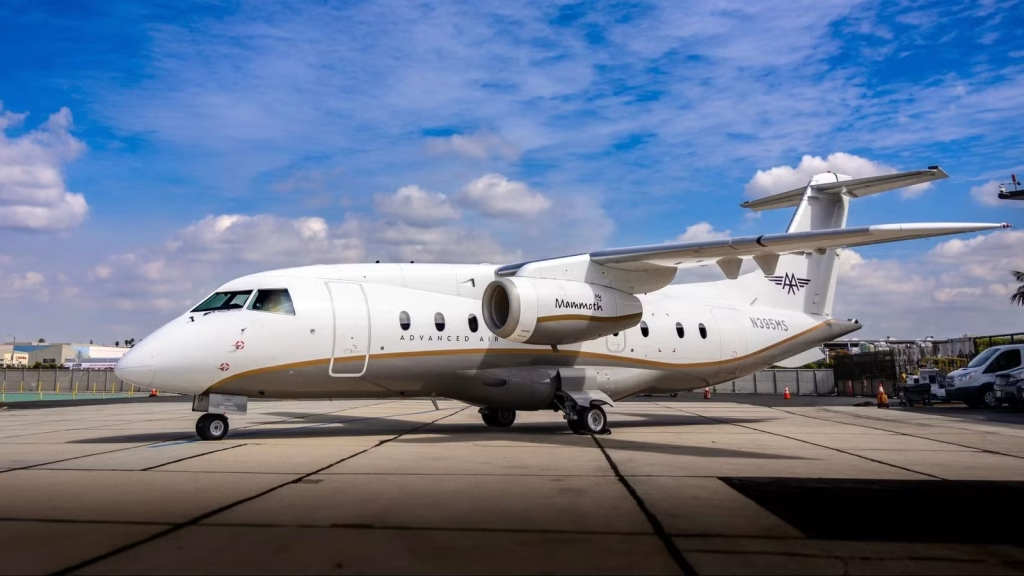
The Dornier 328 Jet, developed by Deutsche Aircraft, combines the heritage of German engineering with innovative advancements to meet the demands of modern regional aviation. As a jet-powered derivative of the Dornier 328 turboprop, this aircraft retains the aerodynamic efficiency and robust construction of its turboprop predecessor while introducing jet propulsion for improved speed, capacity, and operational flexibility. Its design offers a versatile solution for passenger, cargo, and special missions, making it a sought-after platform in various aviation sectors.
The aircraft accommodates up to 33 passengers and features a pressurised cabin optimised for comfort on regional and short-haul routes. Deutsche Aircraft’s ongoing commitment to sustainability and modernisation has positioned the Dornier 328 Jet as a strong contender in regional aviation markets worldwide. The aircraft also supports operational compatibility with emerging green aviation initiatives, including adaptations for sustainable fuels.
Initially introduced in 1997, the Dornier 328 Jet was part of the Dornier family’s innovative efforts to dominate the regional aviation market. Although production was halted in the early 2000s, Deutsche Aircraft has revived the aircraft with modernisation initiatives, addressing today’s market needs.
Dornier 328 Jet: Cabin Experience
The aircraft’s cabin offers an efficient layout with flexible configurations to suit different operational needs. The seating design prioritises passenger comfort, offering ergonomic features and sufficient legroom. Noise insulation and advanced pressurisation systems ensure a quieter and smoother journey, even on high-altitude routes.
Operators can customise the cabin to accommodate a range of applications, from VIP transport, air ambulance, medical evacuations, emergency response, surveillance, military transport roles to high-density commuter layouts. Overhead storage compartments and streamlined interior design enhance usability, making it an attractive option for passengers and operators alike.
Dornier 328 Jet: Technology (Engine and Avionics)
The aircraft is powered by two Pratt & Whitney PW306B turbofan engines, each capable of producing 6,050 pounds of thrust. These engines deliver exceptional reliability and fuel efficiency, making the jet economically viable for regional operators. Its jet propulsion system offers a maximum cruise speed of 405 knots (750 km/h), significantly enhancing travel times compared to its turboprop counterpart.
The cockpit is equipped with Honeywell Primus 2000 avionics, providing pilots with intuitive control and situational awareness. The avionics suite includes advanced navigation, communication, and weather radar systems, ensuring safety and efficiency across various flight conditions.
Deutsche Aircraft’s revitalisation of the Dornier 328 Jet signifies a growing demand for efficient and sustainable regional aviation solutions. Through modernisation, the aircraft aligns with contemporary standards, ensuring its continued relevance in an industry shaped by evolving operational and environmental challenges.
Dornier 328 Jet: Performance
The Dornier 328 Jet is designed to excel in regional and short-haul operations. Its shorter runway requirements and excellent climb performance make it a versatile choice for airports with challenging operational conditions.
The aircraft’s range of approximately 2,000 nautical miles (3,700 km), depending on payload, enables it to serve a broad network of routes, from high-frequency commuter services to remote regional destinations. Its ability to operate at altitudes up to 35,000 feet reduces congestion in lower airspace, offering operators additional flexibility in flight planning.
Its hybrid lineage—part turboprop reliability, part jet-speed innovation—makes the Dornier 328 Jet a unique player in its category. Today, it caters to over 200 operators worldwide, including airlines, governments, and private organisations for regional passenger transport, special missions, VIP and corporate transport, and cargo operations.
Dornier 328 Jet: Specifications
The Dornier 328 Jet is a compact yet versatile regional aircraft tailored for short-haul operations. It balances efficiency with performance, making it ideal for diverse missions.
| Category | Details |
|---|---|
| Manufacturer | Deutsche Aircraft |
| Engine | Pratt & Whitney PW306B turbofans |
| Passenger Capacity | Up to 33 passengers |
| Maximum Takeoff Weight | 33,510 lb |
| Range | Approx. 2,000 nm |
| Cruise Speed | 405 ktas |
| Service Ceiling | 35,000 ft |
| Fuel Compatibility | Compatible with sustainable aviation fuels (SAF) |
| Avionics | Honeywell Primus 2000 suite |
Takeaways
The Dornier 328 Jet is a testament to Deutsche Aircraft’s expertise in creating versatile and reliable regional aircraft. Its jet propulsion system enhances speed and efficiency, while its adaptability allows operators to meet diverse aviation demands.
The aircraft is built on the foundational design of the Dornier 328 turboprop but replaces turboprop engines with jet propulsion for superior speed and efficiency. Originally developed by Dornier Luftfahrt GmbH in the 1990s, it has been further modernised by Deutsche Aircraft to meet the requirements of contemporary aviation markets.
With a capacity for 32–33 passengers, the 328 Jet is tailored for regional airlines operating shorter routes, VIP transport, and specialised roles requiring speed and reliability. Its unique selling proposition lies in its ability to operate from short and unpaved runways, which many traditional jets cannot manage.
Deutsche Aircraft continues to enhance the Dornier 328 Jet as part of its broader portfolio of efficient and environmentally sustainable regional aircraft. Efforts include adapting the airframe for zero-emission hydrogen propulsion and further integrating digital avionics for streamlined operations.