











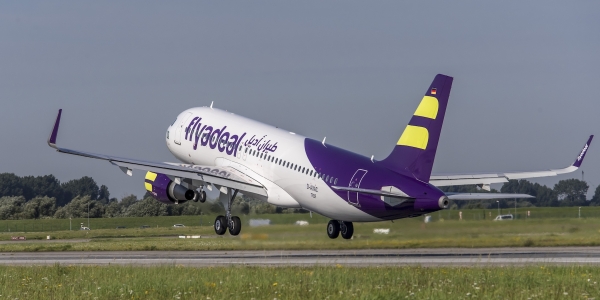


- Indian carriers are driving international air travel growth, expanding routes and reshaping the global aviation landscape with rising demand.
The first quarter of this financial year saw International footfalls from India register a 13% growth over the same period last year. This comes as very positive news from airlines since the international traffic had not returned to pre-COVID levels, even as domestic traffic crossed the pre-COVID levels last year. Indian carriers are adding new destinations by the day and increasing frequencies to existing ones. From Bali to Baku, several new routes are now being connected, the rapid expansion fuelled by a burgeoning Indian middle class rushing to travel abroad for holidays. Even as new peaks are reached in air travel, the number of foreign tourists arriving in India continues to lag the pre-COVID numbers. Foreign Tourist Arrivals (FTAs) for the first half of 2024 stood at 47,78,374 as compared to 43,80,239 in January-June 2023 and 52,96,025 in January-June 2019, with a 9.1% growth over last year but a drop of nearly 10% over 2019 – the pre COVID year. This is even as International footfalls at Indian airports were up 9.9% in Q1-FY25 when compared to the same period in FY20.
A look at the key numbers shows what is happening exactly. The Instagram stories and vlogs from Vietnam, Kazakhstan, Azerbaijan, and Indonesia appear to be fuelling a fear of missing out (FOMO) among travel aficionados. Indians flying internationally stood at 1,50,22,731 in the January to June 2024 period, as compared to 1,33,80,079 in January-June 2019, registering a growth of 12.28%. UAE, Saudi Arabia, USA, Thailand, and Singapore topped the departures for Indian nationals. Airports like Singapore were below the pre-COVID average as late as the first quarter of this year, only to recover in the holiday season. The Russia – Ukraine war, which started in 2022, and challenges in the Middle East led to further stress on travel, both in terms of availability and people trying to either not risk travel or save for bad days.
There has been a general consensus that travel costs have gone up post-Covid. Fuelled by revenge tourism, shortage of planes and in general capacity, the costs had shot up. Yet, only a few markets were travelling. Stricter rules in China meant that travel was low, which led to countries like Thailand and Malaysia offering visa-free travel to Indians, leading to a surge.
Overall, not all countries and airports have reached the pre-Covid levels. The Indian domestic market surpassed the pre-Covid numbers in 2023, even as it lost one major airline in the same year.
Data doesn’t lie
Indian carriers carried 45.6% of all international passengers in the April – June quarter this year, or the first quarter of FY25. This is a jump of 1.7% over the previous quarter. There has been a growth of 13% in Q1-FY25 as compared to Q1-FY24. The growth, though, is not even. Indian carriers grew by 18%, while foreign carriers grew by only 10%. The numbers were significantly lower in 2019 when Jet Airways collapsed in early April, and a large chunk of Indian share in international operations came to a halt, with some cases seeing partner airlines like KLM and Air France operating additional passengers for those who were ticketed on Air France or KLM but were to fly Jet Airways.
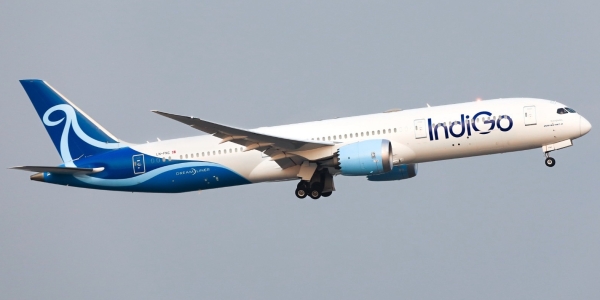
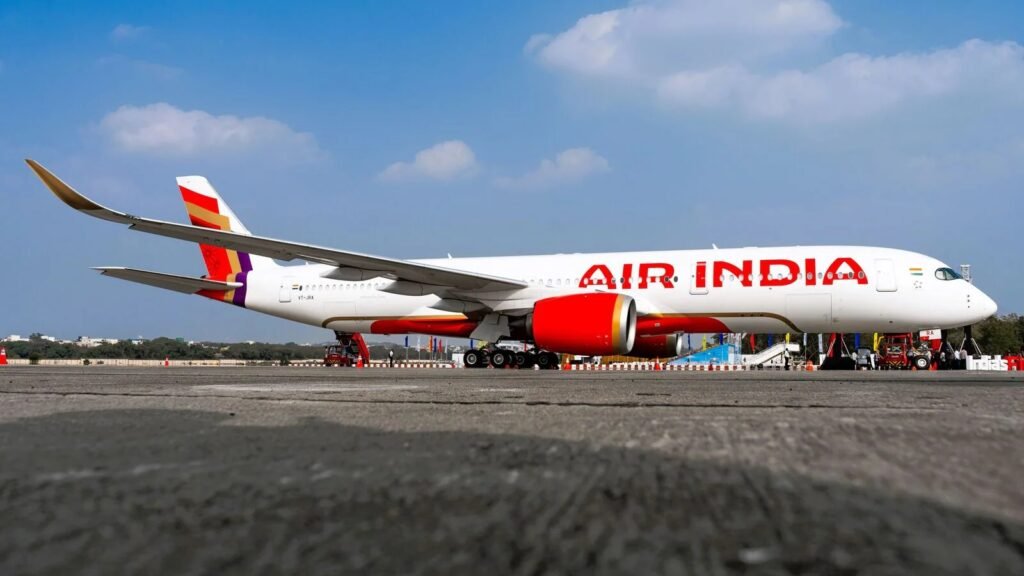
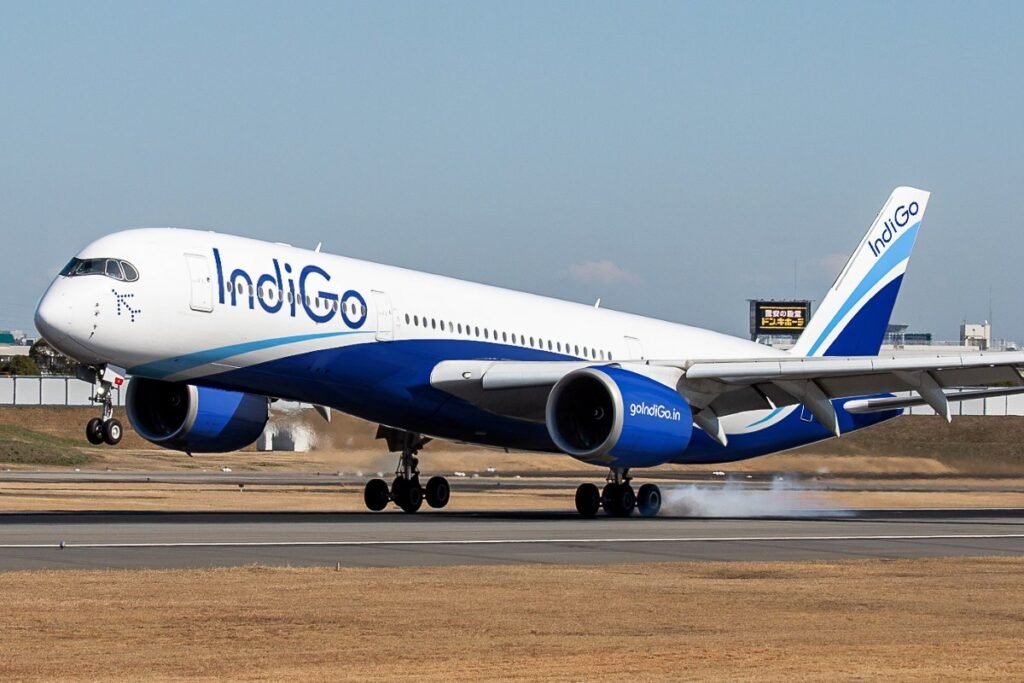
The reason why the tide is turning in favour of Indian carriers is twofold. First, the ability to expand. Air India has expanded to newer shores like Phuket, Ho Chi Minh City, Kuala Lumpur and added flights to its existing destinations like Melbourne, San Francisco and London, along with increasing frequency of flights to European points. IndiGo, with its expansion to Baku, Tbilisi, Tashkent, Almaty, Nairobi, Denpasar, and Jakarta, has attracted more and more tourists. In both cases, a new option has made flying cheaper as it avoids two flights and a transit, giving more time to passengers at their destination, be it for business or leisure.
The bilateral rights have traditionally been left unused from the Indian side as IndiGo was too small and government owned Air India did not have the means to expand. Bumper induction by IndiGo and change of ownership of Air India with fund infusion has led to a change in mindset of Indian carriers.
| Apr – Jun 2024 International passengers Top 10 airlines | ||
| Sr. No | Airline | International Passengers flown |
| 1 | INDIGO | 3226286 |
| 2 | AIR INDIA | 2175852 |
| 3 | AIR INDIA EXPRESS | 1461334 |
| 4 | EMIRATES AIRLINE | 1396564 |
| 5 | VISTARA AIRLINES | 740877 |
| 6 | ETIHAD AIRLINES | 680588 |
| 7 | SINGAPORE AIRLINES | 591297 |
| 8 | QATAR AIRWAYS | 542021 |
| 9 | AIR ARABIA | 452971 |
| SPICEJET | 416269 | |
Tail Note
The Indian dominance in international traffic is likely to continue for two reasons. The first being the increasing middle class in the country wanting to have a foreign holiday and finding the local carrier easy to book and hassle-free experience, and the second being the expansion of Indian carriers not just from metros but from Tier II cities going forward.
A few quarters from now, Indian carriers will cross the 50% threshold of International traffic – which could possibly be by next summer and reverse decades old trend of laying out the international traffic on platter to foreign carriers. It is important that our carriers do not rest here but effectively look to connect the east with the west with an effective hub and spoke model at major Indian airports. Not only that, there lies an opportunity to attract foreigners to India with bundled bookings and offers – similar to what Singapore Airlines or British Airways do to entice passengers to fly to or via Singapore and London, respectively.