












- The GST Council’s two-slab system of 5% and 18% is now in force, streamlining indirect taxes and giving aviation clearer rules and lower compliance costs.
- Business Class GST is raised from 12% to 18%; airlines had sought a uniform 5%. Price-sensitive and some government travellers may trade down, but corporate demand with input tax credit should limit any sharp decline; full-service carriers like Air India are more exposed than IndiGo.
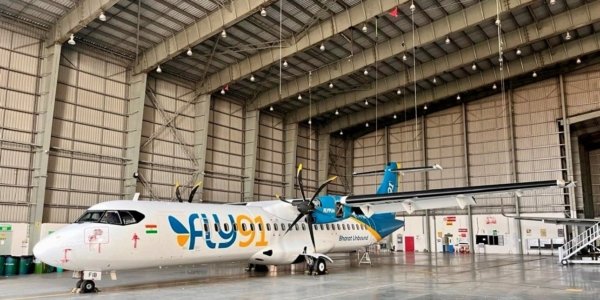
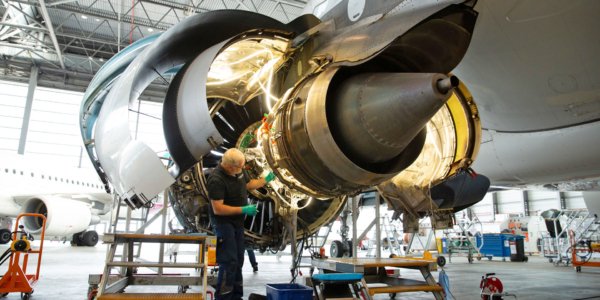
- Civil aviation’s ecosystem benefits as commercial drones are taxed at 5%, military drones are exempted, and domestic MRO services are reduced to 5% with input credit, boosting cost competitiveness in India.
The Goods and Services Tax (GST) Council’s decision to introduce a simplified two-slab structure of 5% and 18%, effective September 22, 2025, marks one of the most significant tax reforms in recent years. It is being hailed as a move toward clarity, efficiency, and fairness in India’s indirect taxation system.
By replacing a patchwork of rates with a cleaner two-slab structure, the reform promises reduced compliance costs, improved transparency, and better consumer protection. While the civil aviation sector emerges as one of the big winners from this restructuring, the story is not without concerns, especially for airlines operating premium cabins.
The Business Class Hurdle
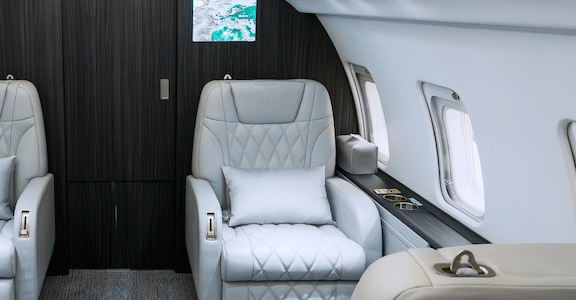
The sharpest impact of the reform on aviation is the hike in GST on Business Class tickets, which has been raised from 12% to 18%. The International Air Transport Association (IATA), which represents global airlines, described the move as “disappointing,” warning that it could dampen demand in premium cabins. Airlines in India had earlier lobbied for a uniform 5% GST across all classes, arguing that such parity would simplify pricing and stimulate demand across the board.
Under the revised system, the cost escalation is significant for self-paying passengers. For example, A Delhi–London Business Class fare of ₹50,000 will now rise to ₹59,000 after applying 18% GST, compared to ₹56,000 at the earlier 12%.

For leisure travellers and small and medium enterprises (SMEs)—segments that are sensitive to price changes—this increase could trigger a downgrade to Premium Economy or Economy.
Government and PSU travellers are also expected to feel the squeeze, since many departments are not eligible to claim input tax credit (ITC) and may become more conservative about authorising Business Class travel.
On the other hand, corporates—who dominate premium cabin demand—face no impact, as GST paid on tickets is fully creditable against other services. For them, the hike represents a cash flow adjustment rather than a net cost. The result: while Business Class load factors may soften slightly, a dramatic collapse in demand is unlikely.
Airline Exposure Varies
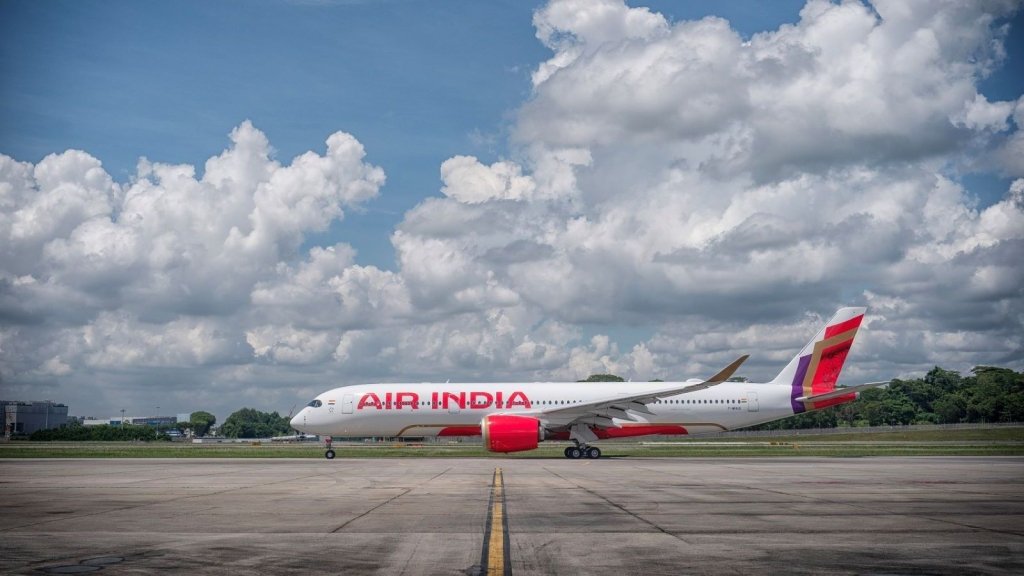
The extent of exposure to premium cabin taxation differs sharply between airlines. Air India, with its full-service legacy and global ambitions, has far more at stake than IndiGo, the market leader in low-cost travel.
Air India deploys widebody aircraft such as the Boeing 777-300ER, where Business Class accounts for 15–18% of seats, the Boeing 787-8 Dreamliner (12–15%), and the Airbus A350-900 (15–20%). On domestic and regional routes operated with Airbus A320-family aircraft, Business Class typically accounts for only 5–7% of the capacity.

In contrast, IndiGo has made its first foray into premium seating with “IndiGo Stretch” on the A321neo, which features only 12 Business Class seats compared to 208 in Economy. For the low-cost carrier, therefore, exposure to the 18% GST slab is minimal.
Industry data underscores the value of premium cabins. Business Class occupancy averages around 80%, which is higher than the typical 75% for Economy.
Yields are two to three times greater, making Business Class cabins disproportionately important for airline profitability. According to some reports, during FY2019–20, Air India’s revenue from front cabins (Business and Premium Economy combined) increased 2.3 times, compared with a 1.6 times growth in Economy.
The Premium Travel Wave
Despite taxation headwinds, a powerful trend is reshaping the skies: Indian travellers are increasingly willing to pay for premium experiences. Rising disposable incomes, greater purchasing power among younger fliers, and the “experience” mindset are driving growth in higher-class bookings.

Recent data points to a doubling of demand in Premium Economy and a threefold surge in Business Class.
On short-haul international routes, airlines have reported an astonishing 800% increase in premium bookings.
Though these cabins account for only about a quarter of total seats, their contribution to revenue and brand positioning is outsized. For global carriers and Indian full-service airlines alike, premium travel is no longer a niche; it is the growth frontier.
MRO, Drones find clarity
While the Business Class debate attracts headlines, the broader civil aviation ecosystem stands to benefit handsomely from the two-slab GST system. Two areas in particular, drones and maintenance, repair, and overhaul (MRO), have gained clarity and relief.
Commercial drones are now subject to a flat 5% GST, a significant reduction from earlier rates that ranged between 18% and 28%. The reform eliminates a long-standing anomaly: drones without integrated cameras were taxed at 5%, while those with cameras were taxed at 18%, and personal-use drones were taxed at 28%.
The new uniform rate will lower acquisition costs, boost adoption in sectors like logistics and agriculture, and encourage startups in India’s burgeoning drone ecosystem. Military drones and related high-tech systems, such as simulators, batteries, and radios, have been granted full GST exemption, supporting defence indigenisation.

The GST Council had already rationalised aircraft parts taxation in 2024 by imposing a uniform 5% Integrated GST (IGST), replacing a confusing mix of rates from 5% to 28%.
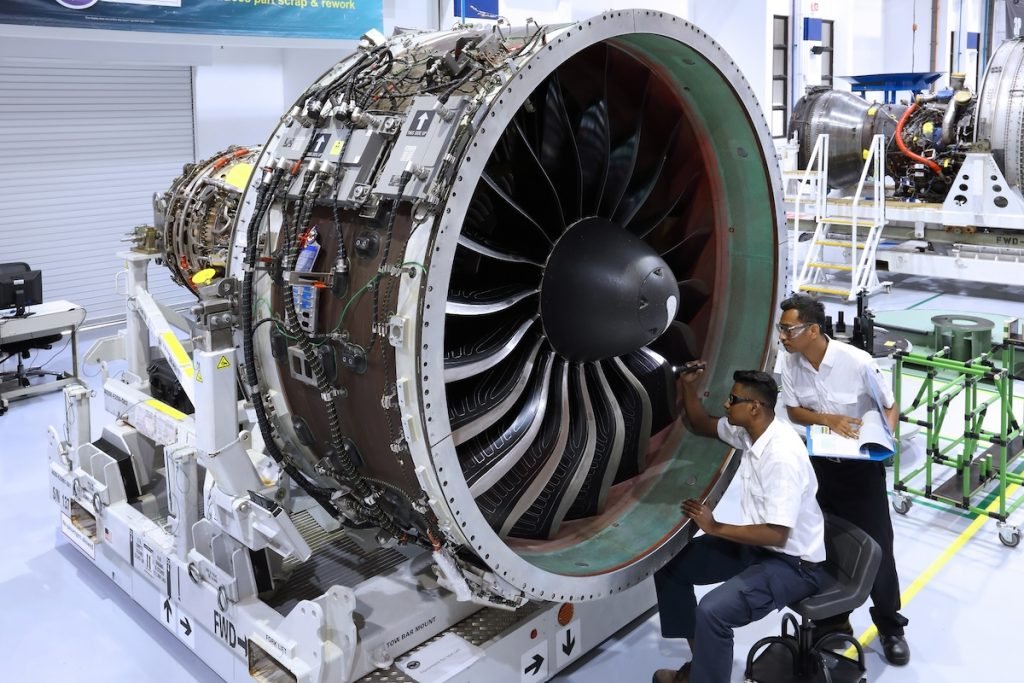
Under the latest regime, domestic MRO services themselves are taxed at only 5%, down from 18%, with full input credit available.
This overhaul addresses structural issues, including inverted duty structures and blocked credits. For India’s MRO industry, which competes with established hubs like Singapore and Dubai, the lower tax burden improves cost competitiveness and makes it more attractive for airlines to conduct maintenance locally rather than offshore.
The new GST framework represents a balancing act between fostering industry growth and safeguarding government revenues. For civil aviation, the benefits to MRO and drones are clear wins, promising to reduce costs, spur investment, and encourage domestic capability-building. The increase in Business Class GST is a tougher pill for airlines to swallow, though its ultimate impact may be limited given the resilience of corporate and premium demand.
As Indian air travel enters a new growth phase, fuelled by expanding middle-class aspirations, global ambitions of carriers, and infrastructure upgrades, the GST reform provides a simplified foundation. Airlines may fret about the 18% rate on Business Class, but the bigger picture is one of clarity and competitiveness.
Also Read: India’s Drone Sector at Inflection Point