








Delhi Airport Reopens Terminal 2 on October 26, Boosting Capacity to 100 Million Passengers Annually

- Delhi Airport’s revamped Terminal 2 reopens on October 26, marking a major milestone in IGIA’s modernisation and boosting its total annual capacity to 100 million passengers.
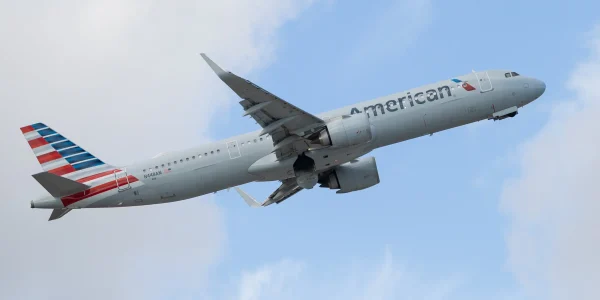
- Around 120 daily flights, operated by Air India and IndiGo, will shift to T2 from the night of October 25–26, easing congestion at Terminals 1 and 3.
- With T2’s reopening and T1’s recent expansion, IGIA strengthens its position as India’s premier aviation hub, aligning with its long-term plan to handle 140 million passengers by the early 2030s.
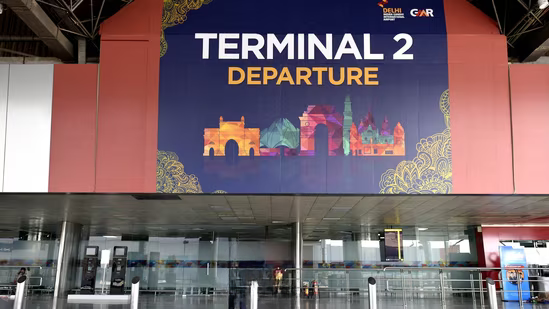
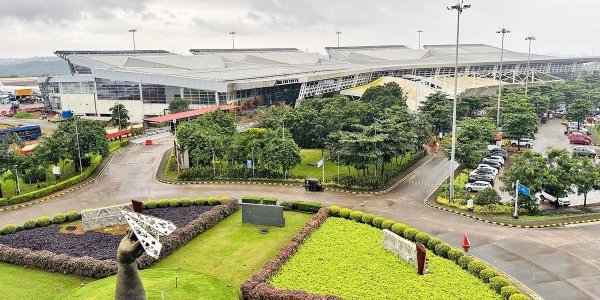
Photo: DIAL
Delhi’s Indira Gandhi International Airport (IGIA) is undergoing a transformation that will propel it to become a key air hub in South Asia.
That leap will come with the reopening of Terminal 2 (T2) on October 26. The long-awaited makeover will crown the comprehensive modernisation effort that began in April of this year.
When the upgraded terminal becomes fully operational, it will help enhance the airport’s total annual passenger handling capacity to a whopping 100 million, consolidating Delhi’s position as India’s premier aviation gateway.
The transformation has been planned for the night of October 25–26. That is when, around 120 daily domestic flights operated by Air India (Air India will relocate 60 of its 180 daily domestic departures out of Delhi) and IndiGo will move their services to the modernised T2, while Air India Express will move all domestic flights to Terminal 1, effective October 26, 2025.
The move will not only reduce the pressure on Terminals 1 and 3 but will systematically balance flows across the airport complex. The ultimate result: a more seamless travel experience for passengers.
Flight timetables and passenger management have been meticulously adjusted to facilitate a seamless transition. Moreover, ground handling teams, security staff, and immigration officials have made thorough preparations to keep disruptions to a minimum during the shift.
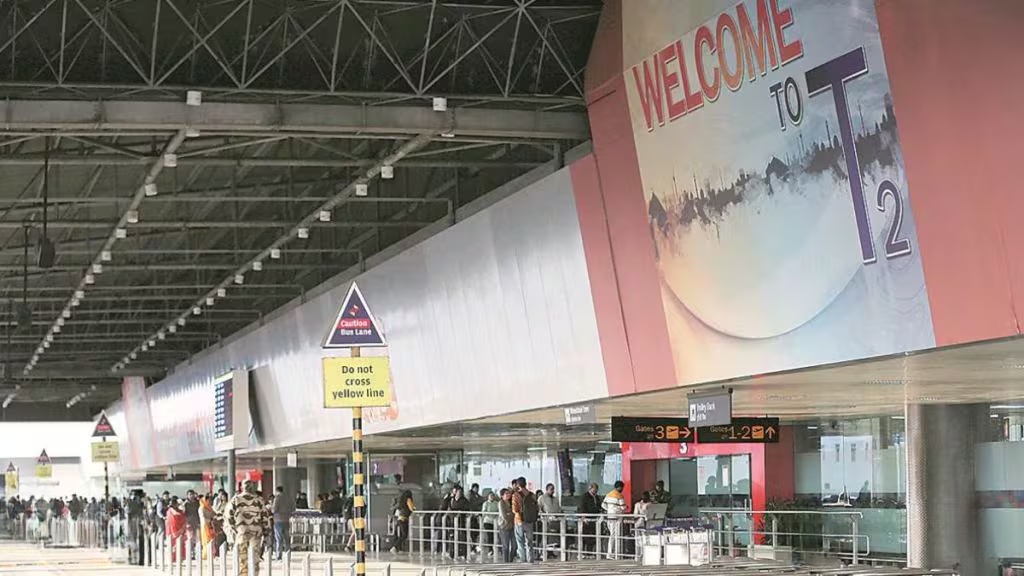
Air India, which is in the process of optimising its domestic network, will be a big gainer. Spreading out operations across multiple terminals will boost turnaround times and enhance reliability even as it will help reduce congestion. For the other major carrier, IndiGo, the T2 move will reduce loads significantly during peak traffic periods and also create smoother transit connections for passengers.
Originally constructed by the Airports Authority of India (AAI) in the 1980s, Terminal 2 will showcase a radical makeover. The upgrades are not mere cosmetic changes but will create a smarter passenger-centric terminal.
Among the key technical upgrades are the Self Baggage Drop (SBD) systems, the autonomous docking boarding bridges and enhancements on the airside and apron. T2 fliers will be able to use the SBD systems and check in bags independently by scanning boarding passes, tagging luggage, and dropping them. This will reduce the dependency on staffed counters.
Passengers will experience the six new autonomous docking boarding bridges from South Korea that have been installed at T2. These features include advanced sensor-based alignment technology that will enable docking with aircraft doors with precision. These docking bridges will not only reduce turnaround time for carriers but also usher in enhanced safety.
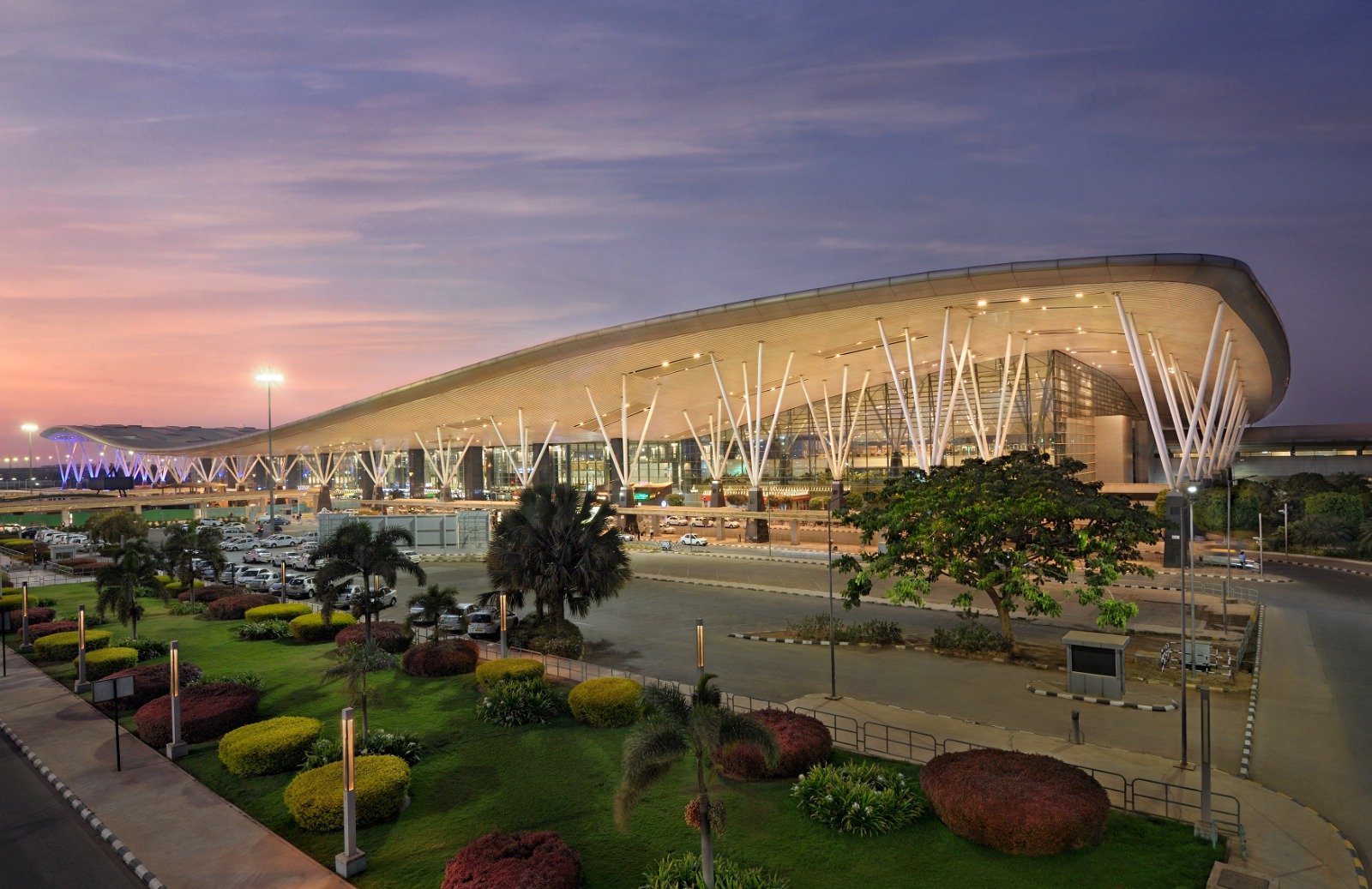
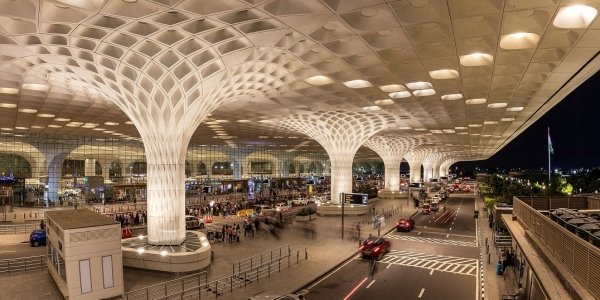
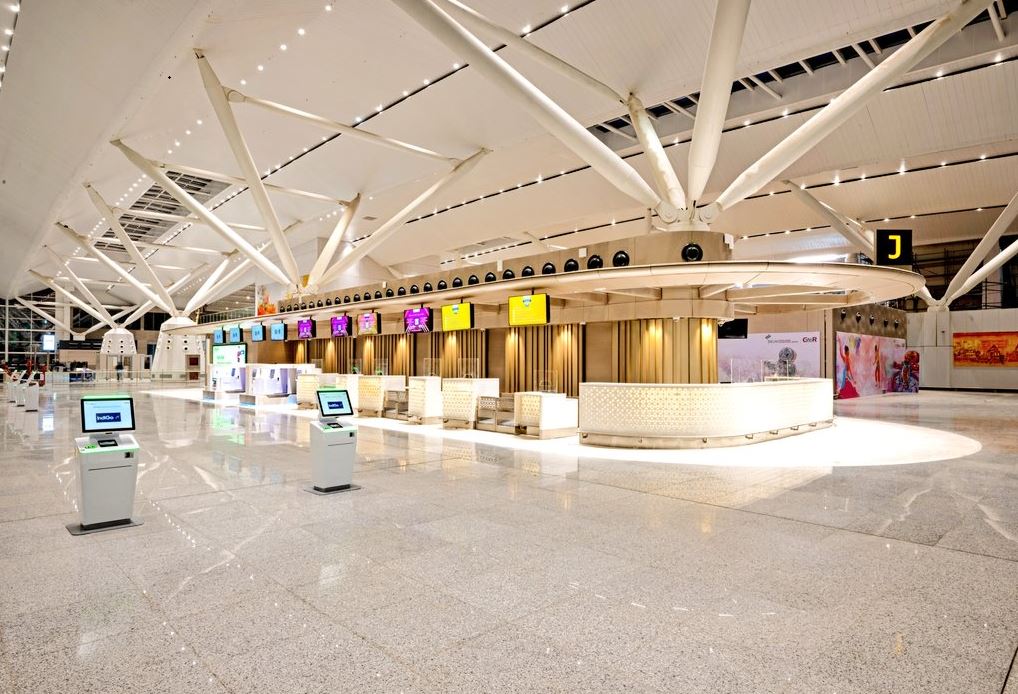
The apron and airside enhancements will enable the terminal to handle heavier aircraft usage and higher operational tempos. The noticeable feature that will please T2 users will be the fresh design, aesthetics and passenger experience. The refurbished terminal will have a modern, airy ambience.
With its striking skylight ceilings and open layouts to infuse natural light, a sense of space and airiness has been created. To add to the ease of users, high-resolution flight information displays (FIDS) have been installed along the way. What fliers will get will be clearer wayfinding signage that will reduce passenger confusion.
Additionally, lounges have been redesigned along with retail, food courts, and accessibility enhancements for persons with reduced mobility (PRM). To top it all, the upgraded floor finishes, enhanced lighting, and interiors showcase a contemporary Indian aesthetic.
As Videh Kumar Jaipuriar, CEO of DIAL, put it in a public statement: “The upgraded Terminal 2 is not just a facility upgrade—it’s a complete reimagination of the passenger journey. With technologies like the Self Baggage Drop and autonomous docking aerobridges, we are preparing IGI Airport for the future of aviation.”
According to a DIAL press release, this renovation is integral to positioning IGIA to address passenger growth, particularly in the National Capital Region’s catchment area. The expansion is timely: India’s domestic air travel demand is surging, and the country is projected to rank among the world’s top three aviation markets by 2030. With T2 returning to full operation, IGIA’s total capacity is projected to touch 100 million passengers per year—a major jump from the roughly 72 million recorded in FY 2023-24.
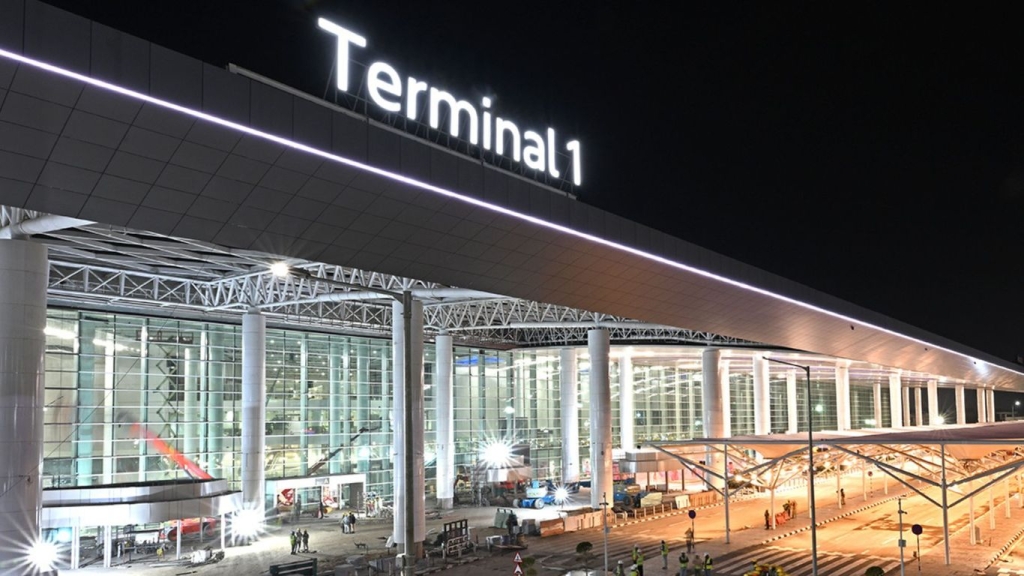
With T2 closed from April 15, 2025, a large number of flights were redirected to T1.
During this time, the Airports Authority of India enhanced Terminal 1 to accommodate the increased traffic.
Earlier, the DGCA had mandated a six-month renovation of T2 to modernise systems and support future capacity expansion.
Delhi International Airport should be credited for upholding passenger comfort during the shutdown of T2. Indeed, closing an active terminal and diverting flights is a complex logistical challenge. For quite a few weeks, DIAL was at the forefront, coordinating with airlines, ground staff, and security agencies to maintain seamless operations. There were contingency steps in case something went wrong. Among these steps were standby manpower, phased transitions, and continuous updates for travellers.
Frequent flyer communities and industry watchers have noted that IGIA’s multi-terminal configuration is now closer to meeting global standards of hub airports like Singapore Changi or London Heathrow.
However, it must be pointed out that, notwithstanding the upgrade and renovation of T2, inter-terminal transfers, especially between T1 and T3 (IGIA’s primary international terminal), continue to pose a challenge. With no operational inter-terminal train yet, bus shuttles and baggage transfer systems have been reconfigured.
While T2’s reopening is a landmark event, IGIA has not yet finished its expansion. Phase II focuses on boosting airside capacity that will create additional taxiways, upgraded instrument landing systems, and smoother aircraft flow. In the long term, the blueprint anticipates handling up to 140 million passengers annually by the early 2030s. Of course, the moves will receive the support of all allied infrastructure, including express metro links, road access, and possibly a new Terminal 4 (T4).
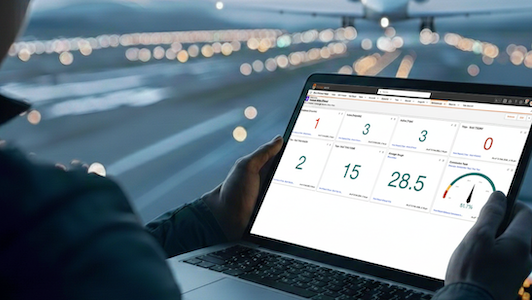
There is also investment in digital twin technology and real-time predictive maintenance platforms, enabling proactive monitoring of terminal systems and dynamic resource optimisation.
While there have been reports that T2 could eventually be replaced by T4, it must be pointed out that its proximity to T3 and the current lack of inter-terminal rail connectivity will provide it operational life for at least another 3 to 5 years.
The reopening of Terminal 2 is not just about infrastructure—it signals Delhi Airport’s emergence among the world’s top airports. By blending advanced automation, sustainable design, and agile operations, IGIA is aligning itself with the future of aviation.
Also Read: Beyond Functionality: Designing Airports for Extended Passenger Stays