








- Air India Express is redefining network design in India’s low-cost segment by prioritising route density and profitability over sheer fleet expansion — focusing on dominating select Tier-2 and Tier-3 markets instead of spreading thin nationwide.
- Within the Tata Group’s dual-brand structure, AIX is positioned as a value carrier feeding and complementing Air India’s full-service network, leveraging group synergies for inbound traffic and cost efficiency while maintaining a single-type, narrow-body operation model.
- Despite current financial losses, the airline is absorbing the cost of integration and network restructuring upfront to build a stronger, more sustainable base for future growth — with Navi Mumbai set to play a key role in its “depth-first, breadth-later” strategy.
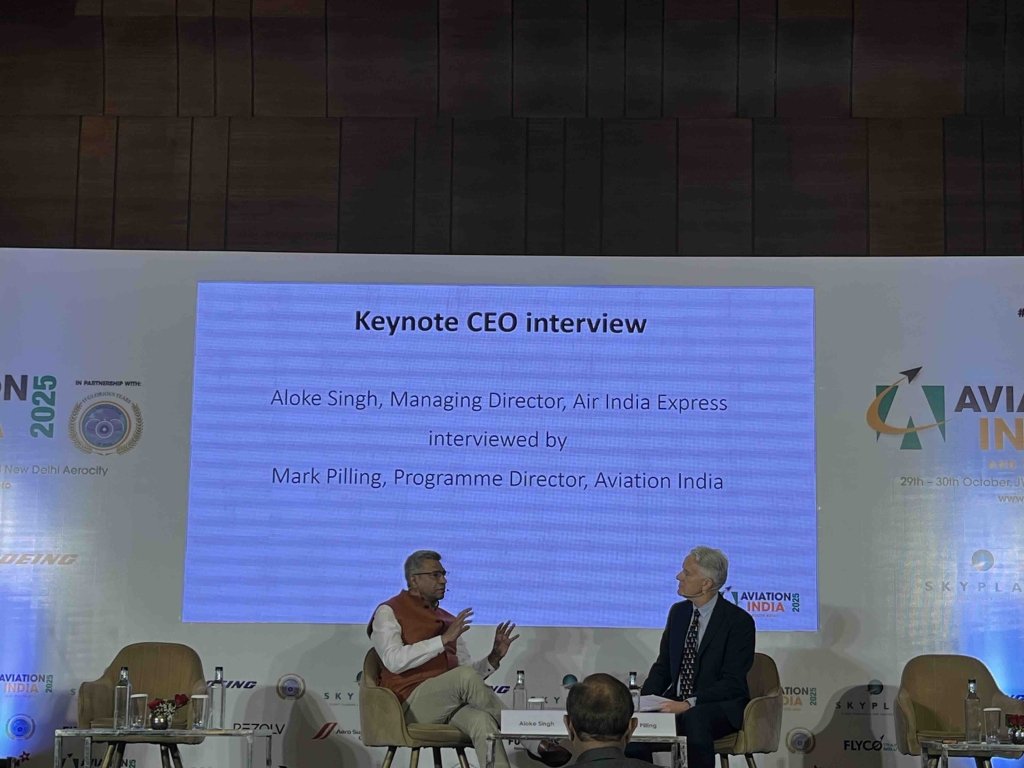
In India’s post-privatisation aviation era, most narratives have obsessed over scale. Who inducts more aircraft faster. Who grabs more city pairs. Who races to 1,000 flights a day. But the most interesting structural experiment underway in India right now isn’t the headline fleet ramp-up. It is what Air India Express (AIX) is trying to do within the Tata Group dual-brand system — by architecting a narrow-body network strategy not around breadth, but around density, consolidation and selective depth in India’s fastest rising demand pools.
This is not a defensive play. And it’s not an IndiGo copycat. It is, fundamentally, a contrarian network construction method: dominate profitable city pairs in Tier-2 and Tier-3 flows before expanding everywhere.
Managing Director Aloke Singh framed it very bluntly at Aviation India Summit: “This business is as much about capacity concentration as it is about capacity scale.”

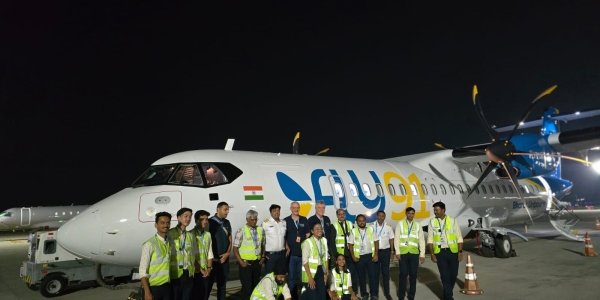
Photo: Air India Express
AIX today is already the third largest narrow-body operator in India when treated separately from Air India — around 110 aircraft between A320/321 and 737/MAX platforms combined after the AirAsia India merger. It expects 20-24 aircraft additions next year, subject to Boeing supply pacing, and fleet doubling in four to five years.
But the unit cost spine is the anchor — not the headline fleet number. And Singh has repeatedly stressed that AIX will not fragment fleet types, will not dilute into regional jets or cargo aircraft experimentation, and will keep the purity of mission: single cabin, narrowbody, five-hour operational radius, high-density seating. This is not a tactical choice. It is the economic requirement to keep cost advantage structurally built in from Day 1.
One reason existing coverage on this story has been shallow is because much of Indian media coverage still tells this as “Tata merger integration/tail repainting/interior retrofit” story.
The real story — the one that matters strategically — is the asymmetric dual brand construct.

Full service Air India does premium metros, business traffic, long haul, alliance/interline complexity, North America/Europe distribution.
AIX does narrowbody value flows, short-haul international, Gulf, South Asia, SE Asia leisure nodes, and most critically — Tier-2 and Tier-3 India.
And here is the inversion that almost no other airline group in Asia has done this deliberately: Air India feeds AIX, not the other way around.
AIX does not have to build global distribution. Air India does that. Yet 1/3rd of AIX traffic already flows in through that inbound feed.
This is a strategic multiplier that other low cost carriers simply do not have. IndiGo, Akasa, SpiceJet — they must build direct distribution and demand independently. With AIX — feed economics are pre-supplied by the Group.
Indian aviation remains metro-heavy in market coverage, but the explosive curve is small city India entering formal aviation for the first time at scale. Indian middle class consumption is not maturing — it is expanding horizontally across geographies.
That is exactly where AIX is aiming aircraft concentration. Singh says AIX does not want to hold 11% domestic share everywhere — it wants one-third share on every strategically chosen route. That is density economics — not presence economics. That means if AIX enters Bhubaneswar – Delhi or Lucknow – Bengaluru or Jaipur – Pune, it doesn’t just want to be present — it wants to dominate.
“Depth first. Breadth later.” Singh repeated that positioning multiple times at the Aviation India Summit. This is a sharp contrast from IndiGo, which historically built a national carpet before selectively densifying. IndiGo is now trying to bend that model to compete in deeper pockets of demand beyond metros — but AIX is designing itself around that from the inception of the dual-brand era.
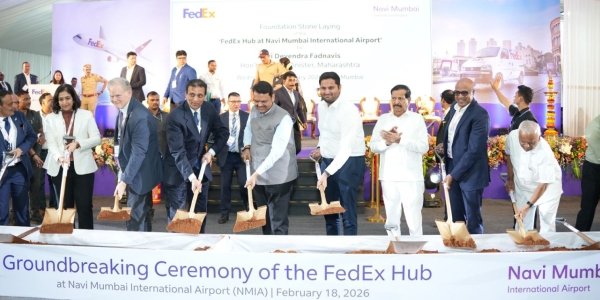
If one single strategic swing factor is not fully understood in mainstream discourse, it is Navi Mumbai.
Mumbai has been slot choked for a decade. And airlines have treated NMIA as overflow relief.
AIX is planning to do the opposite: treat NMIA as a primary hub.
Up to 20 departures eventually from Navi Mumbai — with independent catchment and a structurally uncongested operational base — gives AIX disproportionate first-mover advantage in the largest constrained demand basin in Indian aviation history.
If this plays out, a low cost airline may solve Mumbai’s capacity suppression problem faster than premium carriers could.
AIX losses widened sharply — around ₹5,700 crore loss in FY25. But Singh was unambiguous: this is the cost of building the future backbone while integration, cockpit seniority alignment, MAX induction, merged operations control centre and route pivoting all happen simultaneously.
Aloke Singh said this explicitly: “This is growth absorption. The network reset is happening this year — not three years ago. Profitability can come only after density is established and absorbed.” The balance sheet pain is front-loaded. The density mathematics payoff comes later — and only once depth stabilisation occurs.
AIX is not chasing every new possible country pair. It is resisting the Indian temptation to “flag plant for prestige.” It is building an airline to monetise the next 80-100 million Indians entering aviation + Gulf labour + diaspora + Middle East leisure + SAARC cross border. And unlike India’s early LCC era, this timescale exists.

AirAsia India never got to this scale. Go First never got to this level. SpiceJet never stabilised at this level.
Akasa is too early. AIX has inherited scale — and is now selectively shaping it.
What makes AIX one of the most important network experiments in India’s aviation history is that it is building density first and scale later — a structural opposite of the Indian aviation norm.
This is not a race to be the largest. It is a race to be the most economically defensible.
When the Indian media five years from now writes “how this low-cost airline became the engine of domestic densification,” the answer won’t be the fleet count. It will be the strategy discipline.
Capacity concentration before capacity expansion. AIX is building the first true Indian network airline designed around depth — not bragging rights.
Also Read: Air India’s Quiet Revolution: From Rebuild to Global Flag Carrier