




The Return of the Flying Boat: How Jekta’s Hydrogen Vision Could Transform Regional Aviation

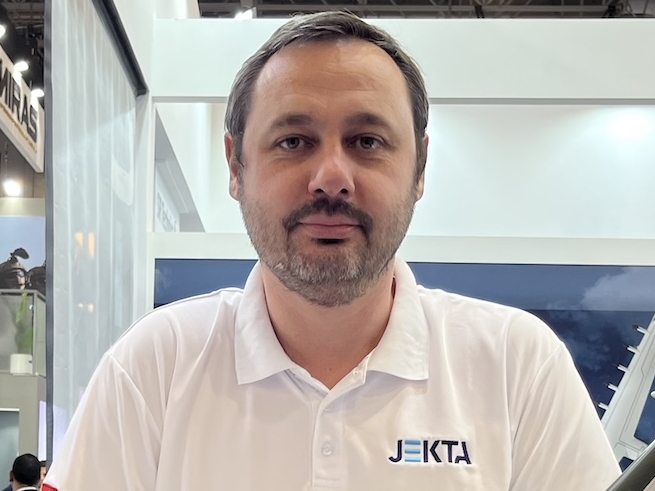
The future of amphibious aviation is being shaped in unexpected places, and few stories illustrate this better than Jekta’s. In an insightful conversation with Rakesh Gera, George Alafinov, CEO & Co-founder of Jekta, traces how the company’s flagship PHA-ZE 100 flying boat was born from discussions in India back in 2018, and how that early engagement has now evolved into one of the strongest markets for the aircraft. From hydrogen-electric propulsion and distributed motor architecture to MEHAIR’s landmark 50-aircraft commitment and rising demand across the Middle East and Southeast Asia, Alafinov outlines a regional mobility model built on simplicity, sustainability and the vast untapped potential of the world’s waterways.
Jekta’s growth has been attracting a lot of attention, both in terms of your aircraft concept and the market interest you’ve generated. How did the Jekta story really start?
Interestingly, our story began in India. In 2018, I travelled to Delhi to meet representatives of the Government of India under Prime Minister Narendra Modi. They were evaluating solutions for regional transportation, both intra- and inter-state, and speaking with every major amphibious aviation specialist worldwide. As specialists in this field, we were invited to share our views on where amphibious technology is headed and the opportunities it could unlock.
The government’s vision was very clear: instead of spending huge amounts of time and money building regional airports, along with the irreversible ecological impact that comes with them, they wanted to explore opening India’s lakes and rivers for aviation.
We immediately saw the scale of this opportunity. Given India’s size, rising population, and fast-growing middle class, a modern amphibious aircraft with sufficient capacity and low operating costs could connect large portions of the country solely by water.
Seven years later, that vision has materialised. Of the 94 proposed water-aerodrome routes, more than 40 have already advanced through regulatory processes. The challenge, however, remains the same: today’s seaplanes and amphibious aircraft are outdated designs from the 1960s–1980s. Because they fly on floats rather than being true flying boats, they are inefficient and expensive to operate.
Using modern materials and new technologies, we saw a genuine opportunity to design a clean-sheet aircraft capable of addressing these limitations. In a way, the origins of the Jekta PHA-ZE 100 come directly from India’s early vision for regional amphibious mobility.
Today, that interest has expanded significantly. We see enormous demand from the Middle East: UAE, Oman, Qatar and Saudi Arabia, where long coastlines, luxury tourism, and limited last-mile connectivity create a strong business case. Southeast Asia is another major growth region, Indonesia, Malaysia and the Philippines, among other countries, where thousands of islands must be connected safely, comfortably and efficiently.
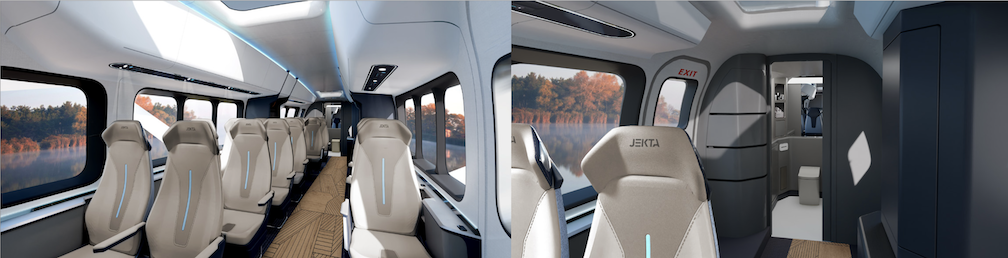
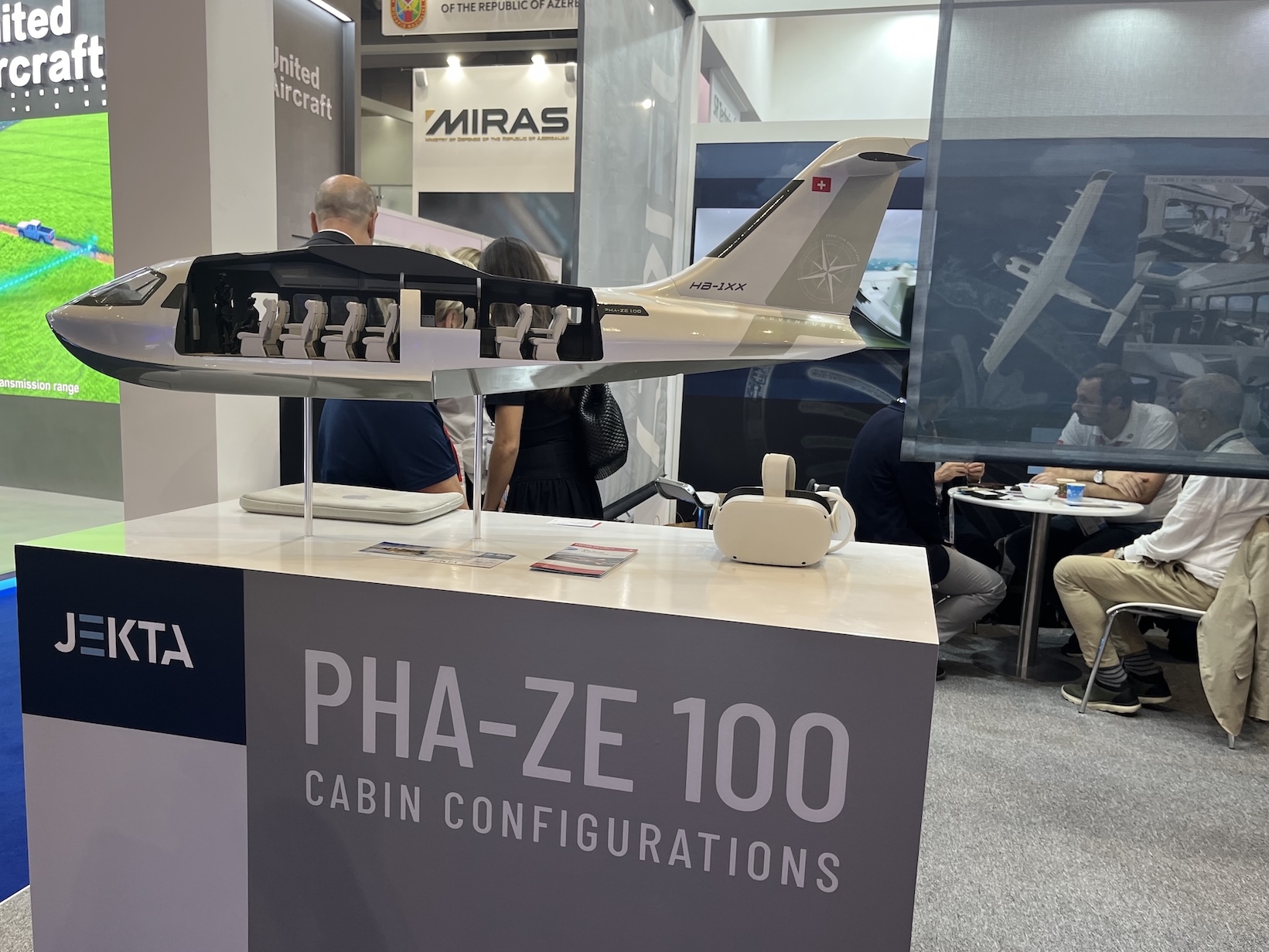
Our aircraft, with its ocean-class flying-boat design, 19-passenger capacity, 30-metre wingspan and ability to operate in wave heights up to 1.2 metres, enables exactly that.
Because you do not need to build airports, the ecological impact is minimal, and the investment is small. All that’s required is a regulator-designated waterway, something aviation authorities worldwide, including in the U.S., Europe, India and Asia, have been doing for nearly 100 years.
You’re using a distributed electric propulsion system on the PHA-ZE 100. Can you explain how it works and what advantages it has shown in your scale tests?
The aircraft uses multiple small electric motors distributed along the wing’s leading edge. This creates a “blown-lift” effect, accelerating air over the wing and dramatically increasing lift. As a result, an aircraft weighing almost nine tonnes can take off within just 400 metres.
This has three major advantages:
- Access to constrained environments: It enables operations from small lakes, rivers, lagoons and short coastal stretches.
- Safety: The aircraft can maintain horizontal flight even with up to three motors inoperative. The probability of three simultaneous failures is extremely small, around 0.004 per cent.
- Cost efficiency: Propeller pricing grows non-linearly with size. A 10% larger propeller can cost nearly twice as much. Using multiple smaller-diameter propellers significantly reduces maintenance and overhaul costs.
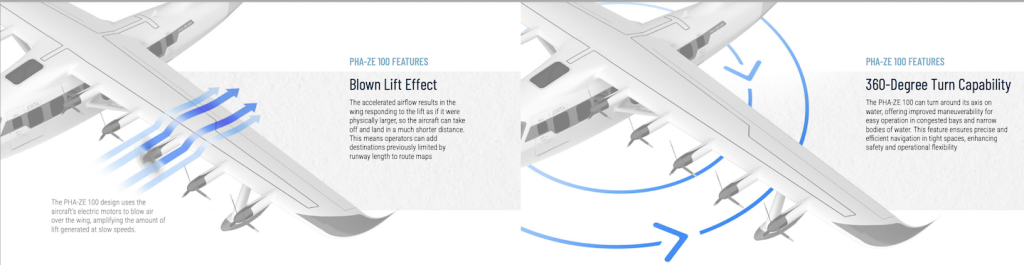
Together, these factors make distributed propulsion ideal for amphibious electric aviation.
Our propellers measure between 1.8 and 2 metres in diameter, compared with the 3-metre propellers used in most conventional amphibious aircraft. This size difference further enhances the cost advantage.
Conventional amphibious aircraft typically use much larger propellers, about three metres. With your smaller propellers and hydrogen-electric architecture, how does the operational behaviour differ from battery-electric aircraft?
The key differentiator is the power system. Electric motors themselves are a revolution for regional, non-pressurised aviation because they are simple to design, certify and maintain. They have very few moving parts and can theoretically last 40,000 hours, compared with 5,000–8,000 hours for turboprop engines. Maintenance checks, such as A-checks or C-checks, will be drastically simplified, often reduced to visual inspections.
Battery-electric aircraft, however, face a major limitation: energy density. Our aircraft weighs 8.6 tonnes. To power it purely with batteries, we would need approximately 4.5 tonnes of batteries, yielding only about 80 km of range. That is not commercially viable.
Hydrogen fuel-cell electric propulsion solves this challenge. It enables a practical range target of 500 km plus reserves, making the aircraft suitable for real-world routes across India, Southeast Asia, the Middle East and other markets.
What is the timeline for hydrogen infrastructure setup in the regions where you will operate?
Hydrogen infrastructure is developing rapidly. We are building a country-by-country network of suppliers to deliver hydrogen and refuel aircraft. We already have partners in Europe and the Middle East, and we are actively working to establish one in India.
India, interestingly, has some of the lowest hydrogen prices in the world and significant green hydrogen production. Our aircraft can use any type, green, blue or grey, depending on operator availability. Globally, governments, especially in the Middle East, are investing heavily to create hydrogen-based economies. As that ecosystem matures, hydrogen-electric aviation will scale far faster than battery-electric options for this class of aircraft.
What is your certification and service-entry timeline?
Certifying the amphibious aircraft itself is straightforward because regulations have existed for a century. Unlike eVTOL manufacturers, who are pushing regulators to define entirely new categories, we follow established rules.
The main certification challenge is the hydrogen fuel-cell power unit. For this, we rely on our partner, ZeroAvia, the leading hydrogen fuel-cell aviation company with nearly a decade of development behind them. Based on current progress, we expect the first deliveries in 2031.
India already has significant orders with Jekta. Can you clarify the numbers and global demand?
India moved quickly because it recognises the immense potential. MEHAIR (Maritime Energy Heli Air Services Pvt Ltd), India’s seaplane operator, is a major contributor to this total. They have committed to 50 aircraft: 10 firm orders plus options for 40, making them the first Asian customer for the PHA-ZE 100.
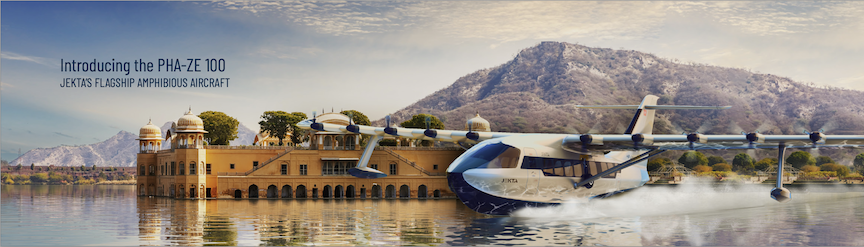
MEHAIR has been operating seaplane services in India since 2011 and aims to expand connectivity using India’s 7,400-km coastline and extensive network of rivers, lakes and dams. Indian operators believe the eventual domestic demand will reach 150–200 aircraft.
Beyond India, we have customers in the U.K., the Middle East, Thailand and South Korea with an order book of 139 aircraft. Our Korean customer is a leasing company planning routes connecting Korea and Japan over water.
Our research indicates that from around 2030 onwards, global demand could reach 400 new amphibious aircraft per year for approximately 15 years. Growth will come not just from existing seaplane markets like the Maldives and the Caribbean, but largely from new routes such as UAE-Oman, UAE-Qatar and regional coastal networks that don’t exist today.
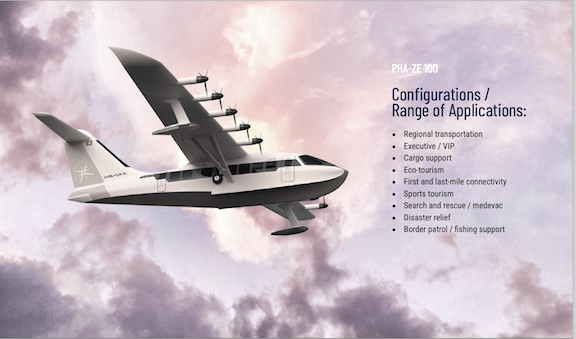
For the Middle East, amphibious aviation aligns perfectly with tourism strategies: faster guest transfers mean higher hotel revenue. The passenger experience is also significantly elevated, quiet, comfortable and premium, matching the hospitality standards of the region.
Southeast Asia, India, Latin America and Australia all present strong future markets as well.
You mentioned the aircraft can operate from water, sand and unprepared airstrips. How does the transition between these surfaces work?
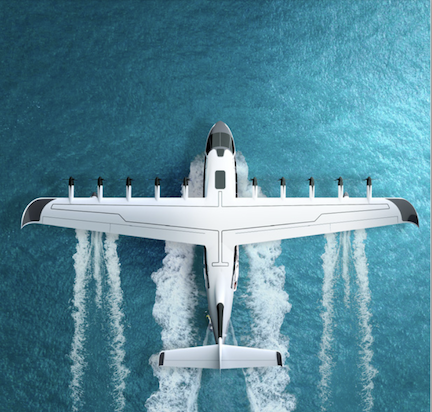
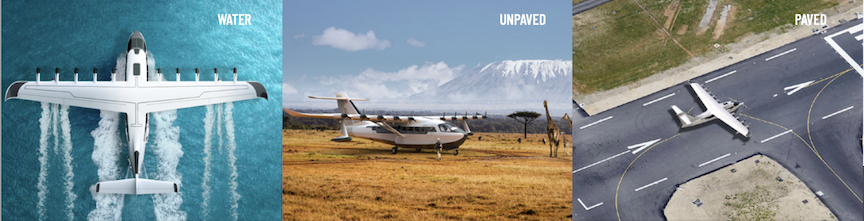
It’s completely seamless. The PHA-ZE 100 is a true flying boat. In water, the hull acts as the undercarriage.
On land, robust landing gear deploys, designed for “safari-style” unpaved runways, common in Africa and remote regions.
There is no adjustment needed by the pilot. You simply take off, retract the gear, and choose water or land for landing.
This operational flexibility is grounded in a long heritage: before World War II, amphibious aircraft were the primary mode of global air travel.
We are modernising that legacy for today’s needs using advanced materials and electric propulsion.
For India to scale amphibious aviation, what needs to change?
India needs more confidence in this segment and less distraction from trendy technologies. Amphibious aviation is not experimental; it is a proven, sustainable mobility solution.
What we are doing is simply modernising a concept that worked extremely well before the jet age overshadowed it. With 80% of the planet covered by water, amphibious aviation is the most natural and sustainable form of regional mobility.
What about manufacturing? Are you considering sourcing or assembling in India?
We are evaluating several regions, not for the cheapest solution but the best overall value. India is absolutely one of the candidates, as are the Middle East and parts of Africa.
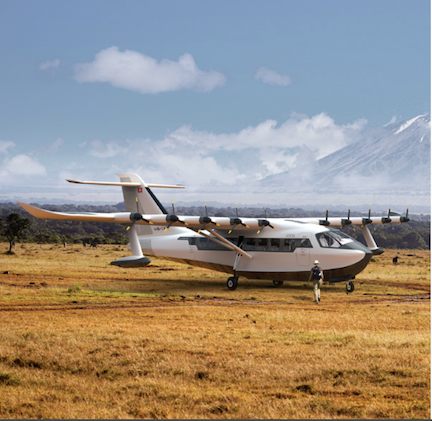
Photo: Jekta
In aviation, “manufacturing” has two components: producing parts and assembling the final aircraft. Both can be located outside Europe. Europe’s rising energy and labour costs make external manufacturing highly attractive.
Composite component production could be done in value-efficient countries. Final aircraft assembly could also be outside Europe, provided it meets economic, perceptual and confidence-related considerations.
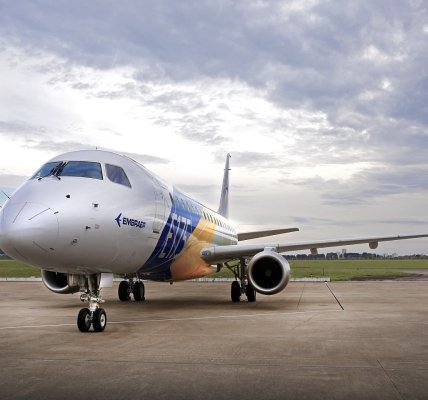
Right now, a full Indian final assembly is challenging due to lingering market perceptions, but this can absolutely change. Brazil, for example, transformed from a non-aviation nation to a global powerhouse with Embraer. India can follow a similar trajectory.
Also Read: “Simply Fly-Once more”- Can Deepinder Goyal Fulfil Capt. Gopinath’s Dream?