









CITA Focuses on Experienced Airline Crew and Ground Operations Hiring

- The company works with airlines to screen and shortlist experienced cabin crew and select pilot profiles before final selection.
- Its early-stage recruitment filtering is designed to help airlines manage high application volumes and reduce post-joining attrition.
- Alongside recruitment, it operates a training pipeline focused on preparing candidates for airport ground operations roles.
As Indian and international airlines continue to expand fleets and rebuild networks after years of disruption, recruitment pressures are shifting from volume hiring to experience-led staffing. While fresh cabin crew can be trained through in-house academies, airlines are increasingly focused on sourcing experienced professionals who can be inducted quickly and operate with minimal retraining.
Delhi-based aviation recruitment and training firm CITA has built its business around this specific gap. Founded 16 years ago, the company specialises in recruiting experienced cabin crew and select pilot profiles for airlines operating Airbus and Boeing fleets, working across both scheduled and non-scheduled operators.
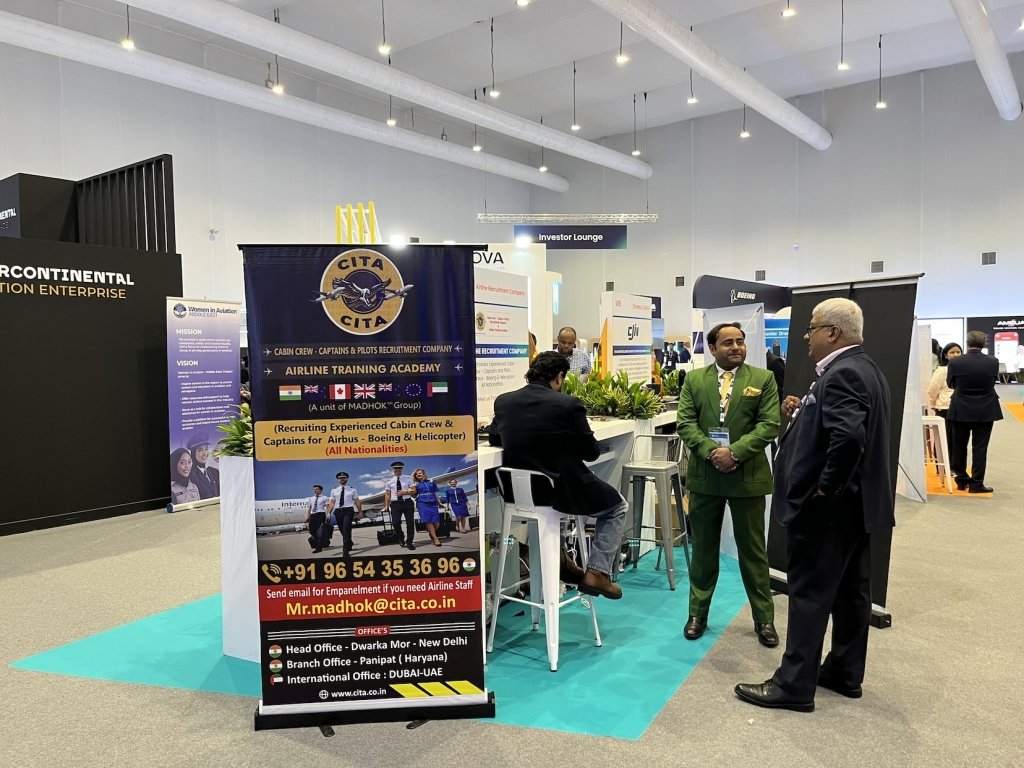
“Whenever airlines open large recruitment drives, the challenge is not attracting candidates — it’s screening them,” explains Madhok, while speaking on the sidelines of the Dubai Air Show 2025. “If they have 50 open positions, they may receive applications running into the tens of thousands. For a small internal team, it becomes difficult to scrutinise every profile.”
CITA positions itself as an early-stage filter in the recruitment chain. Candidates apply directly to the company, which conducts initial screening including document verification, regulatory compliance checks, physical criteria and communication assessments before forwarding shortlisted profiles to airline selection panels.
According to Madhok, this model not only reduces the administrative burden on airline recruitment teams but also addresses a persistent industry issue — attrition. “In aviation, attrition is expensive,” he says, “People sometimes accept overseas roles without fully understanding the job or the country. When they leave after a few weeks, airlines lose money on visas, medicals, uniforms and training. When a consultant is involved, expectations are clearer and attrition is lower.”
Focus on experienced crew
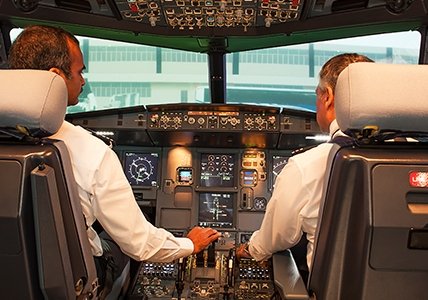
CITA’s recruitment portfolio is weighted heavily towards cabin crew roles, reflecting broader industry demand. Madhok estimates that in the 2024 calendar year alone, the company placed between 800 and 900 candidates, with the majority in cabin crew roles. Pilot recruitment remains limited and highly specialised, handled on a one-to-one basis depending on fleet availability.
“For pilots, we work only with experienced captains,” Madhok adds, “The numbers are naturally smaller. For example, we placed eight to nine pilots on the Q400 fleet, but those profiles are not easily available in the market.”
The company works across scheduled airlines and charter operators, though volumes are higher on the scheduled side due to scale. Charter and non-scheduled operators typically recruit only a handful of crew at a time.
Madhok says CITA has worked with multiple Indian airlines over the years, including during early growth phases and post-merger transitions. However, he notes that the firm’s core strength remains sourcing experienced crew rather than fresh hires, who are readily available through airline academies and independent training institutes.
Training and academy arm
Beyond recruitment, CITA also operates an aviation training academy focused primarily on ground handling and airport operations roles. The academy, which has been operational for around five years, caters to candidates who may not meet cabin crew or pilot requirements but are suited for airport-facing functions.
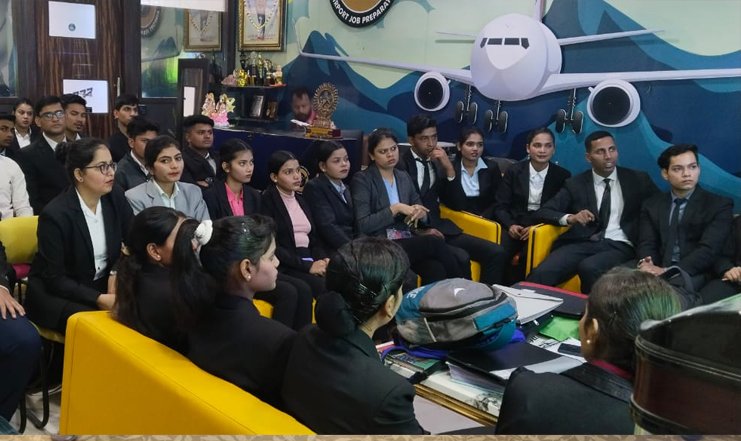
“We train candidates for ground staff roles — check-in, boarding and customer handling. This is actually a high-volume area of hiring, especially with airport expansion across India,” Madhok points out.
The academy operates from Delhi and features a mock-up Airbus A320 cabin used as an experiential training environment.
Programmes run for five months for graduates and up to eleven months for non-graduates. Rajesh claims that around 900 candidates have been trained so far, with most placed across Indian airports through third-party ground handling agencies.
International outreach and future plans
CITA has also stepped up its presence at international aviation exhibitions, including events in Saudi Arabia, Singapore and Dubai, primarily to build relationships with airline recruitment teams.
“We are in the services business, and services take time, trust doesn’t come from one event. It comes from showing up consistently,” Madhok notes.
Looking ahead, the company is beginning to explore opportunities linked to emerging segments, such as eVTOLs and air taxis, which are expected to enter service later this decade. While still at an exploratory stage, Rajesh says CITA could eventually support ground training and recruitment in this segment through partnerships.
For now, the company remains focused on its core proposition — acting as a recruitment bridge between airlines and experienced aviation professionals, at a time when operational readiness and retention are becoming just as critical as hiring scale.
Also Read: India’s Pilot-Training Crunch: The Quiet Crisis Behind the Aviation Boom