












- Guwahati’s new integrated terminal marks a step change in airport infrastructure for the Northeast, combining a sharp capacity upgrade with digital-first passenger processing and a design language rooted in Assam’s natural and cultural identity.
- Delivered from concept to commissioning in under a year, the terminal reflects the faster execution of large aviation projects in India, with phased operations beginning in February and full domestic–international transition expected by the end of March.
- Beyond passenger handling, the ₹5,000-crore airport development plan positions Guwahati as a future logistics, cargo and MRO hub, reinforcing its role as India’s eastern gateway and a bridge toward Southeast Asia.
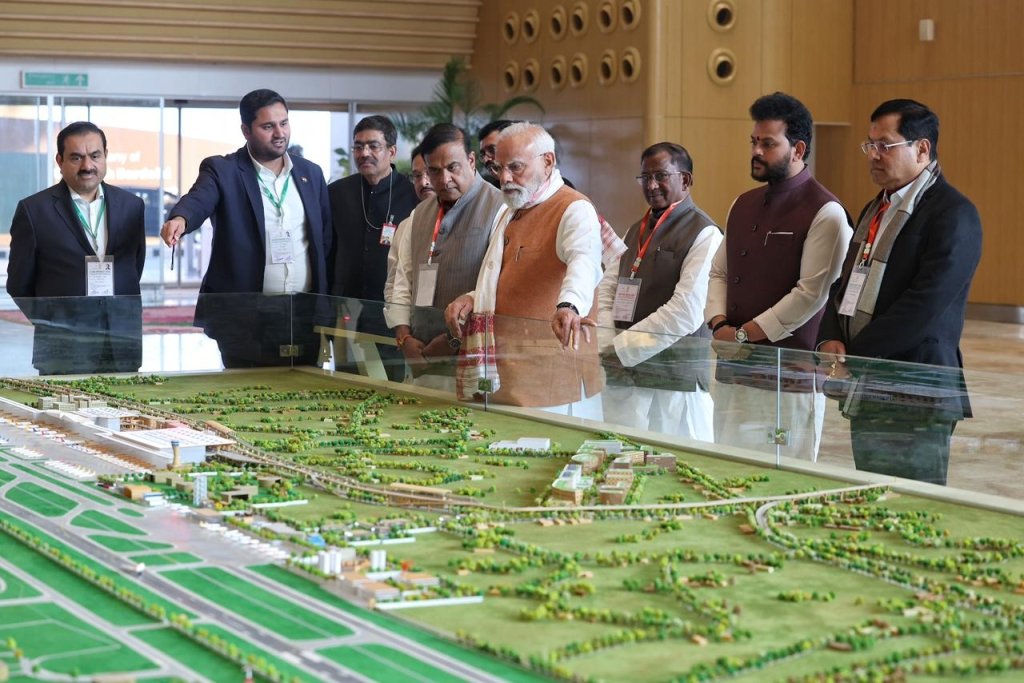
Photo: Adani Airports
Prime Minister Narendra Modi on Saturday inaugurated the new integrated terminal building at Lokapriya Gopinath Bordoloi International Airport (LGBIA), Guwahati — a project described by officials as India’s first airport terminal built around a nature theme and designed to increase capacity for the Northeast’s fastest-growing air gateway.
The project has been developed by Guwahati International Airport Limited, with operations led by Adani Airport Holdings Limited (AAHL). The terminal exemplifies the Adani Group’s integrated approach to infrastructure delivery — bringing together design excellence, engineering capability, ORAT-led preparedness and time-bound execution across complex aviation projects.
The terminal’s design concept was unveiled earlier this year at the Advantage Assam 2.0 summit, and the project has moved from concept to commissioning in under a year — a timeline that reflects how quickly large airport upgrades are now being executed in India.
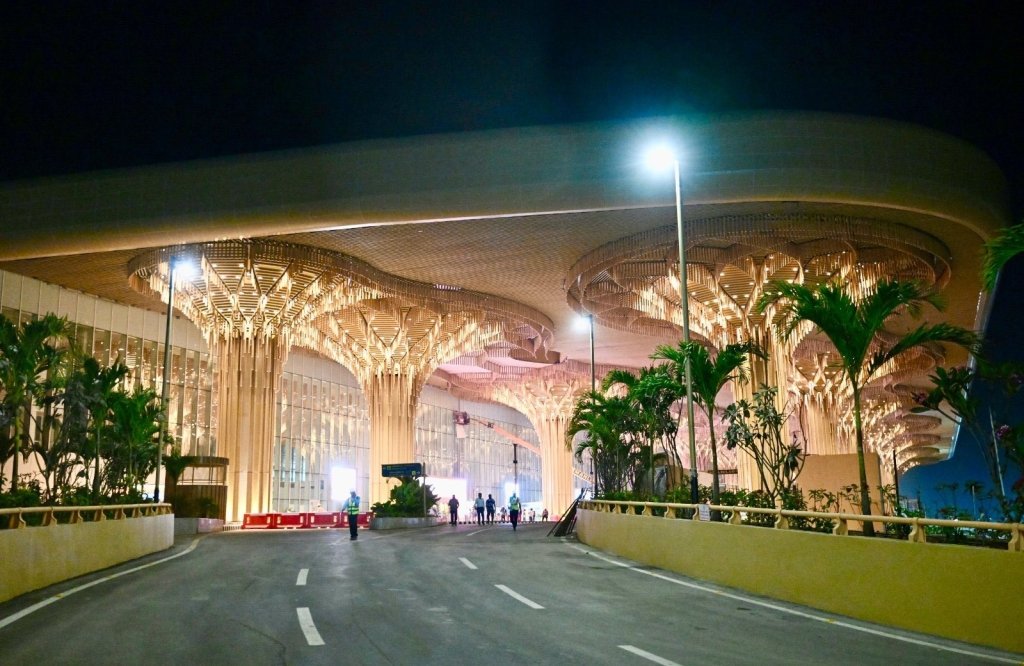
While the terminal has been inaugurated, commercial operations will begin through a phased transition starting in February.
Domestic operations will shift to the new terminal first, with international flights following; the full transition is expected to be completed by the end of March. The existing terminal is expected to be repurposed into a cargo hub once the transition is complete.
From concept to commissioning
A key part of the runway-to-ready process has been the Operational Readiness and Airport Transfer (ORAT) programme, supported by an expert visiting team from Munich, Germany, aimed at aligning systems, processes, staffing and passenger flows ahead of live operations.
In parallel, the terminal has been planned as a capacity and efficiency upgrade. Officials said that the terminal is designed to handle 13.1 million passengers annually by 2032, and can support up to 34 air traffic movements per hour — an important figure for peak-hour scheduling as Guwahati’s role as the region’s hub expands.
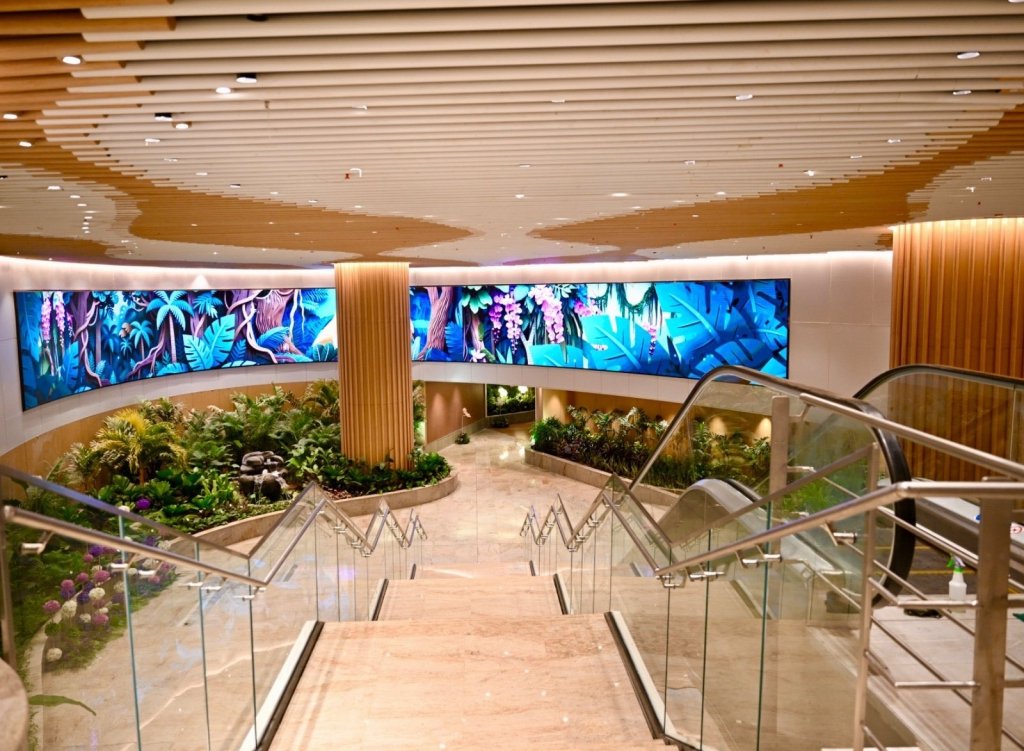
Photo: X/@RamMNK
The terminal spans around 1.4 lakh square metres, described as India’s 10th busiest airport and a key hub serving all 8 North Eastern states.
The terminal introduces digital processing standards, positioning Guwahati among India’s most technologically advanced aviation gateways. DigiYatra-enabled biometric facial recognition eliminates traditional document verification at multiple touchpoints, while full-body scanners expedite security screening.
Automated Tray Retrieval Systems (ATRS) in consolidated domestic security lanes reduce manual handling and queuing delays for passengers. Passengers can complete check-in at parking areas and arrival forecourts — a feature previously unavailable at Indian airports, eliminating the need to carry baggage into the terminal proper. Fast Track Immigration (FTI-TTP) services accelerate clearance for Indian nationals and OCI cardholders.
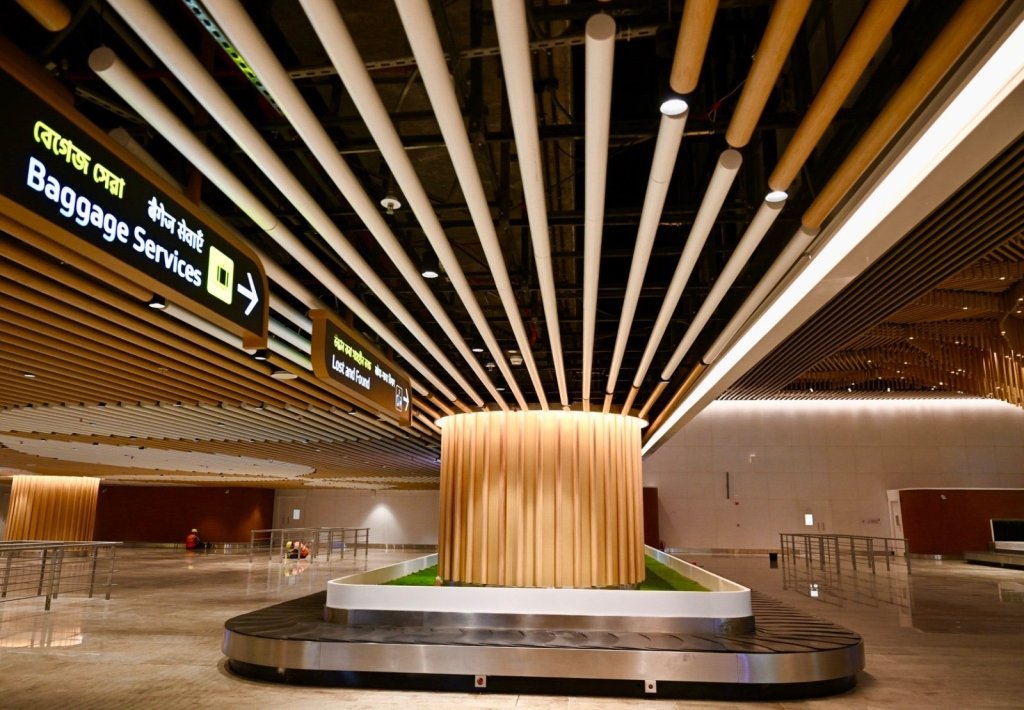
Automated baggage handling, AI-driven airport operations, and self-service information kiosks reduce dependency on airport personnel while improving service reliability

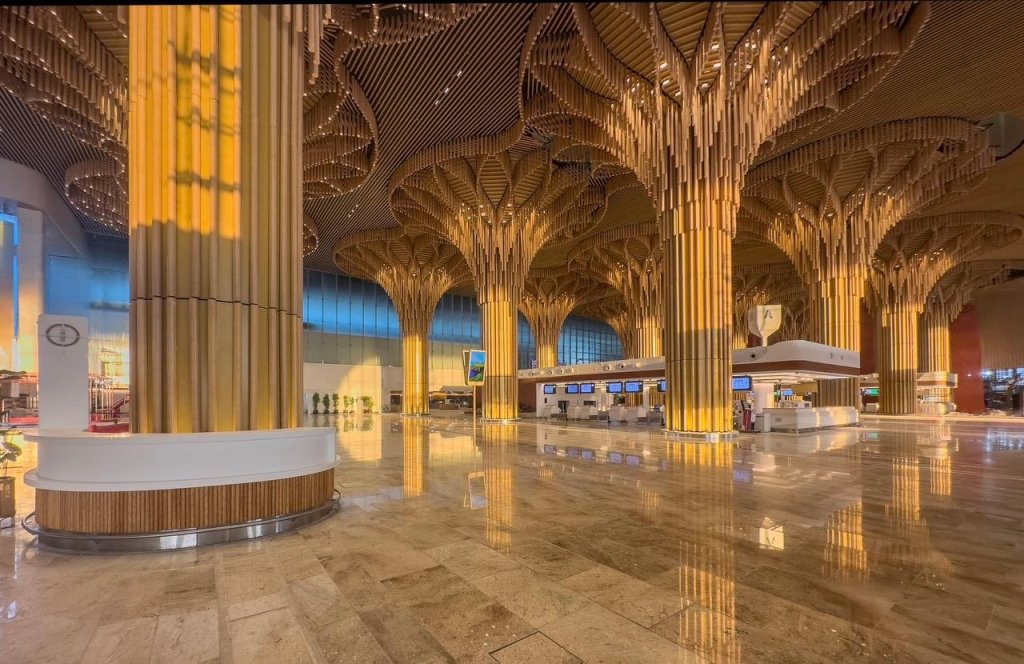
‘Bamboo Orchids’: local identity built into the structure
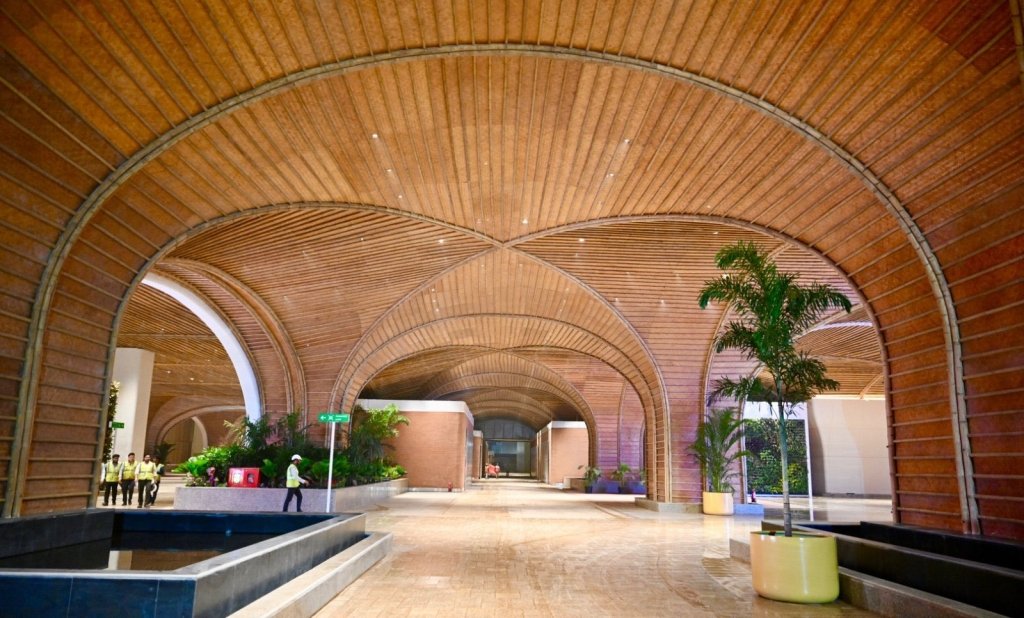
Named “The Bamboo Orchids”, the terminal draws its design language from Assam’s kopou phool (foxtail orchid) and bamboo varieties, including Bholuka bamboo from Assam and Apatani bamboo from Arunachal Pradesh. The architecture is a modern terminal rooted in regional identity, using natural materials, abundant daylight and contemporary finishes to reflect the Northeast’s ecological and cultural context.
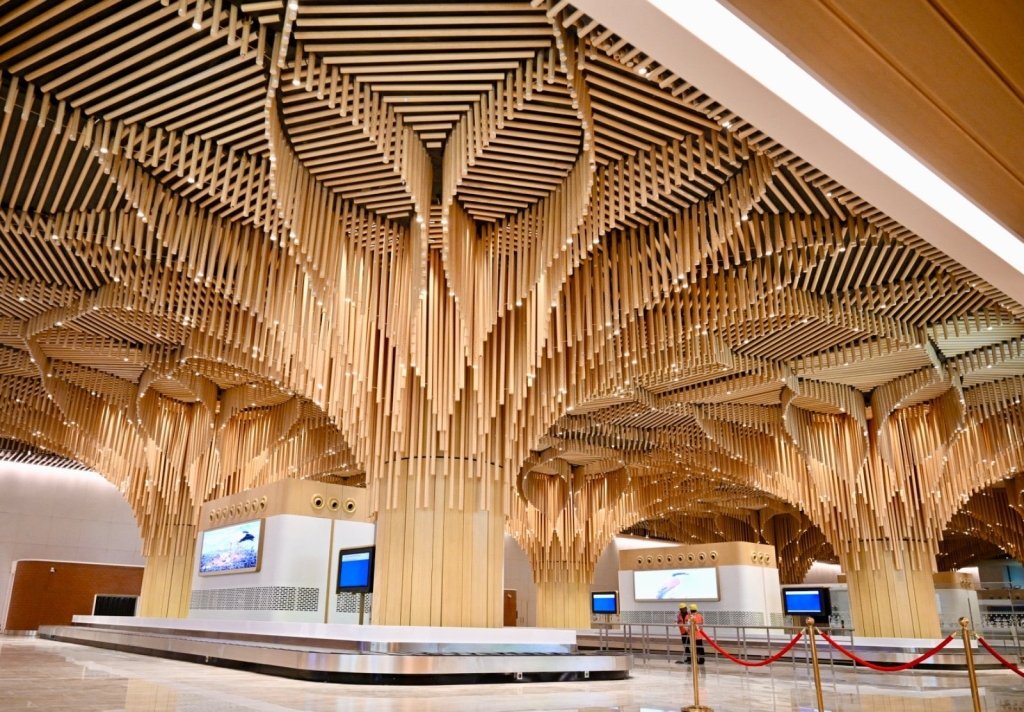
A key detail is the scale of bamboo use: about 140 metric tonnes of locally sourced bamboo from the region has been used across the terminal. Several design motifs tied to Assam and the Northeast, including Kaziranga-inspired green landscapes, japi motifs, the iconic rhino symbol, and 57 orchid-inspired columns reflecting the Kopou flower, reflect the Kopou flower.
For arriving passengers, the terminal includes a “Sky Forest” zone featuring nearly one lakh plants of indigenous species, described officially as an immersive, forest-like arrival experience.
The terminal’s design has also been recognised internationally.
The Chicago Athenaeum’s International Architecture Awards 2025 winners list includes “Guwahati International Airport, Assam, India” by NUDES in the airports/transportation category.
Capacity, MRO and cargo: what’s planned next
On the investment side, the overall airport development is a ₹5,000-crore programme, including ₹1,000 crore earmarked for MRO facilities, with the aim of positioning Guwahati as a stronger aviation and logistics hub for the Northeast and a gateway toward Southeast Asia.

The cost of the new terminal is estimated to be ₹4,000 crore. Taken together, the figures suggest the broader ₹5,000-crore plan includes additional components beyond the terminal — such as MRO and cargo infrastructure.
The terminal will feature future integrated domestic and international cargo facilities, with the existing terminal converting to dedicated cargo operations once passenger traffic fully migrates to the new building.
In a statement issued on the inauguration, Adani Group Chairman Gautam Adani said: “The Guwahati terminal demonstrates how world-class airport infrastructure can be delivered swiftly while remaining deeply rooted in local identity. It will strengthen connectivity, support economic growth across the Northeast, and offer passengers a seamless, modern travel experience.”
In his address, Modi described the airport upgrade as part of a wider push to strengthen connectivity and growth in the region, describing Assam and the Northeast as a “new gateway” for India’s development. He also linked the region’s role to the Act East policy, positioning Assam as an “eastern gateway” and a bridge toward ASEAN countries.
The inauguration also comes as Adani Airports prepares for the start of commercial operations at Navi Mumbai International Airport on December 25, 2025, with a phased rollout, starting with limited operating hours, before moving to 24/7 operations by February 2026.
Also Read: A Lotus Takes Flight: Inside Zaha Hadid Architects’ Vision for Navi Mumbai International Airport