












- The global outsized cargo market is splitting between Russia’s Volga-Dnepr and Ukraine’s Antonov Airlines.
- The Russian carrier is being taken over by the state, securing its survival as a “strategic enterprise.”
- With Volga-Dnepr locked out of Western markets, Antonov gains monopoly power over NATO and allied routes.
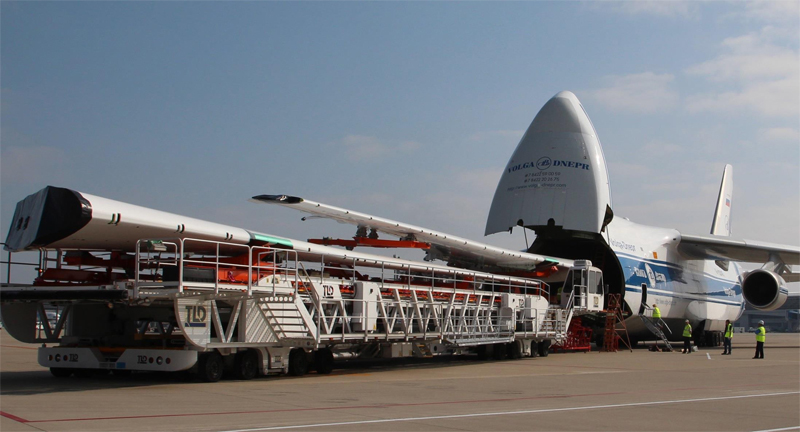
The global heavy-lift cargo market is entering a turbulent new phase, fractured along hard geopolitical lines. Russia’s Volga-Dnepr Group, now aligned with Moscow’s allies—or the “Axis of Upheaval”, as Western analysts describe the Russia-China-India bloc—stands in sharp contrast to Ukraine’s Antonov Airlines, firmly embedded within NATO and Western supply chains. Once a seamless system for moving outsized cargo across continents, it is now becoming costlier, slower, and more politically charged.
This rupture was sealed at the end of August, when it was announced that Volga-Dnepr would be nationalised by year’s end. Struggling under heavy losses—though no official figures are available—the Russian carrier has seen its once-vital AN-124 fleet sidelined in key markets such as China, the European Union, the United States, and Canada.
Volga-Dnepr had long operated in tandem with its linehaul arm, AirBridge Cargo, which deployed Boeing 747s and 777s until operations were suspended in March 2022 after Western sanctions hit. Two years later, in August 2024, sanctions extended further, with AirBridge, Volga-Dnepr, and sister carrier Atran formally blacklisted—cementing the divide in the world’s heavy-lift corridors.

Financial pressure mounted when one of Volga-Dnepr’s AN-124s was seized by Canada in 2023. Facing lawsuits at home, owner Alexei Isaykin agreed to hand the airline over to the state. At the company’s 35th anniversary in Ulyanovsk, he told Kommersant: “If the motherland says the company must go to serve the motherland, then that’s it: nationalization, confiscation, a fair deal, any form…”
Before the sanctions, Volga-Dnepr had been a dominant force in the oversized cargo market, even serving NATO contracts. Now, its future lies in government lifelines. Nationalisation will guarantee Volga-Dnepr state support, while its “strategic enterprise” tag protects it from bankruptcy. Its aircraft will be redeployed to maintain Russia’s logistics links with Asia, the Middle East, Africa, and other non-West-aligned countries.
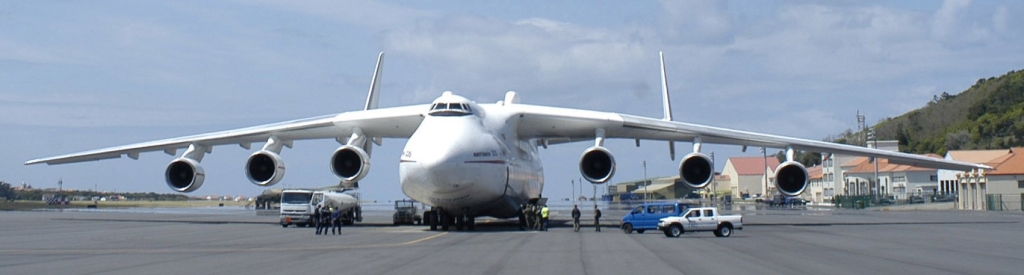
The implications are global. The An-124s and Il-76s that once moved oil rigs, satellites, metro coaches, and military equipment worldwide will no longer serve Western markets — blocked by sanctions, compliance, and insurance barriers. By December 2025, Volga-Dnepr’s cargo routes will likely focus on Russia-China, Russia-India, Russia-Middle East, and Russia-Africa, strengthening Moscow’s logistics ties with Asia and the Global South.
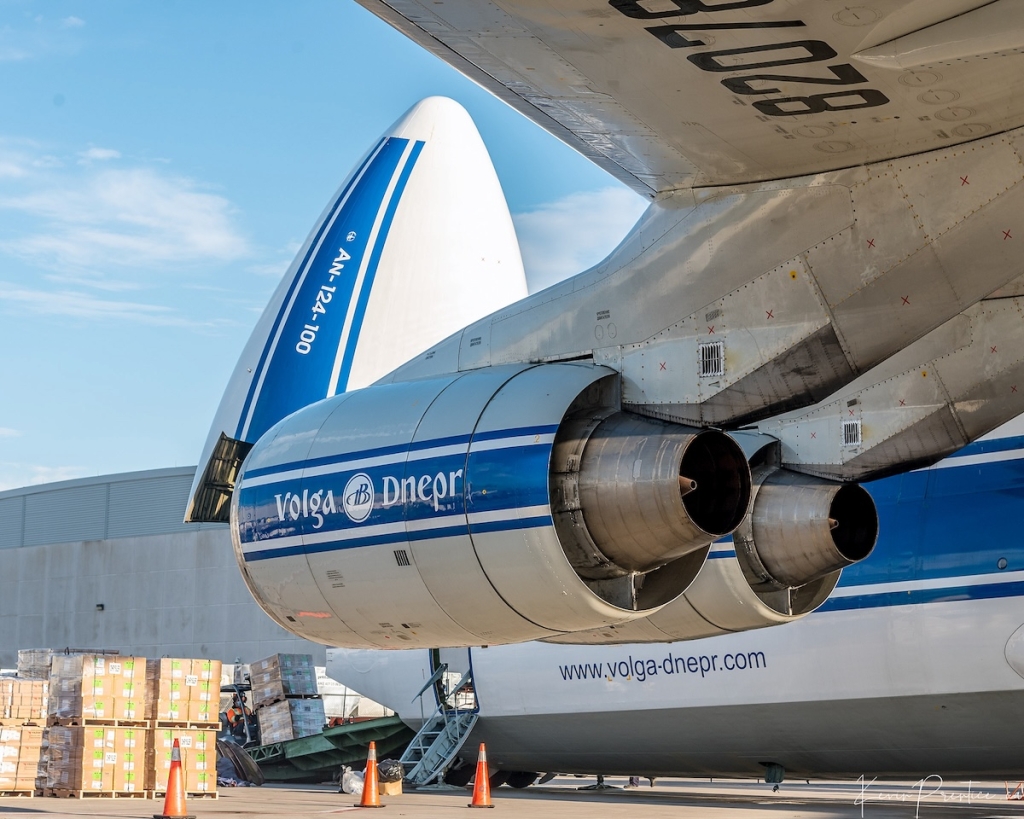
For Europe and North America, reduced access to these rare freighters will squeeze capacity, raising transport costs. Ukraine’s Antonov Airlines—the last Western-accessible An-124 operator—is set to benefit, with newfound leverage to dictate pricing.
The heavy-lift cargo market, once dominated by Volga-Dnepr’s neutral commercial network, is now splitting in two. Volga-Dnepr will serve Russia-aligned nations, while Antonov caters to NATO and neutral partners. The result: reduced interoperability, complex supply chains, and higher costs for multinational industries.
Air cargo pundits point out that while Middle Eastern carriers such as Emirates, Etihad, Qatar Airways, and Saudia may pick up some contracts, they lack the capacity and specialised reach of the An-124 fleet.
The future of the oversized cargo transport market points to a duopoly: Volga-Dnepr and Antonov. Bitter rivals before the Ukrainian war, the two seem all set to divide the globe into their spheres of influence. The once borderless world of outsized cargo transport has given way to one where politics, and not payloads, dictate the price of delivery.
Also Read: Trump’s tariffs trips air cargo forwarders