







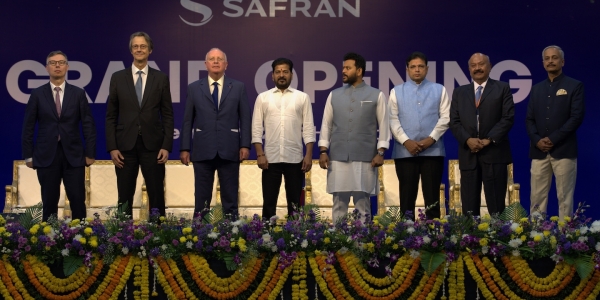



The flight path of FLY91 so far has reflected strategic clarity and purposeful progress. In its first year of operations, the airline has expanded from a single aircraft to a fleet of four ATR 72-600s, operated over 3,500 flights, and carried nearly 1.7 lakh passengers, connecting underserved tier 2 and tier 3 destinations across Maharashtra, Goa, Karnataka, and Lakshadweep. With five active UDAN routes and more cities on the horizon, FLY91’s expansion is rooted in a five-year vision to link 50 cities across India using a fleet of 30 aircraft and five operational bases. Driven by operational efficiency, cost discipline, and a commitment to connecting communities—not competing—FLY91 positions itself as a vital enabler of last-mile air connectivity in India’s regional landscape, as shared by Manoj Chacko, Founder, Managing Director & Chief Executive Officer, FLY91 in this interview.
FLY91’s objective is to enhance air connectivity from tier 2 and tier 3 towns across India. How successful have you been in this endeavour?
FLY91, India’s only pure-play regional airline, marked its first anniversary in March 2025. Headquartered in Goa and operating out of Manohar International Airport, FLY91 connects underserved tier 2 and tier 3 destinations with quiet efficiency. In its first year, the airline operated over 3,500 flights and carried nearly 1.7 lakh passengers across seven destinations: Goa, Hyderabad, Bengaluru, Pune, Jalgaon, Sindhudurg and Agatti in Lakshadweep. We started operations with one ATR 72-600 aircraft. In the course of the year, FLY91 became the first regional airline in India to simultaneously purchase two ATR 72-600 aircraft in a one-of-a-kind order. FLY91’s fleet currently comprises four ATR 72-600 aircraft, a significant enhancement in the fleet size in one year for a regional airline.
Your initial routes were part of the UDAN scheme. How many of these routes are you flying at the moment, and what is your plan for the next 12 months?
FLY91 operates certain flights under the Government of India’s UDAN – Regional Connectivity Scheme (RCS). Under its aegis, we operate five routes: Goa–Jalgaon–Goa, Pune-Sindhudurg-Pune, Goa–Agatti–Goa, Jalgaon-Hyderabad-Jalgaon and Pune-Jalgaon-Pune. All these routes have gained popularity since their introduction by FLY91. Their success highlights the importance of providing air connectivity to underserved regions, which hold immense untapped potential, which our five UDAN routes have been able to unlock.

Over the next 12 months, we plan to steadily expand our footprint to new underserved destinations, in line with our long-term vision of connecting 50 cities through five operational bases with a fleet of 30 ATR 72-600 aircraft. Our focus remains on tier 2 and tier 3 cities, ensuring safe, efficient and sustainable regional connectivity that simplifies last-mile travel for Indian flyers.
The airline’s identity, ‘Bharat Unbound’, reflects its mission to connect overlooked regions, while its name, drawn from India’s country code +91, reinforces its Indian roots and ethos.
The airline name FLY91 comes from India’s country code. So, when are you moving to other parts of the country?
Currently, we operate in Sindhudurg, Jalgaon, and Pune in Maharashtra alone, in addition to other destinations. Our objective is to further strengthen our connectivity network within the western states. To supplement our efforts to connect tier 2 and tier 3 towns in Maharashtra and western India, we are adding Solapur to our list of destinations. Looking ahead, we are also in the process of finalising another underserved destination in Maharashtra and also in Karnataka, which we will announce once we are fully prepared to launch operations.
Our goal is to deliver a seamless flying experience that reflects and celebrates the diversity of our regions. We are committed to reaching underserved and remote destinations where air services are limited or non-existent. When the UDAN Scheme was announced, 52 cities were put up for bidding. We conducted a detailed study and selected four destinations based on infrastructure viability. Sindhudurg and Jalgaon are great examples of near-zero connectivity regions that are performing very well today.
You have four aircraft now and have ambitions to increase the size of your fleet to 10. When do you hope to achieve this target, and what sort of network do you hope to have by then?
We currently operate three aircraft, and the fourth aircraft, which we have purchased, will join us soon. We have a five-year vision to build a well-connected regional network across India. As part of our measured growth plan, our approach is to grow steadily and strategically, adding one new base each year, with 5 to 6 aircraft per base. As we scale, each base will serve 8 to 10 destinations, allowing us to connect over 50 cities by the end of five years. The average flight duration on our network ranges between 60 to 90 minutes, making regional travel faster and more efficient for passengers across tier 2 and tier 3 locations.
How many of the aircraft are company-owned, and how many are on lease, and what is the acquisition model you hope to follow?
Having completed its first year of operations in March, FLY91 has operated over 3,500 flights and carried close to 1.7 lakh passengers. The airline has consistently maintained a schedule of over 100 weekly flights, with increased frequencies scheduled for the peak summer travel period. FLY91’s third aircraft has now joined its fleet, while the fourth is expected to be delivered shortly. This landmark twin purchase marks a significant milestone in India’s regional aviation sector and signifies FLY91’s commitment to measured growth and the potential of regional aviation in the country. While the airline’s first two ATRs were leased from Dubai Aerospace Enterprise, the new twin acquisition signals a strategic shift towards ownership and long-term fleet expansion. With the arrival of the third ATR 72-600, a 72-seater aircraft known for its fuel efficiency and suitability for short runways, FLY91 continues to fulfil its mission of connecting tier 2, tier 3 and underserved regions.
You have spoken about generating a healthy load and revenue. Could you elaborate on that?
The ATR 72-600 was selected for its exceptional safety record, fuel-optimisation for operational efficiency in the 70-plus-seater category. To put things into perspective, the ATR burns approximately 600 kilograms of fuel per flight hour, which makes it highly economical. In terms of costs, the cockpit costs for an ATR are similar to those for larger jets like the A320 or 737. However, while those aircraft spread costs over 186 or more passengers, we do so across just 70 seats. Despite this, the ATR has significant advantages in maintenance and leasing costs, which are typically one-third or even one-fourth of what larger jets require. This cost efficiency is particularly beneficial on days when passenger loads are lower. While we have fewer seats to generate revenue, we also lose far less compared to operating larger aircraft like the A320 or 737. The ATR 72-600’s combination of safety, fuel efficiency, and cost-effectiveness makes it a perfect fit for FLY91.
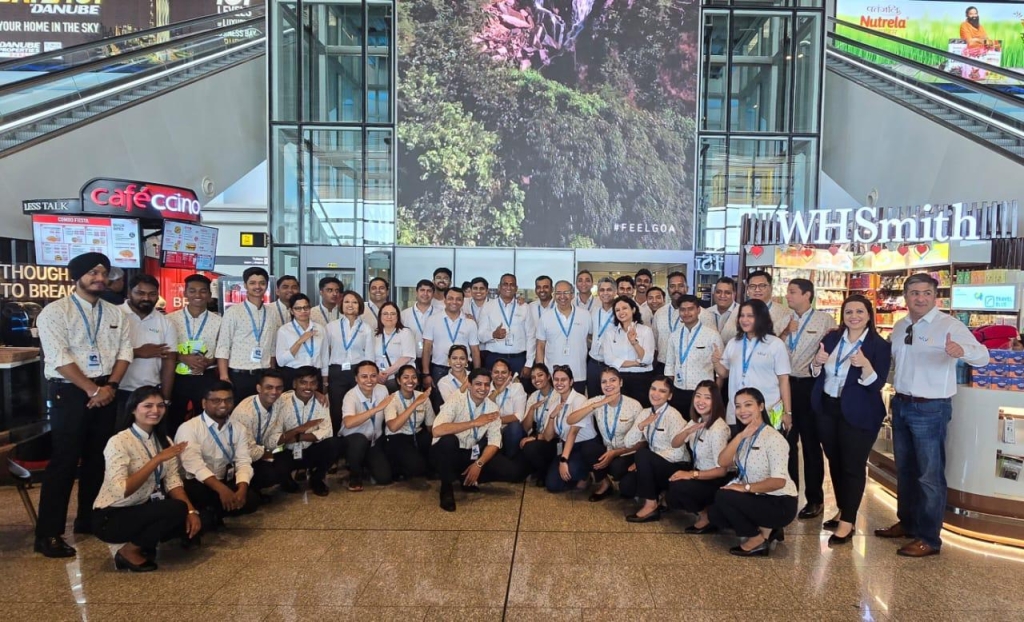
There are two critical elements to a breakeven — one is the kind of average yield that you can get because the load factor is never a problem in our country, as there are enough people who want to fly. The more important part is the unit cost at which you can operate, as aviation is all about cost leadership. Keeping our cost structure very smart and low is critical, and making sure that we’re flying the routes where you can get the right yields is very important. As you start going into niche sectors, your yields automatically start going up.
Would it be right to say that the basics of the operations are now in place and the time for expansion has begun?
At this point in time, our fundamental business model is to stand on our own feet. Our expansion plans are on point and are focused on our five-year plan, but right now our focus is purely on taking passengers point-to-point, what I call connecting communities. India’s aviation sector is expanding at an unprecedented rate, and FLY91 is proud to be part of this growth story. Our focus is to provide safe, reliable and comfortable flights to our customers in such regions.
Considering that your aircraft are delayed because of supply chain issues, it must be tough competing with the existing players on many of the routes you serve.
We aim to co-exist, not compete, with all forms of transportation, including airlines. Our goal is not to compete with anyone, but to provide access to cities where air service is lacking, focusing on last-mile connectivity. While competition is inevitable, we have various strategies in place. In niche sectors, we are often the only player, or one of two. Our sweet spot is any route under 90 minutes for an ATR. We consider ourselves an air transportation company, dedicated to safely and efficiently connecting tier 2 and tier 3 cities, creating a robust air transport ecosystem which focuses on improving last-mile connectivity.
You also discontinued flying to Bengaluru, which was your first route. Any particular reason?
Our operations in Bengaluru were paused temporarily due to unforeseen circumstances. We are earnestly working towards restarting this service. Bengaluru is a fantastic city where people from across the country come to work, to visit, to experience and to fly to international destinations. There are many individuals who are employed with tech companies and other corporates who hail from different towns and cities who would like to travel back home to family and relatives, or a leisure destination or for religious ceremonies. Bengaluru is a key part of our long-term strategy. We aim to connect 8 to 10 cities, which are at a distance of 60 and 120 minutes flying time from/to Bengaluru. We are constantly evaluating the demand from various cities into and out of Bengaluru to enhance connectivity.
Since your focus is last-mile connectivity, what sort of interline arrangement are you going to have with the big players?
FLY91’s commitment to last-mile connectivity goes beyond just ensuring efficiently run flight routes. A prime example is our new initiative at Sindhudurg Airport. In collaboration with airport authorities, FLY91 is currently the only airline in the country who initiated and facilitated with the Sindhudurg airport authority to organise a complimentary coach service for passengers flying on the Pune–Sindhudurg–Pune route, connecting them directly to Panaji, the capital of Goa, located at a distance of nearly two hours from the Sindhudurg Airport. This service reflects our broader goal: to make onward journeys smoother and ensure easy access to or from FLY91 flights.
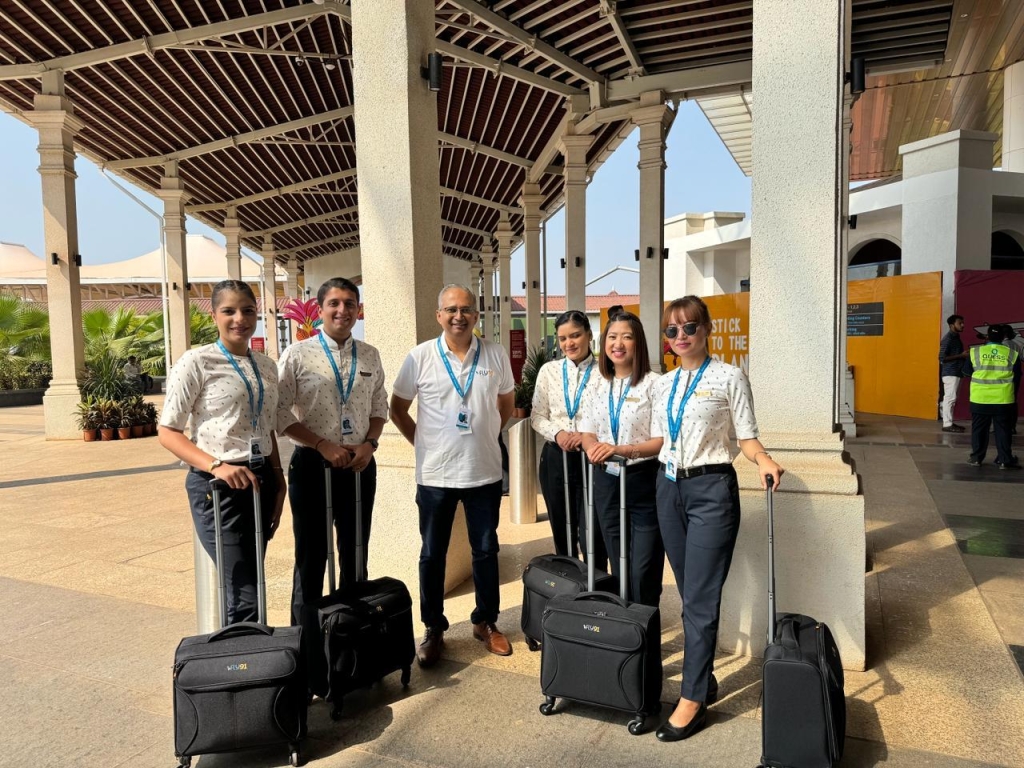
As far as interline agreements go, our approach is intentionally simple. We fly passengers from point A to point B—but because of how our network is designed, we naturally function as a connecting carrier. For instance, many passengers travelling from Jalgaon to Hyderabad continue onward to cities like Delhi, Kolkata, Mumbai, Chennai, or even international destinations like Thailand or Singapore. While we don’t yet offer formal facilitation, our schedules inherently support such connections. It’s early days for us to formalise interline connectivity, as that adds operational complexity—but it’s certainly on the horizon. If you look at North American airline models, for example, you’ll see similar patterns, though the European approach differs slightly.
Read More: New regional airlines can boost cargo