













- AEGEAN receives a new ATR 72-600 and confirms two more, advancing its low-emission fleet strategy. With the latest orders, AEGEAN reinforces its commitment to sustainable, year-round connectivity across Greece.
- The additions strengthen Olympic Air’s island network, improve fuel efficiency, and cut emissions across short-haul routes. The ATR 72-600’s short-runway capability and lower emissions make it ideal for Greece’s island airports.
- AEGEAN’s renewal aligns with EU sustainability mandates and positions it among Europe’s youngest regional fleets by 2027.
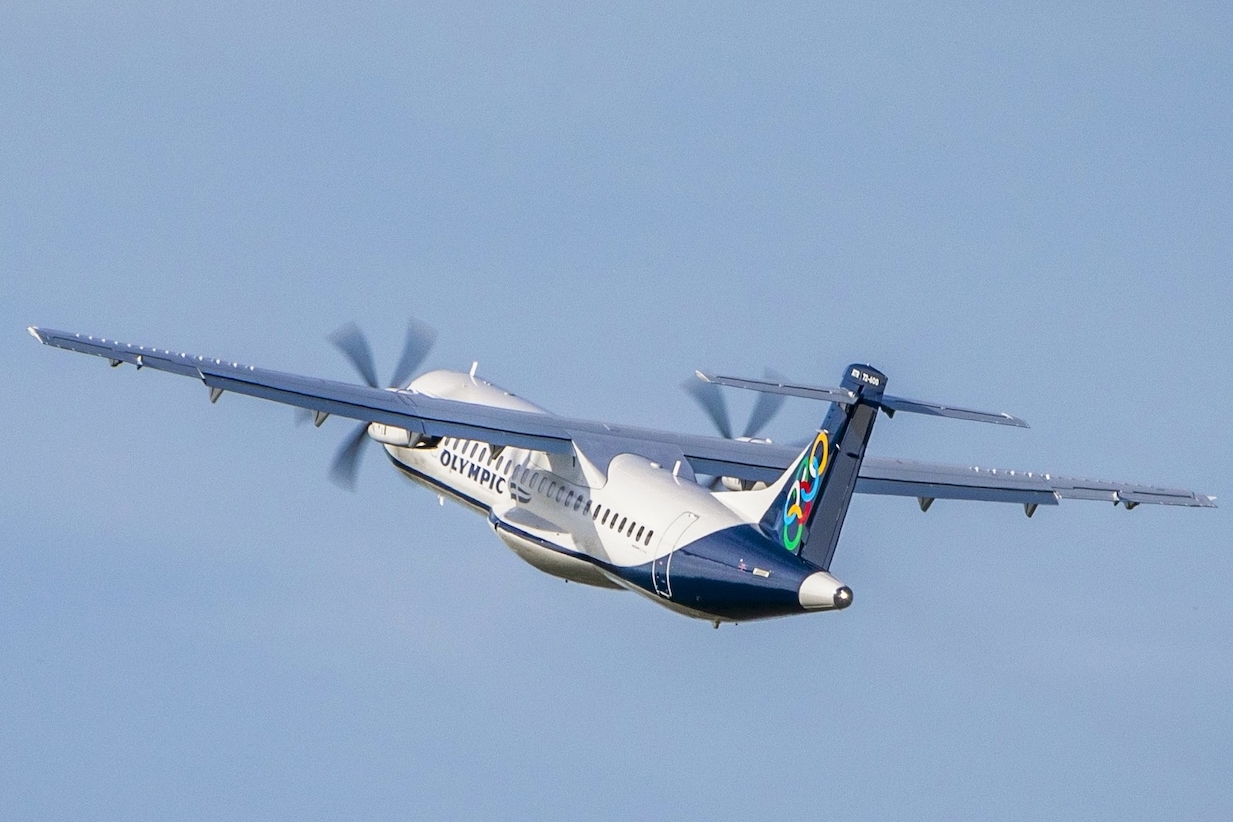
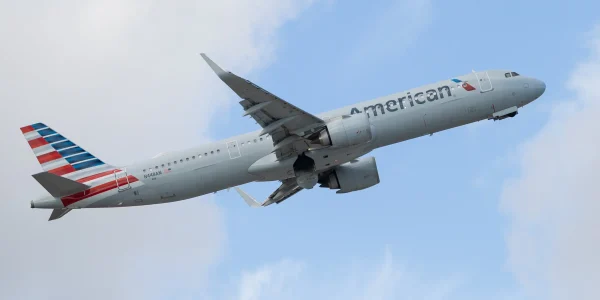
AEGEAN Airlines, through its regional subsidiary Olympic Air, has received a new ATR 72-600 and confirmed firm orders for two additional aircraft to be delivered by December 2026. The move reinforces Greece’s largest carrier’s commitment to reliable island connectivity, sustainable operations, and long-term cost efficiency across its domestic network.
Fleet Renewal Anchored in Regional Demand
The latest delivery brings Olympic Air’s turboprop fleet to 15 aircraft—12 ATR 72-600s and three ATR 42-600s—serving short-haul routes linking Athens and Thessaloniki with islands such as Rhodes, Mykonos, Santorini, and Chania. These routes form the backbone of AEGEAN’s regional network, particularly vital during winter when ferry services are curtailed.
Michalis Kouveliotis, Deputy Chief Executive Officer of AEGEAN Airlines, said the new additions align with the group’s focus on sustainability and efficiency.
“We are pleased to welcome the new ATR 72-600 to our fleet and anticipate the arrival of two more aircraft by December 2026. These additions reflect AEGEAN’s and Olympic Air’s ongoing commitment to fleet renewal, operational efficiency and sustainability. We remain confident that ATR’s latest-generation aircraft will enable us to further enhance connectivity across Greece while reducing our environmental footprint.”
ATR Upgrades and Operational Fit
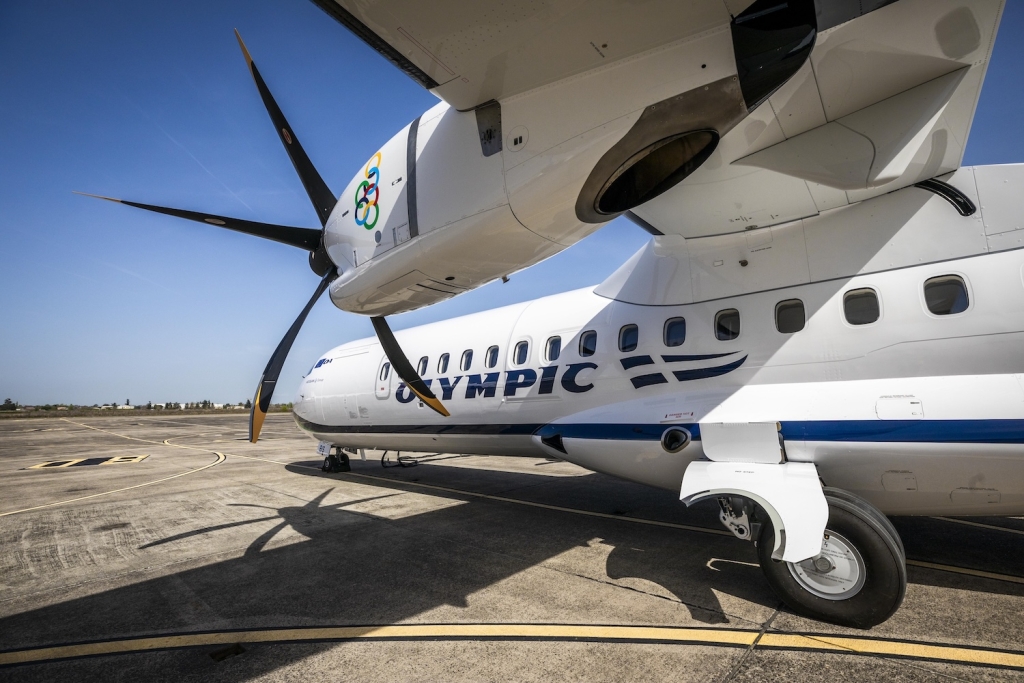
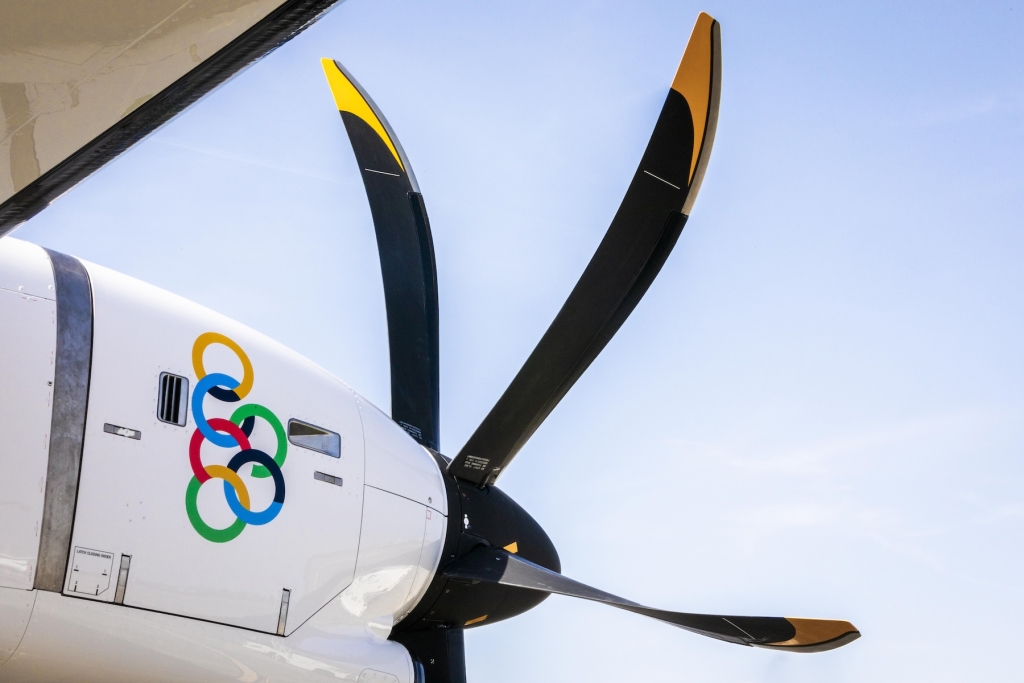
The ATR 72-600 is powered by Pratt & Whitney Canada PW127XT-M engines, introduced in 2022, which deliver approximately 20 per cent lower maintenance costs and around 3 per cent lower fuel burn than earlier versions.
For AEGEAN’s network of short sectors and challenging airfields, the aircraft’s short-runway performance is a core advantage. Greek airports, such as Naxos (900 m), Paros (710 m), and Kastellorizo (800 m), require the type of take-off capability and payload balance that the ATR 72-600 provides.
ATR’s leadership echoed the significance of AEGEAN’s continued investment in turboprops.
Nathalie Tarnaud Laude, Chief Executive Officer of ATR, stated that the partnership demonstrates how modern regional aircraft can efficiently sustain vital air links.
“AEGEAN Airlines and Olympic Air’s role in delivering accessible and inclusive connectivity throughout Greece is commendable. The ATR 72-600 is ideally suited to their regional network, offering unmatched fuel efficiency and reliability. Its low operating costs and minimal environmental impact make it the perfect aircraft for maintaining profitable operations on low-density routes, especially in winter when air travel becomes a lifeline for island communities. This partnership reflects our shared vision for a truly essential and profitable regional aviation landscape.”
Fleet-registration data shows that ATR models account for over 85 per cent of turboprops operating in southern Europe—a reflection of their fuel efficiency and reliability on routes of less than 500 kilometres.
In Greece, both AEGEAN and other regional operators rely on ATR aircraft to serve dozens of islands where demand varies seasonally, but air access remains essential.
Beyond fuel efficiency, the 72-600 variant features updated avionics certified for ADS-B Out and RNP approaches, improving situational awareness and reducing diversion risk at weather-affected island airports.
Commonality in the PW127XT engine programme also allows shared training and parts pooling across European MRO facilities in Toulouse, Malta and Naples, helping AEGEAN keep turnaround times and maintenance costs under control.
Competitive and Network Context
AEGEAN’s regional network strategy is designed around a dual-fleet model: Airbus A320/A321neos for trunk and international routes, and ATR turboprops for thinner domestic sectors. This ensures optimal fleet utilisation and route profitability across seasonal fluctuations.
Its principal domestic competitor, Sky Express, operates a fleet of 24 ATR aircraft and serves over 35 domestic and eight international destinations. AEGEAN’s continued investment in new turboprops helps it maintain its lead in market share and control of feeder traffic into its mainline jet network, particularly at Athens International Airport, where domestic connections account for roughly one-third of total departures.
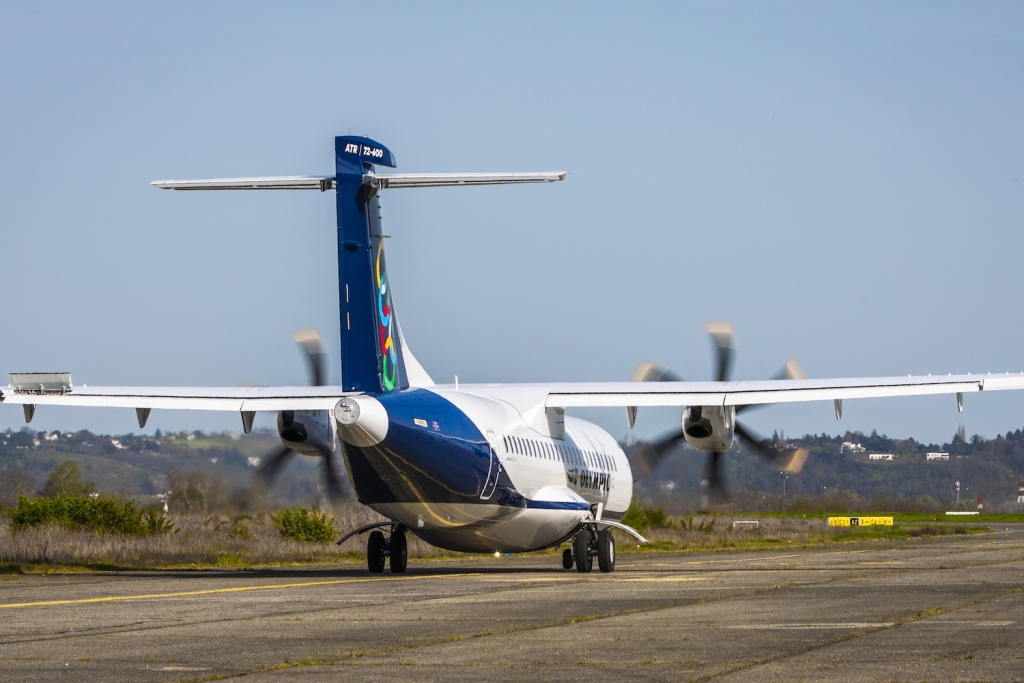
Between September 2025 and March 2027, the airline will add 14 new aircraft—11 A321neos and three ATR 72-600s—bringing its total fleet to around 85. In 2024, AEGEAN carried 16.3 million passengers, offering 19.7 million seats across 250 direct routes (55 domestic and 195 international) to 162 destinations in 47 countries. Revenue exceeded €1.7 billion, with capacity about 108 per cent of its 2019 level, showing a strong post-pandemic recovery.
The airline, a member of the Star Alliance, was named Best Regional Airline in Europe for the 14th consecutive year and the 15th time overall in the Skytrax World Airline Awards — recognition that underscores its consistency in on-time performance and service quality.
AEGEAN’s 2024 Sustainability Report also recorded a 12 per cent reduction in CO₂ emissions per passenger-kilometre since 2019, reflecting the impact of fleet renewal and operational efficiency measures with its newer Airbus neos and ATR 600-series aircraft.
Policy Environment: Why Turboprops Make Sense
AEGEAN’s renewed investment in turboprops aligns with Europe’s environmental and regulatory landscape. Under the EU Emissions Trading System (ETS), airlines must purchase allowances for each tonne of CO₂ emitted on intra-EU flights. The cost of these allowances has risen from under €30 per tonne in 2020 to more than €75 in 2025, increasing the financial burden on fuel-intensive jets.
Meanwhile, the ReFuelEU Aviation Regulation (2023/2405) requires airlines to blend a minimum of 2 per cent Sustainable Aviation Fuel (SAF) in 2025, rising to 6 per cent by 2030 and 20 per cent by 2035. Because Sustainable Aviation Fuel remains several times more expensive than Jet-A1, aircraft that minimise consumption have a clear economic advantage.
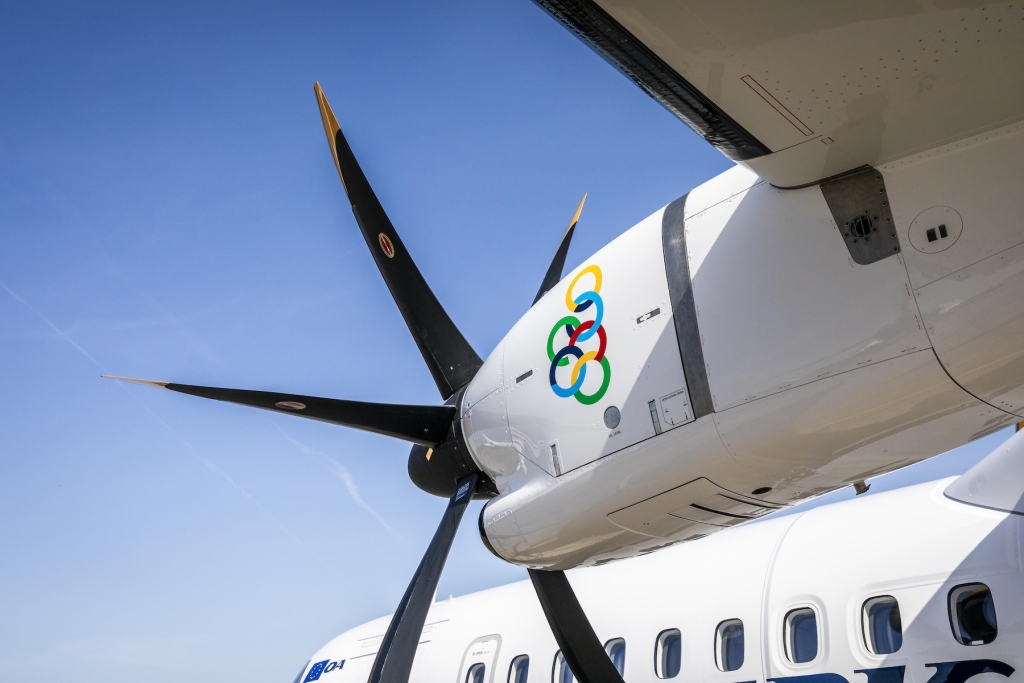
On a typical 300-nautical-mile sector, the ATR 72-600 consumes around 2.8 litres of fuel per 100 passenger-kilometres, compared with about 5 litres for regional jets such as the Embraer 170 or CRJ900.
That difference translates to approximately 45 per cent lower CO₂ emissions per flight.
EASA studies also show that turboprops flying at lower altitudes generate fewer contrails—a growing focus area in European climate metrics.
For AEGEAN, whose average domestic flight time is under one hour, this alignment of operational pattern and environmental regulation translates into tangible compliance and cost advantages.
Regional Aviation and Market Perspective
ATR’s production has remained steady, with around 36 aircraft delivered in 2024 and a global backlog of approximately 160 units, according to Cirium. The manufacturer’s turboprops are flown by some 200 operators in more than 100 countries, opening around 120 new routes annually.
Across southern Europe, the ATR 72-600 has become a cornerstone of regional aviation economics. Short runways, thin seasonal demand, and mountainous terrain create conditions where fuel-efficient turboprops outperform jets on both cost and accessibility. For Greece, where more than 35 islands depend on scheduled air links for medical, educational and economic mobility, the type’s utility goes beyond commercial metrics—it is infrastructure in motion.
Outlook
The arrival of the new ATR 72-600 and the follow-on order set AEGEAN on course to operate one of Europe’s youngest regional fleets by 2027. The combination of A321neos for medium-haul routes and ATR 72-600s for short sectors will allow the airline to balance growth with efficiency, reducing unit emissions and maintaining competitive costs.
For ATR, the continued trust of a profitable European flag carrier highlights the value of incremental innovation in a market increasingly defined by sustainability targets and economic discipline.
Also Read: ATR Sees Demand for 300 Aircraft in the U.S.