













Air India AI171: A Stark Reminder of the Human Cost Behind Aviation Growth

- The Air India AI171 crash highlights how rapid aviation growth often sidelines crucial safety and human concerns.
- Pilots, crews, and ground staff face mounting pressures, with mental health and workforce issues largely ignored.
- India must overhaul rules, enforce accountability, and put people first to prevent future tragedies.

What a travesty that the tragedy of those lost in the ill-fated Air India AI171 crash in Ahmedabad has been reduced to a storm of opinions and contrasting views, with everyone suddenly posing as experts and scrambling to prove the other side wrong. The preliminary Air Accident Investigation Bureau (AAIB) report has only fuelled this noise. Often, the arguments tossed around seem plausible, but they are nothing more than conjectures until the final report is out.
In all this, the real questions about human lives, safety, and accountability remain unanswered, only to fade from our short memories. We shout for a while, life moves on, the rhetoric changes, but the conditions remain the way they were. Then, God forbid, another tragedy strikes, evoking the same reactions, and the cycle continues.
The Forgotten Human Factor
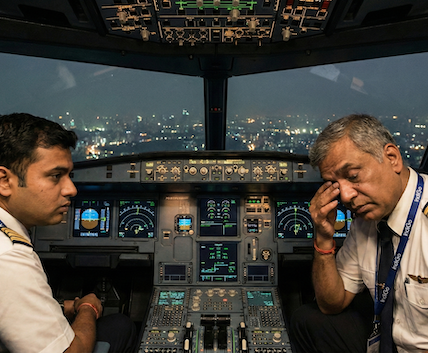
In this entire melee, where is the focus on the human factor? The pilots, crews, technicians, and ground staff, these are the people who have enabled aviation growth in the country, yet they have been conveniently forgotten. We talk endlessly about the rapidly expanding aviation sector, but rarely about those who actually make it happen.
No, it is not the money airlines have to buy more and more aircraft, nor the infrastructure the government intends to create, that truly powers aviation. It is the people who manage these assets, who bring to life the vision of growth and safety in the sector. We have always lived in constraints, and it seems we will continue to do so, but what have we truly done over the last 10 years to address the challenges we knew would come with this ambitious expansion? Be it the shortfall of resources to manage growth or the far more critical challenge of managing an existing workforce already working beyond its capacity to fuel the engine of aviation boom and safeguard the bottom lines of corporates.
A Systemic Lapse in Oversight
Yes, Air India management has been at fault for not heeding multiple complaints about how different departments were functioning. So too have the DGCA and MoCA, who ignored the safety aspects of aviation when these complaints were raised. Who will be held accountable? The managers running the airlines, the administrators shirking from taking stern action, the government of the day, or those who were at the helm earlier? Did the MoCA, which spearheads aviation in India, ever caution either the airline or its administrators on the safety aspects? These are the questions on everyone’s minds, and there will never be any real answers.
The Overlooked Crisis: Mental Wellbeing in Aviation
The aftermath of aviation tragedies often shifts focus to technical failures and administrative oversights, but the human element, especially the emotional health of pilots and crew, remains largely unaddressed. Historical parallels like the Germanwings Flight 9525 crash, where the co-pilot, Andreas Lubitz, with a history of severe depression, deliberately locked the captain out of the cockpit and crashed the plane into the French Alps, show what happens when these issues are ignored.
Studies clearly reveal pilots face unique stressors: disrupted sleep cycles, isolation, and the ever-present stigma around mental health, all of which can spiral into depression, anxiety, and worse. As retired pilot Carl Eisen aptly noted, “If each aircraft requires two pilots, one out of four planes is flying with a pilot who qualifies as clinically depressed. Yet, airplanes aren’t falling from the sky because of this. It’s a testament to the resilience of pilots, but also a call to action for better support systems.”
Dr Brent Blue, a senior aviation medical examiner, had put it bluntly: “The FAA is so worried about a smoking hole in the ground that they’re scared to death someone’s going to be held responsible. So, the fallback is always to say no. That’s why pilots tend to withhold information.” This highlights how mental health is handled in aviation, a culture that drives silence instead of support.
What Needs to Be Done: No More Half Measures
MoCA must urgently:
- Overhaul its administrative structure and make departments truly accountable.
- Replace archaic, ambiguous rules with clear, practical guidelines that leave no room for manipulation.
- Establish explicit norms for airlines and all aviation stakeholders to ensure that decisions remain transparent and above board.
- Ensure defaulters aren’t let off lightly: for airlines, ground part of their operations for flouting norms; for officials, mere suspension should give way to more stringent actions.
- Create a digital dashboard to transparently track every safety complaint, verify its legitimacy, and initiate action, whether against erring airlines, negligent administrators, or even false whistleblowers.
Air India must confront its urgent responsibilities:
- Address crew grievances empathetically, replacing fear-based discipline with practical, supportive solutions.
- Ground aircraft with even basic system issues impacting passengers, prioritising long-term credibility over short-term profit.
- Build meaningful mental health programs, integrating peer support and confidential counselling so that pilots and crew can seek help without jeopardising their careers.
Now, with Chandrasekaran at the helm of Air India, there lies an opportunity to foster a more democratic culture where decisions about safety and workforce welfare aren’t left to a few individuals but guided by broader oversight that puts people first.
What the airline needs to do, across the board, is to confront the challenges of how to earn the trust of their customers, who, by and large, will fly, but the onus to fly them safely lies in the hands of the effective and efficient management of their operations. This is the right time to either revamp or start anew for the airline, which has often been referred to as the national carrier.
A Call to Leadership
We have a young minister who can bring about the much-needed change in a ministry which affects millions of lives. By driving a culture of openness, accountability, and genuine care for the human side of aviation, he could not only surpass anticipated growth figures but also transform India into a regional powerhouse known as much for its humane approach as for its ambitious scale.
After AI171, the world isn’t just watching India’s aviation numbers, they’re watching how we value lives over ledgers. Let’s ensure the next chapter of India’s aviation growth story puts people at the heart of our ambitions.
Mr. Naidu, all our hopes rest on you. There cannot be a better time than now.
Read More: Will lessons be learnt from the Air India AI 171 crash? Not so sure