













- As Air India merges with Vistara, the airline aims to boost its market share and international reach.
- This article explores whether this move will enable Air India to compete effectively with IndiGo’s dominance in the Indian aviation sector.

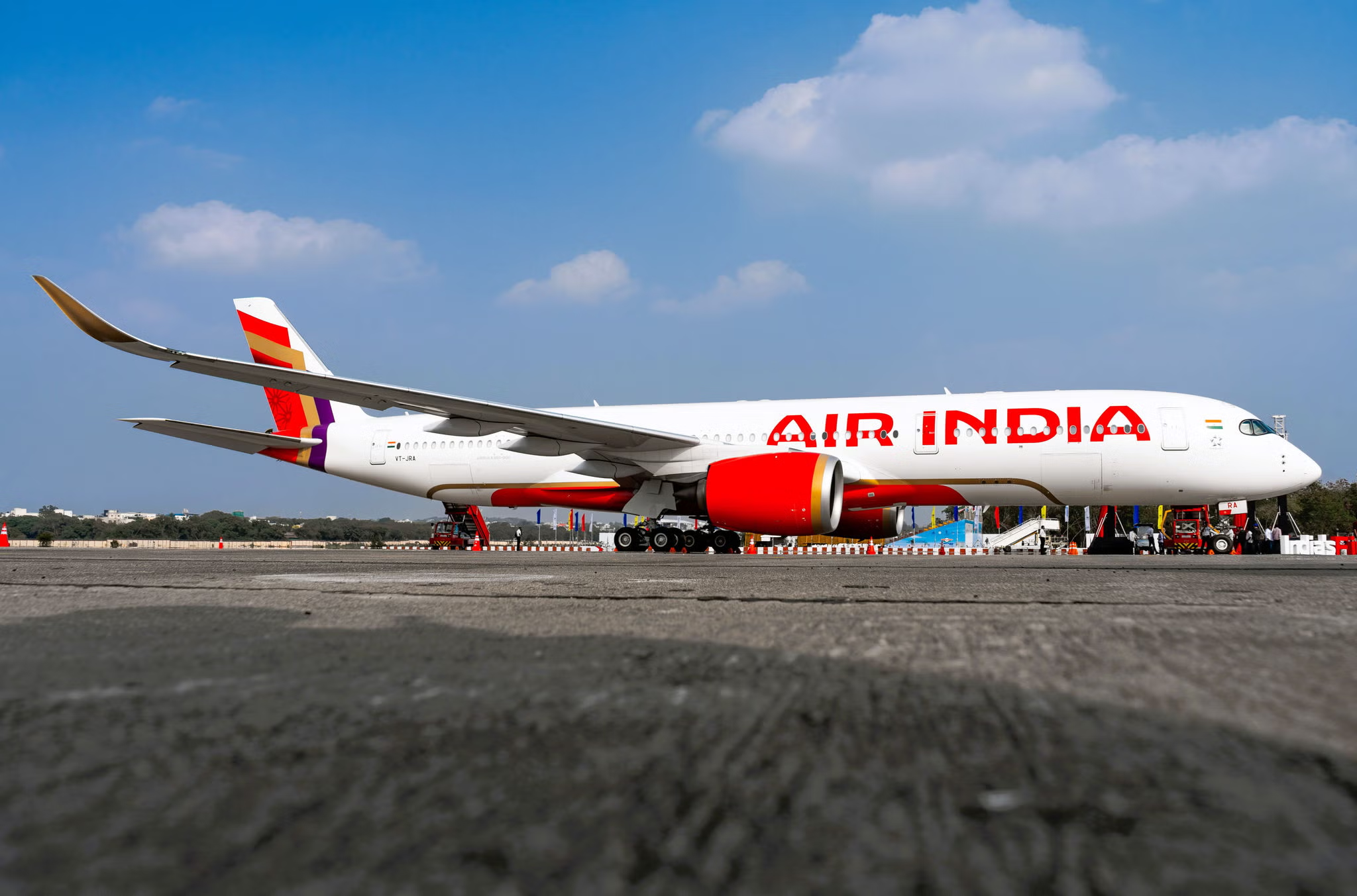
Come next month, Vistara will be history. An airline which was founded with much fanfare in 2013 and started operations in 2015 will merge with Air India on November 12, 2024, thus ending a chapter for the Tata group but will mark the beginning of a larger journey as Air India. While it got many laurels over its nearly decade-long experience, it was never profitable and shows how cutthroat and ruthless Indian aviation has been.
In 2022, Air India unveiled its transformation plan named “Vihaan.AI”. The plan envisioned having a 30% market share in five years. With less than 10% market share when the announcement was made, it was very clear that the Tata group had made up its mind to merge Vistara with Air India. Market share is always a function of capacity deployed, with load factors remaining more or less similar across airlines. It was evident that the talk was about capacity.
As IndiGo continues to maintain its over 60% market share, a look at the pre-COVID and pre-privatisation times shows that IndiGo was sub-50% in market share, while SpiceJet was second at 15.3% and Air India third at 12%. AirAsia India and Vistara, the two Tata entities along with government-owned Air India, would have 26% market share pre-COVID. The four airlines will fold into two and are all set to cross the 30% mark by the end of this year. That gets us to the real question, with changing market dynamics – How is Air India placed to compete with IndiGo, both domestic and internationally?
Data shared by Cirium – an aviation analytics company, shows interesting trends on both domestic and international routes.
Head-start in international
Air India has a tremendous headstart on the international front with non-stop services to Europe and North America, which includes two points in Canada and five in the USA, with a few more expected to start soon. IndiGo is currently leading with more seats and passengers, but Air India leads with more capacity by ASK (Available Seat Kilometres), a measure of unit for capacity.
In terms of destinations, spread, and connectivity, Air India and Vistara, along with Air India Express, are miles ahead of IndiGo due to their legacy network. The 54 widebody with Air India and seven with Vistara give an edge with flights to London, Birmingham, Frankfurt, Paris, Stockholm, Copenhagen, Amsterdam, Zurich, Rome and Milan in Europe, along with flights to Australia.
There remains an overlap in the network to Paris and Frankfurt from Delhi between Air India and Vistara, which could either be resolved by retiming the flights or shifting them to another destination, which would help offer a wide spread of connectivity.
Domestic is still a metro game
Until 2013, nearly 80% of the domestic air traffic in India originated from the top six metros. This has significantly changed now as more airports have become operational, and the number is down to 68%. The highest returns always come from business travellers who have last-minute travel and the bulk of the travel. While holiday destinations are seasonal, the metro’s remain season agnostic.
Come November, Air India will have more frequencies and capacity than IndiGo on the Mumbai – Delhi route. The same will also be true for the second busiest route in India, Delhi – Bengaluru – Delhi, where Air India will have 122 weekly frequencies each way, while IndiGo will have 105. In the case of Delhi – Mumbai – Delhi, Air India’s 200 weekly frequencies will definitely overshadow IndiGo’s 135. There remains a narrow lead for a merged Air India on Delhi – Ahmedabad – Delhi. However, the rest seven routes see IndiGo maintaining its lead in terms of seats on offer and frequencies.
The IndiGo dominance continues for almost all routes thereafter, barring a handful. For Air India, increasing its presence on key seasonal and non-seasonal routes is important. However, its strategy to break the IndiGo monopoly is nestled in letting Air India Express, which has a lower cost structure, tackle it while on its own, it focuses on routes from where it can build traffic for its international feed.
How to handle the overlap
From London to Frankfurt and Kochi to Kolkata; the group has a challenge of handling the overlap of flights. Take Kochi, for example; within a span of 30 minutes, Air India, Vistara and Air India Express have departures to Kochi from Delhi. How will the group deal with this? While it could be a strategy to have both full service and low cost at similar times, two full service at the same time isn’t part of any strategy. The story repeats more prominently between metro routes and on three widebody international routes.
The question to answer is always densification or spread. In an environment where new slots are hard to come by at major airports, will Air India look to densify its core network of metro routes and become the airline of choice, or will it look to offer a plethora of options to the market by starting new destinations and flights. The answer would be a mix of both.
What should Air India do?
As part of the merger plan, the airline has said that the aircraft and crew of Vistara will continue to operate as is until early 2025, indicating that the merger will go ahead, but integration will take time. As it carefully chooses new destinations to add and flights to plan, the focus will be on building a hub at Delhi, followed by Mumbai and Bengaluru.
Air India has the immense benefit of operating from a single terminal in Delhi, unlike IndiGo, which currently operates from all three terminals. Not only the full-service arm but also the low-cost arm operates under the same roof in Delhi, Mumbai and Bengaluru – where the airline plans to further develop the hubs and look for transfer passengers.
Air India has to strengthen its international network, which it is already doing with flights to Phuket, Kuala Lumpur and Ho Chi Minh City, which connect to European banks. The additional aircraft of Vistara could aid that with a reduction on some duplicating flights and freeing up aircraft for refurbishment followed by regional international expansion.
The time looks bright for Air India and India.
Weekly frequencies: Top 20 routes in India
| Sector | IndiGo | Air India | Air India Express | Akasa Air | SpiceJet | Vistara | Total |
| Mumbai-Delhi | 140 | 83 | 7 | 21 | 19 | 117 | 387 |
| Delhi-Mumbai | 140 | 83 | 7 | 21 | 19 | 117 | 387 |
| Delhi-Bengaluru | 106 | 67 | 13 | 8 | 7 | 55 | 256 |
| Bengaluru-Delhi | 105 | 67 | 12 | 8 | 7 | 55 | 254 |
| Bengaluru-Mumbai | 105 | 41 | 8 | 32 | 49 | 235 | |
| Mumbai-Bengaluru | 105 | 41 | 7 | 32 | 49 | 234 | |
| Delhi-Hyderabad | 84 | 49 | 0 | 14 | 7 | 35 | 189 |
| Hyderabad-Delhi | 84 | 49 | 0 | 14 | 7 | 35 | 189 |
| Pune-Delhi | 63 | 33 | 21 | 7 | 17 | 24 | 165 |
| Delhi-Pune | 62 | 33 | 21 | 7 | 17 | 24 | 164 |
| Kolkata-Delhi | 77 | 35 | 0 | 7 | 35 | 154 | |
| Delhi-Kolkata | 77 | 35 | 0 | 7 | 35 | 154 | |
| Ahmedabad-Delhi | 62 | 37 | 0 | 14 | 6 | 28 | 147 |
| Delhi-Ahmedabad | 61 | 37 | 0 | 14 | 6 | 28 | 146 |
| Delhi-Srinagar | 59 | 19 | 40 | 13 | 14 | 145 | |
| Srinagar-Delhi | 59 | 20 | 40 | 13 | 13 | 145 | |
| Hyderabad-Mumbai | 70 | 30 | 0 | 7 | 1 | 34 | 142 |
| Mumbai-Hyderabad | 70 | 28 | 0 | 7 | 34 | 139 | |
| Kolkata-Bengaluru | 77 | 22 | 13 | 21 | 133 | ||
| Bengaluru-Kolkata | 77 | 22 | 12 | 21 | 132 |