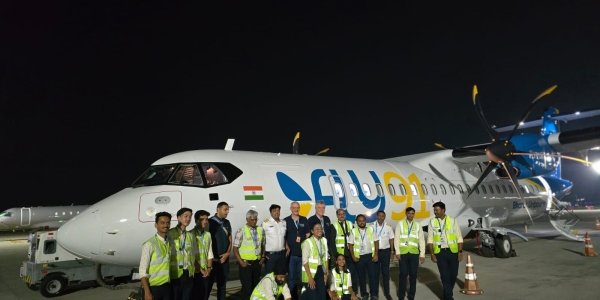












ATR 72-600
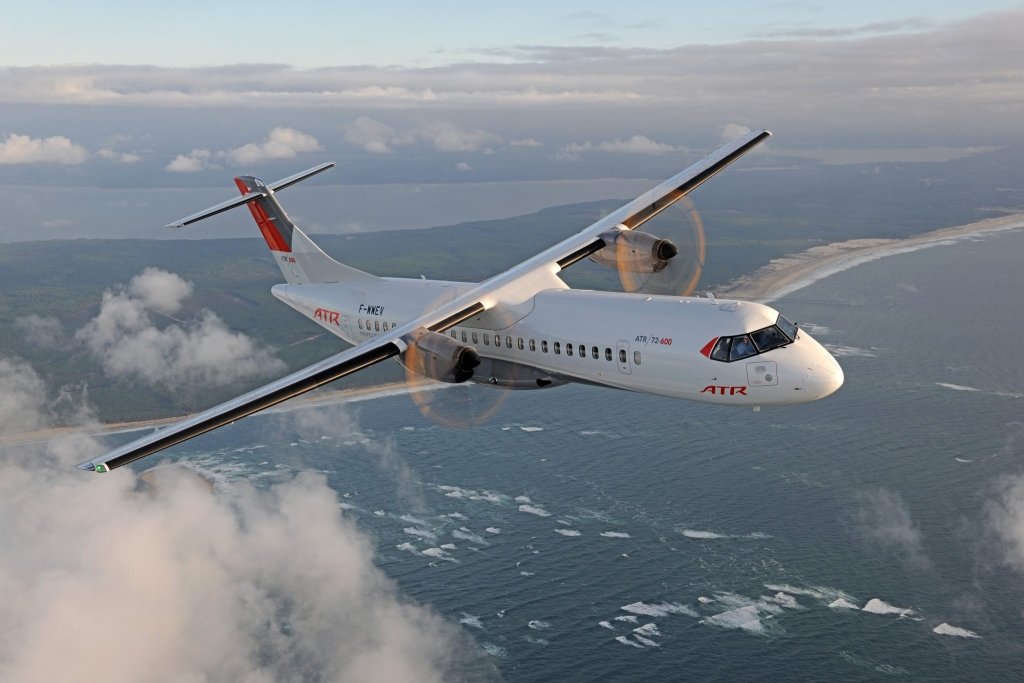
Accommodating up to 78 passengers with ease, ATR 72-600 is renowned for its exceptional fuel efficiency and minimal CO2 emissions. Its low operating costs enhance airline profitability, while its ability to navigate challenging airfield profiles including extreme temperatures, high altitudes, short, narrow, and unpaved runways, and steep approaches ensures essential connectivity to remote communities.
Cabin Experience
ATR 72-600 features the largest cabin in the turboprop segment, offering unparalleled passenger comfort and a spacious, flexible layout. The cabin is a marvel of flexibility and comfort. With modular seating and galley configurations, it can be customised to increase cargo space or accommodate stretchers, addressing specific needs for different missions. This adaptability ensures the aircraft can provide quick, reliable, and comfortable access to healthcare, education, and economic opportunities, making it an essential tool for connecting remote communities.
The Armonia cabin, standard on all ATR –600 series aircraft, crafted by Italian designer Giugiaro, offers several flexible layouts to meet the varying needs of airlines and incorporates cutting-edge technologies to create a spacious, tranquil environment for passengers. The ergonomic 18-inch-wide seats are designed for maximum comfort and support, comparable to the latest widebody aircraft. These seats are also lightweight, contributing to enhanced fuel efficiency and a reduced environmental footprint.
The overhead bins are designed to store the widest carry-on luggage. The cabin amenities include soundproofing materials that reduce noise, LED lighting that creates a pleasant atmosphere, a standalone In-Flight Entertainment system for passenger enjoyment, and USB ports in each seat for convenience. The New Air Management System ensures the cabin is smoothly pressurised, with fresh air circulating every five minutes for maximum comfort.
To foster inclusivity, ATR 72-600 incorporates several features designed for passengers with disabilities. The Audioback® concept is a hearing aid loop that captures audio inputs, such as in-flight announcements, and transmits them via a magnetic field to hearing-impaired passengers’ hearing aids equipped with a Telecoil. Safety instruction signs in Braille cater to visually-impaired passengers, while a wide aisle compatible with onboard wheelchairs and fully foldable armrests ease seating for passengers with reduced mobility.
Technology
The ATR 72-600 is powered by the PW127XT engine from Pratt & Whitney Canada, which offers 40% more time on wing, 20% lower direct maintenance costs, and at least 3% fuel savings for reduced emissions. This engine sets new standards for fuel consumption, carbon and NOx emissions, and operating economics in regional aviation.
Enhanced durability and efficiency are achieved through a new high-pressure turbine, bearings, and machined gas generator case, as well as redesigned low- and high-pressure compressors and a new power turbine module. These advancements not only improve fuel efficiency but also extend the engine’s lifespan, reducing maintenance needs and operational costs for airlines.
The PW127XT series is certified to fly with 50% Sustainable Aviation Fuel (SAF), demonstrating a commitment to sustainability. ATR is actively collaborating with Pratt & Whitney Canada to achieve 100% SAF capability by 2025. This commitment to sustainability ensures that the ATR 72-600 will continue to lead the way in environmentally friendly regional aviation, helping to reduce the industry’s carbon footprint and support global efforts to combat climate change.
Cockpit Innovation
The ATR 72-600’s cockpit is a game-changer in regional aviation, featuring continuous innovation and a full glass cockpit provided by Thales. Five large high-resolution Liquid Crystal Displays (LCDs) offer an immersive and comprehensive view of flight information. The ergonomic and intuitive design ensures pilot comfort and eases decision-making under demanding conditions, promoting a safer and more efficient flying experience.
Electronic checklists and an Electronic Flight Bag (EFB) are integrated into the Flight Management System, streamlining performance calculations and documentation in a fully digital format. This digitalisation simplifies the pilot’s workflow, allowing for more efficient operations and enhanced situational awareness.
Performance-Based Navigation, a satellite-based system, enables precise and reliable guidance, replacing conventional ground-based aids. Advanced navigation capabilities—such as Baro Vertical Navigation (Baro VNAV), Localiser Precision with Vertical Guidance (LPV), and Required Navigation Performance with Authorisation Required (RNP AR) 0.3/0.3—equip pilots with cutting-edge tools for safe and precise navigation. Real-time data, predictive tools, and direct flight paths allow pilots to make informed decisions, resulting in smoother operations, reduced fuel consumption, and a lowered environmental footprint.
Performance
Engineered for optimal performance, ATR 72-600 is designed to deliver efficiency while enhancing safety margins and reducing pilot workload. This sets new standards for regional aviation operations, ensuring that airlines can offer reliable service even under demanding conditions.
The cockpit also features advanced avionics and intuitive control systems that enhance the pilot’s ability to manage the aircraft effectively. The integration of these systems provides a seamless interaction between the pilot and the aircraft, ensuring optimal performance even in challenging conditions. The state-of-the-art technology incorporated into the cockpit sets a new standard for regional aviation, making the ATR 72-600 a preferred choice for airlines worldwide. Advanced avionics and digital systems enhance pilot efficiency and safety, contributing to smoother and more reliable operations.
In the mid-eighties, ATR partnered with Pratt & Whitney Canada to introduce the PW120 engine. The continued evolution of this partnership has resulted in the PW127XT engine series, which represents the pinnacle of engine technology for regional aircraft. With its innovative design and commitment to sustainability, the PW127XT engine ensures that the ATR 72-600 remains at the forefront of regional aviation for years to come.
Specifications
| Category | Metric | Value |
|---|---|---|
| Performance | Take-off distance (MTOW, ISA, SL) | 1,315 m / 4,314 ft |
| Landing distance (MLW, SL) | 915 m / 3,002 ft | |
| Range (max pax) | 740 NM / 1,370 km / 851 mi | |
| Weight & Payload | Maximum Take-off Weight | 23,000 kg / 50,705 lb |
| Maximum Landing Weight | 22,350 kg / 49,272 lb | |
| Maximum Zero Fuel Weight | 21,000 kg / 46,296 lb | |
| Maximum Payload Weight | 7,400 kg / 16,313 lb | |
| Maximum Fuel Load | 5,000 kg / 11,024 lb | |
| Dimensions | Overall Length | 27.17 m / 89′ 1.5″ |
| Wingspan | 27.05 m / 88′ 9″ | |
| Typical Layouts | 72 seats at 29” pitch | – |
| 78 seats at 28” pitch | – | |
| 44 seats + 1,400 kg / 3,086 lb cargo | – |
Takeaways
Featuring the largest cabin in the turboprop segment, the ATR 72-600 redefines standards of passenger comfort in regional travel, offering an optimal experience from take-off to landing. Its state-of-the-art technology and spacious cabin ensure a modern, responsible, and reliable connection for people and businesses.
Passengers can enjoy the high-wing design, allowing them to marvel at breathtaking landscapes as the aircraft cruises at a maximum altitude of 25,000 feet. The ATR 72-600’s modern, digital environment enhances pilot situational awareness, streamlining decision-making, reducing workload, and increasing safety margins and overall efficiency.