











- Rapid traffic growth at Kempegowda International Airport (KIA) has pushed operational intensity to a new level, triggering a comprehensive modernisation of air traffic control, surveillance and surface movement systems to sustain safety and efficiency.
- Beyond airside upgrades, Bengaluru International Airport Limited (BIAL) is aligning long-term terminal expansion, taxiway optimisation and air navigation enhancements with airline growth plans, targeting an 80-million-passenger capacity over the next phase.
- At the same time, the airport is shifting toward a data-driven operating model, integrating predictive analytics and AI tools to improve passenger flow, real-time decision-making and its ambition to evolve into a stronger international transit hub.
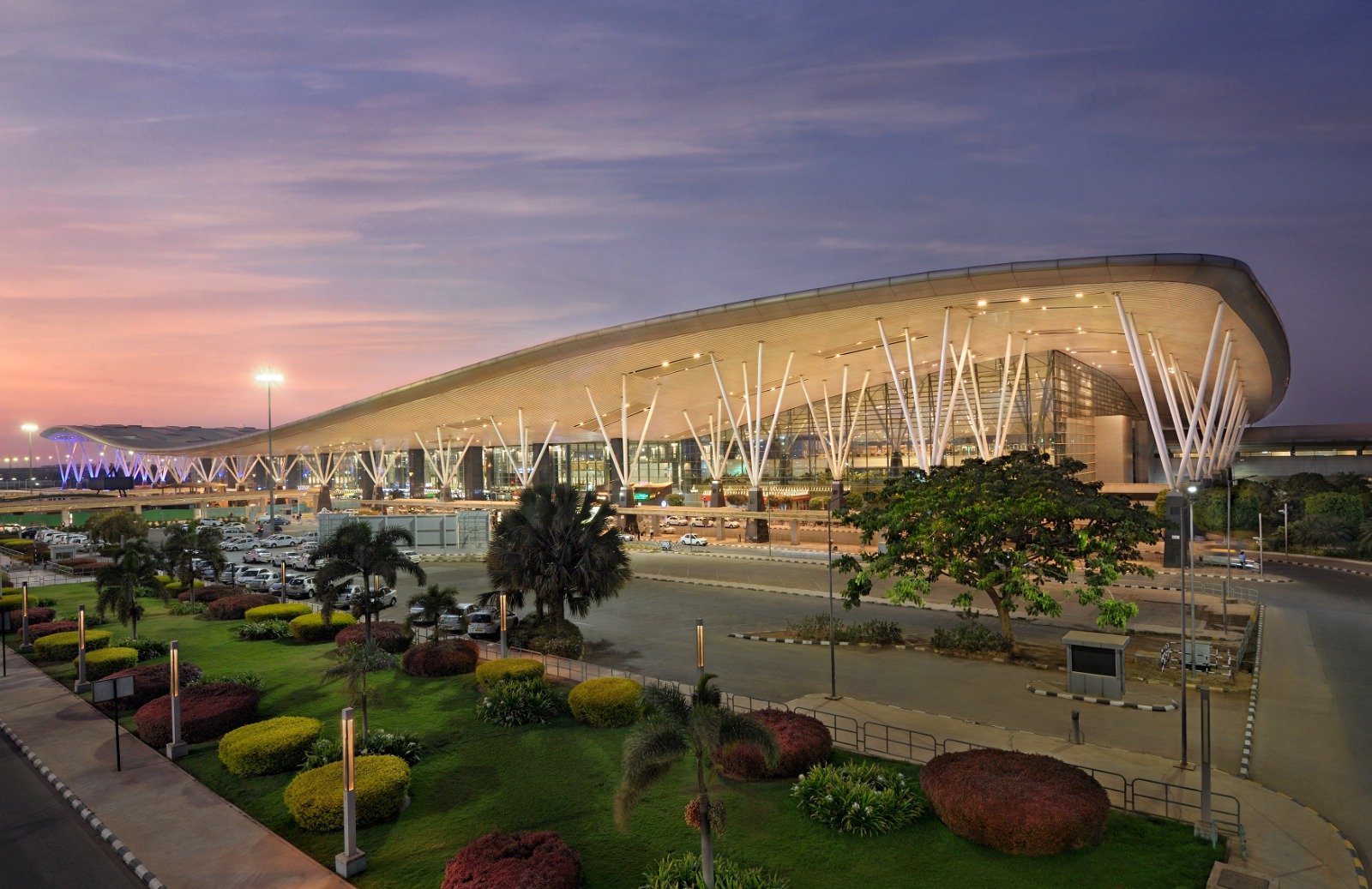
Riding high on an 8% plus annual passenger traffic growth, Bengaluru’s Kempegowda International Airport (KIA) is all set for a major technological upgrade this year. High on its agenda is an all-new Air Traffic Control (ATC) and an upgrade of its Advanced Surface Movement Guidance and Control System (ASMGCS).
In the calendar year 2025, KIA’s annual passenger traffic rose to over 43.8 million, up from 40.7 million in 2024. Driving this growth were strong domestic demand and a substantial increase in the airport’s international connectivity. Air Traffic Movements hit a daily average of 765 in 2025. International passenger traffic rose a considerable 28.7%, with daily departures increasing from 38 in 2024 to 51 last year.
New ATC tower
The sharp rise in aircraft movements and expanded airport capacity have accelerated the move to build a new ATC tower. The existing tower was built 18 years ago to manage the air traffic from a single runway. The launch of a second runway and Terminal-2 have pushed the ATC to its functional limits. The Bengaluru International Airport Limited (BIAL) has already floated tenders to design and develop a new tower, with commissioning scheduled by 2027.

The new tower will be designed to dramatically boost KIA’s capability to handle more aircraft movements and streamline arrivals and departures while ensuring flight safety.
On BIAL’s radar are tech upgrades to the existing ATC and equipping the new tower to strengthen emergency response systems, boost weather-monitoring capabilities. Also on the agenda are facilities such as rest areas for air traffic controllers.
To upgrade the Air Navigation Services (ANS) at the airport, the Airports Authority of India will upgrade and replace key ANS systems.
As part of this, the automation system of the existing ATC will be fitted with advanced flight data processing. Better integration of surveillance inputs and improved decision-support tools for controllers are also on the anvil. The upgrades will be designed to meet the airport’s expansion plans as well.
Integrated in this upgrade process is a revamp of the Advanced Surface Movement Guidance and Control System (ASMGCS). The objective is to ensure a more precise monitoring and regulation of both aircraft and vehicular movements on both the North and South runways besides all the taxiways. The upgrades are expected to substantially boost ground safety and operational efficiency, especially during low-visibility conditions.
Radar systems upgrade
The AAI is also set to boost airspace surveillance at KIA with upgraded radar systems. This is to accurately and reliably track aircraft in the terminal space, improving situational awareness and operational resilience. To ensure a faster and more secure exchange of aeronautical messages and operational data, the Aeronautical Message Switching System (AMSS) is also being upgraded. The move is aimed at boosting real-time coordination and quicker flow of information across ANS systems.

To further improve voice and data exchange between air traffic controllers, pilots and operational units, AAI will upgrade the Voice Communication Control System (VCCS) to the next-gen, IP-based communication platform.
The upgrades will meet the International Civil Aviation Organisation (ICAO) global standards.
The robust growth in KIA’s passenger numbers had hit a high in October 2025, when the domestic aircraft movements exceeded those of the Mumbai airport.
KIA handled 20,819 domestic flights surpassing Mumbai’s 20,540. However, in sheer passenger volumes, Mumbai had the edge with 32 lakh over KIA’s 31 lakh.
Industry observers are sure that Bengaluru airport could eventually emerge as the country’s second busiest airport in domestic flights. Currently, KIA handles a higher share of smaller turboprop compared to Mumbai. However, passenger load factor is higher in Mumbai due to higher demand and fewer seats.
20-year master plan
To remain ahead of the rising demand, BIAL has also drawn up a 20-year master plan. On the KIA operator’s agenda are the refurbishment of Terminal 1 and Phase 2 expansion of Terminal 2. Underway now, the refurbishment of the T1 domestic terminal will add another 10 million to KIA’s annual passenger capacity. The kerbside access was rejigged recently at T1 to ease congestion and boost passenger flow.

The T2 Phase 2 completion will further boost the capacity by another 20 million.
The project, tenders for which have been floated, is scheduled for completion before 2029.
BIAL sees the capacity upgrades in sync with the expansion plans of Air India and IndiGo. Both the airlines have identified KIA as a key airport partner. The T1 and T2 expansions will boost the airport’s overall capacity to 80 million passengers annually.
Designed to reduce taxiing time and improve aircraft turnaround efficiency, a west cross-field taxiway will come up by 2026-end or early 2027. The objective is to boost fuel saving and on-time performance. The capacity upgrades are also in sync with BIAL’s larger push to develop a hub, connecting air traffic between Australia and Europe through KIA. The airport operator has decided to pitch new routes at the forthcoming Routes Asia 2026 event in China.
Algorithmic airport
Meanwhile, BIAL recently inked a strategic partnership with global decision sciences firm Mu Sigma to transform KIA as a data-driven ‘algorithmic airport.’ The intention is to leverage real-time insights and advanced AI to overhaul the passenger experience. As part of the agreement, Mu Sigma’s Decision Intelligence Platform will be integrated into the airport’s ecosystem. Travellers’ needs will be anticipated before they arise, a clear shift beyond traditional operations.
Once launched, the new system will rely on predictive analytics deployed to monitor and reduce passenger wait times at security queues, restaurants, and retail outlets. Passengers driving into the airport could make use of the system’s ability to track and display dynamic pricing, besides real-time demand forecasting. These are expected to streamline parking and transport logistics.

The new system will also boost digital engagement, particularly users of the airport’s Pulse app and official website. Users will get tailored recommendations and loyalty rewards linked to individual passenger intent. Improved digital signage to ensure effortless wayfinding and location-based promotions within the terminal are also part of this tech upgrade.
In May 2025, BIAL had tied up with KPMG to leverage Generative AI (GenAI) and redefine airport operations, boost efficiency and establish new global benchmarks. The deal was aimed at delivering a GenAI platform specifically tailored to BIAL’s operational ecosystem. The platform will process and analyse vast datasets in real time, powered by a flexible technology stack. It is expected that the platform will enable smarter decision-making that generates predictive insights, enabling delivery of adaptive solutions that evolve with operational demands.
Also Read: How the Airports Authority of India is Expanding Aviation Infrastructure