










- Kempegowda International Airport’s rapid expansion to 100 non-stop destinations is driving discussions about the need for a second airport to handle growing passenger demand and capacity limits.
- The article highlights the key factors behind this growth and future challenges.
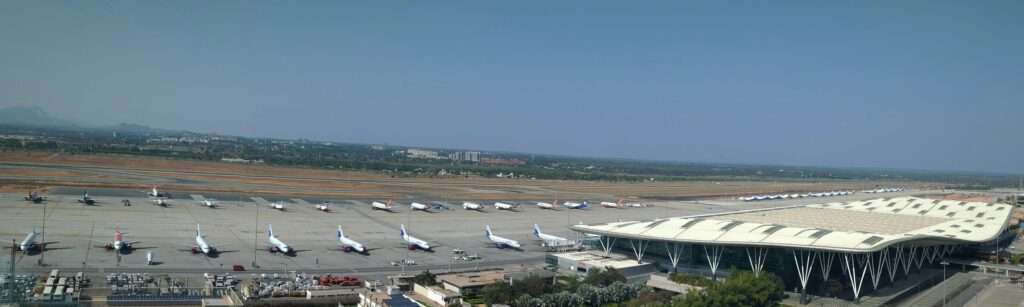
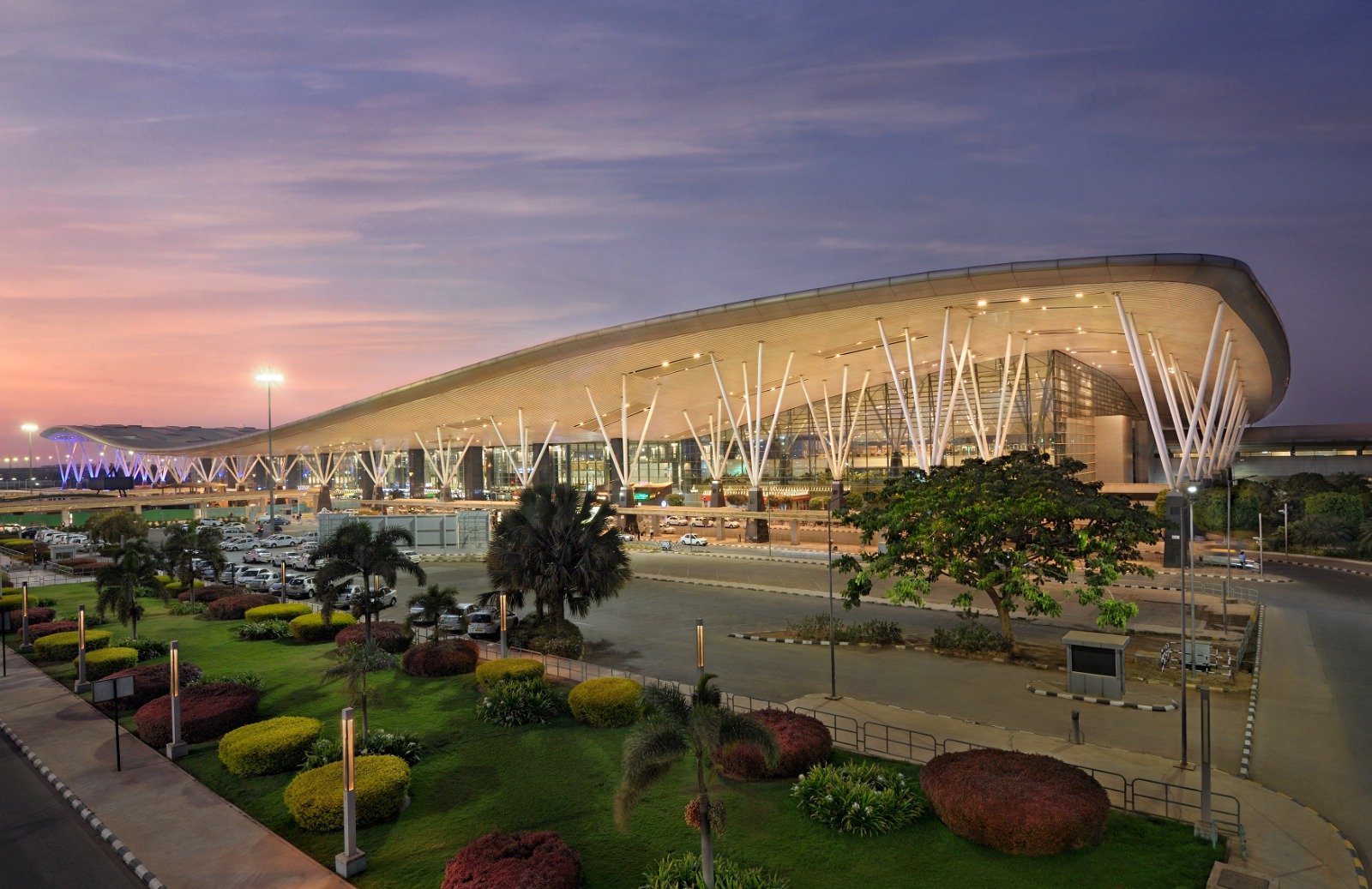
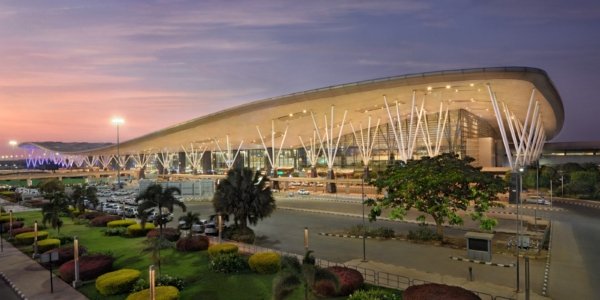
Clocking 100 non-stop destinations in September 2024, Bengaluru’s Kempegowda International Airport (KIA) has lived up to its reputation as India’s third busiest and one of the fastest-growing airports worldwide. But this growth, sustained over 16 years since its launch, may one day reach its saturation point. There is hardly any alternative beyond scouting for a second airport.
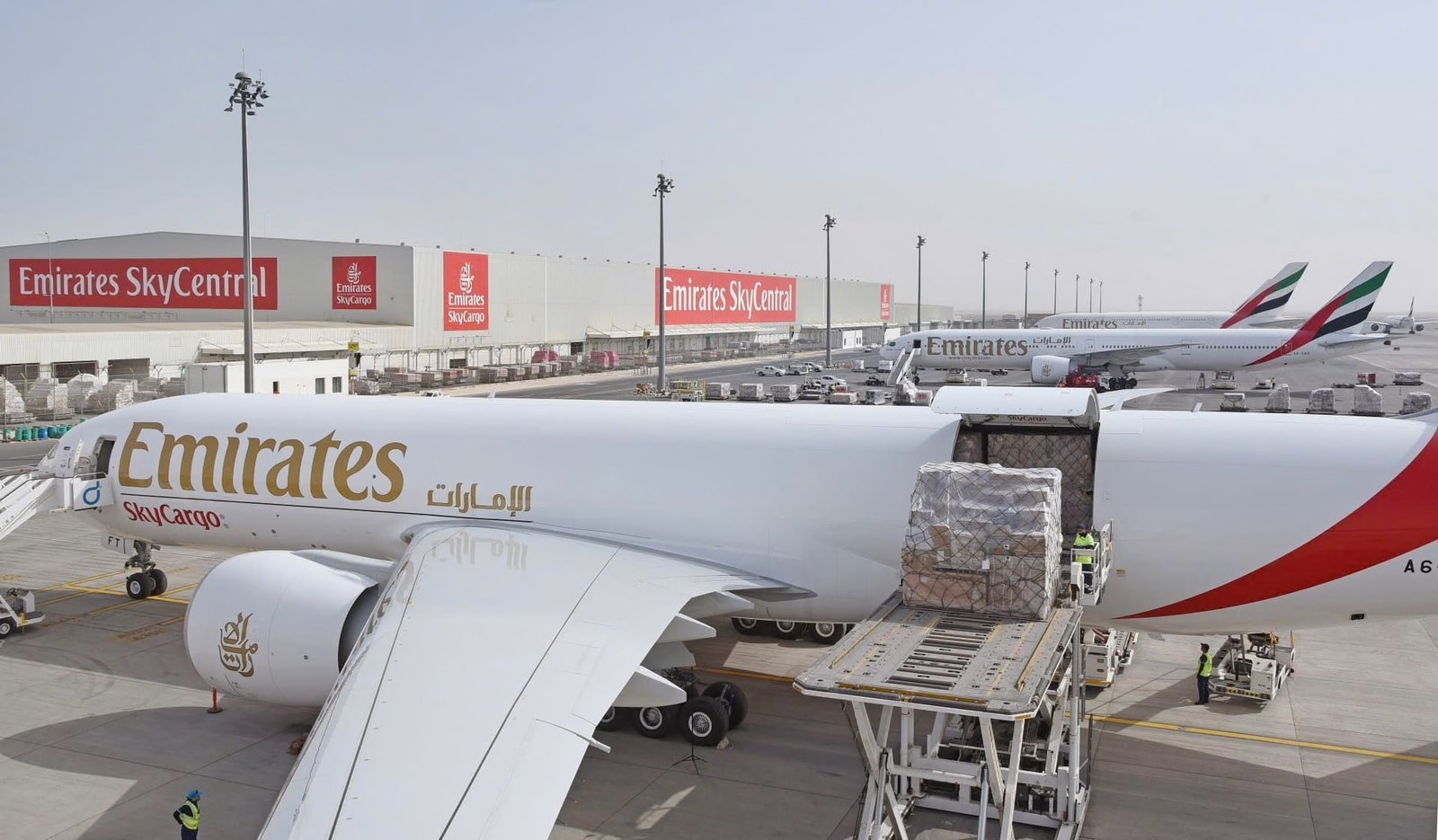
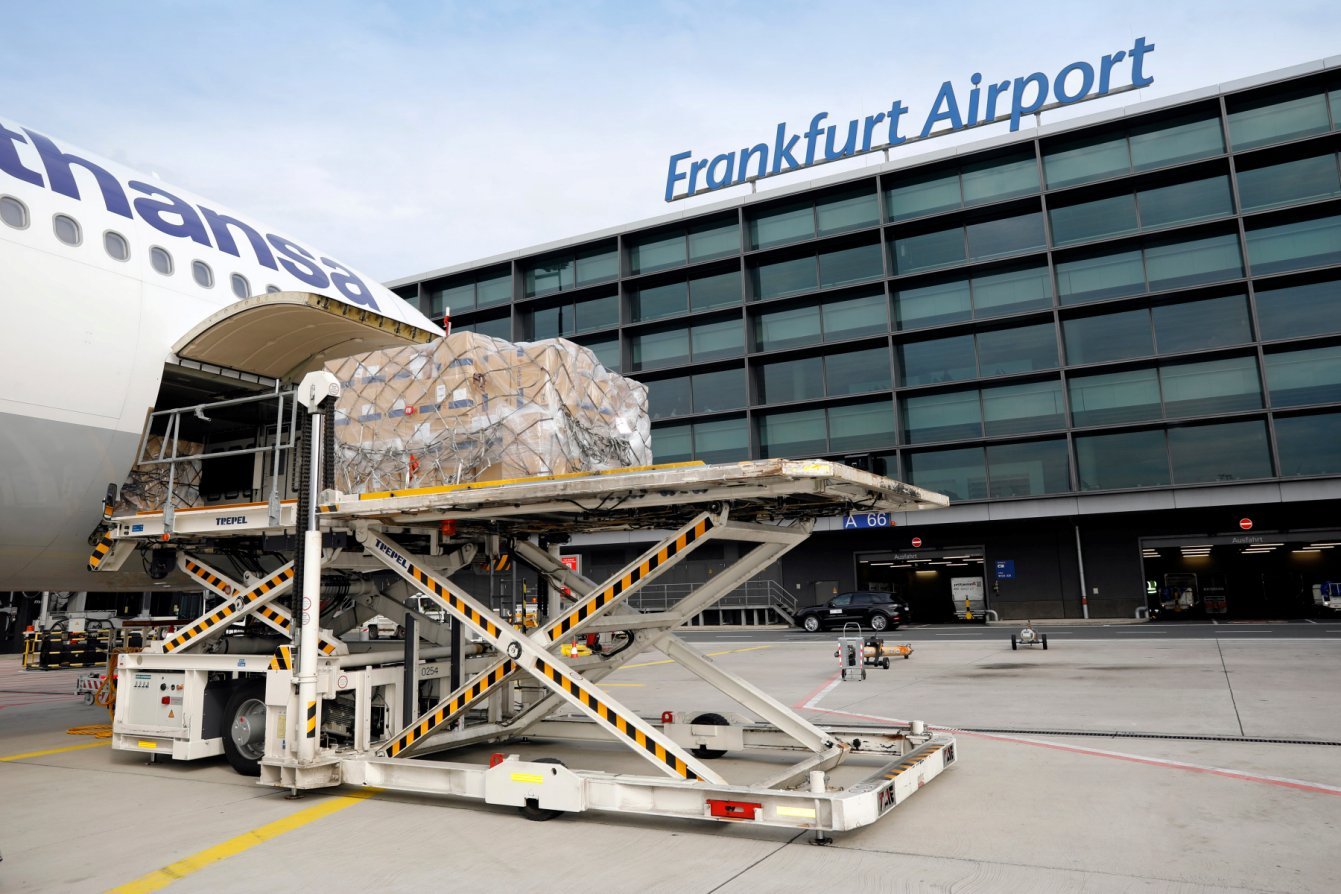
Stretched far beyond its capacity, the old HAL Airport within the city proper struggled to meet Bengaluru’s air traffic demands, which were at the cusp of unprecedented explosive growth. In May 2008, when the new greenfield airport opened in distant Devanahalli, passenger numbers had already reached 9 million per annum. Today, with two runways and two terminals, KIA is all set to exceed 40 million passengers and 465,000 Metric Tonnes of Cargo this financial year.
This astounding growth has been fuelled by multiple factors. While the IT boom and the mushrooming of a vast ecosystem of allied industries are the obvious triggers, the lack of an airport of comparable size and capacity in the vicinity accelerated the growth.
“In the 2000s, Bangalore was doubling its air traffic every three years. In 2005, we had projected to the then Union Civil Aviation Minister Praful Patel that the capacity of the HAL airport would cross 8 million by 2008,” recalls former Bangalore Chamber of Industry and Commerce (BCIC) chairman Devesh Agarwal.
Capacity upgrade even before airport launch
It was clear that the new airport’s planned capacity of 4.5 million annual passengers had to be upgraded quickly. The airport was redesigned and its terminal capacity expanded to accommodate 11 million passengers. The number of aircraft stands also went up. But this, too, did not suffice. As Devesh puts it, “The traffic growth was so high that even our projections went haywire.”
Since its launch, the new airport has gone from strength to strength. “In many ways, they have been lucky. Whenever they reached a capacity constraint, some financial or natural calamity came to their rescue that curtailed the demand so that they could build up their capacity,” he notes, indicating the Covid-19 pandemic-induced dip in global aviation growth.
80 million annual passengers in 10 years
Bangalore International Airport Limited (BIAL) Chief Operating Officer Satyaki Raghunath informs that the last fiscal year FY 23-24, KIA recorded 37.5 million passengers per annum (mppa) and 439,000 MT of cargo. “This year (FY 2024-25), we will cross 41 million in my view. In the next five years, we should be in the 60 million range, and in the next ten years, we will be 80 million plus,” he tells Cruising Heights in an exclusive interaction. Over the next decade, KIA’s cargo handling capacity is also expected to exceed a million MT.
Satyaki, however, cites a rider. “These figures are predicated on the fact that airlines continue to receive the ordered aircraft correctly and they are deployed. A lot of carriers are not getting aircraft on time. Boeing is facing massive challenges from safety, union-related and supply chain perspectives. Airbus is also getting delayed by supply chain challenges. These are not in our control,” he points out.
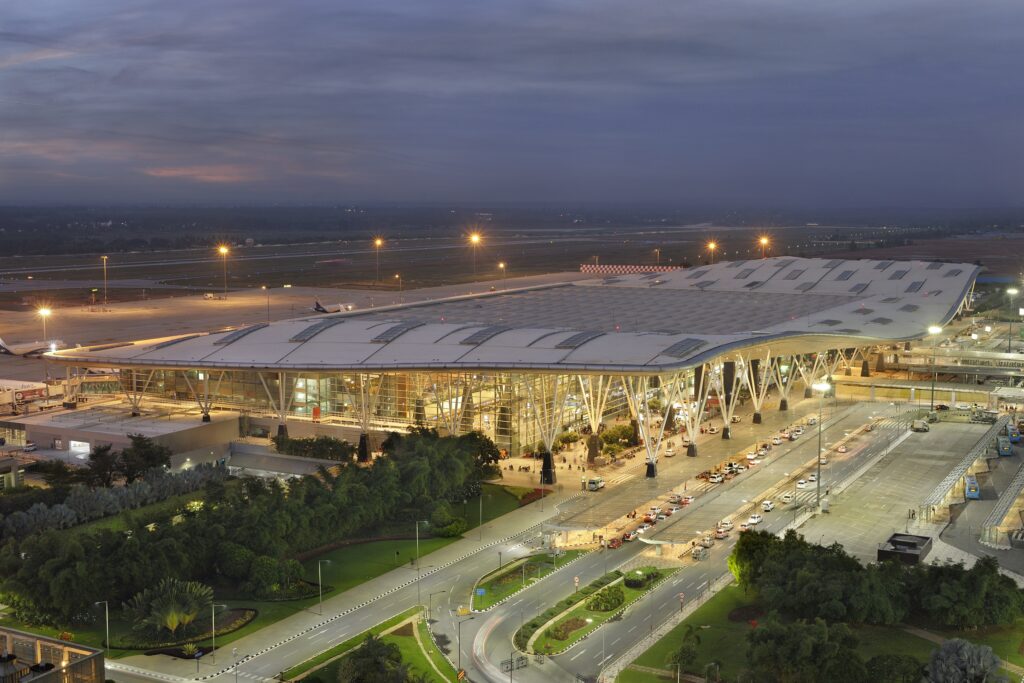
But in terms of unconstrained demand, Satyaki is certain that in the next decade, 80 mppa will definitely happen. “This could probably be somewhere between 80 and 100 mppa by the early 2030s.” If everything goes well, he adds, the number could even reach anywhere between 95 and 115 mppa subsequently.
But going forward, the airport could face insurmountable obstacles to expanding its capacity further. As seasoned aviation analyst Sanjeev Dyamannavar points out, the close proximity of the Yelahanka Air Force Station airfield poses a big hurdle. “During every Aero India airshow at the AF Station, the flights interfere with the KIA operations, and the airport has to temporarily halt takeoffs and landings,” he recalls.
Besides, both runways at KIA are parallel. “It lacks a cross runway. Mumbai and Delhi airports have that, and they are able to expand. KIA has already reached a saturation point. Improving technology for landing and takeoff is possible, but it has its own limitations. Flight operations are affected during maintenance and repair since the airport is now operating near its peak, particularly in the morning and night,” explains Sanjeev.
Lack of cross runway, not a liability
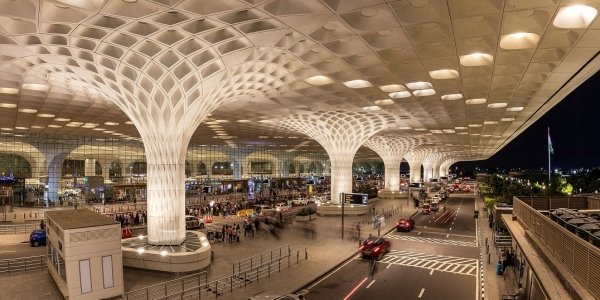
However, Satyaki says a cross runway would actually reduce KIA’s existing capacity. “A cross runway will affect operations on our current two parallel runways. Look at the aerial photo of Mumbai Airport, where the runways intersect. You have to let operations on one runway finish before the other one starts. There are dependencies. Whereas, we can have independent operations on both parallel runways like we have here, without one affecting the other,” he explains.
The only way to increase capacities, he says, is to have more parallel runways with a minimum spacing of at least 1,100m with a precision runway monitor to have independent operations. “Fundamentally, even if you have a new runway, unless it is spaced correctly, an extra runway does not guarantee 2x capacity. It only adds 30 to 40 per cent of capacity, depending on the spacing and threshold. But at KIA, we don’t have the space for a third parallel runway on our campus. For that, the government has to acquire the land and make it available, which I don’t think is feasible at this point,” says Satyaki.
The first 4,000-metre runway had to be completely resurfaced due to a severe decline in quality barely four years after it was laid, reminds Sanjeev. The second, a full-length parallel runway, has a taxiway and an apron and is capable of handling all aircraft types, including Airbus A380 and Boeing 747-8. Critically, the new runway is equipped with CAT IIIB Instrument Landing System (ILS), which the first runway lacks. BIAL had abandoned its plan for an ILS upgrade.
The demand for a second greenfield airport for Bengaluru is not new, but it has been reiterated by the BIAL Chief Executive Officer Hari Marar himself. He, however, did not make any mention of the HAL airport, where commercial operations had ceased based on a Concessions Agreement between BIAL and the government. The contractual agreement mandated that no commercial airport should operate within a radius of 150 km around the new facility for the next 25 years.
Reopening HAL airport: Not easy
In the initial years of KIA, then called just the Bangalore International Airport (BIA), there was a huge demand to reopen the HAL airport since it was barely five km from the city centre. It made sense to take shorter flights from Bengaluru to, say, Chennai, Coimbatore, or Hubli, negating the need to travel well over an hour to the new airport, 40 km away in Devanahalli.
“The HAL airport should be opened,” contends Devesh. “It allows for small traffic. Brazil, for instance, has the same concept. There, the major cities have one big, large external international airport and an in-city smaller airport that handles only narrow-body jets, small propeller regional aircraft, the ATRs, the A320s and the Boeing 737s. These basically cater to people who travel from city centre to city centre.”
However, as Sanjeev reminds, the scenario has changed now since Hindustan Aeronautics Limited (HAL) requires the airport for testing and trials of the Light Combat Aircraft (LCA) with enhanced production schedules and other military planes. “Ten years back, the LCA project was at a low level. Today, it is far bigger. Commercial aircraft cannot land or take off during the test flights.”

KIA not a transit airport so far
Irrespective of the old airport’s effectiveness, a second greenfield airport for the city was always on the cards. Bengaluru, being essentially an Origin and Destination (O and D) airport, requires a distributed airport system. This implies one main primary airport and a secondary one, a system that has worked well in cities with O and D airports worldwide.
“In an O and D airport, people are coming in and getting out without going further with their journey,” notes Devesh. Transit airports are different. “For instance, Atlanta, which is considered the world’s largest airport in terms of passengers, has only less than 1/5th of its passengers actually get down in Atlanta. The rest of them catch another flight and fly on to some other destination,” he says.
At KIA, estimates show that almost 85% of the passengers get down and proceed by road to nearby urban centres such as Salem, Mysore or Shivamogga. They do not opt for a connecting flight. However, this could change once the airport expands further and the transit traffic grows.
But passenger numbers alone do not dictate decisions on airports. The driving force for the second airport, as Devesh notes, will be cargo. BCIC had suggested to the government an airport location in the triangle between Mysuru, Hassan and Bengaluru. “Hassan has been designated a food-processing district, Mysuru has its upcoming knowledge and engineering industry, and many industries are moving to Bidadi and Ramanagara along the Bengaluru-Mysuru expressway with faster connectivity. An airport somewhere there will also help the government achieve its goals of decongesting Bengaluru.”
Tamilnadu government’s move to upgrade an existing airport in Hosur on its border with Karnataka has injected a sense of urgency for a second airport for Bengaluru. IT hub Electronic City would be much closer to Hosur Airport than KIA, which is a good three hours away by road. Passengers would weigh in their total travel time and switch to the nearest airport. The likelihood of an extension of the Metro line from Bengaluru city to Hosur is also likely to influence their decision.
But Electronic City passengers account for only a small portion of KIA, contends Sanjeev. “People staying beyond Silk Board on Hosur Road in Bengaluru may prefer the upgraded airport there. But Hosur, being an industrial hub, will have its own traffic-driving growth. The closest airport in Tamilnadu is in Coimbatore, a good 250km away. There will be a crowd, but it will not be like Bengaluru,” he explains.
While a second airport would mean better choice for both passengers and cargo, KIA’s potential to be a hub for airlines has been overlooked for years, notes Devesh. Only Akasa has made Bengaluru as its base. “Indian carriers have ignored Bengaluru to their peril. Today, Bangalore is dominated by all foreign carriers because no Indian carrier, whether it was Jet Airways or Air India, operated out of Bangalore,” he says.
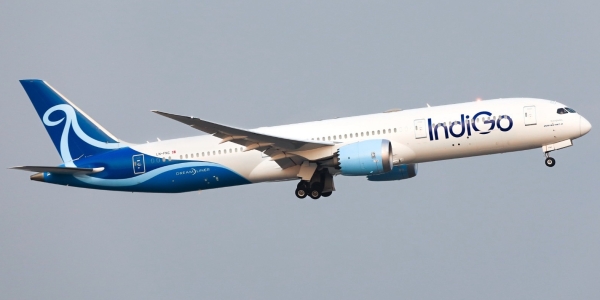
IndiGo, with a large volume of narrow-bodied aircraft, could have made Bengaluru its base since KIA is within a six-hour flying radius of much of Southeast Asia. Manila, Bali, Singapore, Kuala Lumpur, Bangkok, HoChiMinh City and even Hong Kong and Taipei may be within range of a narrow-bodied aircraft.
KIA, already a hub for IndiGo: Satyaki
But Satyaki indicates that KIA is already a hub for IndiGo more than Akasa. “On September 29, IndiGo hit 200 daily departures at Bangalore airport. We are already a very sizable airport as far as IndiGo operations are concerned. After Delhi, we are the second largest base for IndiGo. They are the largest carrier domestically and internationally in terms of daily seats offered from here,” he elaborates.
KIA, he says, is already seeing a significant amount of domestic to domestic hubbing. “There is a reasonable amount of domestic to international and international to domestic hubbing also happening. Not just IndiGo to IndiGo, but IndiGo to Qantas, Air France, KLM, Virgin, Qatar Airways, British Airways and JAL. They have codeshares with all.”

The Tata Group, too, he informs, has committed to making Bengaluru their third hub in India after Delhi and Mumbai. “That process has started. They have started introducing domestic and international routes and are increasing their presence here. They have just announced and broken ground for their MRO base as well. A 35-acre MRO campus is coming up. So, in the next five years, I don’t see any reason why we will not be a substantial third hub for the Tata Group as well,” Satyaki says.
However, aviation experts insist that it would be an uphill task for both IndiGo and Air India to create additional capacity and compete against the foreign carriers at KIA. But opportunities exist, they agree. Air India could begin an upgrade, exploring flights between Bengaluru and New York, building on its existing flight to San Francisco. Seattle could be another option, with corporate biggies such as Amazon and Microsoft having their facilities in both cities.
Growth redistribution in future
Going by the current aviation growth rate in the region, the demand is expected to reach around 120 million by 2040 in the Bengaluru metropolitan region. The growth would then be redistributed to the secondary airport and other smaller airports in the vicinity. So, KIA is unlikely to hit, say, 250 destinations in the future. Besides, airlines are not keen to expand on routes that are not economically viable. Routes with demand that peaks only during the holiday season are not attractive, as airlines prefer consistency.
Multiple airports within a city and its outlying areas could complement one another, says Sanjeev. “Mumbai is getting a second airport in Navi Mumbai, Delhi NCR is getting another international airport in Noida. Globally, too, there are several cities with multiple airports. There is enough growth in Bengaluru to make both airports financially viable,” he observes.
Satyaki echoes this point when he says that once the airport crosses 60-70 million, the high demand will allow multiple airports to operate without being a threat to one another. “Yes, we might slow down for one or two years marginally, but from a long-term perspective, there will not be any impact on us,” he says.
The next decade is bound to see multiple airports populate the region, fueled by KIA and the emergence of a second airport. With the Indian aviation industry set for an accelerated growth with the arrival of about 1,200 aircraft ordered by multiple airlines, it is expected that most big airports across the country, including the likes of Chennai and Hyderabad, will see substantial uptick in both passenger numbers and cargo volumes. The optimism appears real.