












- Airports today are redefining functionality with immersive designs that blend green aesthetics, local culture, and retail-focused layouts.
- By encouraging extended passenger stays, they transform travel into an engaging experience.
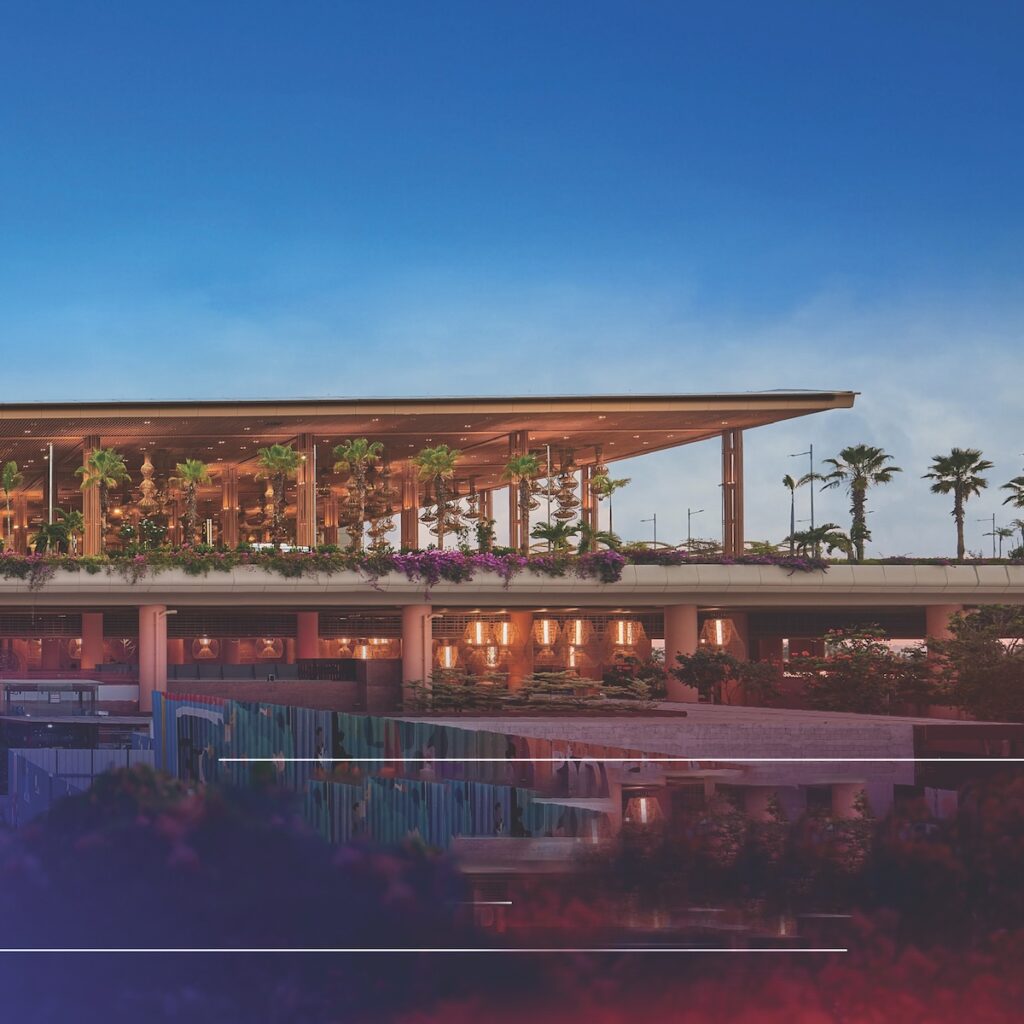
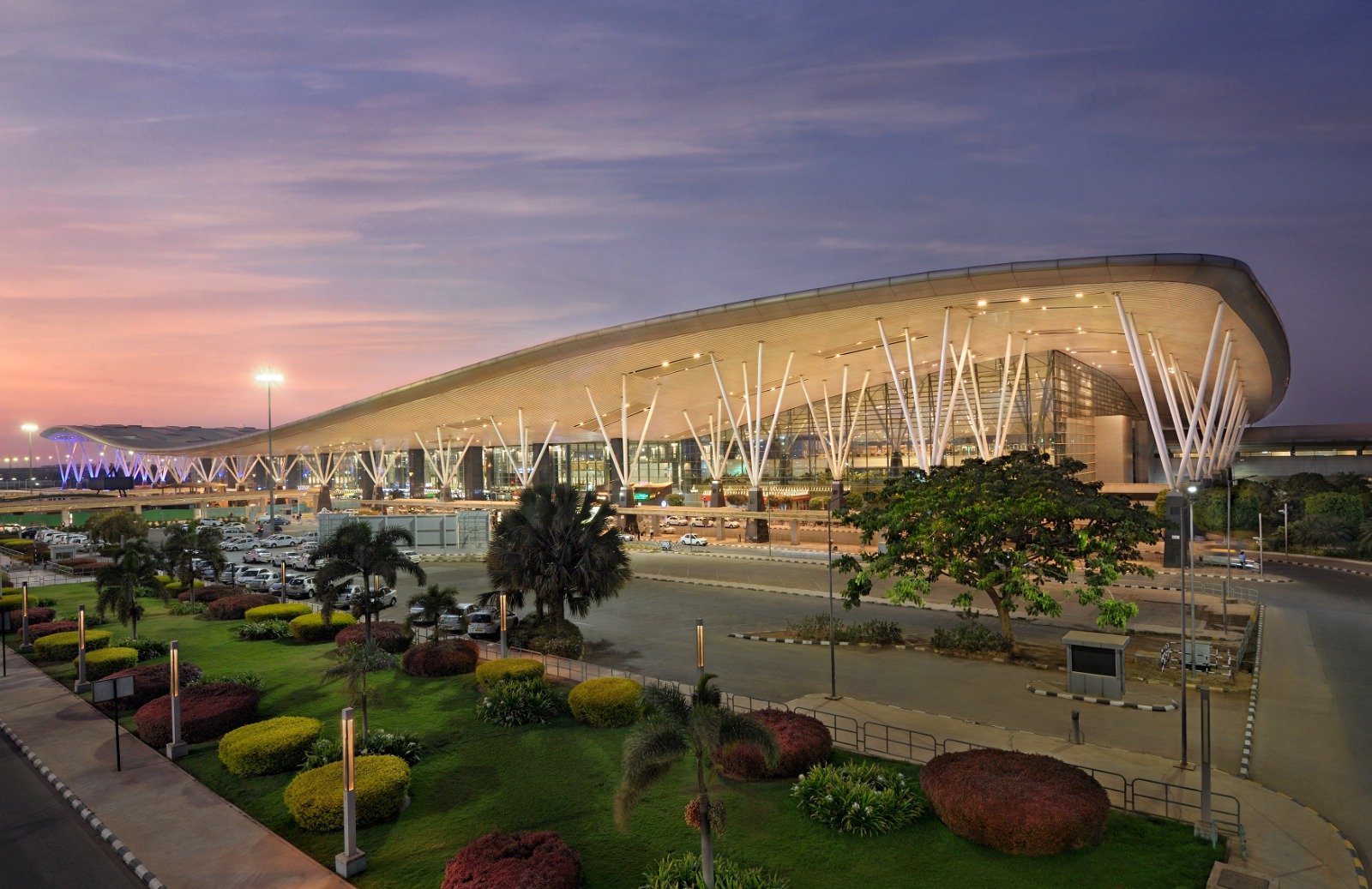
Pure functionality defined airports of old. But by integrating aesthetics, disruptive architectural tweaks and elements of local culture, greenfield airports of today have broken that mould. Indian aviation, too, has adopted this global trend in a big way, tellingly demonstrated by the garden-themed Kempegowda International Airport (KIA) in Bengaluru and the new ones taking shape nationwide.
Traditionally, seamless passenger experience meant airport design that minimises the time spent both during arrival and departure. While technology has eased the taxing troubles associated with check-ins, luggage and security, the overall ambience remained largely unchanged. A dramatic shift is now apparent across airports and geographies.
‘Airport in a garden’
The transformation is emphatic at KIA. The Terminal-2’s ‘airport in a garden’ concept offers passengers an immersive, nature-focused experience. Visually striking with bamboo-cladded pillars and locally sourced natural stones, the terminal is also aesthetically packed with flora brought from multiple ecological habitats. Elements to showcase the natural beauty and culture of Karnataka are hard to miss.
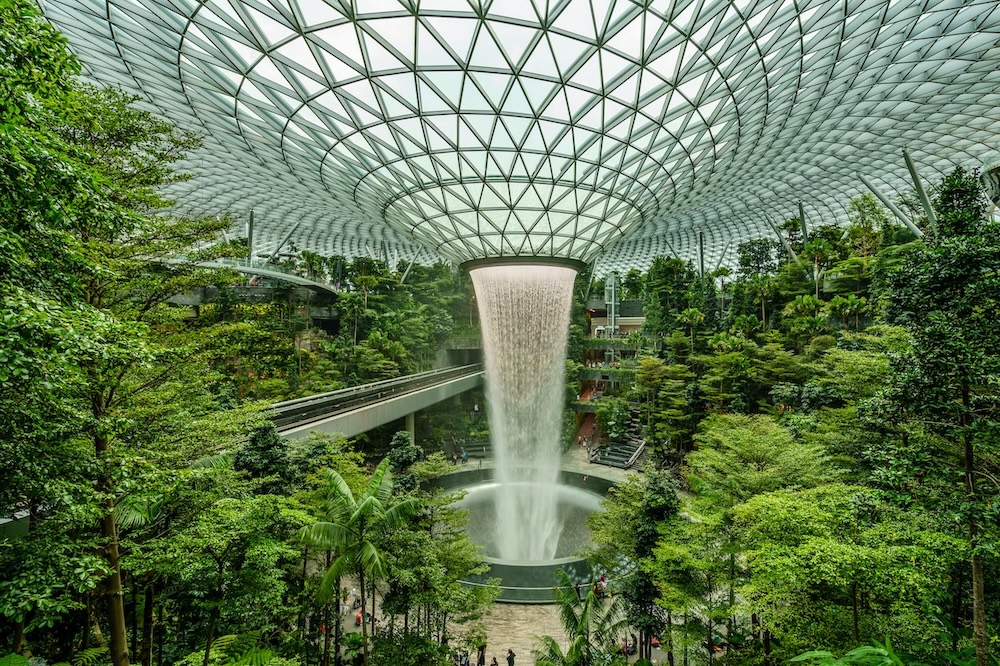
Travellers would instantly draw parallels with Singapore’s Changi International Airport, a pioneer of sorts in seamlessly marrying an airport ecosystem with nature. The scale might be different. While Changi reflects Singapore’s avowed commitment to a green, serene space, the KIA terminal is a vision of how a once-green city like Bengaluru could envision sustainability with innovation and green thinking.
Pervasive green aesthetics
The green aesthetics of the airport design is pervasive. Imposing, a 10-metre tall green wall runs the entire length and breadth of the terminal. Over 450 plant species are embedded in the wall, reflecting nature’s diversity. This adds to the ambience amplified by lush internal and external gardens. These green elements are designed to visually astound both arrival and departure passengers. An automated irrigation system fed by harvested rainwater is in place to nourish the plants and the terminal’s overall environmental conditioning.
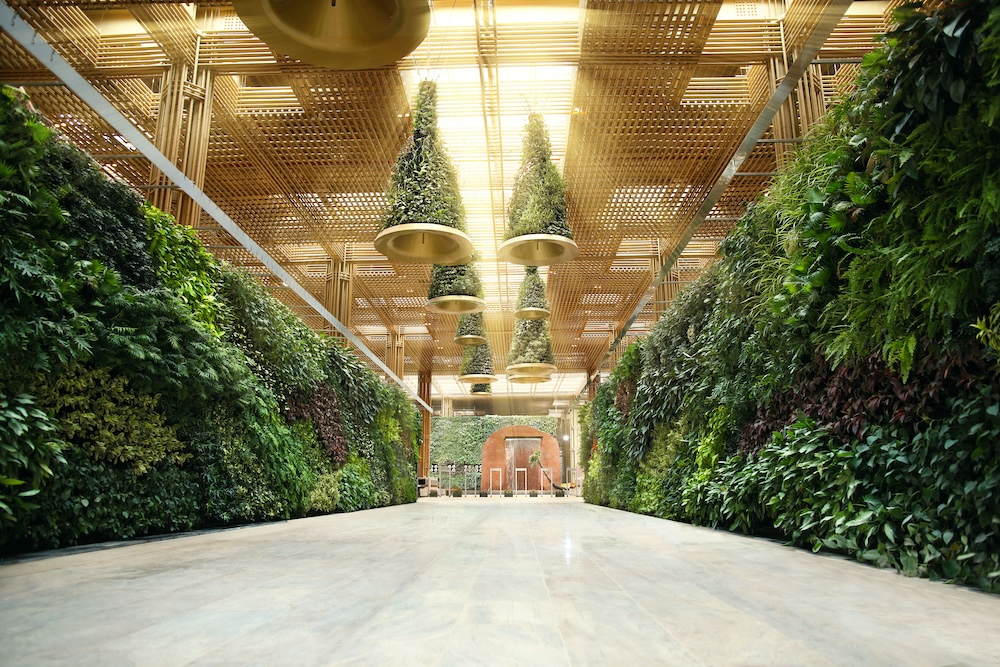
Anchored by the Bangalore International Airport Limited (BIAL), the terminal’s green interiors were envisioned and landscaped by Grant Associates, designers of the iconic Garden by the Bay in Singapore, in collaboration with the Chicago-based design firm Skidmore, Owings & Merrill (SOM). Essentially, as SOM puts it, the design establishes a new vision for sustainable growth and conveys a sense of place that is unique to Bengaluru.
The architecture incorporates outdoor retail, event spaces and entertainment areas to let the space grow beyond a travel hub. Like Terminal-1, the new facility is designed to emerge as a destination for local residents as well. The gardens inside the new terminal cascade out into the surrounding landscape to create a continuous look and feel.
Retail agenda, beyond transit hub
This echoes the global trend where airports are seen as much more than mere transit hubs. Retail promotion is the unstated agenda. Changi had taken it to a whole different level by integrating a rooftop swimming pool, a mirror maze, slides, fish ponds and even a playground. To amplify its natural setting, the airport’s interior also houses butterfly, cactus, orchid and sunflower gardens. There is an indoor forest and a 40m tall waterfall. A 24/7 cinema adds to its entertainment quotient.
Considered one of the best in the United States, the Denver International Airport in Colorado is a bold statement in design and aesthetics. The design reflects Colorado’s snow-capped Rockies, with the fiberglass roof filtering sunlight to create a cloud-like effect. The design is in sync with cutting-edge services, lounges, restaurants, and other amenities.
Featuring a 300-meter skylight and curved windows to highlight scenic views, the Oslo Airport in Norway is another aerodrome that stands out for its aesthetic façade. The new terminal is built from Scandinavian wood. The airport reflects the Norwegian emphasis on its capital’s green ethos and ecological focus.
Global but distinct thrust on local culture
Airport aesthetics with a distinct local culture thrust has spread across the globe. In North-west Africa, the Marrakech Menara Airport in Morocco showcases a unique Islamic design with its bold colours and geometric patterns. The harmony between modern architecture and Moroccan tradition is seamless. The airport shops are packed with unique handmade crafts to amplify the Moroccan experience.
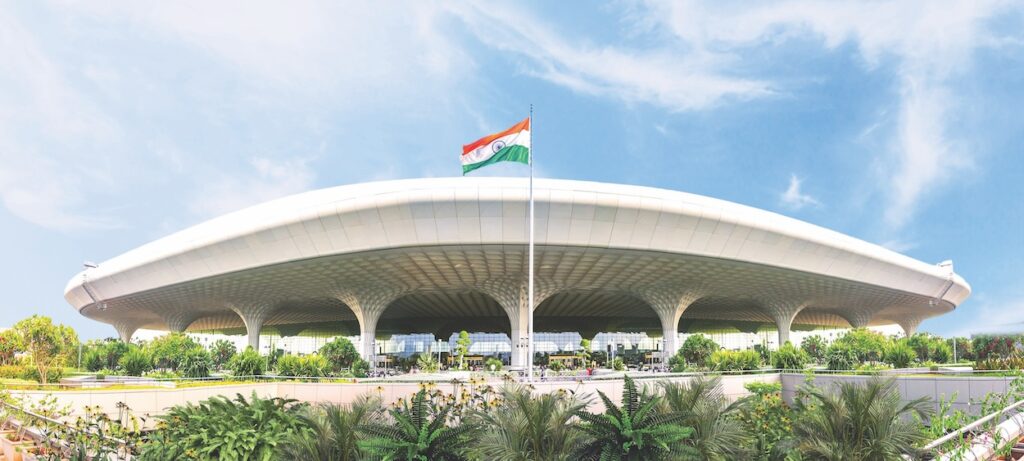
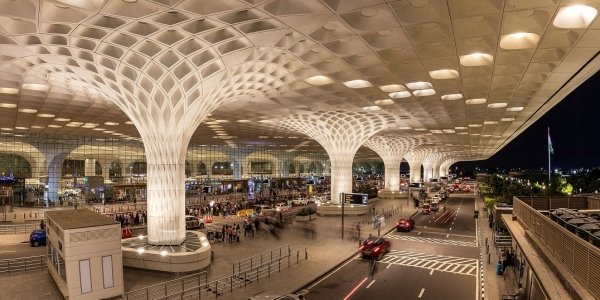
Back in India, the Chhatrapati Shivaji International Airport in Mumbai follows the same trend, combining design elegance with a reflection of the country’s culture and traditions. For instance, the airport has a diamond-shaped rooftop design with a striking resemblance to a peacock’s feather tail. About 30 pillars support the vast roof, an imposing visual that echoes Mumbai’s dynamism and cultural diversity.
Striking balance with functionality
But the design had to ensure that functionality was not compromised. SOM, which designed KIA’s second terminal, had bagged this project four years earlier. The design team chose an x-shaped, four-level plan that fit the site while avoiding the villages and river. The frontage was maximised for aircraft parking. The airport’s contact gates can handle 32 wide-body / 48 narrow-body aircraft for both international and domestic travel.
To accommodate local customs, the design had to separate departing and arriving passengers from each other. Also, the post-security facilities had to be separated for both international and domestic sectors.
Local fashion houses were roped in to collaborate on interior details, with a strong emphasis on traditional craft patterns. For instance, the gate lounge light fixtures were designed to mimic India’s national flower, the lotus. To humanise the passenger spaces, these fixtures offer a handcrafted feel. Besides, hundreds of meters of wall space were allotted for artwork display, visible to both departing and arriving passengers.
Early trends, Madrid to Zurich
Passengers are now used to spotting striking design elements wherever they land. Eighteen years ago, the Adolfo Suarez Madrid-Barajas Airport in Spain had hit headlines with its bold aesthetics. A serene bamboo ceiling, combined with colourful rainbow-painted pillars had the travellers hooked. Airport watchers have dubbed these enduring design elements a true reflection of Madrid’s reputed assembly of museums, galleries and large palaces. Another European aerodrome, the Zurich Airport in Switzerland echoes the same strong emphasis on art and sculpture installations.
The design takes a mobility switch at the Incheon International Airport in South Airport, once awarded the world’s best transit airport. The architecture encourages all passengers to walk, negating the need for automated transportation within the building. Accessibility and convenience are boosted to ensure that everyone walks to their departure gate, regardless of destination or airline. Throughout the walking path, the terminal features gardens based on Korean courtyard plantings.
Airport as shopping mall
In all these airport designs, there is an apparent underlying motive: Maximise passenger presence within the terminal space. “The effort is to keep the passenger engrossed within the terminal so that they spend enough money. The modern airport is a shopping mall with aerobridges attached to it. Airports today make bulk of their revenue through such non-aeronautical facilities,” notes seasoned aviation analyst Devesh Agarwal.
Today’s airports are more like malls, combining shopping with eateries and entertainment for children and adults. “Airports are following the same principle,” he notes.
The trend is making its presence felt in India, where more green fields are emerging, unlike the West. As Devesh explains, “The airport terminals here are new. Legacy airports in the Western world are finding it a bit more difficult because they have to first destroy the legacy infrastructure and build new ones. It is like how the telecom industry here leapfrogged to mobile, largely bypassing the landlines.”
Besides India, the trend is more visible in the Middle East and other Asian countries with less legacy infrastructure. “In the US and Canada, they have a lot of such existing infrastructure. But the new designs are being incorporated in new terminals such as the one in London’s Heathrow Airport. It is difficult to retrofit a building altering its core.”
When the new Bengaluru Airport opened in May 2008, questions were raised about the boxy, factory-like façade. A ministerial visit articulated the need for a more striking design, after which the exterior look was changed. The GVK group introduced a curved roof with flashy white pillars. The roof unified the new and old facilities, while providing a canopy to protect visitors from the elements.
But the core building of the first terminal remained unchanged, reminds Devesh. “See the difference between the old terminal and the new one. T2 reflects 20 years of advancement in airport terminal design. The whole thing is to make it attractive so that the passenger spends more time and money inside. This is true for both departing and arriving passengers. Airports don’t spend money on aesthetics for nothing.”
Counter views on retail focus
This retail focus is not necessarily a good thing, says veteran architect of urban spaces, Naresh Narasimhan. “The trend is not driven by aesthetics but by retail experience. Airports want to cash in on the captive passengers, who spend a lot of time. If you look at T1 and T2 in KIA, there is a fundamental difference. In T1, the shops are on the way. In T2, the shops are in the way. Retail design will now make you shop, since you have nothing else to do there,” he explains.
This retail design philosophy, which is taking over airports worldwide, often forces passengers to cover long distances by foot between security clearance and the gates. “In T2, there is almost a kilometre of shops before you reach the gates. You are forced to walk too much even if you don’t want to shop. And when you are arriving, you have to walk the same distance.”
A recent study on airport retail shopping with focus on the Indira Gandhi International Airport (IGI) shows the impact of design. Analysing inputs from 118 respondents, the study noted: “The first-hand analysis showed that the airport shopping behaviour was very well affected by the physical aspects of the setups and in-store variety, discounts and offers and the long waiting duration at airports. Providing a shopping environment that can fulfil travellers’ experiences were concluded to be significantly vital.”
Forced walking by design might see senior citizens and the elderly complaining. But the study observed that those in the 20-35 age group were keen to explore the retail outlets. The study said, “Delhi Airport has a plethora of retail opportunities as the travellers do find airport retail interesting. The results show that travellers’ acceptance to indulgence in impulse buying and seeking discounts at the airport stores leads to vast buying motivations.”
‘Softening’ for shopping by design
Grand designs such as the garden themed one in Bengaluru are preferred to soften passengers for shopping, feels Naresh. “I am not a great fan of this, but I am in a minority. The original T1 design is a shoebox with skylights. You check in, and the moment you are up there, after security, you are out. The shops are somewhere on the side. Now, the airport people have found out that they have a captive audience for two to three hours. So, they are integrating more retail to get more money out of them.”
The T2 retail architecture is designed in such a way that the passengers have to negotiate a big snaky pathway through multiple shops. “Dubai started this trend, now it is spread all over the planet. They soften you up so that you are more amenable to shopping. This is a far cry from earlier designs which were more utilitarian. It was meant to get you in and out of an aircraft quickly.”
Trend enduring, here to stay
With fortunes of the aviation industry fluctuating wildly, airport infrastructure is seen as a sound investment by most stakeholders. Barring pandemic-level disruptions, airport operators are convinced that maximising non-aeronautical revenue could be the way forward. Seen from this perspective, new airport designs with a thrust on visual appeal and pronounced retail orientation make commercial sense. To further stress on this appeal, airports are being rebranded as gateways. KIA, for instance, is now being addressed as the gateway to the South.
Bengaluru, Mumbai, Madrid or Beijing, the trend towards flashy airport architecture with cultural and place-making tweaks is unmistakable. This is bound to only get bigger with more flight disruptions triggering long waiting times for passengers at airports. Pioneered by big airports worldwide, the design trend is now being picked up by many tier-2 and tier-3 city airports in India. The new trend seems well set to stay for years to come.