





India’s Next Aerospace Contender? Bharat Forge Bets Big on Aircraft and Unmanned Systems

- Bharat Forge Aerospace is shifting its ambition beyond components, using long-term engine and structural programme commitments as the foundation to move toward aircraft structural assembly and participation in programmes like LCA, LCA Mk2 and AMCA.
- The company has built a comprehensive unmanned portfolio across FPV, ISR, kamikaze and long-range platforms, along with logistics drones in collaboration with Windracers, all offered to the Indian services as proof-of-concept systems.
- Automation, AI-based inspection solutions and university collaborations are being adopted to solve real manufacturing challenges and develop skilled talent, supporting its broader goal of scaling future aerospace and unmanned production.

When Bharat Forge Aerospace first entered the aviation industry, it did so as a specialist in critical engine and structural components for global programmes. Today, the company’s ambitions extend far beyond its origins, as it positions itself to play a direct role in aircraft structures and unmanned systems designed and built in India.
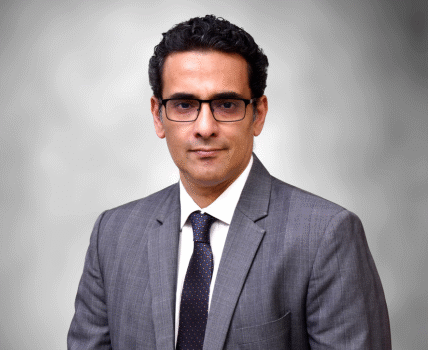
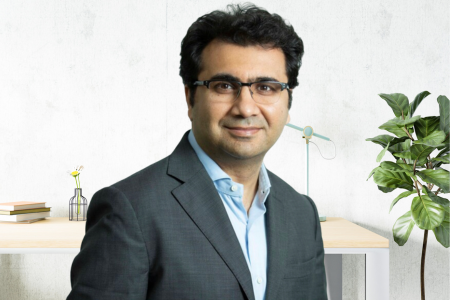
“We started by making components, turbochargers, engine parts,” says Guru Biswal, CEO – Aerospace, Bharat Forge. “The next phase of growth is built around two clear focus areas: building aircraft in India and developing unmanned flying systems in the country.”
That dual focus, aircraft and unmanned platforms, now underpins the strategy of Bharat Forge’s aerospace arm as it navigates a rapidly evolving industrial landscape at home and abroad.
From Components to Complete Platforms
The journey began with traditional aerospace work: core engine components supplied to Honeywell and Rolls-Royce, and structural parts, including landing-gear components, supplied to Liebherr Aerospace. That early phase gave Bharat Forge Aerospace manufacturing depth and long-term relationships with major global programmes.
India’s aircraft production landscape is still heavily dominated by Hindustan Aeronautics Limited (HAL) on both the civil and defence sides, with Tata and a few other players also involved but largely for export-focused work. Within the country, the infrastructure to assemble aircraft remains limited, and even HAL has faced challenges in ramping up production of the Light Combat Aircraft (LCA) to the levels required.
“That is where we began asking whether Bharat Forge could step in,” he explains.
Looking ahead, he sketches a pipeline of programmes where additional industrial capacity will be essential. The Advanced Medium Combat Aircraft (AMCA) programme is one of them, where Bharat Forge has joined as one of the lead partners in the bid. The existing LCA is another bottleneck that will require new partners to set up structural assembly lines. Beyond that are the LCA Mk2 and an aspirational regional transport aircraft programme, along with India’s growing helicopter plans.
He also points to India’s growing helicopter plans, where new platforms are expected to be assembled and eventually manufactured in the country. With HAL unlikely to handle all of the anticipated volumes alone, Bharat Forge Aerospace wants its emerging structural-assembly capabilities to be relevant when these helicopter programmes scale up, rather than confining itself only to fixed-wing aircraft.

In this context, structural assembly becomes a central theme. Bharat Forge Aerospace sees itself moving into that space, but not as a basic assembler that simply bolts parts together.
“We are in the process of defining our roadmap for structural assembly,” Biswal says. “Do we just put up an assembly line with jigs, fixtures and labour, or do we build deeper capabilities in composite manufacturing, avionics and honeycomb structures. These are the core capabilities we as a group feel we must develop.”
These ambitions are backed by a mature components business built around the engine and structural programmes Bharat Forge Aerospace already supports. Biswal says the division has long-term, largely single-source roles on key programmes, including a Rolls-Royce agreement with a horizon of about 40 years and a Honeywell contract of around 10 years. These commitments, he says, give the business the visibility it needs to invest in new capabilities, especially with the components side expected to grow by nearly tenfold over the next three years.
Parallel to this, a fast-growing product portfolio is taking shape. Bharat Forge Aerospace has developed 40 kgf and 45 kgf class indigenous micro jet engines, showcased at Aero India 2025 and have since been certified. “They have performed well, with strong demand emerging,” Biswal says. “The next challenge is scaling up production to meet that demand so the division can move from successful demonstrations to steady serial output.”
On the turbocharger and engine side, Bharat Forge Aerospace is also building a Maintenance, Repair and Overhaul (MRO) offering intended to support both Indian operators and export customers. Rather than limiting MRO work to domestic fleets, the company wants to leverage its manufacturing expertise to serve international markets as well.
Much of the future industrial footprint is being anchored in Bengaluru. The facility Bharat Forge Aerospace operates there today is focused on gas-turbine work and design. The plan is to expand it into a full aircraft-structures assembly site.
“We are in the process of taking over a small company of about 45–50 people that already has relevant aircraft structural-assembly capability,” Biswal says. “The idea is to bring those capabilities together and build a setup where we can assemble aircraft fuselages and helicopters in the future.”
The company is also eyeing the recently issued Medium-Altitude Long-Endurance (MALE) unmanned aerial vehicle Request for Proposal (RFP), with the intention of participating along with suitable partners and executing such programmes from India.
Building an Unmanned Systems Portfolio
If aircraft structures are one pillar of Bharat Forge Aerospace’s future, the other is unmanned aviation.
“We admittedly started late there,” Biswal concedes, “but today we are engaged in multiple defence programmes: Intelligence, Surveillance and Reconnaissance (ISR) drones, kamikaze drones and long-range drones.”
The division’s unmanned portfolio now spans four distinct product lines, developed with partners. First are the First-Person View (FPV) drones, with a range of around five kilometres and a payload of about one kilogram, used largely as bunker-buster platforms for the Army.
Second are ISR drones operating in the 50-100 kilometre range, designed for reconnaissance, sending ground signals and returning safely to base. A third category is Kamikaze drones with a range of roughly 100-150 kilometres and a payload of around 3.5-4 kilograms of munitions, intended to strike and neutralise specific targets.
Finally, Bharat Forge Aerospace is working on long-range drones aimed at extending range from 400–500 kilometres out toward 3,000 kilometres, a space that demands step-change improvements in design, propulsion and communications.

“We are engaged in each of these segments,” Biswal says. “All these products have already been offered to the services as proof-of-concept systems, and we are working with them at various levels to move towards induction.”
One firm red line is supply-chain security. “None of these products uses any Chinese equipment or components,” he emphasises, a point that has become increasingly important for defence customers.
Within this unmanned push, one collaboration in particular illustrates how Bharat Forge Aerospace wants to address specific Indian challenges. With UK-based Windracers, the company is developing logistics drones designed to carry loads that are currently moved mainly by helicopter.
“Today, helicopters do most of the load-ferrying,” Biswal explains. “If there is an aircraft carrier deep at sea, for example, helicopters fly from shore to ship and back, even for routine logistics. What we are working on with Windracers is an unmanned platform that can take that load as a logistics drone.”
The platform can operate day and night over long distances without continuous human control. The system has already been successfully used by the UK Navy, highlighting its maturity. In India, potential use cases range from maritime logistics to resupply in remote or difficult terrain.
“We have presented the capability to the services, and the feedback has been very positive,” he says. Trials in Indian waters are planned to evaluate how the platform performs in local conditions.
The broader technology strategy is to combine external expertise with in-house capability. Bharat Forge Aerospace is working with Original Equipment Manufacturers (OEMs) to bring technology into India and manufacture it locally, not only structural elements, composites and honeycomb parts, but also avionics, ground control systems and navigation systems. In parallel, it is investing in core capabilities such as anti-jamming and electronic warfare, aiming to offer complete systems rather than just airframes.
This approach also shapes how the company thinks about “indigenisation”. Biswal is clear that copying and making something locally, by itself, is not enough.
“We actually don’t believe in indigenisation in the narrow sense,” he says. “If indigenisation simply means copying something and making it locally, it may be a starting point, but it cannot be a long-term strategy.”

Instead, the focus is on building genuinely homegrown technologies by combining global knowledge with local execution. That entails bringing in people “from zero” and training them, working with start-ups, including mid-stage firms that have already tasted some success, and collaborating closely with universities in India and overseas.
He explains that the goal is not to insist on doing everything locally from day one if that slows development and leaves India uncompetitive, but to use the best global knowledge and partners to build technologies that are ultimately Indian and globally credible in their own right.
Automation, Skills and the Factory of the Future
As Bharat Forge Aerospace’s ambitions scale up, so does its need for skilled people. But the workforce entering the industry today often has very different expectations from earlier generations.
“Many young people don’t want to spend eight hours on a shop floor doing repetitive manufacturing work; they would rather spend 18 hours working on Artificial Intelligence,” Biswal observes.
The company’s response has been to push automation as far as practical and redesign jobs so that people focus more on systems and processes than on repetitive manual tasks. Aircraft assembly is a clear example. Traditionally, it has been viewed as highly labour-intensive. But globally, large manufacturers have already moved in a different direction, using floating fixtures, robotics and automated systems to reduce the number of people physically on the line.
For Biswal, the focus has shifted from simply adding more people to a task to designing smarter processes and systems so that leaner teams can deliver better results, faster.
To make this real, Bharat Forge Aerospace has built structured programmes with universities. The idea is to excite students while they are still in college by giving them real problem statements straight from the company’s factories.
“These need not be huge problems, but they are real shop-floor issues,” Biswal says. “We give them as projects and let the students figure out how to solve them.”

One example involves inspecting a blade, where each piece used to take about 45 minutes. The challenge posed to students was simple: can inspection time be reduced from 45 minutes to around 20 minutes initially, and eventually to about five minutes, without compromising quality?
“We don’t tell the students how to solve it,” he says. “We simply give them the problem statement.”
In this case, the students came back with an optical-sensing, machine-learning based inspection solution integrated into the production line, reducing the need for a human inspector to be physically present at the station all the time.
“Typically, such a project would have gone to an industrial consultant or a design house,” Biswal points out. “Instead, we gave it to student teams, and we pay them. It’s a genuine project, not just an academic exercise.”
Bharat Forge Aerospace is currently working with around four universities, and they are not necessarily the best-known institutions. “We actually believe that the smartest student may not always be in the most famous college,” he says.
There is a twin objective behind this outreach: to help build expertise in advanced manufacturing, automation and AI among students, and to introduce them to Bharat Forge Aerospace’s work, culture and way of operating. Some of the students who took on such projects four years ago are now working in the company’s factories.
“They started by solving problems for us in college, and then they joined us,” Biswal says. “That is how we are building the human pipeline for this journey.”

The same mindset extends to Bharat Forge Aerospace’s role in the Advanced Medium Combat Aircraft (AMCA) programme. Biswal explains that our focus will be on strong project management, execution of the mechanical work packages and operational efficiency, as well as on helping to design a production ecosystem that can avoid the bottlenecks seen in earlier programmes.
“You cannot simply manufacture everything yourself; you must also enable subsystems to be produced by your external ecosystem and guide that network so that the programme is sustainable,” he says.
“The main purpose of being here at the Dubai Air Show 2025 is to show our presence and to send a clear message back home that we have started our journey in unmanned systems and in aircraft,” he add. For years, Bharat Forge preferred to remain at the subsystem level. “I think this is the biggest change we are signalling now. As part of our strategy, we do want to move into aircraft manufacturing, and this is a good platform to demonstrate that shift.”
From long-term engine and structural contracts to logistics drones, from AMCA assembly to university labs solving inspection challenges, Bharat Forge Aerospace is knitting together a broader ecosystem around itself. The next few years will show how far — and how fast — that new flightpath can take off.
Also Read: Rolls-Royce signs new agreement with Bharat Forge for Pearl 10X fan blades