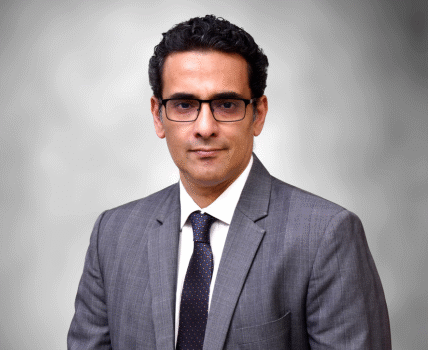
















Discussions around India’s aviation growth often centre on aircraft orders, airport expansion, and rising passenger volumes. Yet beneath this visible momentum lies a quieter, more complex layer that determines whether flights actually operate on time and safely — ground handling. From manpower and equipment to compliance, cost structures, and service quality, this segment sits at the intersection of operations, regulation, and commercial economics. In this conversation, Mohit Jajoo, CEO of BKJ Airports, speaks candidly about building a ground handling business in a fragmented and policy-heavy environment, the challenges of scaling across regional airports, and why India’s next phase of aviation growth will depend as much on operational discipline as on infrastructure expansion.
Could you share how BKJ Airports entered the airport services space?
BKJ’s journey didn’t begin overnight. Between 2010 and 2016, we were associated with one of a ground handling company, where we were managing operations at Jaipur, Udaipur and Dehradun Airport. At that time, we were deeply involved in airport development and operations, including investments and day-to-day management. Around 2016, our paths diverged from our partners due to differences in the long-term vision.
Later, as our group expanded into real estate and infrastructure, we felt the need to step back and re-evaluate our aviation strategy.
When tenders reopened post-COVID, particularly in 2023, we were fully prepared. We had built strong internal data capabilities — tracking aircraft movements, airline operations, and airport performance — and that gave us clarity on where and how to bid. That’s how BKJ Airports formally began its journey.
Can you describe your current operational footprint?
Currently, we are present at 17 airports, of which 11 are operational, and 6 are under various approval stages. We handle complete ground handling operations — ramp, terminal, and passenger handling.
We have a very strong presence in non-scheduled operations, where we handle close to 90–95% of activity at several airports. On the scheduled side, we work with airlines such as Star Air and SpiceJet. Tata Group Airlines are currently working with AIASL, but we are very optimistic and expect opportunities there as well.

How does data shape the way BKJ assesses opportunities and decides where to bid?
At a group level, we are extremely data-driven. We track aircraft movements, airline activity, non-scheduled operations, and airport-level traffic in detail. We have an in-house research and strategy team that continuously analyses this data.
Because of this, when tenders come out, we already know the commercial potential of an airport — what kind of revenue it can generate, what the cost structure will look like, and what is realistically viable. That’s why, when we bid, we are very clear about our thresholds.
In fact, when we entered the market seriously, we bid for around ten airports and won nine. Later, when another set of six airports came up, we won all six. That was not by chance — it was because we knew exactly what we were getting into.
Our philosophy is simple: we don’t chase volume blindly. We chase viability and long-term sustainability.
Scaling to 17 airports in such a short time is no small feat. What were the biggest challenges in stabilising operations?
The biggest challenge is that the industry itself hasn’t evolved uniformly. In many airports, people have worked in the same environment for decades — only the uniform changes, not the mindset or skill level.
At the senior level, skill development and service orientation are often missing. That’s where we faced our biggest challenge: changing attitudes and building a professional service culture.
Ground handling in India has historically been transactional. Our approach has been to institutionalise it. We wanted systems, processes, training, and accountability — something that survives beyond individuals.

Ground handling is often seen as a cost-driven service. How does BKJ differentiate itself?
There are only two real touchpoints in ground handling: people and equipment.
If your equipment is modern, well-maintained and safe — and if your people are trained, presentable, and service-oriented — half the job is done. There is no rocket science.
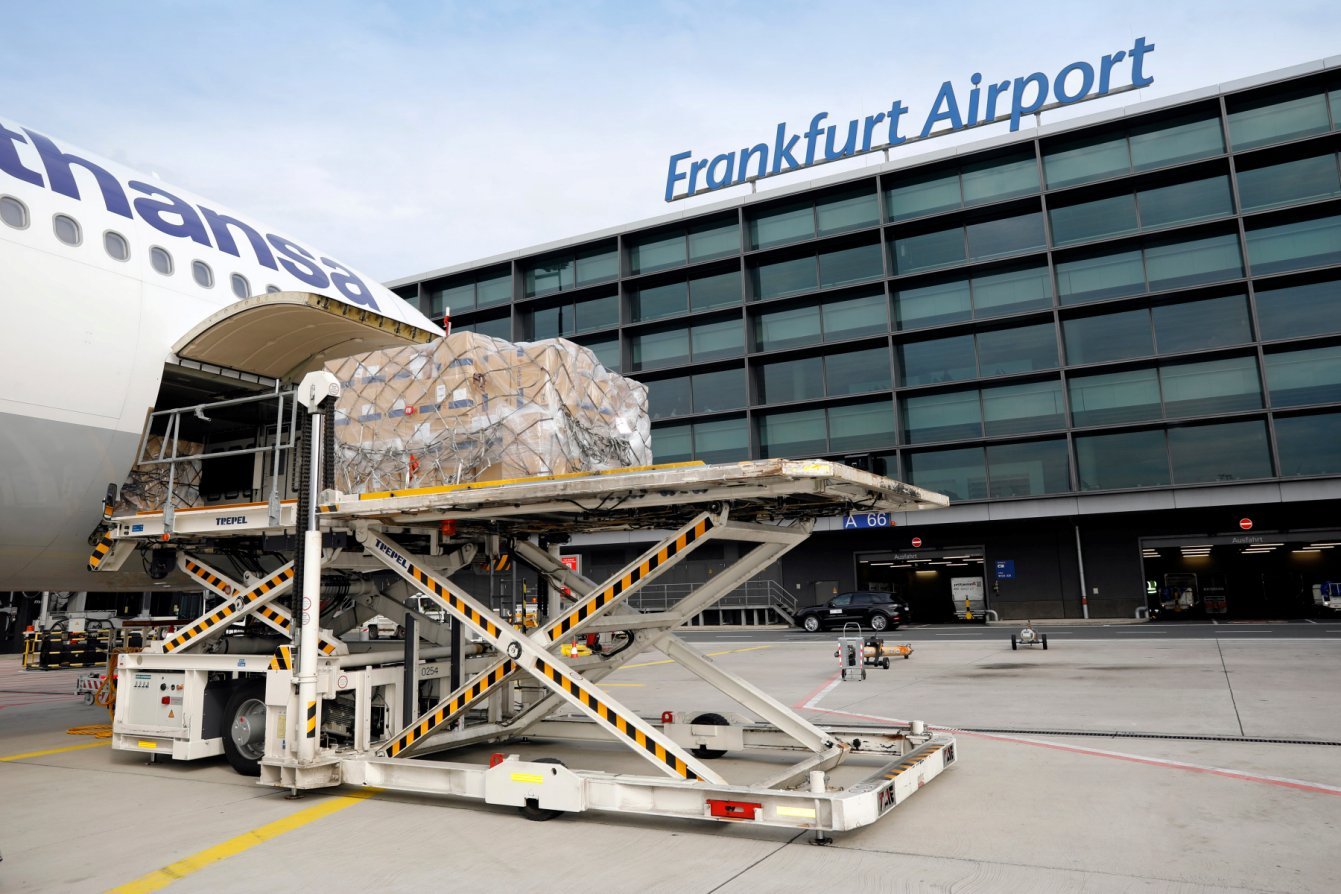
We invested heavily in both. We have introduced new-generation electric ground support equipment and ensured high maintenance standards. On the people side, we have created detailed grooming and hospitality manuals, similar to what premium airlines use.
We avoid localising leadership. Station heads are typically appointed from outside the region, which helps prevent complacency and ensures standardisation.
You have invested significantly in electric ground support equipment. Beyond sustainability, what impact has this had operationally?
The sustainability aspect is important, but operationally, it brings consistency and reliability. Electric equipment has lower downtime, predictable maintenance cycles, and better performance in the long run.
We’ve already placed orders with global manufacturers like TLD and others. Some equipment is already operational; the rest will be inducted over the next two years. This aligns with our long-term view; we are building for the next decade, not just the next tender cycle.
Manpower is a major challenge in aviation. How do you approach recruitment and training, especially in Tier-II and Tier-III cities?
Our hiring process is centralised, even for entry-level roles.
Every hire goes through structured interviews and induction. Senior staff undergo in-person training in Jaipur, while junior staff go through structured online and on-site induction programs. We also have a dedicated Learning & Development team focusing on hospitality, behaviour, and service culture — not just technical compliance. This approach ensures consistency across all stations, regardless of location.
You’ve raised concerns about self-handling. Why do you see it as problematic in India’s context?
At large airports, multiple handlers make sense. But at smaller airports with six or eight daily flights, having three handlers is inefficient.
Globally, airlines do not self-handle in most markets. In Dubai, London, or Singapore, airlines rely on professional ground handlers. That ensures efficiency, accountability, and scale.
In India, self-handling distorts the ecosystem. Airlines use common infrastructure, but when they self-handle, they bypass revenue-sharing mechanisms. That means the airport operator and other handlers lose out, while costs remain the same.
At smaller airports, this becomes even more problematic. You end up with three handlers for six flights a day. That’s simply inefficient. Infrastructure gets overcrowded, costs rise, and service quality suffers.
If ground handling were consolidated sensibly, everyone—including airports and airlines—would benefit.
You have highlighted concerns around uneven competition in ground handling. Can you explain what this means in practical terms?
The biggest challenge today is not policy on paper — it is uneven enforcement.
For example, we are required to deploy brand-new electric equipment, meet all compliance norms, and maintain high service standards. We do that willingly. But at the same time, government-linked operators can run very old equipment, sometimes decades old, without facing the same scrutiny.
We invest crores in electric buses and ground equipment, while others operate depreciated assets that cost almost nothing. Naturally, our operating cost is higher.
At the same time, rates are being undercut aggressively. International flight handling that earlier cost USD 1,200–1,300 per turnaround is now being offered at USD 400–500 in some cases. That is simply not sustainable unless costs are being bypassed somewhere.

How do you see policy evolving in this space?
Many policies are well written, but the issue lies in interpretation and execution.
For instance, certain equipment requirements are listed as “indicative,” but at some airports they are treated as mandatory without context. An airport may insist on equipment for aircraft types that don’t even operate there.
There is also inconsistency in how rules are applied across airports. The same regulation may be interpreted differently by different airport management. That creates uncertainty and unnecessary cost.
We are not asking for dilution of standards — only for rational, consistent implementation.
Beyond ground handling, are you exploring adjacent verticals?
Yes. We already have strong capabilities in facility management through our real estate businesses. As a group, we already manage 2–3 million square feet of real estate. Facility management is a natural extension of what we do.
At many smaller airports, professional facility management simply doesn’t exist. There is a clear gap, and we see strong potential there.
We are also exploring retail development within airports, particularly in Group B and C airports. These are underserved markets, and with the right approach, they can be commercially viable and improve passenger experience.
Where do you see BKJ Airports evolving over the next decade?
We are building systems and capabilities to remain relevant in this industry for the next 100 years.
We want to be known for professionalism, compliance, and reliability — not just scale. If we can contribute to a more structured, transparent, and efficient aviation ecosystem in India, that itself would be success for us.
Also Read: Collateral Damage: Celebi Airport Services India Future Hangs in Balance