









Table of contents
Boeing 777-8 Freighter
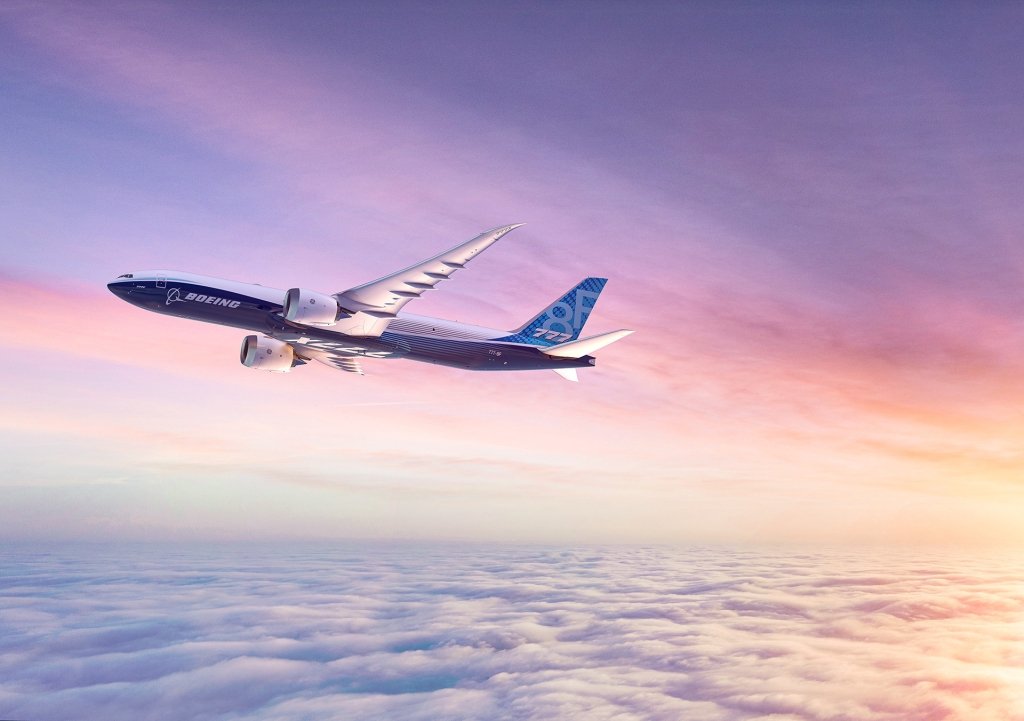
As the world’s most capable and fuel-efficient twin-engine freighter, the 777-8 Freighter builds on the success of the 777 family and the new 777X. This new freighter model will play a critical role in supporting the rising demand for air cargo, driven largely by the growth of e-commerce, express shipping, and global supply chains.
Boeing launched the 777-8 Freighter in January 2022 to meet the growing demand for air cargo, particularly driven by e-commerce expansion. The aircraft is designed to be the world’s largest twin-engine cargo jet, offering a payload capacity similar to the iconic 747-400 Freighter but with 25 per cent better fuel efficiency, emissions, and operating costs. This makes it a more sustainable and cost-effective option for operators.
With its superior economics and environmental performance, the aircraft is well-positioned to become a key player in the future of air freight, helping airlines operate more sustainably while maximising profitability. It offers the highest payload and range capability in its class, making it the ideal solution for airlines looking to expand into new markets and handle heavier cargo loads.
Technology (Engines and Avionics)
The freighter is powered by General Electric’s GE9X engines, which are part of the next-generation engine family designed for the 777X series (which includes the 777-8 and 777-9 models). The GE9X is known as the largest and most powerful commercial jet engine ever built, with a fan diameter of 134 inches. This engine not only provides remarkable thrust—up to 105,000 pounds of thrust—but also boasts significant technological improvements that contribute to superior fuel efficiency and environmental sustainability.
The aircraft benefits from Boeing’s most advanced avionics systems, offering pilots enhanced operational capabilities and increased safety. The 777X flight deck is an evolution of the proven 777 flight deck with several new technologies incorporated for improved situational awareness and ease of use.
The aircraft utilises fly-by-wire system that electronically controls the aircraft’s flight surfaces. This allows for smoother, more precise handling, reduced pilot workload, and greater safety, especially in turbulent conditions.
The FMS on the 777-8 Freighter helps optimise flight paths for fuel efficiency and shorter travel times, utilising satellite-based navigation. This advanced FMS also improves the aircraft’s ability to land in low-visibility conditions using GPS precision approaches.
The avionics package includes Heads-Up Display (HUD) technology, which provides critical flight data, such as speed, altitude, and navigation guidance, directly in the pilot’s field of view. This feature enhances situational awareness and safety, particularly during takeoffs and landings.
The aircraft’s Enhanced Vision System (EVS) uses infrared cameras to provide pilots with an enhanced view of the runway and surrounding environment in low-visibility conditions, such as at night or during fog, contributing to safer landings.
Performance
The aircraft is engineered for a sustainable future, offering the lowest fuel consumption and CO2 emissions per tonne of payload among its competitors. By incorporating cutting-edge technologies from the Boeing 777X program, including composite wings and advanced aerodynamics, the aircraft delivers up to 20 per cent lower fuel consumption and emissions compared to previous-generation freighters.
The aircraft’s structural payload capability is an impressive 118.2 tonnes, with a net revenue payload of 112.3 tonnes. This allows airlines to carry more cargo per trip, reducing the number of flights needed to transport goods and thus lowering operational costs. This high payload capacity is complemented by a range of 4,410 nautical miles, giving the 777-8 Freighter the versatility to operate both long-haul and high-demand routes.
The 777-8 Freighter boasts the lowest operating costs per tonne of payload, making it one of the most profitable aircraft for cargo operators. By leveraging the efficiencies of its twin-engine design and innovative technologies, the 777-8F helps airlines achieve better economics while maintaining high levels of reliability and performance.
The 777-8 Freighter is designed to complement the existing 777 family, including the 777 Freighter. Airlines that already operate the 777F can benefit from operational commonality, reducing training and maintenance costs. Though the 777-8F integrates seamlessly with Boeing’s larger freighters, such as the 747-8 Freighter, it provides a balanced cargo solution across various markets.
Cargo Capacity
Boeing’s freighter family, which includes the 747-8 Freighter, 777 Freighter, 767-300 Freighter, and 737-800 Boeing Converted Freighter, provides a comprehensive range of solutions for different market segments. The addition of the 777-8 Freighter ensures that Boeing’s portfolio remains at the forefront of the cargo industry, catering to the diverse needs of airlines and logistics companies around the globe.
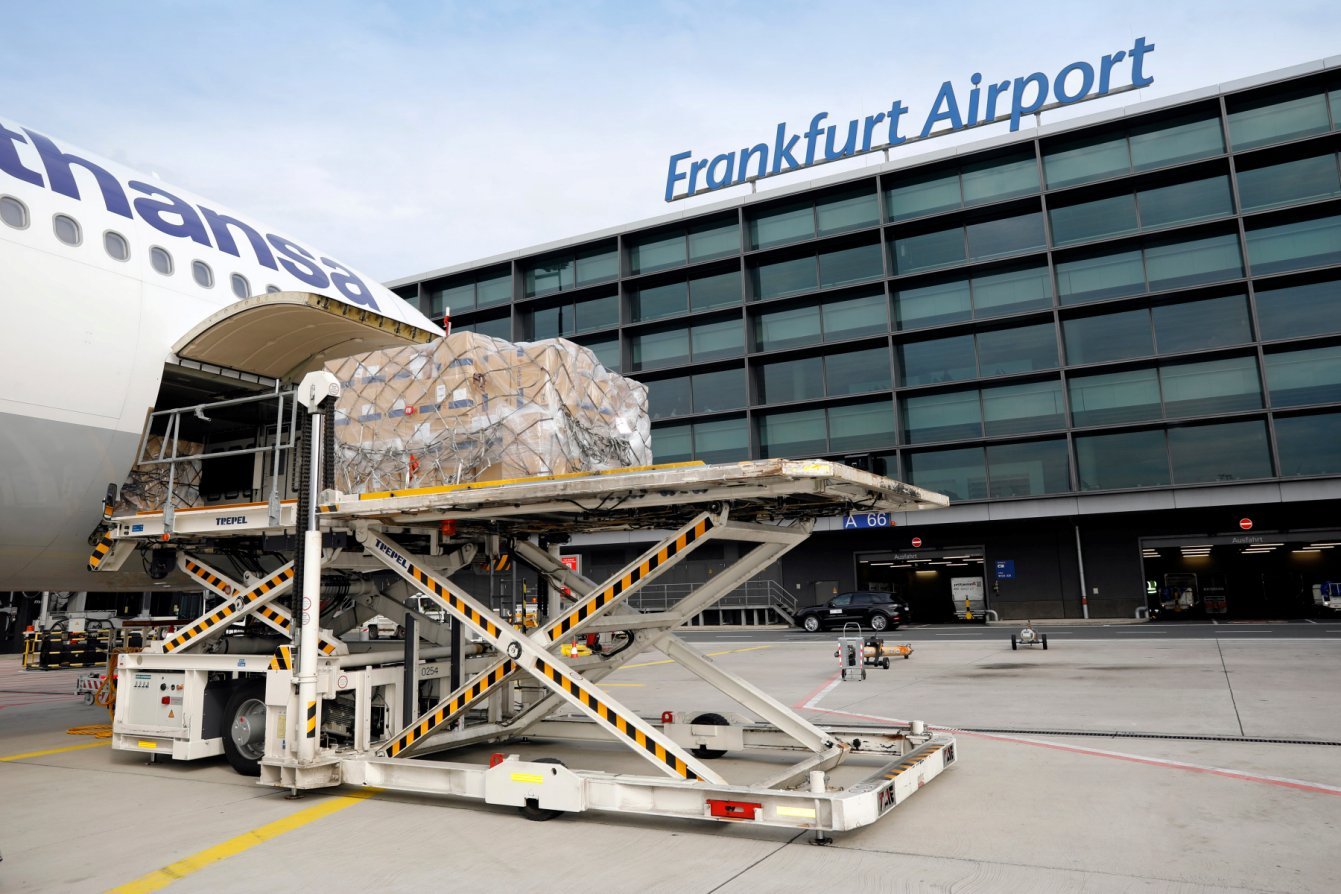
The 777-8 Freighter’s spacious cargo hold is optimised for maximum flexibility in transporting different types of goods. Its wide-body design allows for the carriage of a variety of cargo configurations, including high-density pallets, large shipments, and specialised cargo such as automotive parts and consumer electronics. This makes the 777-8F an ideal solution for airlines and logistics companies that handle diverse cargo needs.
With its large cross-section and innovative cargo arrangements, the 777-8 Freighter can handle both standard freight containers and oversized shipments, offering airlines more opportunities to maximise revenue from every flight.
Specifications
| Specification | 777-8 Freighter |
|---|---|
| Structural Payload (Gross) | 118.2 tonnes |
| Revenue Payload (Net) | 112.3 tonnes |
| Range | 4,410 nautical miles (8,167 km) |
| Engine Options | GE9X Engines |
| Fuel Efficiency | 20% lower fuel consumption |
| CO₂ Emissions | Lowest in its class |
| Cruising Speed | Mach 0.84 |
| Maximum Takeoff Weight (MTOW) | 352,000 kg (776,000 lbs) |
| Wingspan | 71.8 m (235 ft 5 in) |
| Overall Length | 76.7 m (251 ft 9 in) |
| Height | 19.5 m (64 ft) |
Takeaways
The Boeing 777-8 Freighter is poised to become a game-changer in the air cargo industry, offering airlines the highest payload and range capabilities with unmatched fuel efficiency and sustainability. As global demand for air cargo continues to rise, driven by e-commerce and global supply chains, the 777-8 Freighter will play a crucial role in helping airlines operate more efficiently while reducing their environmental impact.
The global air cargo industry is experiencing a period of unprecedented growth, with the global freighter fleet expected to expand by more than 70 per cent over the next 20 years. The Boeing 777-8 Freighter is uniquely positioned to meet this growing demand, offering airlines a modern, efficient, and capable aircraft that can handle the increased volume and variety of goods being shipped worldwide.
Several airlines have already placed significant orders for the 777-8 Freighter. Qatar Airways was the launch customer with an order for up to 50 aircraft, a deal valued at over $20 billion. The deal is the largest freighter commitment in Boeing’s history by value, highlighting the airline’s continued reliance on Boeing for its cargo operations.
Additionally, Silk Way West Airlines, a major cargo carrier in the Eurasia region, placed orders for two 777-8 Freighters with options for two more, further demonstrating the aircraft’s strong market appeal.
In terms of sustainability, the aircraft’s fuel efficiency and reduced emissions are expected to play a major role in helping airlines meet environmental goals while also improving profitability. The economic impact of such deals is significant, with Boeing estimating that Qatar Airways’ order alone will support 35,000 US jobs and generate an annual economic impact of $2.6 billion.
With its state-of-the-art technology, superior economics, and seamless integration with the existing 777 family, the 777-8 Freighter is set to define the future of air freight for decades to come.