












Table of contents
Boeing 777X
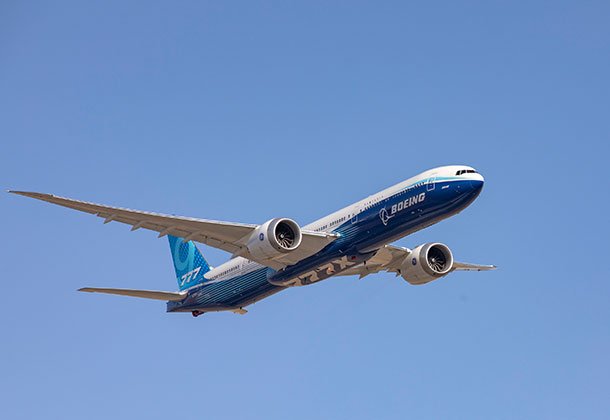
The 777X boasts several landmark advancements, such as the GE9X engines, the largest and most powerful commercial jet engines ever built, which generate over 100,000 pounds of thrust each. The aircraft’s carbon-fibre wings, with a wingspan of 235 feet, include folding wingtips for airport compatibility. This advanced wing design not only enhances fuel efficiency but also increases the aircraft’s range and aerodynamic performance.
With its longer range of up to 7,285 nautical miles, the 777X can connect even more distant cities on ultra-long-haul routes. Its spacious cabin is designed to improve passenger comfort, offering larger windows, quieter interiors, and state-of-the-art amenities. The 777X also achieves up to 12 per cent lower fuel burn per seat, making it a more environmentally friendly option for airlines.
The latest evolution in Boeing’s renowned 777 family, the 777X is poised to reshape the future of international aviation, combining the best aspects of its predecessors with next-generation advancements in performance, efficiency, and sustainability.
Boeing 777X: Cabin Experience
The aircraft features one of the widest cabins in its class, providing airlines with the flexibility to offer more spacious seating configurations. From luxurious first-class suites to modern business-class cabins with fully flat beds, the aircraft enhances passenger comfort, especially on long journeys.
The cabin’s design incorporates Boeing’s Signature Interior, with larger windows, improved air quality, and quieter cabins. Advanced LED lighting is designed to simulate natural daylight patterns, helping to reduce jet lag. Passengers will also enjoy upgraded in-flight entertainment systems and increased overhead storage space, ensuring that all classes of travel benefit from an improved experience.
Technology (Engine and Avionics)
The aircraft reflects Boeing’s commitment to sustainability and reducing the environmental impact of air travel. Equipped with fuel-efficient GE9X engines, advanced aerodynamics, and lightweight materials, the 777X achieves up to 12 per cent lower fuel consumption and emissions per seat compared to its closest competitors. This significant improvement not only reduces operating costs for airlines but also positions the 777X as a more environmentally responsible option for long-haul flights. The new carbon-fibre wings, combined with improved engine performance, reduce drag and fuel burn, while incorporating advanced aerodynamics and cabin innovations inspired by the 787 Dreamliner.
The aircraft is equipped with the most advanced avionics and flight systems in commercial aviation. The aircraft features an upgraded digital glass cockpit, enhancing pilot situational awareness with large-format displays and real-time data integration. Fly-by-wire technology, along with electronic flight bags, further reduces pilot workload, optimises fuel usage, and ensures safe and smooth flights.
Safety remains a top priority for Boeing, and the 777X is equipped with cutting-edge systems, including enhanced Traffic Collision Avoidance Systems (TCAS), weather radar, and state-of-the-art autopilot functions. These advanced safety measures help ensure safe flight operations even in the most challenging conditions, offering pilots and airlines a superior level of reliability.
Boeing 777X: Performance
The aircraft can operate across vast distances, allowing airlines to connect distant global cities without refuelling stops. Its range of approximately 7,285 nautical miles (13,500 km) gives it the flexibility to serve ultra-long-haul routes, making it ideal for flights such as New York to Sydney or London to Santiago. Additionally, the 777X offers a seating capacity of 384 to 426 passengers, depending on the configuration, catering to high-capacity demand while ensuring a comfortable travel experience.
The aircraft’s extended wingspan helps reduce drag and boosts fuel efficiency, making it not only faster but also more sustainable. It allows the aircraft to achieve a cruising speed of Mach 0.84, similar to its predecessors, but with improved overall performance and greater fuel economy.
The aircraft offers substantial economic benefits for airlines. With lower fuel consumption, reduced maintenance costs, and increased passenger capacity, the aircraft promises higher profitability on long-haul routes. The combination of extended range and better fuel efficiency translates to fewer refuelling stops and less downtime, allowing airlines to maximise operational efficiency.
Additionally, the aircraft’s ability to operate on ultra-long-haul routes provides airlines with the opportunity to explore new markets and expand their networks. Its versatility in handling different route types makes it a valuable asset for carriers looking to stay competitive in the increasingly globalised aviation industry.
The aircraft meets the latest global environmental standards, adhering to stricter emission regulations imposed by international aviation authorities. This focus on reducing carbon emissions is a key component of Boeing’s long-term vision for sustainable aviation, making the 777X an essential part of the future of eco-friendly air travel.
Boeing 777X: Specifications
| Feature | Specifications |
|---|---|
| Engines | GE9X engines, each generating over 100,000 pounds of thrust |
| Wingspan | 235 feet (71.8 meters) with folding wingtips |
| Length | 251 feet 9 inches (76.7 meters) |
| Maximum Takeoff Weight (MTOW) | 775,000 pounds (351,534 kg) |
| Range | 7,285 nautical miles (13,500 km) |
| Cruise Speed | Mach 0.84 (644 mph or 1,036 km/h) |
| Seating Capacity | 384 to 426 passengers, depending on configuration |
| Fuel Efficiency | 12% lower fuel burn per seat compared to closest competitors |
| Cabin Width | 19 feet 7 inches (5.97 meters) at armrest level |
| Passenger Amenities | Larger windows, quieter cabin, advanced LED lighting, improved pressurization, in-flight entertainment |
Takeaways
As the flagship of Boeing’s long-range fleet, the 777X comes with next-generation technology, advanced aerodynamics, and eco-friendly design. The aircraft will offer longer range, increased passenger capacity, and reduced fuel consumption, all while lowering operational costs. With its ability to cover even more extensive routes while adhering to stricter environmental regulations, it will continue the 777 legacy of connecting distant cities across the globe with unparalleled performance and efficiency.
The aircraft’s advanced wing design, state-of-the-art engines, and enhanced passenger comfort make it a formidable successor to the 777 family. As airlines look for cost-effective, sustainable solutions for international travel, the 777X is set to become the aircraft of choice, carrying on Boeing’s legacy of innovation and global connectivity.