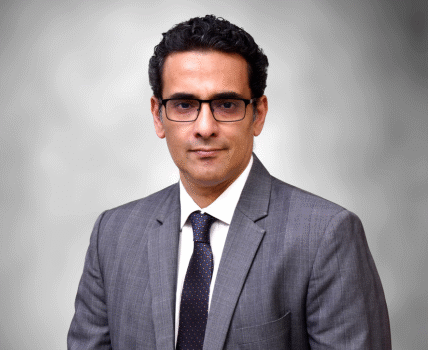




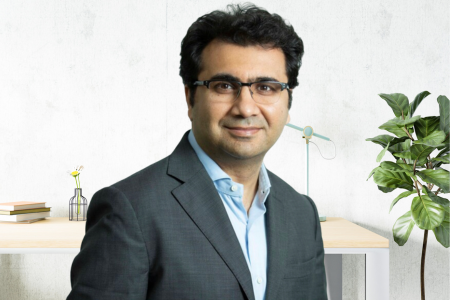




Founded in 2008 with an export-first mindset, SASMOS HET Technologies Ltd. has quietly built a global presence in aerospace, defence, and high-reliability interconnect systems. What began as a wiring-focused manufacturing operation has steadily evolved into a design-to-manufacture partner for international aircraft and defence programmes. In this interview, Founder and Managing Director Chandrashekar H.G. discusses the company’s transition from build-to-print work to engineering-led solutions, its role across commercial aviation, defence, data centres, and emerging technologies, and how disciplined capability-building, rather than cost alone, has shaped company’s growth in global supply chains.
Can you outline the key areas SASMOS focuses on and share how the company began its journey?
SASMOS HET Technologies was founded in 2008 with a very clear intention — to build a company focused on aerospace and defence, serving global markets from India. From the beginning, our belief was that India could be a strong destination for low-volume, high-mix, high-quality manufacturing, particularly where engineering depth and process discipline matter most.
We adopted an export-oriented model almost immediately because the markets we were targeting were international. The long-term vision was to evolve steadily — from engineering-led manufacturing to full design-to-manufacture capability. That foundational thinking has guided the company ever since.

What gave you the confidence, at that stage, that India could support global aerospace and defence programmes?
India had three advantages that aligned well with aerospace requirements: strong engineering talent, the ability to manage complexity, and competitiveness in low-volume, high-variety manufacturing. At the same time, global original equipment manufacturers (OEMs) were increasingly looking beyond traditional geographies — not just for offset fulfilment, but for dependable long-term supply-chain partners.
From the start, we were clear that success would depend on technical credibility, quality, and reliability—not pricing alone. That conviction shaped how we built the organisation.
How did you structure growth in the early years?
We worked with structured five-year plans. In the first five-year block, we focused on three priorities. First, establishing exports — initially to Israel, and later to the United States. Second, building credibility in aerospace and defence interconnect manufacturing. Third, forming an international partnership that could help us access commercial aviation programmes.
That approach led to our collaboration with Fokker Elmo. It was a deliberate, medium-term partnership intended to help us understand global aerospace standards, certification expectations, and customer processes, while we built our own independent capability.

How did that partnership translate into access to global OEMs?
The partnership helped us align with global aerospace supply-chain expectations and positioned us as a credible, reliable supplier. Over time, this opened opportunities to engage with OEMs such as Boeing, Lockheed Martin, Pilatus, and later Airbus.
Importantly, this was not limited to offset-linked work. As our capabilities matured, we became part of the global supply chain on merit, supporting both manufacturing and engineering requirements.
At what point did SASMOS begin moving beyond build-to-print manufacturing?
A key shift happened when we began contributing more actively to engineering and value-engineering. One example was a Boeing programme where a particular part had a lead time of about 52 weeks. We redesigned the component by replacing a casting with a welded and sheet-metal solution, validated it for altitude and aircraft operating requirements, and reduced the lead time to roughly six weeks.
This redesign also resulted in about a 20% cost reduction while fully meeting certification and quality standards. Today, that part is supplied globally. Projects like this demonstrated that we could add meaningful value to OEM supply chains, not just manufacture components.
How did this engineering capability extend into design-led programmes and newer aircraft platforms?

As we gained confidence, we invested further in design capability.
This allowed us to engage in early-stage design work, including in emerging segments such as electric vertical take-off and landing (eVTOL) aircraft.
We worked on the design of critical wiring systems involving high-power management for an electric aircraft programme, including work associated with Lilium in Germany. While that programme faced financial challenges, it gave us valuable exposure to new aircraft architectures and reinforced our design-to-build approach.
Did this experience play a role in your engagement with Deutsche Aircraft?
Yes, it did. Our engagement with Deutsche Aircraft came through a global competitive process. The evaluation was driven primarily by technical proposals rather than pricing. What mattered was our depth of understanding of aircraft systems, airworthiness and safety-critical requirements, and our ability to scale with clearly defined timelines.
From day one, our proposal emphasised a combined team approach — bringing together German airworthiness and safety-critical engineers with our own design and manufacturing teams. We presented a clear end-to-end roadmap, which ultimately led to our selection.
How rigorous was the technical evaluation during this process?
It was extremely thorough. We made four to five detailed technical presentations covering our capabilities, depth of knowledge, and execution approach. Deutsche Aircraft conducted an in-depth screening process to understand not just what we could deliver, but how deeply we understood aircraft systems and certification requirements.
Wiring is often underestimated. How do you see its role in aircraft design?

Wiring is frequently perceived as simple, but in reality it is the nervous system of an aircraft. It interconnects almost every system onboard and must meet extremely stringent safety, reliability, and certification standards.
In modern aircraft programmes, wiring involves hundreds of interconnections and part numbers.
For example, in the Deutsche Aircraft programme, we are working with roughly 300 different interconnections.
By comparison, a business jet programme such as Gulfstream may involve around 150.
The architecture chosen by the OEM largely determines this complexity.
How is your business currently split across segments and products?
Commercial aerospace accounts for roughly 40–50% of our business, spanning commercial aircraft and business jets such as Airbus, Boeing, Pilatus, and Gulfstream. Defence forms another significant portion, alongside fibre optics, electronics, and data-centre interconnect solutions.
From a product perspective, wiring harnesses account for about 60% of our portfolio, fibre-optic interconnects around 20–22%, and the remainder comprises value-added electronic assemblies.
SASMOS has also entered the data-centre space. How did that happen?
Our work in fibre optics naturally extended into data-centre interconnects. Through our partnership with American Fujikura Limited (AFL), we operate as a manufacturing and engineering hub for fibre-optic interconnect solutions in India.
Today, we support hyperscale data-centre requirements in India and internationally, supplying fibre-optic connectivity solutions for large cloud and data-centre operators. This diversification builds on the same interconnect expertise we developed in aerospace and defence.
What kind of design and product development work are you doing in defence?
In defence, we have undertaken multiple design-led programmes. These include fibre-optic radar systems, where we transitioned architectures from copper to fibre optics, including radio-frequency to fibre-optic conversions. One such programme was designed and developed for ELTA and is now being used as an Indian-designed solution.
We have also designed power-distribution and contractor-box solutions for unmanned aerial vehicle (UAV) platforms — among the early instances where such design work was outsourced to India. Defence electronics and fibre-optic systems remain a key focus area for us.
You also mentioned photonics and telecom as future-oriented areas. Could you elaborate?

Photonics is a natural progression from fibre optics.
It involves light-based signal processing at very high speeds and has applications in defence radar systems as well as telecom, including 5G and future 6G networks.
We are part of a government-supported initiative linked to a 5G testbed, working with the Indian Institute of Technology (IIT) Madras on radio-over-fibre solutions.
This technology has global relevance and represents a long-term investment in advanced systems.
How is SASMOS structured geographically today?
India remains our primary engineering and manufacturing base. We also operate in the United Kingdom, where we acquired a wiring manufacturing business in Swindon and scaled it significantly over time, expanding both capability and customer engagement locally.
In addition, we are in the process of establishing a presence in the United States, potentially through acquisition, to support future growth and customer proximity.
Could you share some perspective on exports, growth, and scale?
SASMOS is an export-led organisation, with approximately 82% of our revenues coming from international markets. Over the last eight years, we have maintained a compound annual growth rate of around 25%. In terms of scale, we are approaching the USD 100 million range in turnover.
How do you build specialised aerospace talent, and can you share an example of what that looks like on the shop floor?
Talent development for us is continuous. We run in-house training and certification programmes for shop-floor teams and engineers, focused on aerospace requirements, safety-critical processes, and global customer expectations. Every engineer goes through our internal training framework — what we call “Gurukul” — covering both technical discipline and the management rigour needed for aerospace programmes.
A good example of how seriously we take capability-building is an inclusion initiative on the shop floor. We trained 27 hearing-impaired technicians for specialised aircraft work. Today, the products built through that effort are flying on 300-plus aircraft — including cockpit panel applications. This training wasn’t a typical short programme; where a standard cycle might be a few months, we extended it to roughly one-and-a-half years, including customised learning support. We also used team members who could translate technical concepts into sign language, and created tailored video-based learning to make the process effective.

This work was showcased publicly as well — our team was presented to the Prime Minister during a Boeing-related event. And from a customer-quality standpoint, we have maintained zero defects for the last three years, which we are proud of because it reflects discipline, not just intent.
Where do you see the next phase of opportunity for SASMOS?
The next phase focuses on two areas. One is deeper engagement in defence electronics and advanced military systems. The other is continued investment in future technologies such as photonics and advanced interconnect solutions.
At the same time, we will continue expanding our global footprint. The long-term vision remains unchanged: to build a globally respected, design-led engineering and manufacturing company from India.
Also Read: Wings of Opportunity: Deutsche Aircraft Puts India at the Centre of Its D328eco Play