









- India’s business aviation sector has immense potential, but its growth is hindered by high operational costs, infrastructure limitations, and regulatory hurdles.
- With corporate demand on the rise, addressing these challenges is crucial to unlocking the sector’s future.
Bullish about its commercial aviation growth, India should have had this inevitably mirrored in the business aviation sector as well. But mounting logistical challenges stands in the way of an anticipated growth in India’s business jet fleet, which currently stands at barely 140 aircraft. The aviation market is widely anticipated to touch $37 billion by 2035, but the path for business jets is tricky.

The demand is definitely high. Corporate biggies are queuing up to acquire more business jets than ever before. But the challenges now look imposing: High fuel costs, inadequate infrastructure for aircraft maintenance and repair, poor airport facilities and a stifling shortage of pilots and trained staff. Scaling these could be tough, but a tougher hurdle stands right at the jet acquisition phase: Lack of policy clarity in importing aircraft.
Tedious import process
Unlike in many developed markets, the import process in India is widely dubbed as tedious, taxing and time-consuming by aviation analysts. The Directorate General of Civil Aviation (DGCA) norms on both import and business jet operations are seen as too harsh for the market to grow.
Industry watchers are convinced that relaxing the norms would aid the sector to take off in a big way over the next five years. During the forecast period from 2024 to 2030, India’s aviation market size is projected to grow from the current $13.89 billion to $26.08 billion. This accounts for a CAGR of 11.08%.
The business jet market in the country remains largely untapped. Consider this: The United States has a whopping 12,051 registered business jets, far ahead of Brazil with 764, Mexico with 704 and Germany with 387 jets. India’s current fleet of 140 is seen as grossly underwhelming considering its GDP size and the number of Ultra-high-net-worth individuals (UHNWI), which currently stands at over 13,000. Those with a net worth of at least $30 million are identified as UHNWI.
Business jets, a game-changer
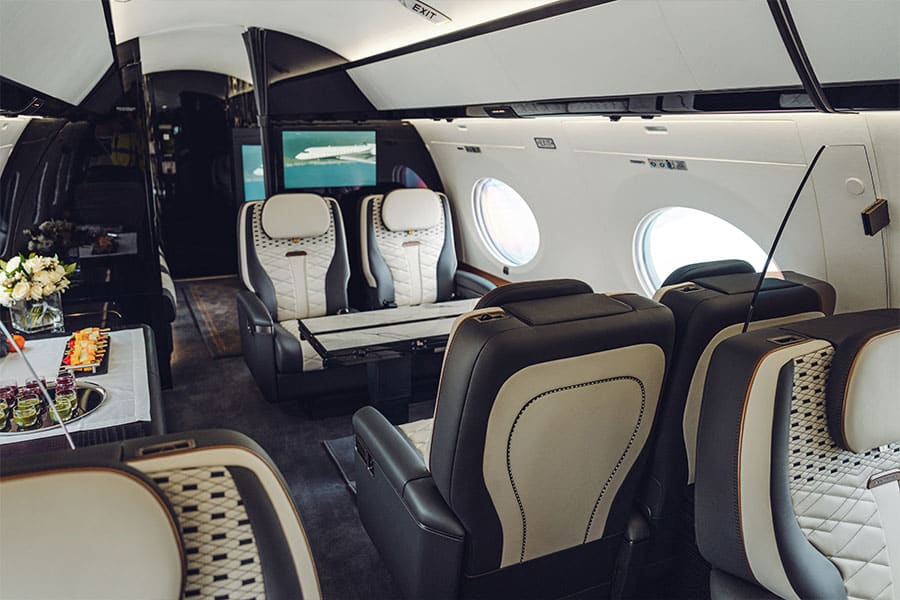
Globally, business jets have been a game-changer for corporate leaders. While drastically cutting travel time, the aircraft enables them to attend multiple meetings across geographies. The ability to take off from small airports at the time of their choosing and landing close to the destination bypasses the hassles of commercial flights, with their associated airport wait times.
The jets are now widely seen as productivity enhancers for those who can afford it. From an Indian perspective, the airport infrastructure is on an upgrade mode. But the question remains: Is it geared to meet the demands of business aviation? Industry watchers are hopeful that the government’s proposal to build over a hundred new airports in smaller cities over the next six years would open up opportunities for business jets. Business travel expenditure had grown by 24.7% in 2023, and this is expected to rise further, pushing the demand for an enabling airport infrastructure.
Proposed 2.5% import duty cut
One silver lining for the industry is a proposal to scrap the 2.5% import duty on commercial business jets. This could ensure a level playing field for non-scheduled operators since commercial airliners are exempted from this tax. The proposal was made by the Civil Aviation Ministry to the Finance Ministry in December 2023. With a new government in place, a formal approval is awaited. The Basic Customs Duty was introduced in 2007, and has now reportedly reached the end of its tenure.
Besides BCD, aircraft imports under the Non-Scheduled Operators of Commercial Operations Permit (NSOP) category are also levied a 10% Social Welfare Surcharge (SWS) on the BCD. In addition, there is a 5% Integrated Goods and Services Tax (IGST). Aircraft that are imported for private or personal use attract 28% IGST, 3% BCD and 10% SWS on BCD.
“The major issue is the 31% GST (28+3) on the import of private aircraft, and not the 2.5% of BCD,” says Rajan Mehra, Chief Executive Officer of ClubOne Air. “This restricts people from buying aircraft in the private category even if their utilisation is more private. Most buyers tend to go the NSOP way, to avoid this GST, or try to keep their aircraft in foreign registration,” he explains.
But he agrees that the BCD of 2.5% has to go to allow parity with commercial airlines. “Also, the GST for purchase of aircraft in private category needs to be rationalised to a more acceptable level of 12% or so.”
NSOP fleet growth
Despite the multiple challenges, the NSOP fleet in India has seen robust growth, says a recent report by Martin Consulting. Pre-owned mid-size and super mid-size jet numbers have seen a sharp rise. Driving this trend was the acquisition of Hawker 800XP, 900XP, the Hawker 4000 and Citation CJ2+. Adani-Karnavati Aviation inducted the Pilatus PC24 aircraft for the first time, the report notes.
Seventy per cent of the aircraft inducted under NSOP were pre-owned aircraft, with most deployment in North India. The use was driven by corporates and election and political party charters. The report found that the aircraft were mostly based in Delhi, Mumbai and Gujarat. Acquisition of long range jets such as the Boeing BBJ-MAX, Gulfstream G550, G650 and the Bombardier Global Express in the last five years were primarily driven by big corporates Adani and Reliance.
More acquisitions are on the anvil. Charter flight operator JetSetGo has proposed to purchase aircraft with a minimum flying range of six hours. Also on its expansion agenda are plans to raise $900 million and an IPO by 2027-28.
Big ticket acquisitions
But the big ticket acquisition this year has been Reliance Industries chairman Mukesh Ambani’s purchase of a Boeing 737 Max 9 at an estimated cost of Rs 1,000 crore. Reports say the aircraft will be used for the long-distance travels of the Ambani family. The acquisition adds to Reliance’s existing fleet of nine aircraft, which include an Airbus A319 ACJ, two Bombardier Global 5000, two Dassault Falcon 900, one Bombardier Global 6000 and an Embraer ERJ 135.
To cater to the transportation needs of its top executives, the Adani Group has reportedly proposed to buy six Pilatus PC-24 aircraft. The Group’s aviation arm, Karnavati Aviation is set to acquire the aircraft from the resale market, reiterating a trend in the Indian corporate aviation market.
Beyond these big players, the perception of business jets as an exclusive luxury travel mode is changing. With companies expanding their operations across a wider geography in the country, the demand for efficient and time-saving transport modes is seeing a surge. Giant strides in aviation technology, the diversity of options on offer, design innovations and the ability to hold business meetings in transit, are all aiding the collective appeal of these jets.
Rationalise taxes, airport charges: BAOA
To tap the full potential of this demand, the Business Aircraft Operators Association (BAOA) had urged the Ministry of Civil Aviation (MOCA) to rationalise taxes, make airport charges affordable and boost infrastructure. Operators of business aviation, both chartered and privately flown, find the airport charges highly unaffordable. In 2022, the Ministry had directed airports and the Airports Economic Regulatory Authority of India (AERA) to make it itemised, but the Association is pushing to make the charges reasonable and affordable.
In terms of infrastructure, BAOA’s demand is clear: Airport upgrades should integrate a separate General Aviation terminal, made available for parking of business jets. To address another demand on existing airports, the government has reportedly told DGCA to accommodate more aircraft in non-standard bays to ensure safety concerns and enhanced business flight operations.
With businesses coming up also in tier 2 and tier 3 cities, the Association has sought more Fixed Based Operators (FBOs) who provide aviation services such as fueling, parking, hangar space, aircraft maintenance, ground handling, catering and lounge services, at those airports. FBOs are critical for private jet operators to refuel, park aircraft and restock supplies.
Fractional ownership model
To tide over the high cost of aircraft ownership and maintenance, some players are trying out alternative models. In one such initiative, a Bengaluru-based startup, IndiaJets had launched the country’s first subscription-based business aviation setup. Modelled after timeshare in the sky, the subscription system is customised for business owners, helping them bypass ownership hassles.
The startup’s IndiaJets Aircraft Membership programme requires subscribers to buy the share size appropriate to the annual flight requirement for a fixed amount per month and per hour flown. This frees them from the costs linked to hiring personnel, hangar rental, ownership and other variable costs. Currently operating a six-seater business jet, the startup has proposed to induct 32 more aircraft over the next few years. This will include medium to large jets.
The IndiaJets’ ‘fractional ownership’ trend could gain ground in the coming years. A way for multiple people to share the cost and use of a private jet without owning it outright, the model ensures flexibility and convenience. While it offers the privacy and time-saving benefits of aircraft ownership, fractional owners are freed from the attendant capital expense and management responsibilities.
Currently, India does not have a fractional ownership policy for aircraft, but a draft is likely soon. The government has reportedly held discussions with multiple stakeholders. Existing rules in other countries are expected to guide the policy. Industry standards abroad mandate that anyone keen to buy a share should hold a minimum of 5-10 per cent stake in the company. The number of fractional owners is capped at a maximum of 8 or 10. The ownership model works best for aircraft with up to 20 seats.
Once the policy is approved, industry experts believe the fractional ownership model could energise the NSOP segment, boosting the aircraft fleet in operation. Currently, an estimated 100 NSOP holders are in the country with a combined fleet of 330 charter aircraft. These include helicopters too. Among the top players in the segment are ClubOne Air, IndiaJets and JetSetGo, who might diversify into fractional ownership as well.
An industry insider with a deep understanding of the sector and long years of flying experience has this to say: “Shared ownership is good, which gives required fund flow when needed. However if one owner is not using the aircraft, he should give it up to another and also for the charters.” The veteran preferred to remain anonymous for the feature.
Prohibitive operational costs
The growth potential for business jets, he says, is huge. “But costs of operating are almost prohibitive. Oil companies are giving discounted rates / subsidies for aircraft like ATR operated by scheduled airlines that are below 25,000kg. If the same can be given to the NSOP operators, variable cost can be brought down,” he points out.
Summing up the factors that pose the biggest challenge to growth of private aviation in India, Rajan Mehra reiterates the lack of dedicated general aviation airports and aviation Free Zones, FBOs, quality airports, heliports, parking and hangar facilities. In terms of taxes, the high GST on aircraft purchase in the private category, charters, ground handling charges, maintenance services etc. are dampeners.
On the regulatory front, Rajan echoes the need to bring in rules and regulations that are more in line with airlines, rather than private aircraft operations. “The process of aircraft purchase and imports is long and cumbersome. FDTL (Flight Duty Time Limitation) rules, cross utilisation of pilots, operations at Defence airfields, restricted airspace in cities are some of the issues that are hampering the free growth of the industry,” he elaborates.
But he is clear that fractional ownership is a welcome step by the government. “It has been accepted after many years of lobbying by the industry and BAOA. It will allow entry level users to purchase aircraft fractions and bring in more users into the system, thus spurring the growth of the industry.”
Private airport operators and cost factor
The industry insider brings another perspective to the infrastructure issue. He says: “The private airport operators are fleecing business jet owners and operators on all services. Proper Lounge facilities are required for the corporate passengers and business aviation crew at AAI airports. The main airports of Chennai, Mumbai, Delhi and Kolkata have been facing capacity issues in terms of slots and parking bays, especially power-in and power-out bays needed for business jets.”
Availability of well-trained pilots has been an issue even for legacy carriers. But the industry insider feels there are enough pilots. However, the training facilities to train pilots for business jets in the country are virtually nil. “We all go to the United States or Europe,” he says.
Another issue flagged is linked to aircraft accessories. When an aircraft is grounded due to delayed supply of parts by the manufacturer, the time-consuming customs clearance process adds to the operator woes. The departments linked to the aviation regulator are not helping matters, say industry experts.
It is clear that the huge growth potential of business aviation in the country can be maximised only through a comprehensive upgrade of airport infrastructure across the country, rationalisation of tax and import duty and an enabling policy architecture. Any further delay in responding to the industry’s concerns will only add to the mounting problems. Hopes are high that this will not be another case of an opportunity missed.