












- Despite rapid digital advancements in passenger air travel with the airline market expected to surpass $35 billion by 2030.
- The air cargo industry remains bogged down by outdated legacy systems, impeding progress in efficiency and real-time tracking.
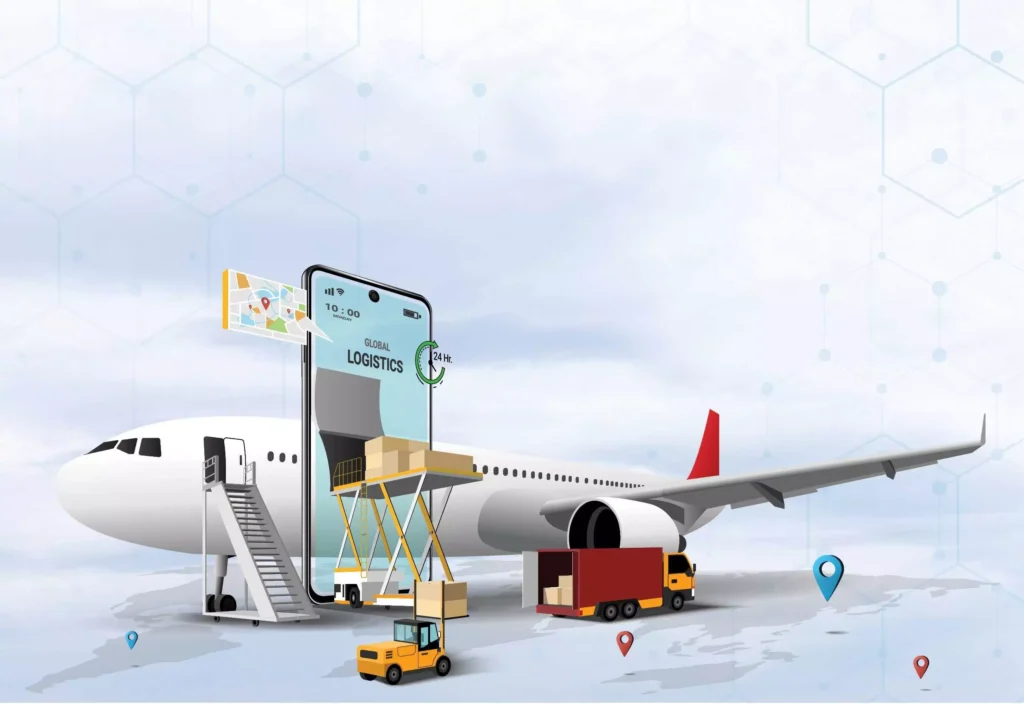
Unlike the passenger segment which has seen rapid adoption of digital technologies (ticketing, check-in process, inflight entertainment, customer relationship management, and so on), the air cargo segment has been a laggard, with many operators still relying on legacy systems where usage of paper is high. This dichotomy is at a time when airline digitalisation market is estimated to earn over $35.42 billion in revenue by 2030.
Airlines are focused on enhancing the end-to-end passenger experience. The pandemic has prioritised minimising physical contact across the passenger journey. The shift to direct distribution and carriers owning the end-to-end passenger experience will increase digital investments, forecasts Frost & Sullivan. There are few airlines and cargo operators who have invested in digitalisation, however, those investments are not encouraging.
Ashok Rajan, head of cargo and logistics solutions at IBS Software who calls himself a ‘freight technologist’ avers that “air cargo has moved from being a poor cousin of airlines and probably the poorer cousin of digital.” But the movement has been tardy.
Paper-based processes still in vogue
At the recent World Cargo Symposium of the International Air Transport Association (IATA) in Hong Kong, the Global Head of Cargo, IATA, Brendan Sullivan said: ”Air cargo volumes are now firmly back to pre-pandemic levels. The challenge now is to ensure that air cargo growth is efficient, safe and aligned with achieving net zero carbon emissions by 2050. Through the hard work of the air cargo industry, the building blocks are in place to significantly accelerate progress in all these areas.”
The challenges vary from outdated customer touch points (the stakeholders are many – customer, freight forwarder, ground handler, airline, customs, logistics provider etc); over-reliance on paper-based processes (according to a report over 50 per cent of global air trade still uses paper-based transactions); to the inability to track cargo in real time, once outside the carrier network.
In such a scenario, digitalisation is the biggest opportunity for the air cargo sector. “This has not happened as fast as any of us would have liked. But progress is real. Inefficient paper-based, manual processes are being replaced with digital solutions in all aspects of cargo operations from tracking to customs clearance. That’s a fact. And it’s making international trade more efficient. Our call to action is clear: Governments must consistently implement global standards, supply chain partners need to collaborate to overcome shared challenges, and the entire industry must align to ensure a unified and effective approach to digitalisation,” added Sullivan.
The air cargo players are aware of the benefits of digitalisation and there are companies which are pushing the envelope by developing technologies that are easy to adopt. This is more noticeable post-Covid.

Digital technologies for enhanced efficiencies
Amar More, Director of Kale Logistics mentions “For decades, the air cargo industry has relied on outdated technologies and communication systems prevalent throughout the logistics chain. Manual data entry and paper-based processes remain commonplace. Each stakeholder in the air cargo industry functions as a vital link within the global supply chain, presenting a significant challenge for collective evolution. Achieving progress requires alignment and uniform communication among all stakeholders. However, the industry’s diversity in actors, with varying interests, objectives, and clientele, complicates this harmonisation process. Additionally, a substantial portion of air cargo actors exhibits conservatism and distrust regarding data sharing, hindering exploration of the potential value derived from collaborative data sharing initiatives. Overcoming these barriers necessitates fostering trust, promoting transparency, and emphasising the mutual benefits of adopting modern digital technologies for enhanced efficiency and competitiveness across the air cargo sector.”
Incorporated in 2010, Kale Logistics Solutions is a global cloud-based tech provider for several Fortune 500 companies worldwide, offering a comprehensive suite of tech solutions for the logistics industry. Kale has created a suite of comprehensive enterprise systems and Cargo Community Platforms, which offer a single electronic window capable of supporting operational flows, percolating data to various stakeholders, and facilitating the paperless exchange of trade-related information between stakeholders.
Impact of Cargo Community Systems
Asked about the digitalisation status in India, More said “It is difficult to say in absolute terms the rate of digitalisation in air cargo for India as the parameters for assessment have been different. Like if we see e-booking it’s close to 80 per cent which is way above global standards of 50 per cent. Similarly, India’s rank in IATA electronic Air Waybill (e-AWB) is 7th globally with 76 per cent adoption. With major airports like Mumbai, Hyderabad, Bengaluru, Delhi, Ahmedabad, Goa now connected with Cargo Community Systems (CCS), the rate of digitisation moves up significantly as CCS are designed to have end-to-end digitalisation. As these airports handle close to 80-85 per cent of India’s cargo, we can safely say that could be percentage.”
Dwell time at cargo terminals is an issue, but with automation and digitalisation, this is getting reduced. More explains “Dwell time and use of technologies are directly related, higher tech leads to lower dwell time. At some of the airports where we have implemented our community systems, we have seen the airport’s handling efficiency (tons/sqm t) going up 2.5 times which means those airports could handle more than twice the cargo in the same infrastructure. We also saw the airports being able to save around 1,000 trees per annum just by reducing 24 copies of paper per shipment (thanks to data moving digitally instead of on the paper). The commercial counters at the airports for paperwork reduced from 9 to just 1 due to reduced paperwork at the airport. Just behind 300 trucks, we noticed 9 Mn Gms of CO2 emissions were saved. In some cases, up to 80 per cent of data entry costs on the exports side were saved. The airports also saw the dwell times for trucks go down by 40 per cent.”
More said that air cargo immediately needs to prioritise three key areas – collaborative platforms; data sharing and tech literacy. Explaining further, he said that implementing collaborative platforms like CCS to facilitate communication, data sharing, and collaboration among all stakeholders in the air cargo ecosystem is the need of the hour. As regards data sharing, he considers it as the ‘new oil’ that needs to be owned and shared by different stakeholders. On tech literacy, he averred that the air cargo industry needs to look at talent and job roles which are appealing to millennials. To shape the future of the industry, there is a need for decision-makers with high knowledge in new tech and data management.
Phenomenal growth of eBookings in India
This requirement is urgent considering that India is on a good growth path, emerging as a crucial exports hub. In 2023-24, the air cargo handled in the country was a little over 3.36 million tonnes and the ambitious target for 2030 is 10 million metric tonnes. As per Freightos data, the Indian air cargo industry has witnessed an explosive trend from 2020 to 2023 with number of eBookings increasing by a humongous 6,168 per cent by the end of 2023. In such a scenario, the digital connect of stakeholders needs no emphasis.
IATA has highlighted the need for seamless sharing of digital information. It said that the adoption of the ONE Record standard is enabling efficient data exchange throughout the supply chain. The aim is for all IATA members to achieve ONE Record capability by January 2026. Cathay Cargo and Lufthansa Cargo have already met this target. And all major airline IT platform providers have pledged to attain ONE Record capability to support this transition. ONE Record is a standard for data sharing and creates a single record view of the shipment.
IATA is pushing countries to quickly digitalise customs and trade facilitation processes and the US has been one of the early adopters. It said that among countries already implementing, Brazil’s use of IATA’s digital standards has cut cargo release times from five days to just five hours, potentially reducing manual processing by up to 90 per cent. And the European Union, UAE and Canada have recognised the value of accurate data sharing across the air cargo supply chain and are expected to adopt pre-loading advance cargo information systems by the end of 2024.
Another priority area that IATA is laying emphasis on is the process of ‘shipment tracking and its Interactive Cargo Guidance offers a unified framework, enabling tracking devices to ensure the quality and accuracy of conditions for time and temperature-sensitive goods. This is critical to facilitate growing demands for real-time shipment tracking by e-commerce and pharmaceutical trade.
Future is AI-enabled enterprises
Giving a peek into the evolving trends in digitalisation, More says the future is going to be only AI enabled enterprises and the sector has already a few use cases which will bring the quantum jump in innovation, growth, sustainability and customer centricity. When tied to CCS, it amplifies its benefits to the entire supply chain.
AI is not just about improved communication among the stakeholders, it is also about increased optimisation and efficiency within an organisation. AI helps in faster decision-making, more importantly informed decision-making. According to a McKinsey report, AI has helped some organisations in improving load factors, anywhere between 8 and 25 per cent as automation takes over routine tasks, leaving the employees to look at value-addition.
The other technology which will be in play is Blockchain wherein transparency and data privacy would become critical for air cargo stakeholders. “Right from sharing crucial advanced information safely to securing the information from phishing attacks and data thefts, the need to safeguard data is pretty high. That’s the time when Blockchain comes into play. Blockchain has seen an upward adoption in use cases such as freight bill, Crypto, Certificate of Origin, and Digital Trade Corridors.”
While there is no escaping digitisation, the aviation industry has to work on the security risks that come along with technological advancements. Data theft is pretty common. The sector has to factor in digital security, right from the start. While new technologies become far more affordable and accessible, the need to secure data and in turn the freight, needs no emphasis. As rightly mentioned by the Director General of TIACA, Glyn Hughes, the industry is on course to digitalisation, but there is more that needs to be done.