















Table of contents
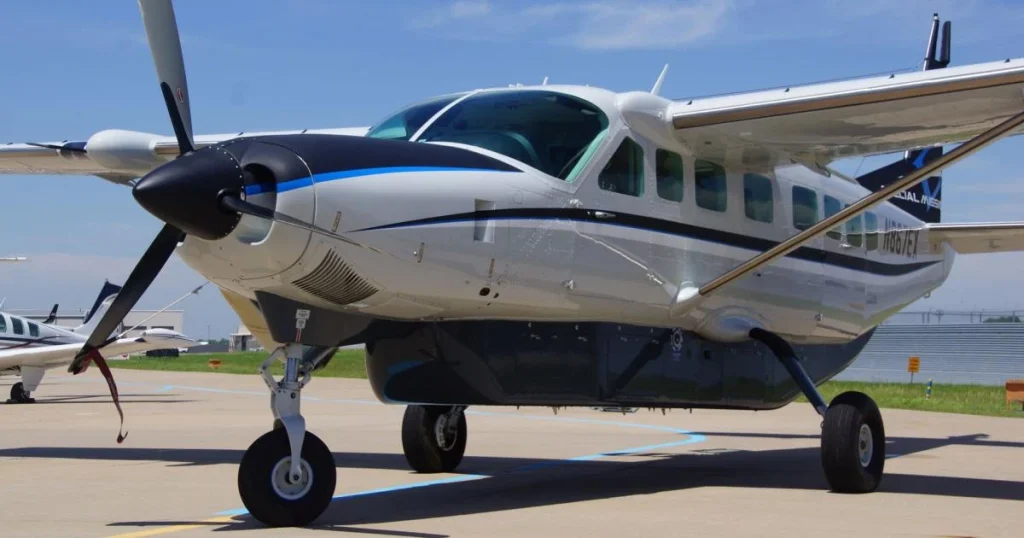
Cessna Grand Caravan EX
The Cessna Grand Caravan EX is renowned for its proven dependability and versatility. Designed to handle high payloads, short runways, and challenging environments, this single-engine turboprop offers a maximum range of 912 nautical miles, and a maximum cruise speed of 185 ktas. The aircraft is perfect for operators seeking efficiency and simplicity, with low direct operating costs and robust factory support. Whether flying into remote areas with unpaved runways or performing humanitarian missions, the Grand Caravan EX is a popular choice for diverse operations.
In environments where road access is limited or where airstrips are nothing more than dirt runways, the aircraft’s versatility has made it an essential tool in noble tasks, delivering essential supplies to remote regions and helping with disaster relief efforts. One well-known example is the use of the Grand Caravan EX to save Africa’s wildlife, with the aircraft being integral to anti-poaching operations and wildlife conservation missions.
Textron Aviation’s commitment to customer service, and industry-leading support ensures that the Grand Caravan EX remains an unbeatable investment for those looking to maximise their return in aviation.
Cabin Experience
The aircraft’s spacious interior can be configured in several seating arrangements, from a 10-passenger commuter setup to a 14-passenger arrangement. The cabin is known for its simplicity and functionality. The cabin dimensions provide plenty of room for passengers or cargo, measuring 21 feet 4 inches in length, with a width of 64 inches and height of 54 inches. The aircraft also features a baggage capacity of 1,410 lbs, ensuring ample storage for personal or operational needs.
Alternative setups such as club seating for more luxurious passenger experiences are also available. Operators can choose between several interior packages, such as Canyon, Savanna, and Oasis, which feature distinct colour palettes for different styles, providing a blend of warmth and sophistication and ensuring that the aircraft interior matches the operator’s aesthetic or functional requirements.
Additionally, the aircraft’s large windows provide plenty of natural light, creating an airy, comfortable atmosphere, ideal for long flights. The ample baggage capacity of 143 cubic feet ensures that passengers can travel with all necessary cargo, making the aircraft suitable for both commercial and humanitarian operations.
Technology (Engine and Avionics)
At the heart of the Grand Caravan EX is the powerful Pratt & Whitney Canada PT6A-140 engine, delivering 867 shaft horsepower (shp). This engine provides the aircraft with exceptional climb rates, performance in hot and high conditions, and reliability in harsh environments. The robust design of the PT6A-140 engine is integral to the Caravan’s renowned dependability, ensuring that the aircraft can take on challenging tasks with ease.
The cockpit of the aircraft is powered by the Garmin G1000 NXi avionics suite, offering cutting-edge technology to enhance pilot situational awareness and safety. This system includes Primary Flight Displays (PFDs), a Multifunction Display (MFD), and features like Garmin FliteCharts, SafeTaxi, and terrain awareness systems. The avionics suite is designed to be intuitive, reducing pilot workload and improving operational efficiency. Its advanced graphical interface and high-resolution displays make managing flight data seamless, offering enhanced situational awareness through better terrain, obstacle, and traffic data. Optional features like Bluetooth capability, Datalink, and wireless databaseupload further enhance the cockpit’s functionality.
Performance
The aircraft is engineered to excel in a variety of demanding environments. Its takeoff ground roll of just 1,399 feet and landing ground roll of 1,004 feet make it ideal for short, rough runways, providing access to remote or undeveloped airstrips that larger aircraft cannot handle. Whether operating in mountainous terrains, tropical islands, or desert environments, the aircraft robust construction and versatile capabilities make it the perfect aircraft for regions where infrastructure is limited.
This aircraft offers excellent endurance, perfect for regional operations, island-hopping flights, or remote humanitarian assignments. Its powerful engine allows for a maximum climb rate of 1,275 feet per minute and a maximum operating altitude of 25,000 feet, offering operational flexibility in diverse weather and terrain conditions.
The 185 ktas maximum cruise speed ensures efficient transit times, while the 3,532 lbs useful load makes the aircraft a reliable choice for cargo operations. Whether flying passengers or transporting goods, the aircraft consistently delivers strong performance in the toughest conditions, making it a key player in regions with limited infrastructure.
Specifications
| Feature | Specification |
|---|---|
| Engine | Pratt & Whitney Canada PT6A-140 |
| Power Output | 867 shp |
| Maximum Passenger Capacity | 10–14 |
| Maximum Cruise Speed | 185 ktas |
| Maximum Range | 912 nm |
| Maximum Climb Rate | 1,275 ft/min |
| Maximum Operating Altitude | 25,000 ft |
| Takeoff Ground Roll | 1,399 ft |
| Landing Ground Roll | 1,004 ft |
| Useful Load | 3,532 lb |
| Maximum Payload | 3,190 lb |
| Cabin Dimensions (L × W × H) | 21 ft 4 in × 64 in × 54 in |
| Wingspan | 52 ft 1 in |
| Length | 41 ft 7 in |
| Height | 15 ft 6 in |
Takeaways
The Cessna Grand Caravan EX is dependable utility aircraft, capable of excelling in a wide range of environments and missions. With its time-tested Pratt & Whitney PT6A-140 engine, robust avionics, and flexible cabin configuration, it is ideal for operators needing a reliable workhorse that can handle heavy payloads, rough terrain, and remote locations. Whether serving regional airlines, cargo carriers, or humanitarian projects, the aircraft stands out for its economy, simplicity, and versatility. Its low operating costs and proven reliability make it a valuable asset for any fleet, especially a smart choice for regional airlines and charter operators. It is often used for commuter flights, cargo operations, and even tourism—especially in areas with difficult-to-reach locations, such as island-hopping routes or safari tours. Whether it’s flying passengers, delivering critical supplies to remote locations, or supporting conservation efforts, the aircraft proves time and again why it’s known as the ultimate utility vehicle in the aviation world.
The aircraft has earned a reputation for being a reliable revenue generator. Its ability to carry up to 14 passengers or a significant cargo load (with a useful load of 3,532 lbs) makes it a solid investment for operators looking to maximise profitability in passenger and cargo operations.