











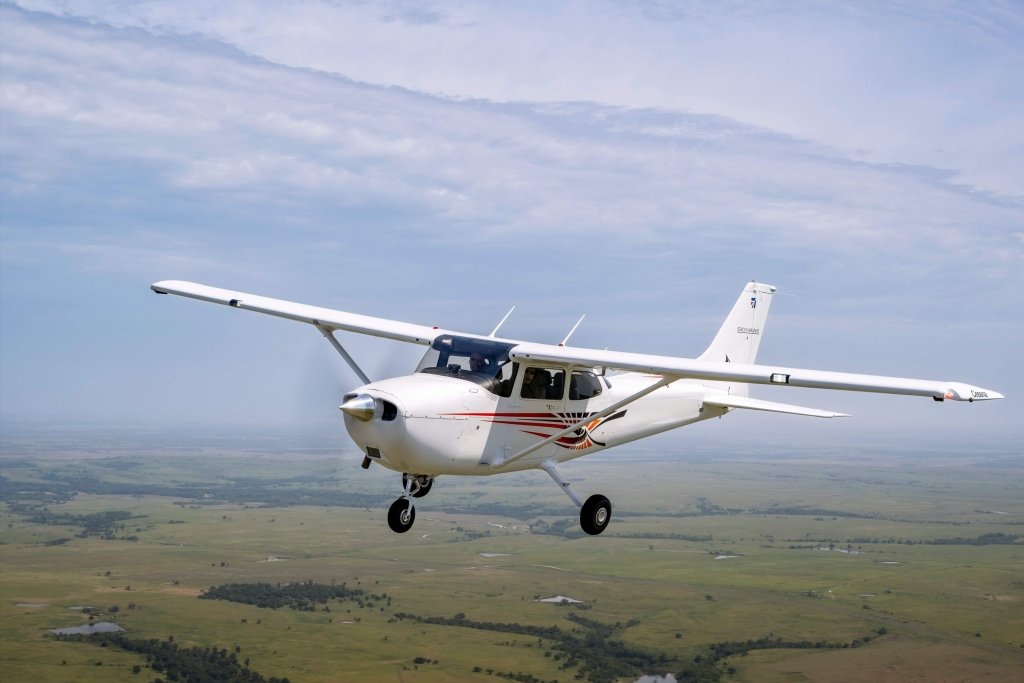
Cessna Skyhawk
Known for its robust design, high wing configuration, and dependable handling, the Cessna Skyhawk is celebrated as an ideal training aircraft while also appealing to a wide range of private pilots and aviation enthusiasts. Known formally as the Cessna 172 Skyhawk, it’s celebrated for its dependability, ease of handling, and affordability. Since its first production in 1955, over 44,000 units have been produced with its numerous iterations and advancements maintaining its reputation for delivering a balanced blend of performance and accessibility. Today’s Skyhawk provides a well-rounded experience suitable for a variety of flying conditions, staying technologically relevant in a changing aviation landscape.
With a longstanding reputation for ease of handling, fuel efficiency, and minimal maintenance requirements, the Cessna Skyhawk has become a global standard, particularly in flight training. The large, supportive network of certified mechanics and parts suppliers ensures the aircraft’s longevity. As a result, many Skyhawks in active service today date back decades, and Cessna’s commitment to supporting older models means that new and returning pilots can easily find affordable parts and qualified technicians. This enduring legacy has only reinforced the Skyhawk’s position in the market, providing long-term value and making it one of the best investments in the aviation sector.
Cabin Experience
The aircraft’s cabin layout is straightforward and functional, providing a comfortable environment for up to four occupants. Seats with supportive cushioning and ergonomic positioning reduce fatigue on longer flights. High-quality upholstery options allow for an enhanced aesthetic and durability, tailored to stand up to the heavy use that training planes often experience.
The spacious windows provide excellent visibility, allowing students to gain a clear view of their surroundings and making sightseeing flights enjoyable for passengers. Standard controls are easily within reach, with a well-organised instrument panel that contributes to the aircraft’s reputation as a user-friendly option. Optional features include adjustable seating, additional legroom, headroom, storage space, USB charging ports, and even climate control in select models, providing comfort and modern conveniences during flight.
Technology (Engine and Avionics)
The aircraft is equipped with a Lycoming IO-360-L2A engine, a 180-horsepower, fuel-injected engine known for its reliability and efficiency. This four-cylinder engine offers sufficient power while remaining economical, a significant benefit for flight schools and private owners alike. The Skyhawk’s high-wing design allows for a stable and forgiving flight experience. The fixed tricycle landing gear ensures durability and requires minimal maintenance, especially on rougher runways or grassy fields often found at regional airports.
The aircraft comes equipped with the Garmin G1000 NXi integrated flight deck. This advanced avionics system transforms the Skyhawk into a sophisticated and technologically modern aircraft, enabling students and solo pilots to gain experience with industry-leading tools. Key components of the Garmin G1000 NXi include Synthetic Vision Technology (SVT), which provides a 3D depiction of terrain, obstacles, and other aircraft, contributing significantly to safety by enhancing situational awareness, especially in poor weather conditions. The other features include Traffic Advisory System (TAS) and ADS-B (Automatic Dependent Surveillance–Broadcast) In and Out, which offer real-time traffic alerts, providing notifications about other aircraft and potential flight path conflicts in busy airspaces. The aircraft’s Terrain Awareness and Warning System (TAWS) alerts pilots to potential terrain conflicts, a feature that’s particularly useful in low-visibility or night-time operations. Its Integrated Autopilot System provides hands-free flying capabilities, with altitude preselect and automatic flight path management, significantly reducing pilot workload, especially during longer flights or training sessions.
The Garmin G1000 NXi also includes wireless connectivity through Garmin Connext, enabling seamless data transfer between tablets, mobile devices, and the flight deck for added convenience and efficient pre-flight preparation. Overall, these advanced avionics systems offer an intuitive and comprehensive flight experience, making it easier for new pilots to adapt to and for experienced pilots to manage complex tasks in the cockpit.
Performance
The aircraft is highly regarded for its dependable performance, with specifications that suit both training and personal flying. It offers a cruise speed of 124 KTAS (knots true airspeed) and a maximum range of 640 nautical miles, making it suitable for regional flights, scenic excursions, and training sorties. Its useful load of 895 pounds allows it to handle a reasonable amount of weight in terms of both passengers and baggage, accommodating diverse flying requirements.
The aircraft’s maximum operating altitude is 14,000 feet, which allows it to safely fly over most regional terrain while providing enough room for stable descent and manoeuvring. Its climb rate of 730 feet per minute offers solid ascent capabilities, providing a quick rise to altitude without excessive fuel consumption. Additionally, the Skyhawk’s fuel capacity of 56 gallons allows for extended flights, which is particularly valuable for long-haul journeys, cross-country trips or and even bush flying, with modifications.
Specifications
| Dimension | Value |
| Length | 27 ft 2 in (8.28 m) |
| Height | 8 ft 11 in (2.72 m) |
| Wingspan | 36 ft 1 in (11.00 m) |
| Wing Area | 174 sq ft (16.2 sq m) |
| Seating Capacity | 4 |
| Useful Load | 895 lbs (406 kg) |
| Maximum Takeoff Weight | 2,550 lbs (1,157 kg) |
| Maximum Cruise Speed | 124 KTAS (230 km/h) |
| Range | 640 nm (1,185 km) |
| Maximum Climb Rate | 730 ft/min (222 m/min) |
| Maximum Operating Altitude | 14,000 ft (4,267 m) |
| Fuel Capacity | 56 gallons (212 L) |
| Engine | Lycoming IO-360-L2A |
| Engine Power | 180 hp |
Takeaways
In its more than six decades of service, the Cessna Skyhawk has served as the backbone of flight training organisations worldwide, often described as the “gold standard” for single-engine training aircraft. Whether used for training, leisure, sightseeing, personal travel or transport, the Cessna Skyhawk continues to embody the principles of quality, reliability, and ease of use.
The aircraft’s balance of power and simplicity ensures that pilots-in-training can focus on fundamental skills without being overwhelmed by complex systems. The simplicity of its design—an uncomplicated powerplant, straightforward systems, and limited reliance on hydraulic systems—further lowers maintenance requirements. This makes the Skyhawk both economical and reliable, traits valued by operators in training environments and remote areas where maintenance facilities might be limited. The G1000 NXi enables features like electronic flight bags, which streamline pre-flight and in-flight planning. The Skyhawk’s adaptability has allowed it to remain popular across changing aviation needs, proving its value for both beginner and experienced pilots.