














Table of contents
Cessna’s Turbo Stationair HD
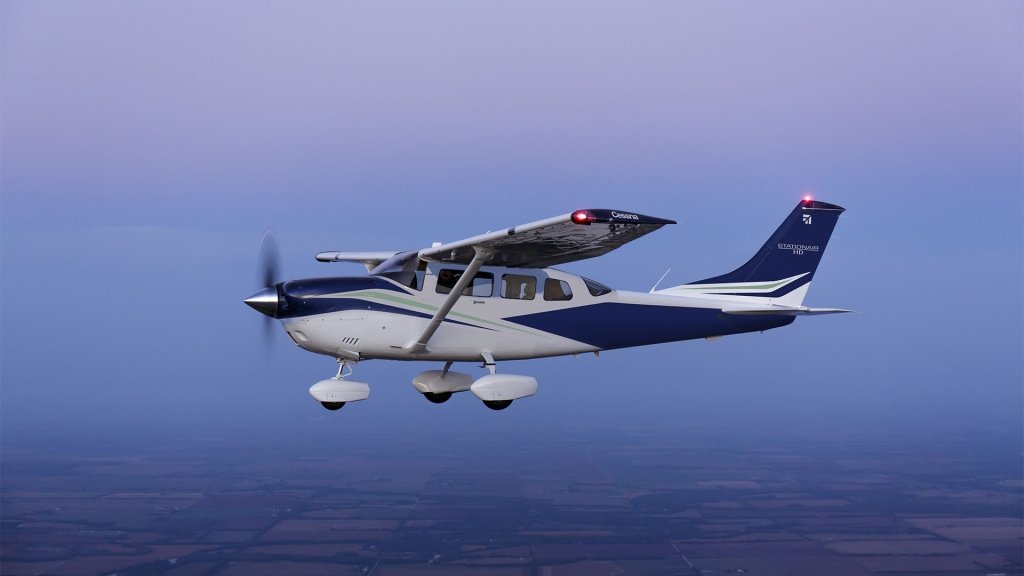
The Cessna Turbo Stationair HD stands as one of the most versatile piston-powered aircraft in Cessna’s line-up. Known for its ability to adapt to an extensive range of flight missions, it serves as a reliable choice for personal travel, corporate charters, cargo transport, and even medical evacuations. Its engineering prioritises both reliability and adaptability, meeting the demands of both private owners and commercial operators in remote or challenging environments. This flexibility is enhanced by Cessna’s integration of advanced technology and structural resilience, which allows the aircraft to excel in both rural and urban aviation settings.
The aircraft’s high-wing design is appreciated by both pilots and passengers. Equipped with a turbocharged Lycoming TIO-540-AJ1A engine, the aircraft delivers powerful performance even at high altitudes, handling rugged terrain and harsh environments where other light aircraft might struggle. It operates effectively on unimproved runways, catering to pilots operating in locations with limited infrastructure.
Inside the Stationair HD
The aircraft offers a spacious, highly adaptable cabin environment. It seats up to six passengers, with each seat positioned for maximum visibility through large windows. This layout not only enhances passenger comfort but also ensures safety and accessibility. Cessna’s engineers have focused on modularity within the cabin, allowing operators to quickly reconfigure the space depending on mission requirements—an essential feature for flights that may involve both passengers and substantial cargo.
For cargo missions, the rear seats can be removed to increase storage space, allowing operators to transport larger or heavier items without compromising the aircraft’s centre of gravity. With a maximum payload of 1,376 pounds, the aircraft is more than capable of handling substantial loads, from medical equipment and supplies to remote expedition gear. The cabin layout is conducive to a range of specialised missions, such as aerial surveying, photography, and search and rescue operations.
Technology (Engine and Avionics)
The Turbo Stationair HD’s core power lies in its turbocharged Lycoming TIO-540-AJ1A engine, delivering 310 horsepower that maintains efficient, high-performance flight in various conditions. This turbocharged engine sustains its power even at high altitudes, ensuring strong performance in mountainous areas where standard engines might lose efficiency. The engine design is complemented by a McCauley three-blade constant-speed propeller, which optimises thrust while maintaining fuel efficiency.
One of the standout aspects of the Turbo Stationair HD’s design is its ability to take off and land on shorter runways—a critical advantage for operators working in remote areas. The aircraft’s short-field performance is attributed to its high power-to-weight ratio and robust landing gear, allowing takeoffs within a 1,950-foot distance and landings on strips as short as 735 feet. This capability also enhances its appeal for operators needing access to underdeveloped areas with limited infrastructure.
At the heart of the Turbo Stationair HD’s operational safety and navigation lies the Garmin G1000 NXi avionics suite, which provides pilots with enhanced situational awareness and intuitive control. This suite features two large 10.4-inch displays offering high-resolution visuals, quick processing speeds, and comprehensive flight data.
The avionics system incorporates several advanced technologies, enhancing situational awareness and reducing pilot workload. Synthetic Vision Technology (SVT) is central to this setup, providing pilots with 3D imagery of the surrounding terrain, obstacles, and runways. This feature enables safe navigation even in low-visibility conditions, improving overall safety. Another key tool, SurfaceWatch, aids in runway safety by helping pilots maintain accurate taxiing and takeoff positions, reducing the risk of runway incursions.
Autopilot integration further supports pilots by simplifying controls on longer flights, especially in challenging weather or complex flight conditions. The system also includes ADS-B In and Out capabilities, ensuring compliance with airspace regulations and enhancing in-flight traffic awareness, which helps minimise collision risks. Additionally, wireless database updates allow pilots real-time access to navigational databases, ensuring they’re informed on any airspace changes or updated operational details.
This avionics suite not only enhances pilot confidence but also simplifies the operational aspects of flying in remote regions or demanding weather conditions, making the Turbo Stationair HD a more efficient aircraft for longer missions.
Performance
The aircraft is built with a rugged, practical design aimed at multi-mission capability. The high-wing configuration not only provides excellent visibility but also enhances in-flight stability and enables easy loading. Built with durability in mind, the aircraft’s structure is crafted from corrosion-resistant materials, enabling it to withstand challenging climates and environmental conditions, particularly beneficial for operators in coastal or high-humidity regions.
Landing gear construction is specifically designed to handle rough or unpaved runways, a key factor for operators in rural or less-developed areas where airstrips may be limited. The aircraft’s robust three-blade McCauley constant-speed propeller contributes to efficient performance and reduces vibration, enabling it to be an effective solution for longer, continuous missions or for short hops where versatility is essential. Additionally, its 36-foot wingspan contributes to stability and lift, improving takeoff and landing performance on shorter runways.
The Turbo Stationair HD is engineered with mission versatility in mind, a feature appreciated by governmental, humanitarian, and corporate operators. Its modular cabin, impressive payload capacity, and high-performance specifications make this aircraft exceptionally versatile across various missions. For aerial surveying, it is well-suited for environmental monitoring, agricultural assessments, mapping, and aerial photography, benefiting from a stable high-wing design and a layout that accommodates specialised equipment. For medical evacuations, the aircraft’s spacious and reconfigurable cabin allows it to transport patients along with necessary medical personnel and equipment, making it an efficient option for emergency flights in remote or isolated areas.
In cargo transport roles, the aircraft’s removable rear seats and generous payload capacity make it highly capable of handling large or irregularly shaped items, offering practical solutions for transporting diverse goods. Finally, for remote passenger transport, the aircraft’s design enables operation on shorter, unimproved runways and effective performance at higher altitudes, providing essential connectivity to regions otherwise difficult to reach by other aircraft. This flexibility and adaptability make it a reliable and indispensable tool for varied and challenging missions.
Specifications
| Feature | Value |
| Length | 28 ft 3 in (8.61 m) |
| Height | 9 ft 4 in (2.84 m) |
| Wingspan | 36 ft 0 in (10.97 m) |
| Cabin Length | 12 ft 11 in (3.94 m) |
| Cabin Width | 4 ft 2 in (1.27 m) |
| Cabin Height | 4 ft 3 in (1.29 m) |
| Maximum Passengers | 6 |
| Max Payload | 1,376 lbs (624 kg) |
| Max Takeoff Weight | 3,800 lbs (1,724 kg) |
| Fuel Capacity | 87 gallons (329 litres) |
| Engine | Lycoming TIO-540-AJ1A |
| Engine Power | 310 hp |
| Maximum Cruise Speed | 161 ktas (298 km/h) |
| Range | 703 nm (1,302 km) |
| Takeoff Distance | 1,950 ft (594 m) |
| Landing Roll | 735 ft (224 m) |
| Maximum Altitude | 26,000 ft (7,924 m) |
Takeaways
Cessna’s Turbo Stationair HD embodies a multi-mission, high-performance aircraft designed to meet varied operational needs, from commercial charters to emergency and humanitarian missions. Its robust build, adaptable interior, and advanced avionics make it well-suited for operators requiring reliability, flexibility, and efficient performance across different terrains and mission profiles. Whether flying over mountains, landing on unpaved strips, or navigating complex airspace, the Cessna Turbo Stationair HD stands out as a dependable, high-capacity option in the light aircraft segment.