








- While Aero India 2025 remained heavily focused on military aviation, the civil side featured emerging drone technologies, upgraded helicopters, and growing participation from OEMs like Boeing, Airbus, and HAL.
- Civilian drones, cargo UAVs, and multi-role helicopters showcased applications in agriculture, disaster relief, logistics, and regional connectivity, reflecting the expanding role of civil aviation in India’s aerospace ecosystem.
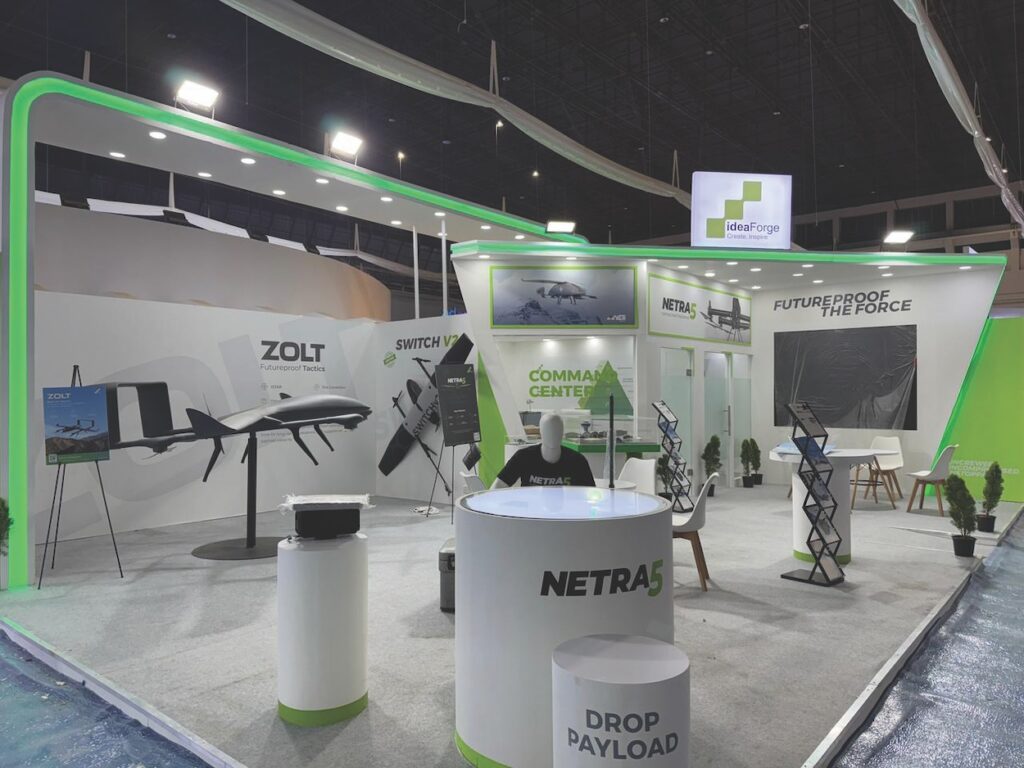
Dominated by Indian and multinational biggies showcasing their prowess in military aviation, equipment and services, the recently concluded Aero India 2025 stuck to its legacy as the country’s premier aerospace exposition. But on the civil aviation side, the show offered an opportunity for smaller players to display their drones, demonstrate their innovations, network and push for collaborations. And then there were the ALHs and Dornier 228s.
Echoing the trend over the last four airshows, drone startups did showcase a definite level-up. For instance, a Bengaluru-based startup, Scandron unveiled its CargoMax 20KHC, claiming it to be India’s most powerful cargo drone with a 200kg payload capacity. Although the startup offered it as an option for the armed forces as a reliable aerial logistics platform for last-mile deliveries, the thrust was also on civilian operations.
The drone was showcased as capable of last-mile deliveries at altitudes exceeding 5,500 metres, supporting both military and civilian demands in remote regions. It was also presented as a platform designed to enhance mid-mile transport between warehouses, reducing delivery times and increasing efficiency. To boost disaster relief and emergency response, the drone could be equipped for heavy-lifting operations, delivering emergency aid to disaster-stricken regions.
Drones as a service
Offering drone as a service (DaaS), HILD Defence and Aerospace demonstrated its UAVs amped for photography and videography, maximised for surveillance. They would double up as agri-drones with up to 30 minutes of endurance and variable camera configurations. The survey drones built for mapping had endurance exceeding one hour. Many of these were offered in quad and hexa configurations. Among its civil applications were asset mapping, monitoring highway construction and maintenance, railway and mining survey and monitoring.
Flying in formation at the airshow, the three Dornier 228s did have the Malaysians in mind as India has offered this domestically produced aircraft for their Coast Guard. Also included in the offer are maintenance and technology transfer. But from a civil aviation perspective too, the aircraft has big potential since over 30 airlines worldwide are already flying Dorniers.
The aircraft has already made a mark in the country’s regional aviation market through Alliance Air and Vayudoot. Manufactured by HAL, the upgraded version of the Dornier 228 was relaunched as the Dornier 228 NG (Next Generation) featuring significant improvements over its previous model. Of the 350-plus design modifications, a standout feature is the adoption of the UNS-1 glass cockpit which allows for flight under instrument flight rules (IFR) with a single pilot and visual flight rules (VFR). This is a first for aircraft in its category.
Dornier 228 NG’s civilian potential
To boost versatility, the Dornier 228 NG’s cockpit is equipped with four large screens that include two primary flight displays and two multifunction displays. These display all the essential flight data. The comprehensive navigation system features VHF Omnidirectional Range (VOR), Distance Measuring Equipment (DME), Automatic Direction Finder (ADF), radar altimeter, Global Positioning System (GPS), air data computer, and a flight management system.
The Dorniers were the mainstay of regional airline Vayudoot to fly thousands of passengers from 1985 to the early 1990s. The network had about 100 airports across India. About half of Vayudoot’s 21-aircraft fleet were Dornier-228s. However, multiple engine failure incidents forced a grounding of the aircraft, which were then all German-made. But the Do-228s on commercial jaunts in Arunachal Pradesh and Assam for Alliance Air were all made by HAL.
Alliance Air had signed an agreement with HAL to lease two 17-seater Dornier 228 aircraft in September 2021. The first aircraft was delivered to the airline in April 2022.
ALH-NG in Pawan Hans colours
Standing out in an area dominated by military colours at the airshow was the Advanced Light Helicopter Dhruv-(ALH)-NG which actually made its maiden entry. The helicopter wore the Pawan Hans colours, demonstrating the aircraft’s potential to be more impactful.
With seating capacity customisable from 6 to 14, the copter weighs 6,500kg. It has a maximum cruise speed of 250kmph and can also be used for VIP travel, offshore operations, medical services including carrying stretchers, disaster and flood management, rescue and search operations and exploring and mining operations. The upgraded Dhruv has a passenger address system, passenger headset, area navigation system, terrain awareness warning system, traffic collision avoidance system, satellite flight following system and automatic dependent surveillance-broadcast.
Pawan Hans had signed a contract with HAL to supply four of these helicopters to the Oil and Natural Gas Corporation (ONGC). The helicopters are to be used to transport ONGC personnel to and from offshore duty locations. The contract is worth over ₹2,141 crore and is for 10 years. Scheduled to go into service this year, the static display at the India pavilion of the airshow was timed to send a message of availability to other firms and foreign players visiting the airshow.
For HAL, it was equally critical to show that the Dhruv was still in the market for multiple civilian and military segments. The helicopter had come under a cloud after the January 5 crash at Porbandar in Gujarat. The accident killed three personnel, including the two pilots onboard. It was the 23rd major accident for the helicopter since its launch 23 years ago. The accidents took place during operational missions, test flights, training sorties, and search and rescue missions.
The Dhruv in flashy Sarang colours has always been a crowd-puller at Aero India, demonstrating its aerial manoeuvring prowess. This time, the Porbandar accident grounded the entire fleet, and its absence was glaring. In October 2024, an Air Force ALH made a forced landing in a swamp in Bihar during flood relief operations due to engine failure. However, all four crew members were safely rescued. Just a month earlier, a Coast Guard ALH Dhruv Mk III had crashed into the Arabian Sea during a medical evacuation mission, killing two.
Boeing upbeat about Indian market
Away from the limelight at the airshow, aviation major Boeing had its senior officials for Commercial Airplanes make some promising projections about India. According to Ryan Weir, Vice President of Commercial Sales and Marketing for India & South Asia, India’s commercial fleet would nearly quadruple by 2041 from its 2019 size and account for more than 90% of South Asia’s aeroplane deliveries. This would mean an addition of over 2,500 new aircraft to the fleet of multiple airlines operating in the country.
To cater to this fast-growing market, he underscored the region’s requirement of 40,000 pilots, an equal number of maintenance technicians and 49,000 cabin crew over the next two decades. Fuelling this demand would be the projected expansion of India’s cargo fleet from 15 to 80 aeroplanes by 2042, he said, citing data from Boeing’s 2024 Pilot and Technician Outlook.
His message was this: Boeing’s presence exceeding 80 years in India with a sound understanding of the dynamics of this market made it the right partner to collaborate and address the demands. Boeing, he recalled, has made extensive investments in supply chain partnerships, engineering, R&D, training, coproduction and co-development. Besides, the company has proposed an investment of $100 million to develop infrastructure and projects designed to train Indian pilots. Advanced full-flight simulators and competency-based training programmes are all part of this investment.
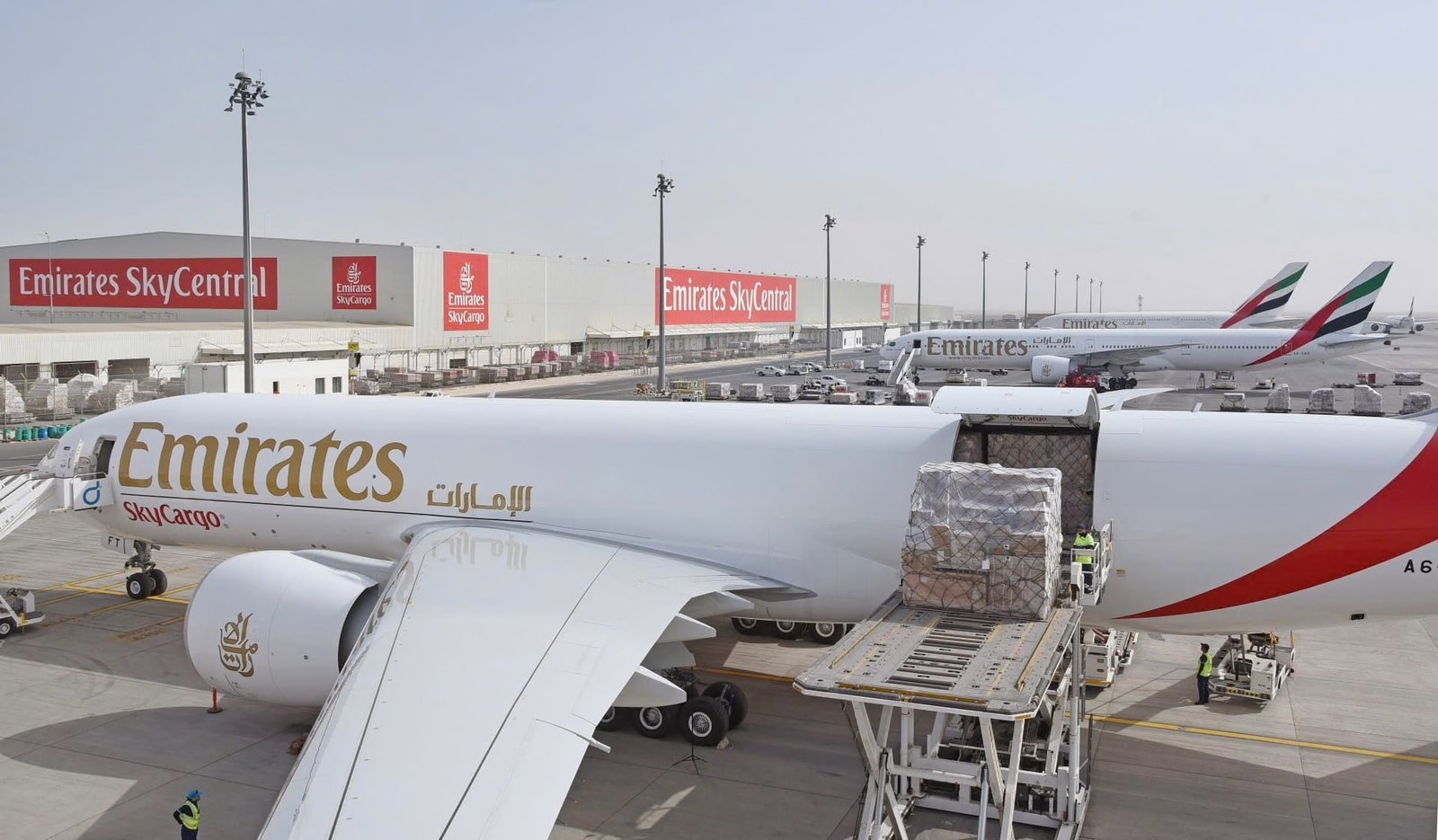
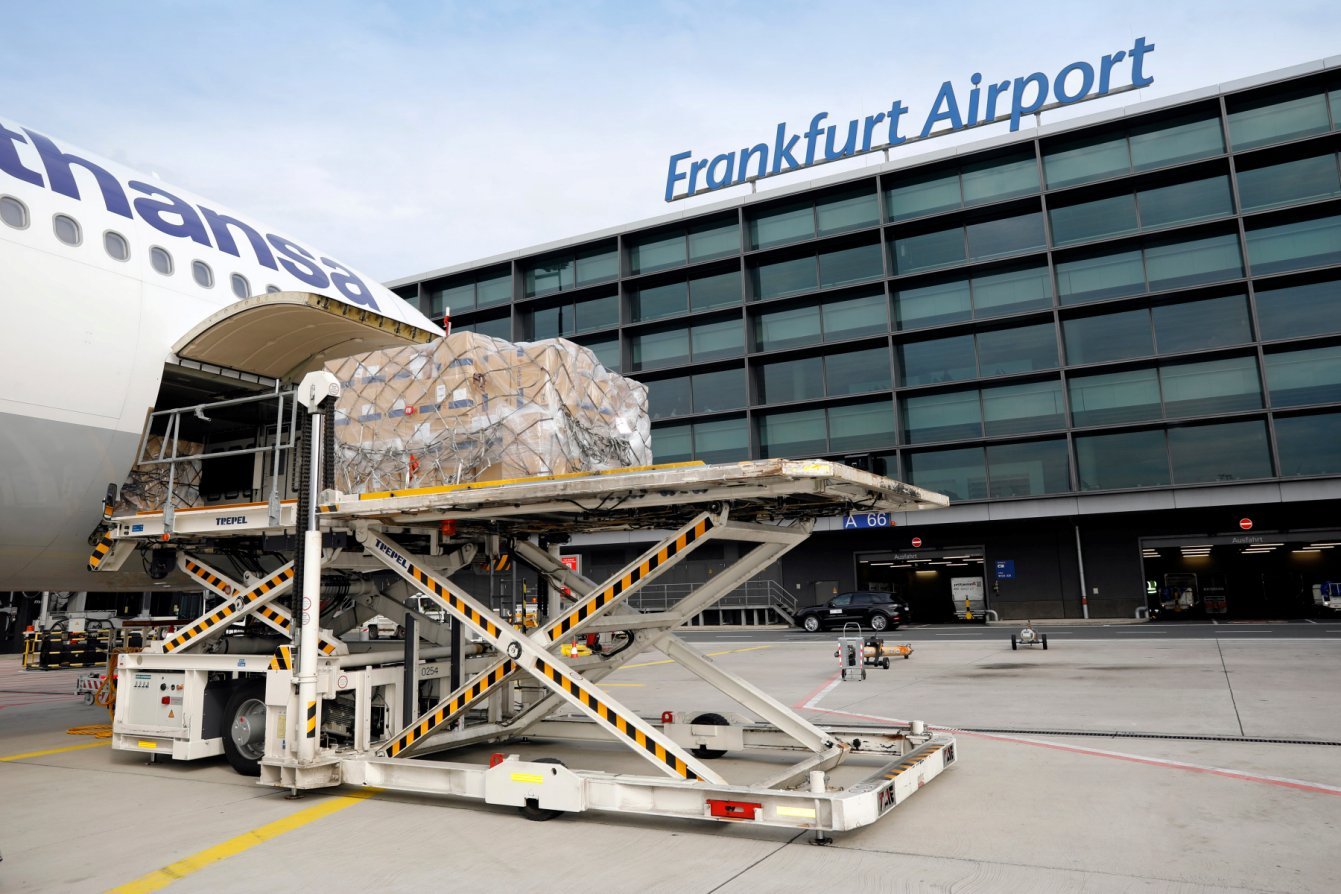
Both Boeing and Airbus are also eyeing India’s growing air cargo requirements. It is estimated that India’s domestic air cargo will grow 6.9 per cent per year over the next 20 years. The expanding e-commerce sector, high-end electronics manufacturing and semiconductors are all fuelling this growth. The signs are already there, with the entry of a range of freighters and these include the Boeing 737-800 Boeing Converted Freighter.
Airbus, riding high on big orders from Air India and IndiGo, had brought its A400M Atlas which stood out as the largest aircraft stationed at the airshow. The tactical and strategic military transport aircraft is operated by the German Air Force (Luftwaffe).
In December 2024, Air India placed an order to purchase 100 more Airbus aircraft, including wide-body A350 and 90 narrow-body A320 Family aircraft. These are in addition to the firm orders of 470 aircraft that Air India had placed with Airbus and Boeing in 2023. IndiGo had in 2023 made civil aviation history by placing an order for 500 aircraft from Airbus. Last year, the country’s largest low-cost airline ordered 30 more aeroplanes.
Airbus helicopters
On the helicopter front, Airbus had non-scheduled operator Chipsan Aviation announce its addition of two H160 choppers for multi-mission roles this year. The company founders said Chipsan would be the first operator in India to bring the helicopter for commercial operations. The aircraft are expected to be inducted into its service connecting Lakshadweep Island with the mainland, besides VIP and corporate requirements.
Back in the drone arena at the airshow, Aksi Aerospace Group showcased its Varuna agricultural drone featuring a unique design with a water tank. “Using the commonly available tank as pesticide storage, this drone is capable of spraying 10 litres of pesticide in an acre in less than four minutes. This also helps the farmer stay away from inhalation of the toxic chemicals. The drone is being produced for the local markets, and we have now started getting export orders,” informed Pankaj Akula, managing director of the Hyderabad-based firm.
Currently, the market for agricultural drones is big and growing, said Pankaj. But there are challenges. “The average farm holding of the Indian farmer is roughly 5 to 10 acres. So, the cost of this drone does not benefit a farmer with small plots. We are trying to cooperate with them through larger farm produce organisations. Groups of farmers can then use it as per a spray per acre basis so that they can get better efficiency at a lower price,” he explained.
LUH, a civil variant in the offing
Although the Light Utility Helicopter (LUH) developed by HAL made a mark with its agility and powerful manoeuvres at the air show, the distinctly military showcasing had an underlying civilian side. Produced at HAL’s Tumakuru facility in Karnataka, the helicopter’s successful testing in the Himalayas has opened up multiple avenues, which HAL is keen to leverage.
Currently, the helicopter is positioned to cater to the Indian army and air force’s need to induct 394 light copters and replace the ageing Cheetahs and Chetaks. While 126 LUHs are lined up for the army, 61 are to be inducted into the IAF. But beyond these obvious military dimensions, the LUH’s civil variant is clearly on the HAL agenda, as articulated by its top brass.
On HAL’s horizon are 600 plus LUHs that could be operating in the civil sector. Initial customers would be Indian, with likely orders from sectors such as tourism, air ambulance and utility. The helicopter is also customisable to operate as a six to seven-seater aircraft for VIP transport. An estimated 350 civil helicopters are flying in India today, and the entry of a purely Indian player could change the dynamics, considering the vast untapped potential of this sector.
However, HAL could face stiff competition from established global players in the market. The focus would then shift to competitive operating and maintenance costs. The development process for the civil variant of LUH is already underway. HAL has proposed to get the certification from the Directorate General Civil Aviation (DGCA) by December 2025.
Also, on HAL’s radar for the Aero India showcase was the Indian Multi-Role Helicopter (IMRH), a medium-lift helicopter currently under development for the Indian Armed Forces. Designed for multiple roles, air assault, air-attack, anti-submarine, anti-surface, military transport and VIP transport roles, the IMRH has also a civil variant in the works. IMRH has the potential to replace all the current Mil Mi-17 and Mil Mi-8 helicopters across the Indian Armed Forces.
With drones with multiple civilian applications in agriculture, disaster management, traffic oversight and cargo; helicopters capable of doubling up as civilian platforms; and aviation majors Boeing and Airbus making some noises on their markets; Aero India 2025 had it say on civil aviation though the scale was muted. However, business jets, which were conspicuously present in many of the previous airshows, gave this edition a miss.