





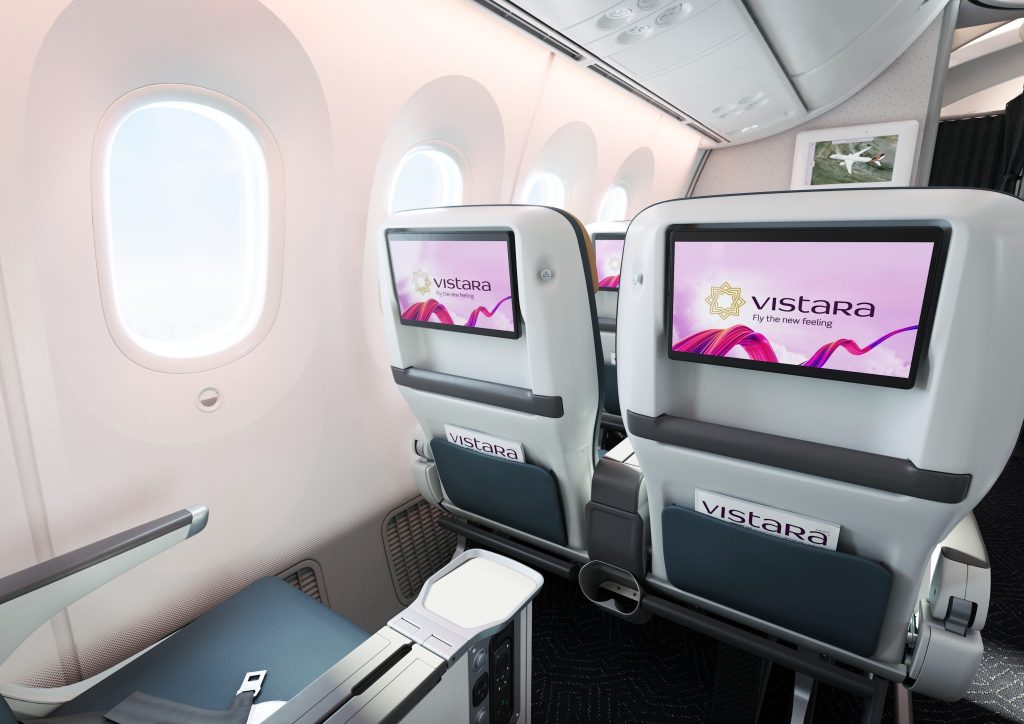
The need for air travel in India is continuing to grow and is bringing with it a change in passenger preferences for an improved in-flight experience. Buoyed by this growth and with the intention to acquire a larger section of travellers willing to pay for a more premium experience, Indian airlines such as Air India and IndiGo are now placing a greater emphasis on a far improved in-flight experience as compared to before.
According to India’s aviation regulator, the Directorate General of Civil Aviation (DGCA), “Passengers carried by domestic airlines during January – July 2024 were 923.35 lakhs as against 881.94 lakhs during the corresponding period of the previous year, thereby registering an annual growth of 4.70% and monthly growth of 7.33 %.” A growing number of these passengers are now expecting more premium options when it comes to seating, In-Flight Entertainment (IFE) and value-added services.
To meet these requirements, Low-Cost Carriers (LCC) are moving to a hybrid value carrier model with Business Class equivalent seating, while Full-Service Carriers are offering an improved cabin experience with better seats, improved IFE and a wider bouquet of value-added services.
An example of an LCC making this shift is Air India Express, which launched ‘Xpress Biz’ in March of this year, a Business Class equivalent offering on its new Boeing 737-8 aircraft. These seats offer a pitch of up to 58 inches. Air India Express is now inducting nearly four new aircraft every month, which will be configured to offer 4-8 Biz seats. It has inducted more than 30 new aircraft inducted since the brand’s launch in October 2023.
IndiGo has also launched a new Business Class offering, while Air India has dramatically upgraded its cabin experience across its fleet of single-aisle and twin-aisle jetliners.
IndiGo Eyes Business Class Travellers
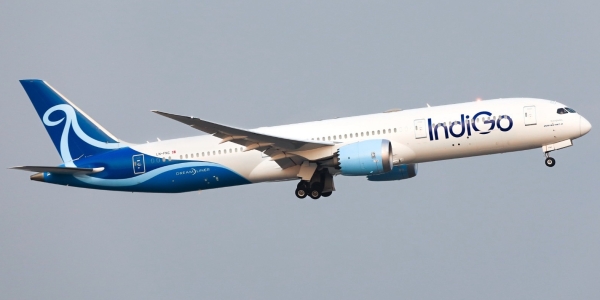
IndiGo, which currently has a 60.8% share of the domestic market, is also amongst the fastest-growing low-cost carriers in the world. Its formula for success has been simple but hard to replicate: affordable fares, on-time flights and a hassle-free travel experience across an unparalleled domestic network. It has built the most extensive network of domestic flight operations over the past 18 years and today connects 88 domestic and 34 international destinations across India. This August, IndiGo announced details of ‘IndiGo Stretch’, which it says will be a tailor-made Business Class offering to be made available on some of its busiest routes and those that have a large number of business travellers.
‘IndiGo is embarking on a new path of its incredible growth story by introducing a tailor-made business product on the nation’s busiest business routes. With India’s soaring Economy and the evolving aspirations of the Indian society, we believe it’s time for IndiGo to redefine business class in India,’ Pieter Elbers, Chief Executive Officer of IndiGo, said while launching the new offering.
IndiGo will launch its new Business Class product in the lucrative Delhi-Mumbai sector starting mid-November. It will be scaled up to be available on 12 routes by the end of 2025, which will be Metro-to-Metro routes. IndiGo Stretch will feature 12 seats in a 2-2 configuration, with a spacious pitch of 38 inches and a width of 21.3 inches, along with specially curated meal options from Oberoi Catering Services. IndiGo Stretch will also offer complimentary benefits such as no convenience fee, a specially curated vegetarian meal box, greater beverage choices, and advance seat selection at no additional charge, along with priority check-in and anytime boarding. It is quite clear that these services are targeted at corporate executives and the well-heeled traveller willing to pay a premium for improved services.
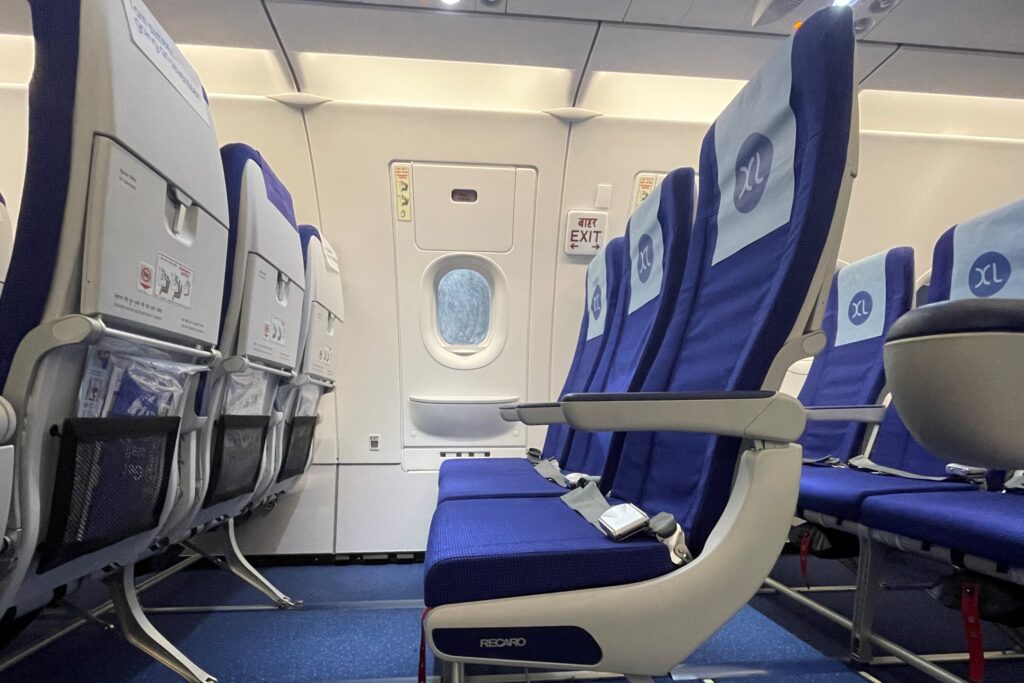
Indigo has opted for Recaro Aircraft Seating’s award-winning R5 seats for its A321neo business cabins, with these aircraft soon to be delivered. The R5 seats feature unique diamond pattern quilted dress covers and advanced comfort cushions, a backrest with privacy wings and an oversized centre console for storage for small items. A total of 45 Shipsets have been ordered to meet this upgrade, with each A321neo aircraft configured with 12 Business Class seats and 208 Economy Class seats. Recaro’s R2 seats will be fitted in Economy Class on these aircraft. The R2, with its lightweight design, allows for a more efficient cabin layout without compromising passenger space. IndiGo’s A321neos are slated for deliveries in Q4 2024, with the Business Class installations expected to be completed by the end of 2025.
Recaro Aircraft Seating was also contracted by IndiGo in July 2022 to outfit its brand-new A320neo and A321neo aircraft with lightweight BL3710 seats. This was the first time that IndiGo had selected Recaro seats since the airline’s inception in 2006. In May 2023, IndiGo became the first airline in the subcontinent to operate aircraft with BL3710 seats. The BL3710s will be installed on a total of 75 A321/A320neo aircraft. These seats are unique due to their slim design, the weight of less than 10kg per pax, and a small number of parts that reduce waste and simplify seat maintenance. Each A321 can seat a total of 232 passengers.
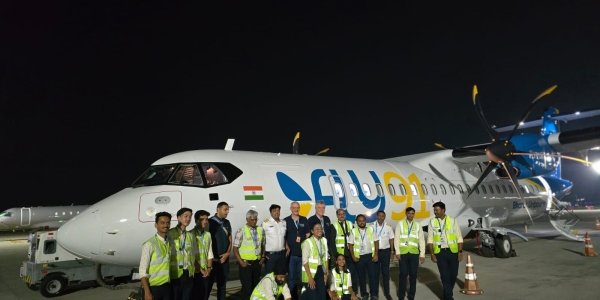
IndiGo’s ATR 72-600 regional transport aircraft also have lightweight seats called the Neo Classic, supplied by the Italian producer of aircraft interiors, Geven. These seats offer weight savings of up to 170 kg compared to seats installed on older ATR variants.
Air India Revamps Cabin Interiors
Air India now offers Premium Economy on key routes with its new Airbus A350-900s. Since the start of this year, it has taken delivery of six A350-900 aircraft, which are deployed on flights within India and on the Delhi-Dubai route for regulatory compliance and crew familiarization purposes. Air India has 34 more A350s on order, including 20 A350-1000s. With the deployment of the A350 on U.S. routes, 60 per cent of all Air India flights to the U.S. now feature new or upgraded cabin interiors.
‘The new seats, new inflight entertainment systems, and new soft products will provide our guests with great comfort and service that are representative of the new Air India. We believe this enhanced offering will solidify Air India’s position as a leading carrier and attract travellers seeking a world-class flying experience,’ Campbell Wilson, Chief Executive Officer & Managing Director of Air India, said.
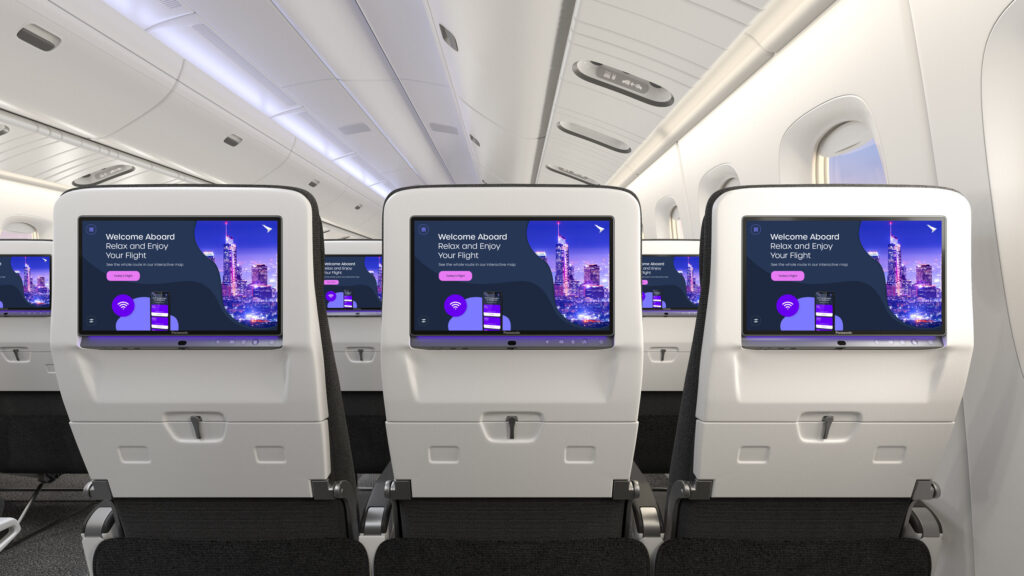
Air India’s A350-900s feature 28 private suites in Business class with full-flat beds in a 1-2-1 configuration. There is a 21-inch HD touchscreen and video handset. The Premium Economy cabin features 24 seats in a 2-4-2 configuration. The seats offer ample legroom with 38 inches of seat pitch, 18.5 inches of seat width, and an 8-inch recline. Each seat has a 13.3-inch HD touchscreen. There are 264 seats in a 3-3-3 configuration in Economy Class, each with a 12-inch HD touchscreen. All seats across cabins on the A350 come with Panasonic’s latest generation eX3 IFE system and HD screens that offer more than 2,200 hours of entertainment content from around the world.
Air India has progressively replaced its legacy aircraft with newer ones on some of its other U.S. routes over the last few months. It now operates the three class-configured Boeing 777-200LR on all non-stop flights between India (Delhi, Mumbai, and Bengaluru) and San Francisco with upgraded cabin interiors, except a 3x weekly Delhi-San Francisco service. Each of these aircraft features 28 private suites with full-flat beds in Business, 48 wide seats in Premium Economy with extra legroom, and 212 seats in Economy, as well as updated IFE systems. Air India also operates a three-class-configured Boeing 777-300ER on all flights from Mumbai to New York JFK and Newark, featuring eight First class suites, 40 full-flat beds in Business, 280 seats in Economy, and updated IFE systems.
In June of this year, Air India announced that its new A320neo aircraft will offer a new business class, an all-new premium economy, and a new economy cabin on domestic and short-haul international routes. Air India is the first Indian carrier to introduce Premium Economy cabins on a narrowbody aircraft. At least two new A320neo aircraft are operational with this three-class configuration featuring eight Business Class seats, 24 Premium Economy seats and 132 Economy seats. The seats are being sourced from Collins Aerospace. Air India’s entire full-service narrowbody fleet will feature the new three-class configuration by the end of 2025.
As part of Air India’s comprehensive cabin overhaul, over 22,000 Recaro seats will be installed in both line fit and retrofit programmes for its aircraft over the next five to six years. These orders were placed in February this year, and Air India has opted for the award-winning CL3710 and the brand-new CL3810 for Economy Class, while the premium PL3530 will outfit its Premium Economy cabin. 40 Air India B787 and B777s are being retrofitted in the first phase with CL3710 and PL3530 seats, and these are already entering service in 2024. This same seat configuration will also be maintained for 12 A350 and B787 line-fit aircraft entering service in 2025.
Air India’s newly ordered A350 and B787s, of which a total of 34 are on order will also be delivered featuring a new layout with CL3810 and PL3530 seats in the Economy and Premium Economy cabins, respectively. Vistara’s Boeing 787-9s are fitted with Recaro’s PL3530 Premium Economy and CL3710 Economy Class seats.
Environment-Friendly Seating
The new seats being installed on Indian carriers from various seat providers are also lighter and more sustainable than ever before. Developing lightweight seats is the best avenue to reduce carbon emissions during flight, and hence, aircraft seat manufacturers have an aggressive focus on continuously optimizing the weight of their seats and thus reducing fuel consumption. According to various estimates, new-generation aircraft seats being installed on aircraft today offer average weight savings of at least 10 per cent in Economy Class and 11 per cent in Business Class. Indian carriers are also benefiting from modern, sustainably built seats, which have a longer service life and don’t require replacement as frequently. These seats also require minimal maintenance, and a modular seat with a predefined recline usually has significantly lower maintenance costs due to fewer parts.
Air India Group Improves IFE Offerings
In August, Air India announced that its wireless inflight entertainment (IFE) service, Vista, which was available across its existing wide-body fleet (except for its newly inducted B777 and A350 aircraft), would now also be available on narrowbody aircraft. “At Air India, we are continuously striving to anticipate and meet the evolving needs of our modern travellers. We are pleased to introduce Vista, a new feature for our customers. It allows seamless integration of personal devices, enhancing the overall travel experience for our customers.”, said Rajesh Dogra, Chief Customer Experience Officer at Air India.
Vista is being deployed on Bluebox’s Blueview digital services platform and delivered to customers via the Bluebox Wow wireless network system. Passengers will be able to seamlessly stream content on their personal electronic devices and easily access and engage with a content library featuring over 950+ hours of entertainment across various formats and genres.
In July, Vistara (which is in the process of being merged with Air India) became the first Indian carrier to offer 20 minutes of complimentary Wi-Fi internet connectivity onboard international flights, operated using its Boeing 787-9 Dreamliner and Airbus A321neo aircraft, across all the three cabins.
Vistara’s Boeing 787-9 Dreamliner and Airbus A321neo offer advanced wireless connectivity powered by Panasonic Avionics, enabling seamless internet access on Wi-Fi-enabled devices at 35,000 feet. Vistara was the world’s first airline to launch Panasonic Avionics’ new, state-of-the-art 3D inflight map application Arc in January 2021. It has upgraded its Boeing 787-9s and A321neos with this map application.
Comfort Factor
It is very clear that Indian domestic carriers are eyeing passengers willing to pay for improved amenities and comfort and this marks a shift away from the LCC model that has been so dominant. IndiGo’s attempt at targeting a more premium segment in air travel and Air India’s dramatically improved cabin experience and new aircraft will add a new dimension in Indian air travel over the next few years.