












Table of contents
E-Freighter
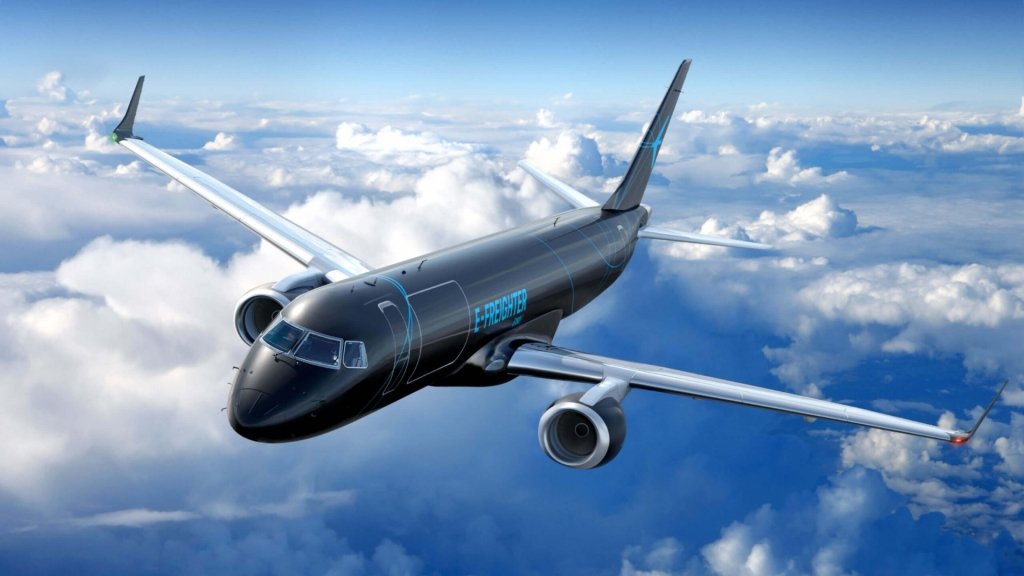
E-Freighter represents Embraer’s transformative expansion into the air cargo industry, leveraging the proven E-Jet platform to cater to the burgeoning demand for efficient, versatile freight operations. Developed through the conversion of E190 and E195 passenger jets, the E-Freighter is engineered to fill critical gaps in the logistics chain, especially for secondary and tertiary markets. With its maiden flight in 2024 and type certification from Brazil’s National Civil Aviation Agency (ANAC), the aircraft is poised to redefine mid-capacity cargo transport.
Conceived as a passenger-to-freighter conversion, the E-Freighter series includes the E190F and E195F, specifically designed to meet the growing demand for regional and express cargo operations. This innovation is driven by the surge in e-commerce and the need for fast, decentralised delivery networks. The aircraft provides an efficient, sustainable, and cost-effective solution for operators looking to modernise their fleets while maintaining flexibility.
The E-Freighter program was conceived in 2022, aligning with the rapid expansion of e-commerce and the need for more agile supply chain solutions. By converting aging passenger E-Jets into cargo-dedicated aircraft, Embraer offers a sustainable and cost-effective alternative to traditional cargo planes. The E190F and E195F models, optimised for modern freight needs, feature increased volume capacity, reduced operating costs, and extended range, making them suitable for both regional and cross-border operations.
E-Freighter: Cargo Hold and Capacity
The E-Freighter’s cargo hold is a standout feature, accommodating payloads of up to 13,500 kg. The aircraft features a redesigned fuselage optimised for cargo operations. The cargo compartment provides over 40 per cent more volume capacity than traditional large cargo turboprops, accommodating a variety of container sizes. It achieves a harmonious balance between payload efficiency and operational flexibility. The main deck is restructured to include large cargo doors, while the underfloor area is optimised for containerised and bulk cargo. This configuration ensures rapid loading and unloading, a crucial advantage in time-sensitive logistics.
With its advanced cargo-loading system certified for seamless operations, the E-Freighter supports a maximum structural payload of 13,500 kilograms for the E190F, with similar capacity for the E195F. This capability bridges the gap between small regional freighters and larger narrow-body jets, offering unmatched versatility.
E-Freighter: Engines and Avionics
The E-Freighter is powered by advanced engines, ensuring a balance between performance and fuel efficiency. While the base E-Jet models are equipped with CF34 or Pratt & Whitney PW1900G engines, the cargo versions incorporate further enhancements to maximise efficiency in freight operations, reducing operating costs considerably compared to larger narrow-body freighters. The aircraft’s avionics suite includes state-of-the-art systems for precision navigation, real-time monitoring, and advanced weather tracking. These features enhance safety and operational reliability, ensuring optimal performance even in challenging conditions.
Embraer integrates state-of-the-art flight management systems, leveraging digital solutions to optimise route planning and reduce pilot workload. The inclusion of Embraer’s proprietary support tools ensures seamless operational support, bolstering reliability and uptime.
E-Freighter: Performance
The E-Freighter’s operational range extends up to three times that of comparable turboprops, enabling direct connections between regional hubs and smaller airports. Its ability to operate from shorter runways and its reduced noise footprint make it ideal for urban areas and environmentally sensitive zones. Additionally, its efficient fuel consumption and lower emissions align with global sustainability goals.
The E-Freighter stands out for its exceptional performance metrics:
- Range: Capable of covering three times the distance of standard cargo turboprops, the aircraft is ideal for medium-haul routes.
- Fuel Efficiency: With up to 30 per cent lower operating costs compared to larger narrowbody freighters, it offers a sustainable solution for freight operators.
- Payload-to-Range Flexibility: Operators can customise payload configurations to balance between volume and distance, enhancing operational versatility.
E-Freighter: Specifications
| Feature | E190F | E195F |
| Maximum Payload | 13,500 kg | 14,200 kg |
| Range (Full Payload) | 2,300 nautical miles | 2,200 nautical miles |
| Cargo Volume | 340 cubic metres | 375 cubic metres |
| Fuel Burn Efficiency | Up to 25 per cent better than competitors | Up to 25 per cent better than competitors |
| Engine Type | CF34/PW1900G (optimised) | CF34/PW1900G (optimised) |
| Operational Costs | 30 per cent lower than narrowbodies | 30 per cent lower than narrowbodies |
Takeaways
The E-Freighter is a testament to Embraer’s ingenuity, offering a tailored solution to the rapidly evolving air cargo market. With its combination of enhanced capacity, superior performance, and reduced costs, the aircraft is well-positioned to become a preferred choice for e-commerce-driven logistics. Its innovative approach to sustainability, through the conversion of existing jets, underscores Embraer’s commitment to a greener future while addressing critical gaps in regional cargo operations
The Embraer E-Freighter represents a significant leap forward in regional cargo aviation. As logistics companies adapt to the demands of e-commerce and fast delivery, the E-Freighter offers a reliable and efficient solution, redefining the possibilities for cargo transport.
This expansion into the cargo market underscores Embraer’s commitment to innovation and its ability to adapt to shifting industry demands. With its promising specifications and performance metrics, the E-Freighter is poised to become a cornerstone of the modern air cargo fleet.