












- Embraer’s India plan is tied to a 200-aircraft threshold, linking industrial investment directly to airline demand.
- India’s network is dominated by narrowbody upgauging and turboprop efficiency, leaving limited structural space for a 76–88-seat jet segment.
- A full assembly line becomes viable only with substantial commitments from domestic carriers.

Embraer’s partnership with Adani Defence & Aerospace brings a fundamental fleet question into focus: does India’s domestic network require a sustained 76–88-seat jet category, or is this an industrial ambition seeking market validation?
The proposed plan is conditional. Embraer has indicated that a full final assembly line in India would require firm orders of roughly 200 aircraft. Until then, the facility would function as a finishing or completion centre—handling interiors, painting and customisation of aircraft built elsewhere. This structure limits upfront industrial exposure and ties expansion directly to airline commitments.
The Competitive Landscape
India’s domestic aviation ecosystem is currently shaped by two dominant forces: single-aisle scale and turboprop efficiency.
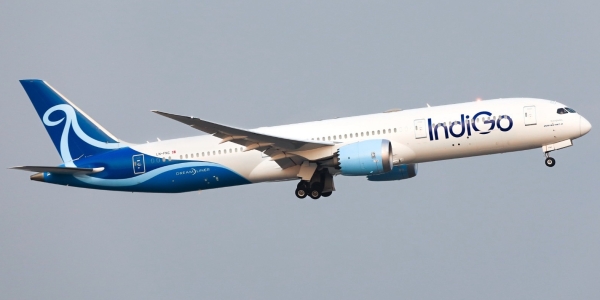
On one end sit Airbus A320-family and Boeing 737 aircraft deployed aggressively by IndiGo, Air India Express and others. These aircraft increasingly serve not just metro-to-metro routes, but also connect metros with Tier-2 and Tier-3 cities, and in some cases operate direct Tier-2 to Tier-3 services. Upgauging has become common as airlines prioritise lower cost per seat and make better use of limited airport capacity.
On the other end are turboprops—particularly ATRs—connecting thinner markets. These aircraft remain economically suited to shorter stage lengths, modest demand and infrastructure constraints at smaller airports. They also offer runway performance advantages in certain tier-3 environments.
The Embraer E175 would sit between these two ends of the fleet spectrum. The question is whether that middle segment is large enough in India to justify scale.

India does have a substantial number of routes in the 400-1,200 kilometre range—Delhi to Ahmedabad, Mumbai to Indore, Bengaluru to Kochi, among many others.
These distances are comfortably within the E175’s operational range. But route length alone does not create a business case. The decisive factor is demand depth.
If an A320 or 737 can achieve high load factors at acceptable yields, airlines prefer it because fleet simplicity reduces costs across pilots, maintenance and spares. Adding a new 76–88 seat jet type introduces complexity. For a carrier like IndiGo—whose operating philosophy is built on fleet standardisation—that represents a structural shift in fleet strategy.
Equally, if demand on certain sectors remains structurally below 100 passengers per departure but requires frequency, the E175 could, in theory, provide a right-sized solution. Yet airlines have often preferred to operate fewer larger departures rather than introduce an additional fleet type.
This is where the Airbus A220 enters the debate.
The A220 and the Fleet Strategy Question
The more consequential competitive dynamic is not turboprop versus jet, but jet versus jet. For any large Indian carrier evaluating aircraft below the A320 category, the Airbus A220 inevitably enters the discussion.
The A220 is not a direct seat-for-seat competitor to the E175. In typical configurations, it carries over 100 passengers and stretches toward 130–150 seats in higher density layouts. It functions more as a small mainline aircraft than as a regional jet.

However, for an airline evaluating “smaller than A320” options, the A220 becomes a more natural extension of existing narrowbody operations.
Its economics per seat, range flexibility and integration with Airbus support systems offer continuity advantages.
For IndiGo in particular, Airbus commonality carries strategic weight. Training pipelines, maintenance infrastructure and long-term supplier relationships already exist. Introducing the E175 would mean building parallel systems from scratch.
Globally, the A220 has steadily gained traction as airlines replace older 100-seat jets and even smaller A319s. In North America and Europe, it has frequently been selected to replace ageing A319s, Boeing 717s and earlier-generation 100-seat jets. That replacement trend matters because it signals how airlines view long-term economics.
The E175, by contrast, has found its strongest footing in a very specific ecosystem: the United States.
Lessons from the E175’s Strongest Market
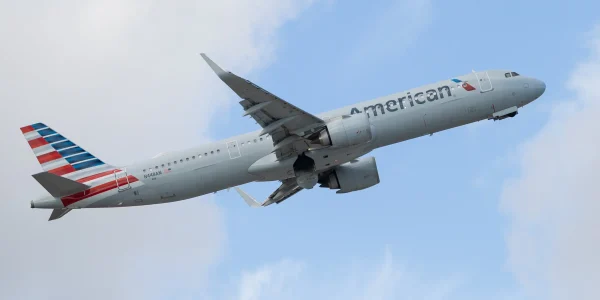
The United States provides a structural explanation for the E175’s success. Scope clause agreements between mainline airlines and pilot unions limit the size, weight and number of aircraft that regional affiliates can operate, typically capping them at 76 seats and defined maximum take-off weights. The E175 sits almost perfectly within those constraints.
This regulatory and labour framework has created sustained demand for 76-seat regional jets, flown by regional carriers under capacity purchase agreements with major U.S. airlines. The aircraft is typically deployed at high frequency from hubs into smaller cities, feeding long-haul networks.
India does not operate under comparable fleet constraints. Airlines are free to deploy narrowbodies wherever economics permit, which means the E175 must compete solely on network efficiency and trip economics.

Internationally, the E175 has been deployed extensively on high-frequency regional routes feeding major hubs, particularly in North America, where utilisation patterns are built around multiple daily departures.
The question is whether India’s domestic structure resembles that model closely enough to sustain a large fleet of similar jets.
India’s network does not rely heavily on regional affiliates feeding major hubs in the same way as the United States. Instead, large carriers operate point-to-point services at scale, often linking tier-2 cities directly to metros with narrowbodies. In that context, the economic argument for an intermediate jet must rest on demonstrable advantages in specific route clusters.
Although turboprops are not direct competitors in cabin class or passenger perception, they remain relevant economically. On sectors under roughly 500–600 kilometres, trip costs can favour turboprops, especially when airport infrastructure is limited.
If tier-2 and tier-3 growth continues but remains thin in yield, airlines may prefer to expand turboprop networks rather than introduce a new jet category. That does not eliminate the E175’s case, but it narrows its natural territory.
The IndiGo Factor
Realistically, IndiGo is the make-or-break customer. Without a substantial commitment from India’s largest airline, reaching the 200-aircraft threshold would be extremely challenging. IndiGo has publicly explored smaller aircraft options for more than a year. Both the A220 and additional turboprops have been under consideration. Yet no firm decision has emerged.
Airbus has actively positioned the A220 as a long-term complement to high-density narrowbody fleets, and IndiGo’s evaluation of smaller aircraft has included the type. Whether that explains the delay is unclear, but the outcome will shape Embraer’s prospects in India.
If IndiGo selects the A220, the Adani-Embraer facility may remain limited to a finishing centre rather than evolving into a full assembly line. Without sustained large domestic orders, industrial expansion would be difficult to justify.

Policy Push or Market Logic?
Another variable is government intent. India has promoted regional connectivity through schemes such as UDAN. If policymakers view domestic assembly of regional jets as strategically important, airlines could receive indirect incentives.
However, Indian airlines are commercially driven entities. Faster delivery slots, financing support or attractive pricing could influence decisions—but only if route economics align.
Airbus and Boeing currently face extended delivery backlogs. If Embraer can offer earlier availability, that timing advantage could carry weight. Yet availability alone rarely compensates for long-term operating cost considerations.
The central question remains unresolved: does India possess a durable market for 76-88 seat jets? There are certainly routes that fall between turboprop viability and full narrowbody saturation. But whether that segment is large enough to absorb 200 aircraft is another matter.
India’s aviation growth has been defined by capacity expansion. Airlines have tended to upgauge rather than diversify. Unless frequency economics become more critical than capacity economics, the E175 may struggle to carve out space.
Embraer’s proposal is structured around commercial thresholds rather than projected demand. If the orders materialise, India could gain a new aircraft category and a new industrial capability. If they do not, the partnership may remain symbolic rather than transformative.
The answer to whether India is ready for the E175 lies not in industrial agreements, but in route economics, fleet strategy and the decision of one airline that holds disproportionate influence over the outcome.
Also Read: Adani Defence & Aerospace and Embraer propose E175 Final Assembly Line in India