













Flying Taxis in India in 2026: Ambitious Plan Faces Global Reality Check

- India has set 2026 as the target year for its first flying taxi prototype, with InterGlobe–Archer’s ‘Midnight’, IIT-Madras’ incubated ePlane Company’s e200X, and BIAL’s ‘Shunya’ leading the charge.
- At the same time, global players are moving faster—Dubai and Abu Dhabi already testing eVTOLs, China certifying passenger models, and the US building nearly 90 vertiports.
- For India, the DGCA’s draft framework on vertiports, airworthiness, and pilot licensing provides a foundation, but the actual rollout may slip to 2027–28 as infrastructure and safety systems catch up.
Earlier this year, the Minister for Civil Aviation, Kinjarapu Ram Mohan Naidu, announced that the first air taxi prototype in India is expected to be ready by 2026, even while Dubai, in collaboration with Joby Aviation, has positioned itself as a front-runner to launch commercial, piloted air taxi services.
Joby delivered its first production eVTOL (electric vertical take-off and landing) and successfully piloted a test flight over the Dubai desert in mid-2025.
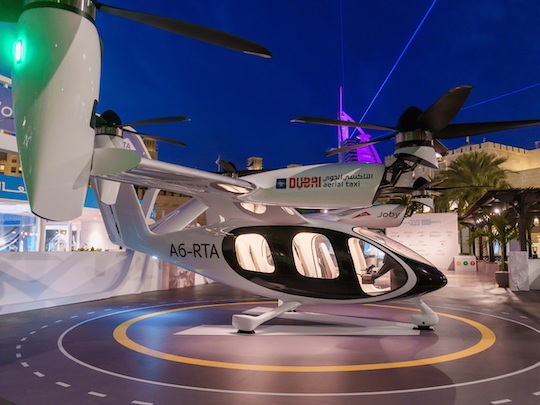
Joby Aviation and Dubai’s Roads and Transport Authority (RTA) have partnered for the project, which has set in motion the construction of the first vertiport at the Dubai International Airport, with vertiports near Palm Jumeirah, Downtown Dubai, and Dubai Marina. In fact, Joby Aviation had earlier completed its first-ever piloted eVTOL between Marina and Monterey airports in the US.
Closely following Dubai is the UAE’s capital, Abu Dhabi, which has tied up with Archer Aviation that had its first test flight of ‘Midnight’ eVTOL at the Al Bateen Executive Airport, validating the aircraft for conditions like heat, humidity and dust. The UAE government is majorly supporting air taxi plans.
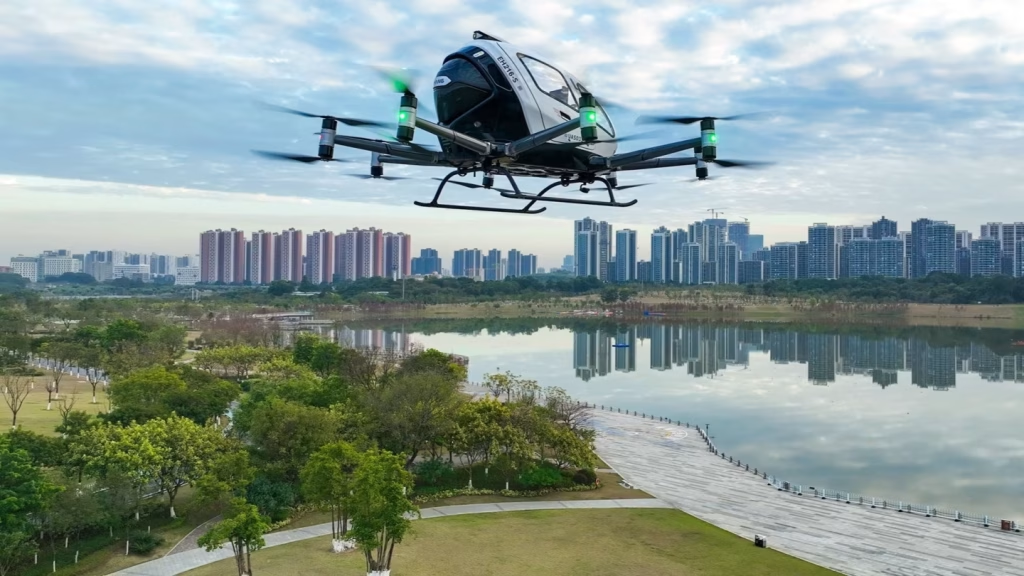
Elsewhere, Chinese company EHang became the first company in the world to receive type certification for a passenger eVTOL.
It has been conducting trials in Guangzhou and Hefei, and is expected to offer services in these two cities by year-end.
In the US, the Federal Aviation Administration is streamlining certification via a Special Federal Aviation Regulation (SFAR) for eVTOLs, providing a clear regulatory pathway for commercial launch, even as nearly 90 vertiports are getting ready.
As regards India, there is a flurry of activity with a few operators aiming for the launch of services in 2026, and it is likely that it will get stretched to 2027. InterGlobe Enterprises, the parent company of IndiGo, has signed a memorandum of understanding (MoU) with Archer Aviation for 200 eVTOL ‘Midnight’ aircraft, valued at $1 billion. InterGlobe plans to launch services in Delhi, Mumbai and Bengaluru in the not-so-distant future and has identified the ‘Delhi-Gurugram corridor as a pilot route.
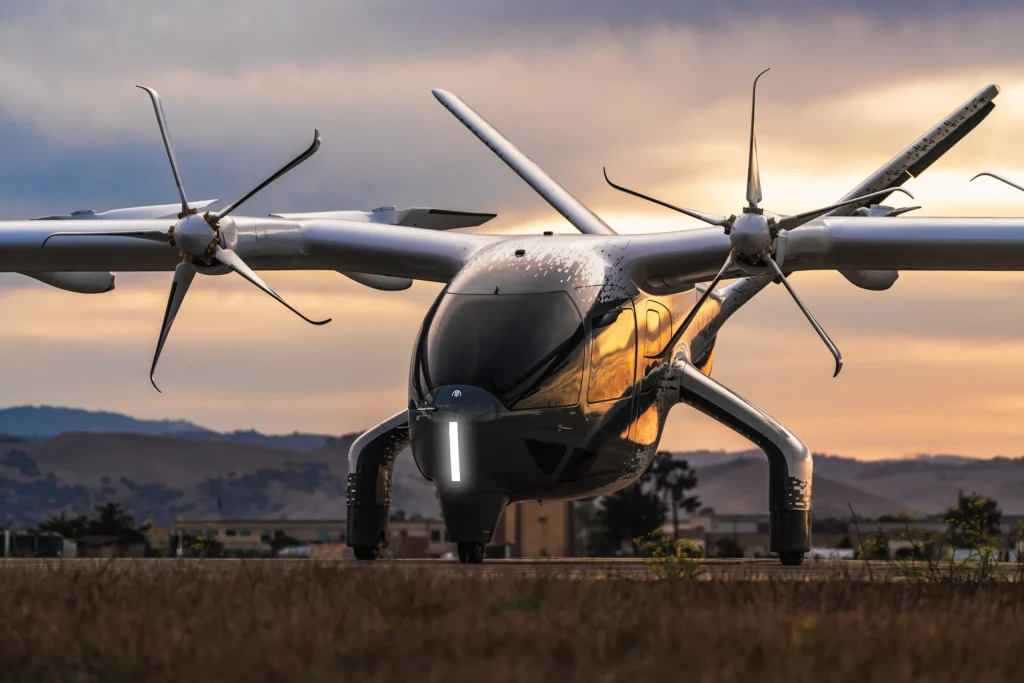
‘Midnight’ carries four passengers plus a pilot, and it can cover a distance of about 30 km in less than 10 minutes, compared to 60 to 90 minutes by car. Archer is advancing certification with the Federal Aviation Administration in the US, and it is expected by the year-end, following which the partnership plans to approach the DGCA. Archer may look at India for manufacturing to scale its operations. Presently, its manufacturing plant is in Georgia, USA.
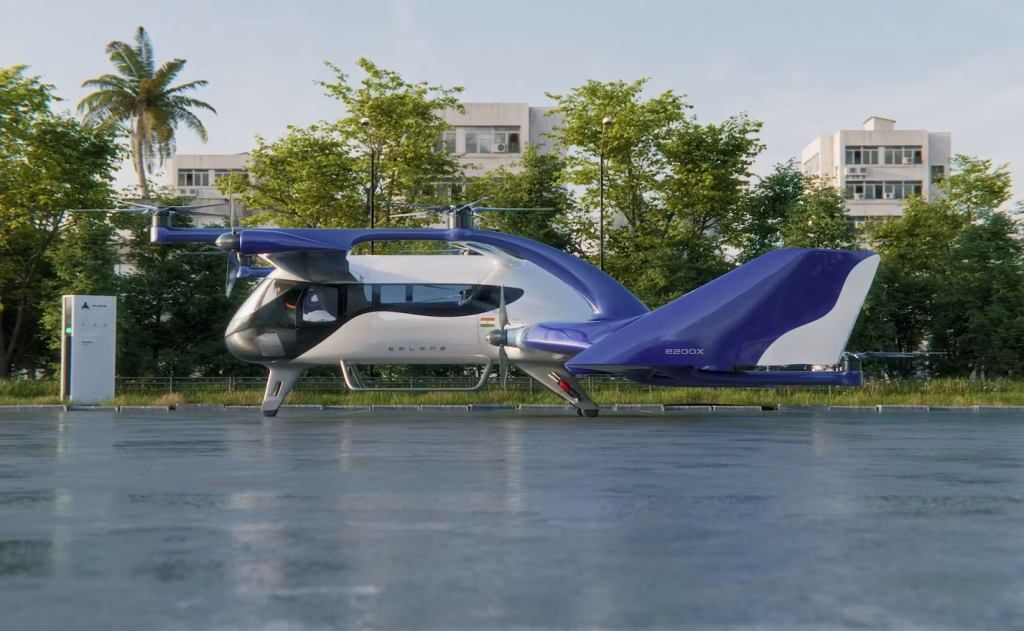
Meanwhile, IIT-Madras–incubated ePlane Company has partnered with firms in Bengaluru and Mysuru to manufacture compact flying electric vehicles, aligning with the “Make in India” initiative. It has secured India’s first eVTOL type certification for the e200X from the DGCA this year and plans to conduct test flights later this year, with aspirations for a 2026 launch.
The DGCA’s acceptance indicates that the e200X has met the regulator’s preliminary requirements regarding design, safety, and operational standards. The company aims to commence flight testing of its prototype soon, with multiple prototypes planned to accumulate the necessary flying hours for final certification compliance. Beyond air taxi services, ePlane envisions a broader range of urban aerial mobility solutions—air ambulances, cargo transport, and charter flights—across cities, indeed an ambitious roadmap.
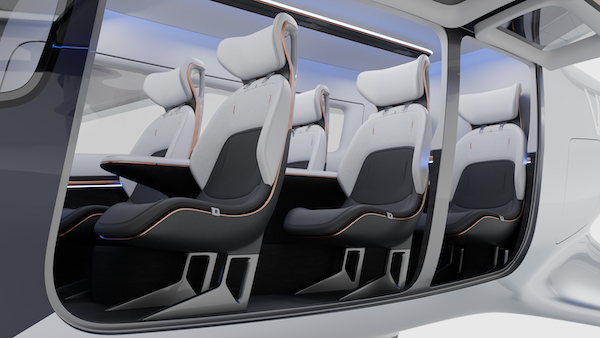
Locally, Bangalore International Airport Ltd (BIAL) has tied up with Sarla Aviation to develop a seven-seater eVTOL model called ‘Shunya’, promising to slash travel time between Indiranagar and Kempegowda International Airport from 90 minutes to just five minutes. Shunya is reportedly India’s first electric air taxi prototype, pending approval from the DGCA. It is designed for short urban trips of 20 to 30 km, reaching speeds of up to 250km per hour, with a flying range of about 160 km. The commercial launch is expected to be sometime in 2028.
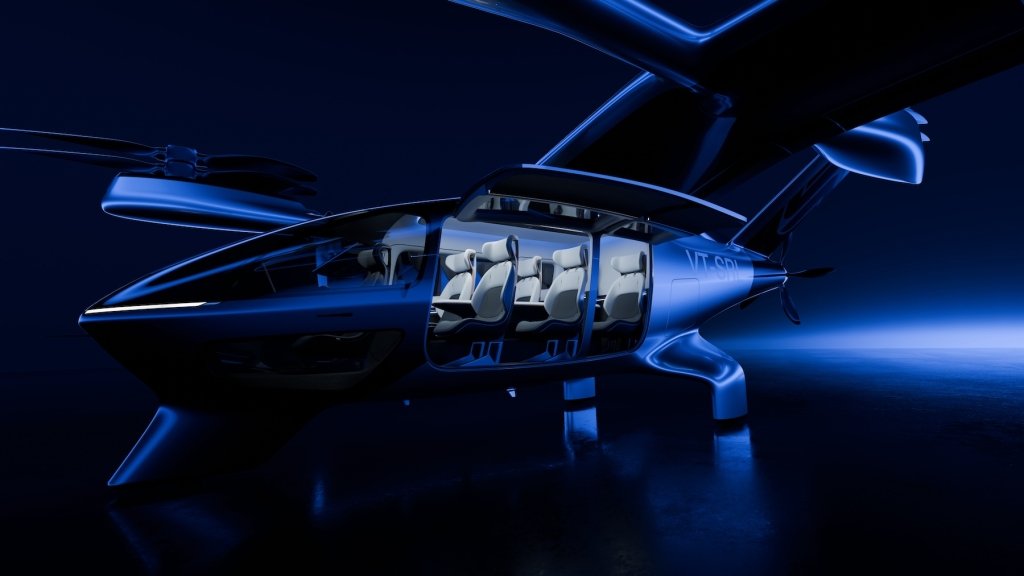
While prototypes and partnerships are promising, Bengaluru still needs to build the backbone of urban air mobility. Dedicated vertiports, charging infrastructure, and air traffic management systems must be established. The idea of beating Bengaluru’s notorious traffic jams by flying to the airport is appealing; however, concerns remain around safety, pricing, and scalability.

The DGCA and the Ministry of Civil Aviation have released a draft framework to regulate eVTOL aircraft and their supporting infrastructure. Last year, the DGCA issued advisory circulars to cover critical aspects of air taxi operations, including: Vertiport design & operation (Guidelines for infrastructure, visual aids, passenger safety, battery charging systems, and emergency response protocols); Airworthiness standards (Rules governing type certification, flight performance, structural integrity, and safety); and Pilot Licensing & Training (Framework under development to define qualifications, training hours, and operational limits for eVTOL pilots).
The DGCA has put in place six specialised working groups focusing on vertiport development, aircraft certification, crew licensing, airport operator permits, traffic management, and maintenance standards. The DGCA has an MoU with EASA to work on certification, licensing, and airspace management standards. This alignment is seen as crucial for India to integrate into the international advanced air mobility ecosystem and facilitate cross-border operations in the future.
With urban congestion worsening, air taxis represent a futuristic solution to mobility. By laying down a comprehensive regulatory framework, DGCA is ensuring India is ready to embrace the next frontier of aviation. By 2035, if policy, infrastructure, and technology align, flying taxis could move from novelty to necessity in India’s transport mix.
Also Read: Advancing Air Mobility: Overcoming Challenges, Seizing Opportunities