













From Market to Capability: Building India’s Aviation Foundations


India’s aviation sector has moved into a phase where scale is no longer the defining story. Passenger growth, fleet expansion, and network reach are now well established. The more pressing question is whether the systems that sit behind this growth—manufacturing capability, engineering depth, maintenance readiness, supply chains, and workforce skills—are being built with the same intent. Drawing on Boeing’s long-standing engagement in India, Salil Gupte, President, Boeing India and South Asia, points out that the country’s aviation future will be shaped less by how many aircraft enter service and more by how effectively they are supported, operated, and sustained across their full lifecycle.
India’s aviation story is often told through scale, passenger numbers, airplane orders, and airport counts. Those metrics matter. But they no longer explain what is really changing. The more consequential shift underway is structural: India is moving from being a fast-growing aviation market to becoming a country that is building aviation capability across manufacturing, maintenance, co-development, co-production, engineering, and talent. That distinction matters.
Already the world’s third-largest domestic aviation market, India is now investing deliberately in the foundations that determine whether growth can be sustained at scale. Airport capacity is expanding across metros and regions alike. Connectivity is reaching Tier 2 and Tier 3 cities. Policy and regulatory frameworks are beginning to align with global aviation systems. Together, these are signals of an ecosystem taking shape; one designed not just to add airplanes to fleets, but to support them over their full lifecycle.
For more than eight decades, Boeing has been part of India’s aviation journey. Our role continues to increasingly focus on contributing to this deeper capability building. That includes manufacturing and supplier development, but also the less visible infrastructure that determines industry resilience: engineering capacity, maintenance ecosystems, logistics networks, and workforce readiness.
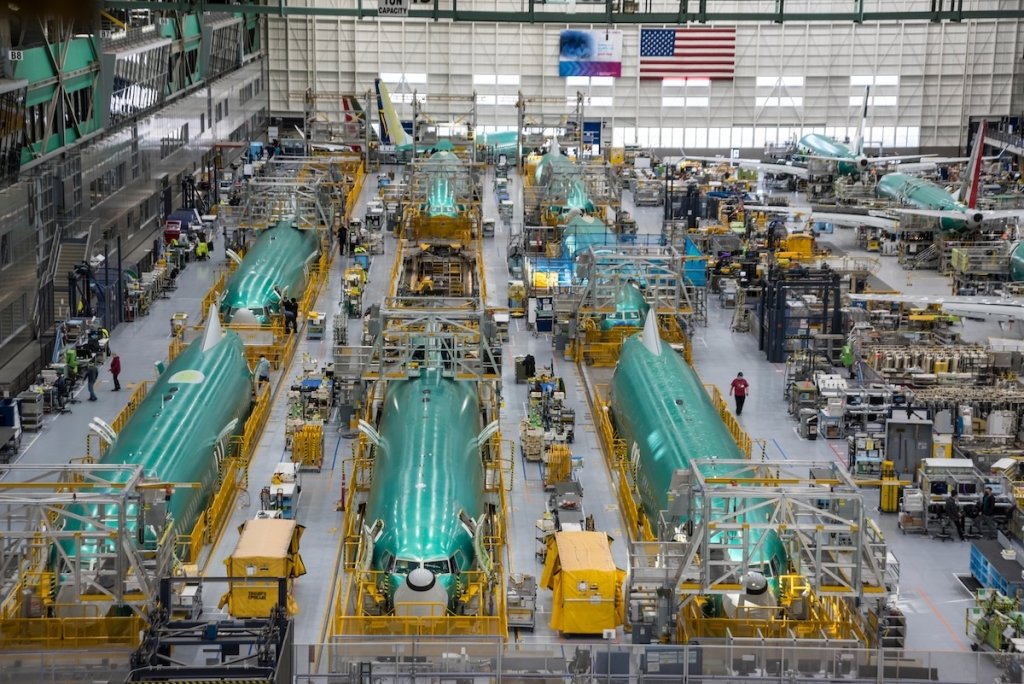
India is already a critical part of Boeing’s global supply chain. Our sourcing is worth over $1.25 billion annually from more than 325 Indian suppliers, a more than five-fold increase over the past decade. These suppliers produce advanced aerostructures, avionics, wiring systems, and digital solutions used on Boeing airplanes worldwide. This is not incidental capacity; it reflects years of investment in quality systems, certification, and industrial maturity. What comes next is equally important.
The opportunity now is to move further up the value chain, into design, advanced engineering, and systems integration. India has the talent base to do this at scale, and the emergence of strong engineering and technology centers, including Boeing’s own in India, shows how capability is being earned, not assigned.
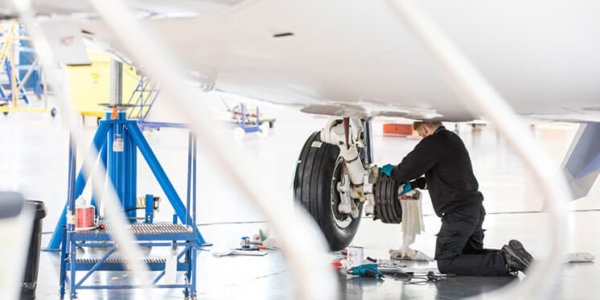
Aviation ecosystems are also evaluated on how well airplanes are supported once they enter service. Here, Maintenance, Repair and Overhaul (MRO) capability becomes decisive. While India has made progress, a significant share of MRO activity still occurs outside the country. Closing that gap is not just about cost; it is about operational resilience and readiness. This is why Boeing launched Boeing India Repair Development and Sustainment (BIRDS) in 2021 – a network-led approach to building advanced indigenous MRO capability in India.
The program focuses on developing the skills, quality systems, tooling, and execution discipline required to perform complex maintenance work to the highest global standards. Through partnerships with Indian MROs, and suppliers, BIRDS is helping raise benchmarks, accelerate workforce readiness, and embed best practices across the maintenance ecosystem. Capabilities built at this level form the foundation for scalable, reliable MRO operations across a wide range of airplanes.
Capability also depends on predictability, having the right parts, at the right place, at the right time. Investments such as the India Distribution Center in Khurja are therefore as critical as hangars and tooling. They reduce turnaround times, strengthen fleet availability, and make India a more reliable base for airline operations.
None of this works without people. India’s advantage is not just talent, but talent at scale. The challenge ahead is skilling workforce to meet aviation’s growth curve. Boeing’s investments in pilot training, supplier upskilling, and structured workforce development programs such as the Boeing Kaushal skilling program, which focuses on building industry-ready skills across the aerospace and manufacturing value chain, are aimed at creating depth and readiness at scale.
Initiatives such as the Boeing Sukanya Program, which creates pathways for women in aerospace manufacturing and engineering, further strengthen this approach. Together, these efforts are focused on building a workforce that can consistently meet global aviation standards over the long term.
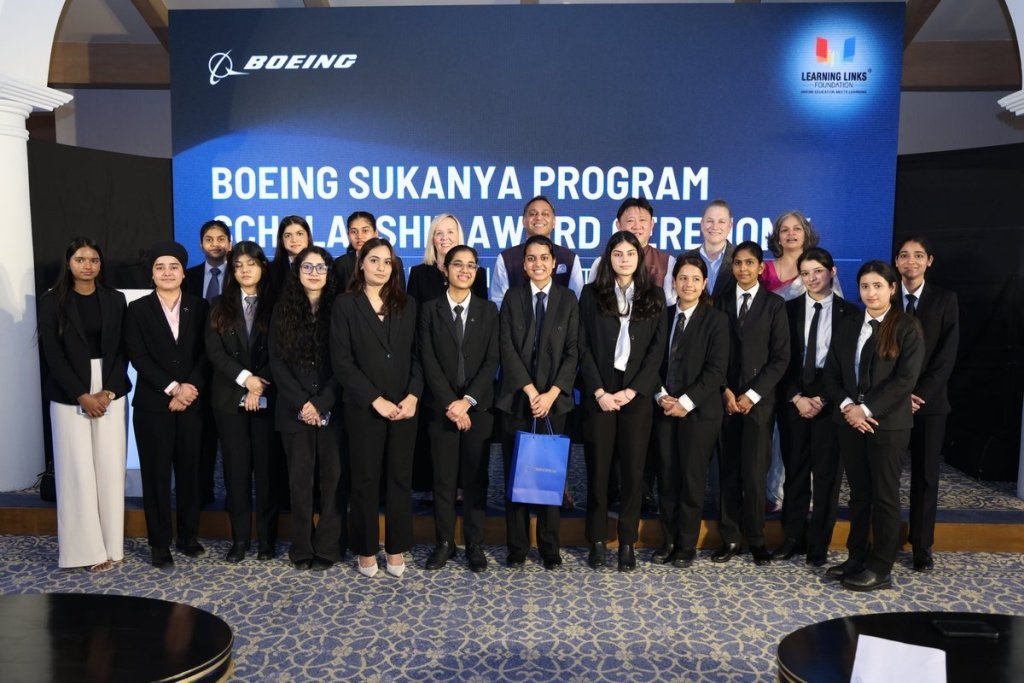
Photo: Boeing
Seen together, these efforts point to a larger truth. India’s next aviation leap will not be defined by how many airplanes arrive, but by how comprehensively the country can support, maintain, design, and operate them. With alignment across policy, industry, and talent, India is not merely participating in global aviation growth, it is laying the foundations to help shape its future.
Also Read: Boeing Expands Sukanya STEM Labs in Odisha Government Schools