











- The rise of ultra-high-net-worth individuals (HNIs) in India is significantly boosting the general aviation sector, with increasing private jet ownership and the development of exclusive terminals.
- With new exclusive terminals and increasing private jet ownership, the sector is poised for further expansion.
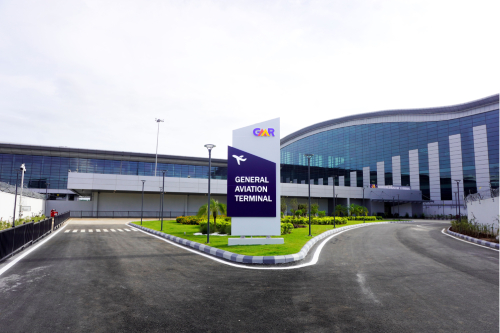
In the United States of America, there are nearly 3,000 general aviation airports, heliports and seaplane bases for a general aviation fleet of a little over 2,00,000, and we are not even talking about general aviation aircraft movements. That translates to one airport for about 66 general aviation aircraft in the US, whereas the number in India is three general aviation terminals and 409 general aviation aircraft, that is one airport for 136. The comparison is odious but meant only to indicate the kind of potential that exists in India for the general aviation sector, even as the number of high net-worth individuals (HNIs) is seeing a massive upward tick.
A report by Centrum has forecast significant growth for India’s HNIs and ultra HNIs (above Rs. 25 crores). By 2028, their combined financial assets are expected to rise from USD 1.2 trillion in 2023 to USD 2.2 trillion, driven by an annual growth rate of 13-14% over the period from 2023 to 2028. At the time of writing, one of India’s richest business tycoons, Mukesh Ambani, has reportedly picked up his 10th aircraft – a Boeing 737 Max 9 said to be worth over Rs. 1,000 crore. Mukesh Ambani already owns a fleet of aircraft, including Boeing Business Jet, Airbus A319, Bombardier Global 6000, two Dassault Falcon 900s and an Embraer ERJ-135.
Celebrities Driving Private Jet Travel
The ultra HNIs have caught on to the bug of private jet travel, and it is gaining currency across India, thanks to the celebrities, politicians and business tycoons, some of whom have acquired private jets, while many rent them for their travel, leisure or otherwise. In Hyderabad, where India got its third exclusive general aviation terminal recently, Tollywood is driving this trend with actors. Besides actors, corporate honchos have been using private jets, many of them operating from the Begumpet Airport, which has location advantages and is also used by the Indian Air Force.
The CEO of GMR Hyderabad International Airport, Pradeep Panicker, says Hyderabad is one of the thriving economic powerhouses with the second highest concentration of ultra-high-net-worth individuals. The thriving pharmaceutical and IT industries and the development of global capability centres in the region by multinational corporations (MNCs) have boosted private jet movements.
“Redefining the flying experience, this new facility will set a new standard for an extraordinary travel experience. The terminal will serve as an extension of luxury for many of our frequent HNI travellers, offering unparalleled comfort, convenience and bespoke services. With our commitment to providing a world-class experience for our travellers, we are committed to enhancing excellence in the years to come,” he adds.


Airports in metros are chock-a-block
With airports in major cities chock-a-block with passenger and aircraft movements, there are moves for a second city airport in some metros to decongest. The passenger numbers are increasing by the day. The total aircraft movements, both domestic and international, were 9,35,686 as against 8,70,977 from April 2023 to July 2024 (international movements 1,50,818), while passenger growth registered 7.2%, up from 123 million to 132 million.
India currently has 157 airports operational, including a mix of international, domestic, and regional airports. “India’s airport infrastructure has expanded from 74 operational airports in 2014 to 157 in 2024, with plans to increase this number to 350-400 by 2047,” the new Civil Aviation Minister Kinjarapu Ram Mohan Naidu forecasts, considering that the aviation landscape has seen substantial movement over the past few years, driven by economic growth, rising middle-class affluence, and supportive government policies aimed at enhancing regional connectivity for which the Modi government had launched UDAN (ude desh ka aam nagrik) in its first term in 2017. While the UDAN scheme takes care of regional connectivity at affordable prices, it has also opened up the airports for general aviation. However, general aviation has taken a hit in metros, where passenger growth is phenomenal, as scheduled commercial airlines are prioritised with time slots, parking bays, etc.
GMR group, the GA terminal initiator
It is indeed good news that the third exclusive general aviation airport was launched in Hyderabad in early September. The GMR group, which runs the Rajiv Gandhi International Airport, said the new state-of-the-art general aviation terminal is tailored exclusively for private jet owners and users. The terminal aims to facilitate the diverse needs of passengers flying through chartered flights meant for business or personal travel to and from Hyderabad Airport.
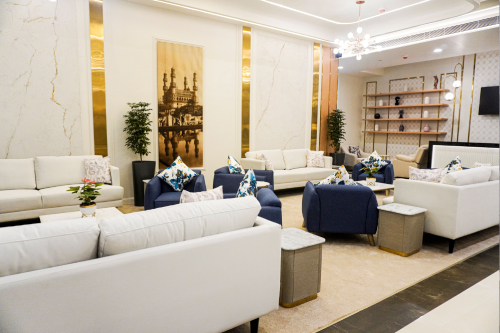
The general aviation terminal, spanning across 11,234 square feet, is situated beside the Rajiv Gandhi International Airport terminal and includes a private entrance and a car park. It features a distinctive theme of classical architecture blended with Indo-Saracenic-Indo-Gothic style, and its interiors create an ambience rich in elegance and comfort. The terminal offers a dedicated facilitation service for domestic and international general aviation passengers and is equipped with a lounge, private lounge, segregated arrival and departures corridors, check-in, emigration-immigration, customs checks and hand baggage processing, security clearance, breathalyser test facility for crew, staff lounge, duty-free offerings and a dedicated Wi-Fi-enabled service for seamless connectivity.
Delhi GA terminal can handle 150 private jets a day
It was the GMR group which opened India’s first general aviation airport in New Delhi in 2020. One of the reasons for that was to decongest the airports which are already stretched out handling scheduled airlines. The general aviation terminal in Delhi was built as general aviation flights were not getting priority as the airport was busy handling scheduled flights, which number 4,56,183 in 2023-24. The general aviation terminal can handle 150 private jet movements on a daily basis, including Code C-type aircraft (which are 50-seater charter aircraft and the biggest in their category). It also offers exclusive city-side car parking and convenient access to and from the city.
It has been a long-standing demand of India’s ultra HNIs who have private jets or use them for their businesses or leisure that there is seamless movement at airports, particularly after they pay huge sums of money on charter operations. The Delhi terminal promises faster turnaround of business jets and chartered planes, saving them the trouble of competing for taxiing slots with commercial flights at regular terminals.
The Delhi general aviation terminal has a range of facilities like spacious passenger lounges, retail and food and beverage sections, 24×7 personal concierge services, a common processing area with Customs and Immigration and immediate access to private jet aircraft stands from the Terminal. Besides, it also has an access control system, Wi-Fi enabled services, an IT system integrated with overall Delhi Airport’s platform, a perimeter security control system, etc.
The Terminal can handle over 50 passengers every hour, thus ensuring that passengers board their flights on time every time. It has a fairly new general aviation aircraft parking stands, making it convenient for the passengers to travel to and from the aircraft for boarding or de-boarding in quick time. The newly developed apron is spread over 8 lakh sq ft area with 57 dedicated bays for parking of general aviation aircraft, that’s indeed looking ahead.
Redefining Luxury at Airports
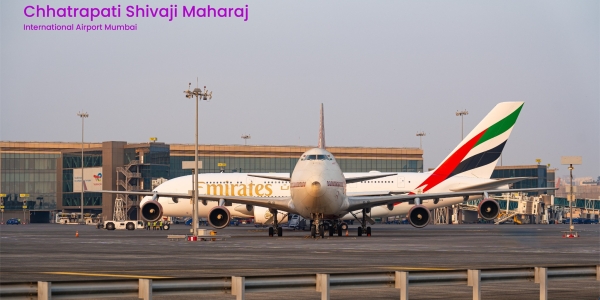
The next airport to have an exclusive general aviation terminal was the Chhatrapati Shivaji Maharaj International Airport (CSMIA), Mumbai, owned and operated by Adani Airports Holding Limited. It opened in November 2022, offering expansive lounges with butler service, all complemented with a curated menu of super-food lite bites, a stylish bar to global cuisine served via a buffet and as per an a la carté menu. The terminal redefines luxury at airports, and it is spread over 753.26sq. m.
The terminal offers efficient processing area with Customs and Immigration and immediate access to private jet aircraft stands from the Terminal. Besides having an access control system, Wi-Fi enabled services, IT system integrated systems, passengers are efficiently processed through all interaction points such as enabling the boarding pass, dedicated porter service, check in and hand baggage processing, with minimum waiting period. The terminal has been made fully accessible to passengers with special needs and passengers with reduced mobility.
The Adani Group’s vision for Mumbai International Airport Limited has been to reinvent it as India’s biggest aerotropolis, where the traditional airport nucleus of passenger and cargo infrastructure is reinforced by interdependent clusters of commercial and residential infrastructure to create the nation’s busiest airport ecosystem. MIAL has been further envisioned as a global air-travel focal point where domestic and international flyers actively engage in business and leisure, supported by metropolitan expansion that catalyses aviation-linked businesses and employment opportunities.
Indeed, such developments have paved the way for the growth of the general aviation sector, in sync with the phenomenal growth in scheduled airlines. India is now the third largest aviation market in the world.