













- GIFT City’s IFSC now hosts 38 registered aircraft lessors and 370 leased aviation assets valued at about $5.8 billion, signalling a measurable shift from policy framework to operational deployment.
- A coordinated regulatory and tax architecture—including a 20-year tax holiday within a 25-year window, structured IGST treatment, and Cape Town–aligned protections—enables the platform to bring leasing activity closer to India’s operating market.
- With Indian airlines beginning to establish leasing arms within IFSC and banks financing over $615 million in aviation transactions from the zone, GIFT City is positioning itself as a domestic node in a market historically dominated by offshore hubs.
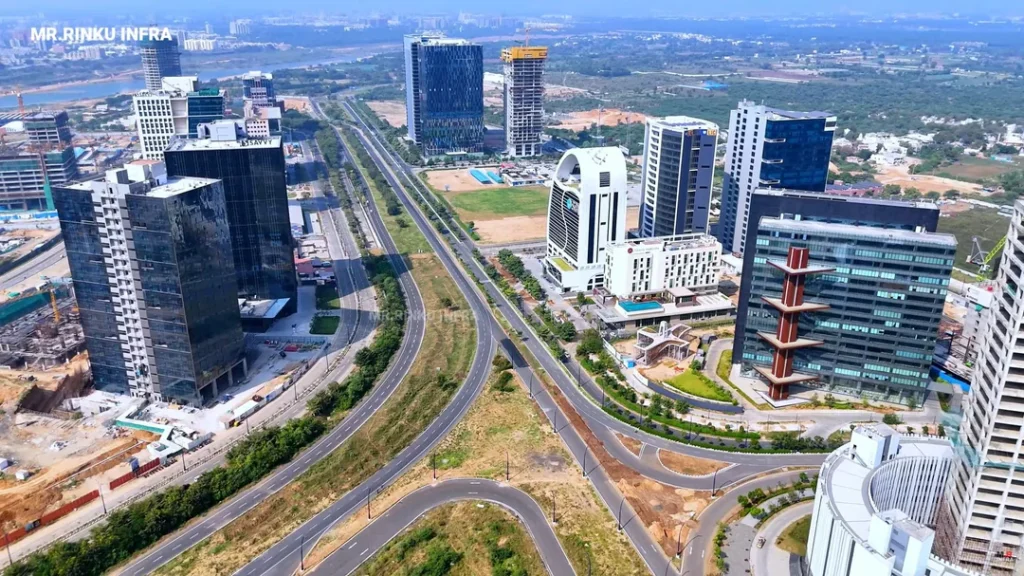
When India first began speaking about building an aircraft leasing ecosystem within its own borders, scepticism was immediate and persistent. For decades, global leasing structures had been routed through established offshore hubs. The assumption was simple: India was a large aviation market, but not a financing centre.
That assumption is now being challenged in measurable terms.
At the 4th Airline Economics Growth Frontiers India conference, Dr. Dipesh Shah, Executive Director (Development) of the International Financial Services Centres Authority (IFSCA), outlined how GIFT City’s International Financial Services Centre (IFSC) has evolved into an operational leasing platform rather than a policy aspiration. He attributed the shift to the regulatory, tax, and institutional framework that has been built over the past few years.
Offshore in Structure, Indian in Jurisdiction
The core structural proposition of GIFT City is its legal positioning. Entities set up within the IFSC are treated as non-resident units under India’s foreign exchange framework, even though they operate physically within India. This distinction allows aircraft leasing entities in GIFT to function effectively as offshore entities while remaining within Indian jurisdiction.

Transactions are conducted in permitted foreign currencies—the IFSC allows activity in 15 currencies, and the Indian rupee is not permitted for settlement within the IFSC zone.
A unified regulator—IFSCA—governs the ecosystem, eliminating the need for entities to navigate multiple domestic regulators for international financial services activity.
The tax framework is structured to mirror global financial centres and provide long-horizon certainty. Out of a 25-year window, 20 years are tax-free on business income, followed by a flat 15% regime thereafter.
Alongside this, the ecosystem includes multiple tax and duty carve-outs across the leasing value chain, including stamp duty waivers for eligible activities and specific withholding tax treatment on lease rentals during the tax-holiday period.
One point needs to be stated precisely: the indirect tax treatment is not a blanket “no GST” environment for aircraft leases into India. Where an IFSC unit leases an aircraft or aircraft engine to an Indian airline/operator, the lease rentals are subject to IGST at 5% under the forward-charge mechanism. This differs from leases routed through foreign lessors, where the tax is generally discharged by the airline under the reverse-charge mechanism.
In the Union Budget announced on 1 February 2026, the government reinforced long-term certainty for IFSC-based leasing structures by formalising the extended tax horizon.

Ecosystem Depth Beyond Leasing
While aircraft leasing is a headline sector, the IFSC has been built as a full financial ecosystem. More than 1,100 firms are now operating in GIFT City, with roughly 30,000 professionals working in the zone. Banks, insurance firms, stock exchanges, fund managers, professional services firms and even foreign universities operate within the ecosystem.
The banking ecosystem comprises 37 banks, including 17 Indian and 20 foreign banks. There are more than 200 fund management entities, with more than 327 funds registered. The insurance segment includes 28 reinsurers and a growing number of intermediaries.
Banking assets in the IFSC have crossed $100 billion. Global banking names, including MUFG, Qatar National Bank, DBS, Standard Chartered and Citibank, are active in the zone, alongside Indian institutions such as Bank of India and Axis Bank.
From an aviation financing perspective, banks in GIFT City have already extended $615 million in funding through IFSC-based structures. That figure, according to Shah, is expected to rise as more banks and structures become active in the IFSC.
The insurance and reinsurance ecosystem has also expanded within the zone, providing coverage solutions for aviation and maritime assets. This layering is significant: leasing, financing and insurance services are being localised within one regulatory perimeter.

Operational Scale: Aircraft Leasing in IFSC
As of the latest data shared at the conference, 38 aircraft lessors are registered in the IFSC. A total of 370 aviation assets have been leased from GIFT City, with an aggregate value of approximately $5.8 billion. These assets include:
- 196 aircraft
- 89 engines
- 85 auxiliary power units
The portfolio spans narrowbody aircraft, widebody aircraft, regional aircraft, trainer aircraft, helicopters, private jets and cargo aircraft. Leasing activity has not been confined to India; some assets have been placed in overseas markets, including Vietnam.
Engine leasing has also taken root, with players such as Willis Lease and Rolls-Royce participating through GIFT-based structures.
Importantly, leasing is no longer limited to third-party lessors. Both Air India and IndiGo have established leasing arms in GIFT City. An application from SpiceJet is in process. The development suggests that airlines see structural value in building captive leasing capacity within the IFSC framework.

Regulatory Enablers Across Ministries
The IFSC leasing framework has been shaped through coordination across multiple ministries and regulators. According to Shah, the Ministry of Civil Aviation, the Ministry of Finance, the Department of Revenue, and the Department of Commerce have all contributed to aligning policy architecture to make the platform workable for lessors and financiers.
Operational enablers include:
- Department of Commerce notification (Rule 29A) enabling the import, acquisition, supply and export of aircraft to and from the IFSC through customs airports, ports and landing stations.
- DGCA exemption removing the requirement for approval/NOC for import or acquisition of aircraft by IFSC-based leasing units.
- DGFT permission for the import of aircraft by IFSC-based leasing entities under the import policy.
- Regulatory flexibility allowing both operating and financial lease structures within the IFSC framework.
- Enactment of the Protection of Interests in Aircraft Objects (PIAO) Act, 2025, aligned with the Cape Town Convention.
The objective has been to reduce friction across the value chain—from acquisition and financing to leasing and redelivery—so that a lease does not need to be “exported” to another jurisdiction simply to work smoothly.
Shah cited a trainer aircraft transaction arranged by Axis Bank as an example of the ecosystem’s integration. In that case, the lessor, bank, administrator and trustee were all based within GIFT City, with the full transaction executed without recourse to external jurisdictions.
From Disbelief to Deployment
The leasing initiative traces its origins to policy discussions that began around 2018. Progress was interrupted by the pandemic and subsequent global aviation disruptions, including supply chain constraints and geopolitical instability. Regulators describe the initiative as part of a longer policy roadmap rather than a reaction to insolvency events or crises.
At the conference, Vandana Kumar, former Joint Secretary in the Ministry of Civil Aviation, described the platform as a “proof of concept” that has come to fruition, while noting that the seeds of the effort were sown well before the recent cycle of aviation shocks.
She also underscored areas that extend beyond commercial airline leasing—including defence and civil aviation cooperation, MRO integration and leasing for transport aircraft under new defence ministry provisions.

Positioning India in the Global Leasing Map
The strategic intent behind GIFT City’s leasing push is proximity. India is one of the fastest-growing aviation markets globally, with significant fleet expansion underway among its carriers. The regulator’s stated goal has been to bring financing structures closer to the operating market rather than routing them exclusively through foreign hubs.
Around 75% of the Indian fleet—roughly 700 aircraft—is on operating lease, with annual lease rental outflows estimated at $4–5 billion over the next decade. In that context, even incremental onshoring of leasing and financing activity becomes economically meaningful.

The comparison with established leasing centres is implicit rather than explicit. Historically, Dublin and other offshore jurisdictions have dominated aircraft leasing flows into India. The data now suggests that GIFT City has begun carving out a measurable share, particularly in domestic placements.
Whether this scales further will depend on the depth of capital, judicial confidence and transaction track record over longer cycles. Regulators maintain that the legal regime is mature and should not require an insolvency stress test to validate its credibility.
For now, the metrics show momentum: 38 registered lessors, 370 leased assets valued at $5.8 billion, and approximately $615 million of aviation financing executed through IFSC banking units as of December 2025.
What began as a policy ambition is now operating as a transactional platform. The next phase will determine whether GIFT City becomes a complementary node in global aircraft leasing—or a competitive one.
Also Read: The Protection of Interests in Aircraft Objects Act to Save Indian Airlines $500 Million Annually