







- The collapse of Jet Airways is a cautionary tale for all Indian carriers, highlighting the risks of debt, mismanagement, and competition in a volatile aviation market.
- Once a leader in Indian aviation, its liquidation marks the end of an era for Full Service Carriers.
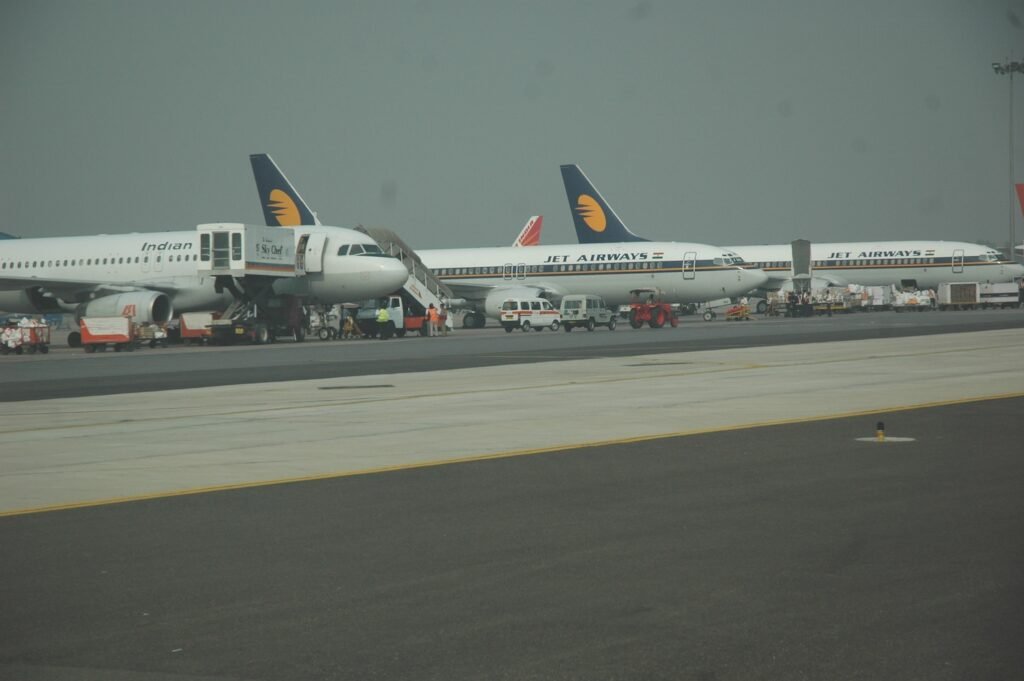
India’s domestic aviation industry is one of the fastest growing in the world but has also turned into a graveyard for carriers unable to adapt to the rapid changes in a high-cost operating environment with rapidly shifting customer preferences. The latest airline to have the nail firmly shut in its coffin is Jet Airways, which for decades was India’s largest and best run private airline. This November, the Supreme Court ordered the liquidation of the airline, bringing to an end an important chapter in the history of Full Service Carriers (FSC) in India. The revival of the airline had been in limbo for the last five years despite the approval of the resolution plan for the revival of the carrier by the National Company Law Appellate Tribunal (NCLAT). The Supreme Court decision also brings to an end the efforts of the consortium led by Murari Lal Jalan and Kalrock Capital, for the revival of Jet Airways. The consortium had initially estimated that if had received NCLT and regulatory approvals on time, Jet Airways would have been back in the skies by the summer of 2021. This was later revised to September 2022 with a total of six single-aisle aircraft and an all-female cabin crew. Whatever is now left of Jet Airways will be sold to resolve its outstanding debt to banks and other financial institutions.
Early Mover
The modern Indian domestic aviation industry is only about three decades old as we currently know it. It was in March 1994 that the Ministry of Civil Aviation (MoCA) repealed and replaced the Air Corporations Act of 1953 with the Air Corporations (Transfer of Undertaking and Repeal) Act of 1994. This once again gave rise to privately owned and operated airlines, resulting in the formation of several private carriers including Jet Airways, Air Sahara, Modiluft Airlines, Damania Airways, NEPC Airlines and East West Airlines which commenced domestic operations. East West Airlines was the first national level private airline to operate in the country, however, today all of the these pioneering Indian carriers have failed with Jet Airways being the last to fall by the wayside.
Founded in 1992 and following the commencement of operations in 1993 with four leased Boeing 737s, Jet Airways quickly grew to become one of the largest Indian carriers, renowned for its high quality of service on both domestic and international routes. In fact, Jet Airways was the first Indian privately owned airline to operate on international routes. It operated from hubs at Mumbai, Delhi, Chennai and Amsterdam airports, swiftly growing to operate on an extensive domestic and regional network in the Indian subcontinent. At its peak Jet Airways operated a fleet of approximately more than 120 twin-aisle, single-aisle jetliners and Regional Transport Aircraft (RTA) with over 16,000 employees.
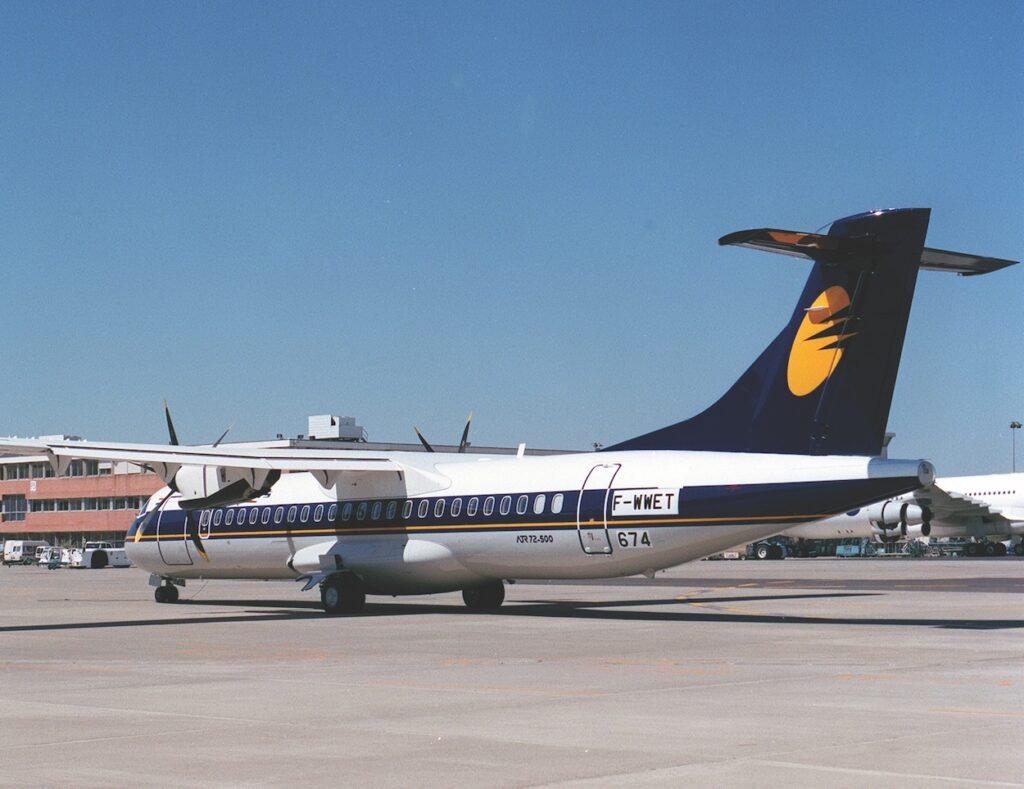
By March 2017, the airline had a fleet of over 100 aircraft with an average age of 7.43 years. The fleet comprised of ten Boeing 777-300 ERs, five Airbus A330-200s, four Airbus A330-300s, 67 Next Generation Boeing 737-700/800/900/900ERs, 15 ATR 72-500s and three ATR 72-600s. Before its collapse, Jet Airways had also placed orders for 150 new-generation fuel efficient B737-MAX aircraft with deliveries having started in June 2018. Jet Airways also had its highly successful JetPrivilege loyalty programme which surpassed the landmark 50 lakh member-milestone in August 2016. Due to size and early beginnings, Jet Airways also owned prized airport slots at major Indian cities, operating from 280 slots out of Mumbai and 160 slots from Delhi, two of the busiest and slot-constrained Indian airports.
Airframer Downside
The demise of Jet Airways, with no chance of revival, is also a blow to Boeing, which had a longstanding relationship with the carrier for single-aisle and twin-aisle jetliners. Jet Airways was the first airline to introduce the 737-300/-400/-500 and the Next-Generation 737-700/-800 into the Indian aviation market. Jet Airway’s purchase of the 737-800 was the first Southeast Asian order for the Next-Generation 737. In 1996, the airline ordered four 737-400s and six 737-800s, with the first of those airplanes delivered in 1997. At the 1999 Paris Airshow, orders were announced for ten more Next-Generation 737-800s. Jet Airways was the first South Asian airline to operate the 737-900 in the early 2000s, carrying 170 passengers in a two-class configuration (32 in business class and 138 in economy class).
In fact Jet Airways eventually operated nearly every modern variant of the 737 ranging from the 737 Classic to the Next-Generation Boeing 737-400/-700/-800/-900 airplanes. It was the first airline outside the United States to operate the three largest models of the Next-Generation 737 family – the 737-700, 737-800 and 737-900. Jet Airways went on to order a total of 150 737 MAX jetliners in two batches in 2015 and 2018, respectively, with the first aircraft delivered in 2018. It was the first airline in India to take delivery of the 737 MAX.
For its international operations, Jet Airways ordered ten 777-300ERs, which started deliveries in April 2007. In January 2007, it ordered ten 787-8 Dreamliners, which started deliveries in 2011. Jet Airways also operated the Airbus A330 on long-haul routes, having ordered 10 A330-200s in 2005.
Descent into Ground
By all accounts, just a decade ago, Jet Airways was well placed for the future. It had sold a 24% stake to Etihad airways for Rs 2000 crore in November 2013, following the Government’s decision to allow foreign airlines a stake in Indian carriers. The carrier had a fleet of modern jetliners, a large share of the premium travellers in the Indian air travel market, new and more fuel-efficient aircraft on order, well-trained and professional pilots and cabin crew, and it had critically important operating slots at two of India’s busiest airports and over 50 lakh members signed-on to its JetPrivilege loyalty programme. However, by April 2019, Jet Airways had suspended all operations and ceased services.

Jet Airways was no doubt a professionally run airline with many ex-employees highlighting this aspect of the Full Service Carrier. However, there were a series of missteps made by the company which eventually led to its demise. Nearly two decades ago in 2005, there were seven scheduled airlines – Air India, Indian Airlines, Alliance Air, Jet Airways, Sahara Airlines, Deccan Aviation and the cargo airline Blue Dart Aviation operating in the country. It was the same year that the Government of India granted No Objection Certificates to five more airline companies – Royal Airways Ltd., Inter Globe Aviation, Indus Airways, Kingfisher Airlines and Go Airlines to operate scheduled air transport services. While Air Deccan had signalled the start of the Low Cost Carrier (LCC) operations in India, IndiGo would go on take the LCC model to new heights in India. Domestic air traffic data released by the Directorate General of Civil Aviation (DGCA) for the month of October, shows IndiGo having a staggering market share of nearly 64%. In 2018, when Jet Airways’ demise was imminent, its domestic market share was nearly 14%, while IndiGo was the undisputed leader with a 41% market share.
It was also in 2005 that Air India decided to operationalise “Air India Express”, a new budget carrier under the banner of Air India Charters Limited (AICL), a wholly owned subsidiary of Air India. Air India Express commenced operations by inducting 14 B-737-800 aircraft on dry lease to operate flights to South East Asia and Gulf (excluding Saudi Arabia) at substantially reduced fares. It was in December 2004 that the Government decided to allow Indian carriers that had completed five years of domestic operations and with a minimum fleet size of 20 aircraft to operate on all international routes. Routes to the Gulf countries were kept reserved for Air India and Indian Airlines for a period of three years. Jet Airways and Air Sahara were the first Indian privately owned carriers to begin operations internationally in 2005. However, Air India Express also took a share of Jet Airways’ profitable Gulf operations.
Jet Airways went on to acquire Air Sahara for Rs 1,450 crore in April 2007, following which it renamed the carrier as JetLite operating as a Low Cost Carrier (LCC), operating under the Jet Airways brand, using its own ‘S2’ code. The LCC Air Deccan was acquired by Kingfisher Airlines for Rs 550 crore in June 2007, as the latter was in a hurry to begin international operations. Air Deccan was renamed Simplifly Deccan in October 2007. These acquisitions proved fatal for both carriers. According to a former employee of Jet Airways, “the purchase of Air Sahara was a strategic mistake as it tied us to a struggling airline that was at odds with our own operating ethos. Precious time was lost in integrating its operations into our own, at a time when we were battling against significant competition on our profitable domestic and international sectors.”
In the years before it finally ceased operations, Jet Airways was impacted by the continued increase in ATF prices, which increased its cost of operations and a decline in its profitable Gulf market. This was further exacerbated by overcapacity in the domestic market and low prices dictated by LCCs, with further impacted its profitability as a Full Service Carrier. By 2019, Jet Airways was saddled with over Rs 8,000 crore of debt which it was unable to service and it finally collapsed under the weight of its debt.
A Cautionary Tale
A common thread across airline failures in India is that they all fell prey to financial mismanagement, operational inefficiencies, rapid fleet expansion and poor leadership. Despite the huge potential of India’s civil aviation market, which still remains largely untapped, airlines continue to struggle to fly into profitability. Successive airline failures such as those that have befallen Jet Airways, Kingfisher Airlines, GoFirst, etc are likely to continue to emerge if the current generation of carriers do not learn important lessons from previous airline collapses.
The demise of Jet Airways also brings into sharp focus that a heavy reliance on debt can place severe financial strain, especially when acquisitions go bad, or fleet expansions do not generate the planned revenue. Prudent management of debt levels is especially crucial for carriers with international operations as these can rapidly generate high losses, disrupting operational cash flows. Strong promoters and stable leadership are vital for any airline to navigate the vagaries of India’s high-cost and heavily regulated civil aviation environment. Good governance practices and accountability are vital for long-term success and are hence non-negotiable.
The demise of Jet Airways also calls into question the viability of Full Service Carriers in the Indian domestic aviation market. Presently, Air India is the only Full Service Indian carrier, while it also has an LCC subsidiary in Air India Express. Jet Airways ignored the threat from IndiGo and the erstwhile Air Deccan to its peril, and the LCCs, which had a more cost-effective model, have been able to undercut its pricing model. In fact, the domination of LCCs in the Indian civil aviation market calls into question the viability of an airline operating with a premium positioning model. IndiGo itself is also targeting the upper segment of air travellers with its new Business Class offerings.
A common thread when speaking with former pilots and employees of Jet Airways, is their appreciation for the professionalism with which the airline was run in its heyday as also the fact that pilots and cabin were treated very well. This is a lesson that present day Indian carriers can learn from as many of them seem to have less than ideal relations with their pilots and cabin crew. In a highly competitive marketplace, the passenger experience will be a key differentiator, and pilots and cabin crew will be key to this experience.
The aviation industry is also highly sensitive to external factors such as fluctuating fuel prices, currency exchange rates, and regulatory changes. Jet Airways was not the first Indian airline to be buffeted by these factors and will certainly not be the last. Operating a large scheduled airline in India is extremely challenging due to the highly volatile operating environment, and a successful airline requires focused strategic thinking, financial discipline, leadership stability, and a continued focus on customer satisfaction. These values need to be retained even during the phases of rapid expansion when the risks to the airline are the greatest from aspects beyond its control, such as rising ATF prices, aircraft groundings such as the Boeing 737 MAX/Pratt & Whitney GTF episodes, pandemic situations and global conflict situations.
In the final analysis, it is a sad end to Naresh Goyal’s aspirations for creating a world-class, privately owned Indian domestic and international airline, which Jet Airways certainly was. The airline reached heights which many Indian carriers can even today, only dream off, but crashed into the ground due to several of the factors listed above. Jet Airways was India’s finest full-service carrier and it will take its domestic competition some doing even today to attain the service standards that Jet Airways delivered at the height of its fame.